







Question: 1. Dictionary Woes A proprietary API for querying a remote data service returns data rows in key/value dictionaries, but the key name case is unreliable.
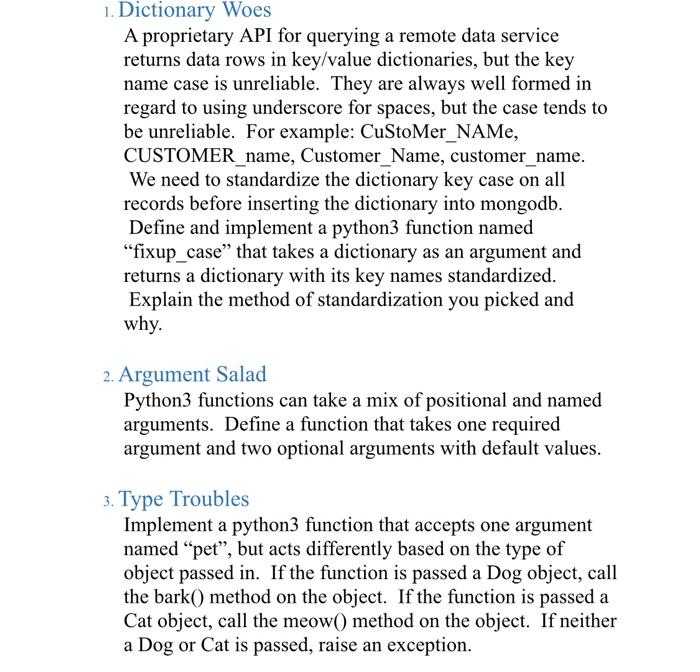
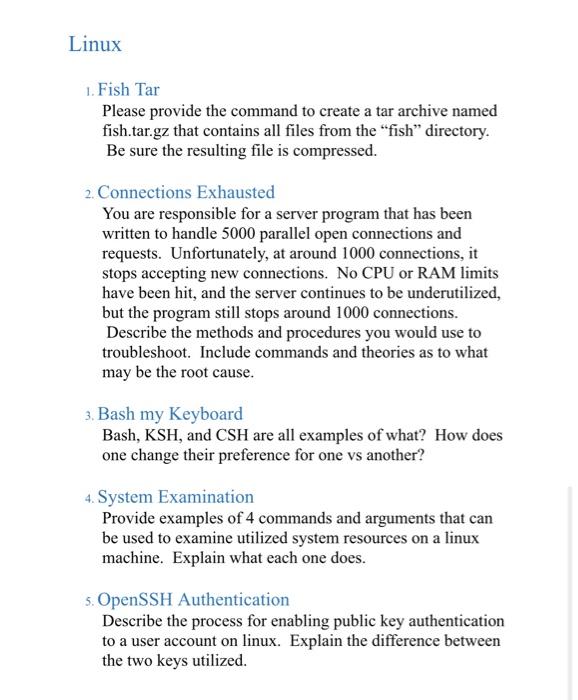
1. Dictionary Woes A proprietary API for querying a remote data service returns data rows in key/value dictionaries, but the key name case is unreliable. They are always well formed in regard to using underscore for spaces, but the case tends to be unreliable. For example: CuStoMer_NAMe, CUSTOMER_name, Customer_Name, customer_name. We need to standardize the dictionary key case on all records before inserting the dictionary into mongodb. Define and implement a python3 function named "fixup_case that takes a dictionary as an argument and returns a dictionary with its key names standardized. Explain the method of standardization you picked and why. 2. Argument Salad Python3 functions can take a mix of positional and named arguments. Define a function that takes one required argument and two optional arguments with default values. 3. Type Troubles Implement a python3 function that accepts one argument named "pet", but acts differently based on the type of object passed in. If the function is passed a Dog object, call the bark() method on the object. If the function is passed a Cat object, call the meow() method on the object. If neither a Dog or Cat is passed, raise an exception. Linux 1. Fish Tar Please provide the command to create a tar archive named fish.tar.gz that contains all files from the "fish directory. Be sure the resulting file is compressed. 2. Connections Exhausted You are responsible for a server program that has been written to handle 5000 parallel open connections and requests. Unfortunately, at around 1000 connections, it stops accepting new connections. No CPU or RAM limits have been hit, and the server continues to be underutilized, but the program still stops around 1000 connections. Describe the methods and procedures you would use to troubleshoot. Include commands and theories as to what may be the root cause. 3. Bash my Keyboard Bash, KSH, and CSH are all examples of what? How does one change their preference for one vs another? 4. System Examination Provide examples of 4 commands and arguments that can be used to examine utilized system resources on a linux machine. Explain what each one does. 5. OpenSSH Authentication Describe the process for enabling public key authentication to a user account on linux. Explain the difference between the two keys utilized
Step by Step Solution
There are 3 Steps involved in it

Get step-by-step solutions from verified subject matter experts
 Study Help