







Question: 1. Explain paragraph 3 using the asset-pricing model for bonds. 2. Get data on inflation and government debt and explain paragraphs 4 and 5. 3.
1. Explain paragraph 3 using the asset-pricing model for bonds.
2. Get data on inflation and government debt and explain paragraphs 4 and 5. 3. In which direction yield is expected to move in paragraph 6. And why?
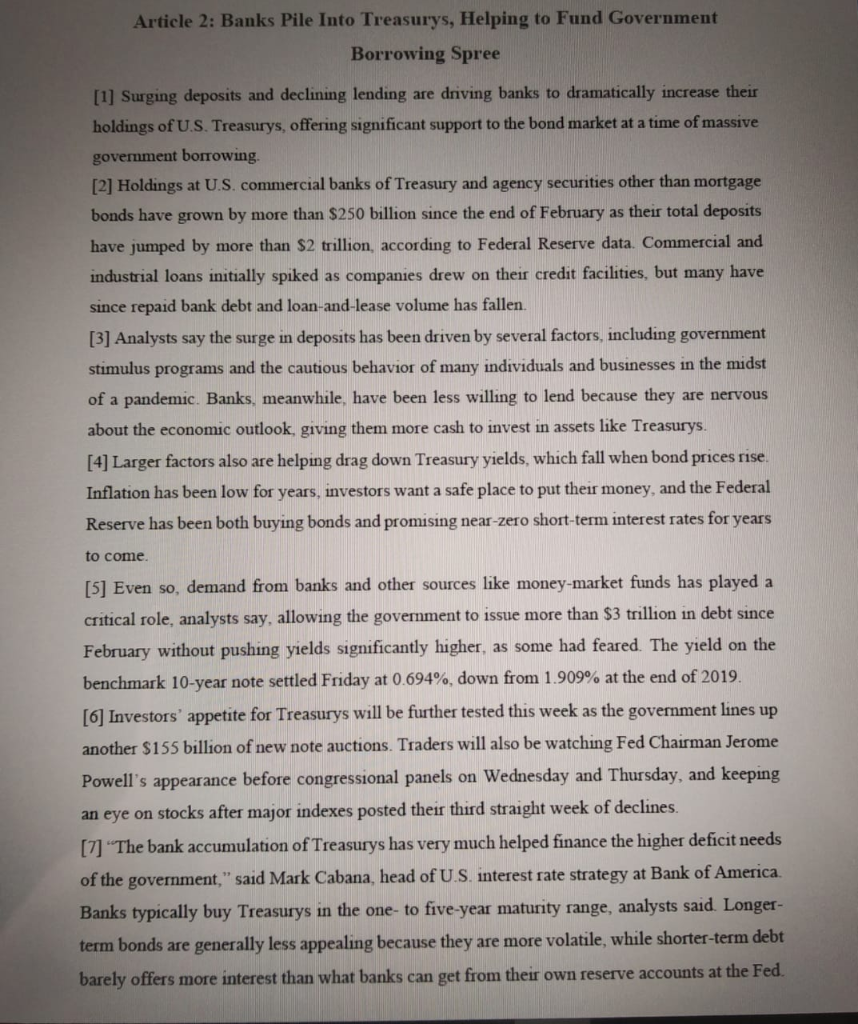
Article 2: Banks Pile Into Treasurys, Helping to Fund Government Borrowing Spree [1] Surging deposits and declining lending are driving banks to dramatically increase their holdings of U.S. Treasurys, offering significant support to the bond market at a time of massive government borrowing. [2] Holdings at U.S. commercial banks of Treasury and agency securities other than mortgage bonds have grown by more than $250 billion since the end of February as their total deposits have jumped by more than $2 trillion, according to Federal Reserve data. Commercial and industrial loans initially spiked as companies drew on their credit facilities, but many have since repaid bank debt and loan-and-lease volume has fallen. [3] Analysts say the surge in deposits has been driven by several factors, including government stimulus programs and the cautious behavior of many individuals and businesses in the midst of a pandemic. Banks, meanwhile, have been less willing to lend because they are nervous about the economic outlook, giving them more cash to invest in assets like Treasurys. [4] Larger factors also are helping drag down Treasury yields, which fall when bond prices rise. Inflation has been low for years, investors want a safe place to put their money, and the Federal Reserve has been both buying bonds and promising near-zero short-term interest rates for years to come. [5] Even so, demand from banks and other sources like money-market funds has played a critical role, analysts say, allowing the government to issue more than $3 trillion in debt since February without pushing yields significantly higher, as some had feared. The yield on the benchmark 10-year note settled Friday at 0.694%, down from 1.909% at the end of 2019. [6] Investors' appetite for Treasurys will be further tested this week as the government lines up another $155 billion of new note auctions. Traders will also be watching Fed Chairman Jerome Powell's appearance before congressional panels on Wednesday and Thursday, and keeping an eye on stocks after major indexes posted their third straight week of declines. [7] "The bank accumulation of Treasurys has very much helped finance the higher deficit needs of the government," said Mark Cabana, head of U.S. interest rate strategy at Bank of America. Banks typically buy Treasurys in the one to five-year maturity range, analysts said. Longer- term bonds are generally less appealing because they are more volatile, while shorter-term debt barely offers more interest than what banks can get from their own reserve accounts at the Fed. Article 2: Banks Pile Into Treasurys, Helping to Fund Government Borrowing Spree [1] Surging deposits and declining lending are driving banks to dramatically increase their holdings of U.S. Treasurys, offering significant support to the bond market at a time of massive government borrowing. [2] Holdings at U.S. commercial banks of Treasury and agency securities other than mortgage bonds have grown by more than $250 billion since the end of February as their total deposits have jumped by more than $2 trillion, according to Federal Reserve data. Commercial and industrial loans initially spiked as companies drew on their credit facilities, but many have since repaid bank debt and loan-and-lease volume has fallen. [3] Analysts say the surge in deposits has been driven by several factors, including government stimulus programs and the cautious behavior of many individuals and businesses in the midst of a pandemic. Banks, meanwhile, have been less willing to lend because they are nervous about the economic outlook, giving them more cash to invest in assets like Treasurys. [4] Larger factors also are helping drag down Treasury yields, which fall when bond prices rise. Inflation has been low for years, investors want a safe place to put their money, and the Federal Reserve has been both buying bonds and promising near-zero short-term interest rates for years to come. [5] Even so, demand from banks and other sources like money-market funds has played a critical role, analysts say, allowing the government to issue more than $3 trillion in debt since February without pushing yields significantly higher, as some had feared. The yield on the benchmark 10-year note settled Friday at 0.694%, down from 1.909% at the end of 2019. [6] Investors' appetite for Treasurys will be further tested this week as the government lines up another $155 billion of new note auctions. Traders will also be watching Fed Chairman Jerome Powell's appearance before congressional panels on Wednesday and Thursday, and keeping an eye on stocks after major indexes posted their third straight week of declines. [7] "The bank accumulation of Treasurys has very much helped finance the higher deficit needs of the government," said Mark Cabana, head of U.S. interest rate strategy at Bank of America. Banks typically buy Treasurys in the one to five-year maturity range, analysts said. Longer- term bonds are generally less appealing because they are more volatile, while shorter-term debt barely offers more interest than what banks can get from their own reserve accounts at the Fed
Step by Step Solution
There are 3 Steps involved in it

Get step-by-step solutions from verified subject matter experts
 Study Help