







Question: 1. Explain the difference between conceptual, logical, and physical database design. Why might these tasks be carried out by different people? a. What is the
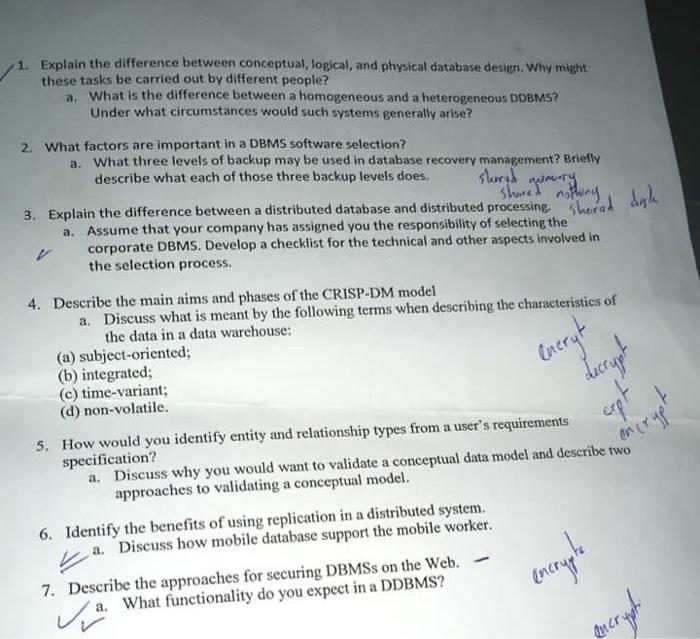
1. Explain the difference between conceptual, logical, and physical database design. Why might these tasks be carried out by different people? a. What is the difference between a homogeneous and a heterogeneous DDBMS? Under what circumstances would such systems generally arise? 2. What factors are important in a DBMS software selection? a. What three levels of backup may be used in database recovery management? Briefly describe what each of those three backup levels does. Shred gumery 3. Explain the difference between a distributed database and distributed processing sotwerad dis he a. Assume that your company has assigned you the responsibility of selecting the corporate DBMS. Develop a checklist for the technical and other aspects involved in the selection process. 4. Describe the main aims and phases of the CRISP-DM model a. Discuss what is meant by the following terms when describing the characteristics of the data in a data warehouse: (a) subject-oriented; (b) integrated; (c) time-variant; (d) non-volatile. 5. How would you identify entity and relationship types from a user's requirements specification? a. Discuss why you would want to validate a conceptual data model and describe two approaches to validating a conceptual model. 6. Identify the benefits of using replication in a distributed system. a. Discuss how mobile database support the mobile worker
Step by Step Solution
There are 3 Steps involved in it

Get step-by-step solutions from verified subject matter experts
 Study Help