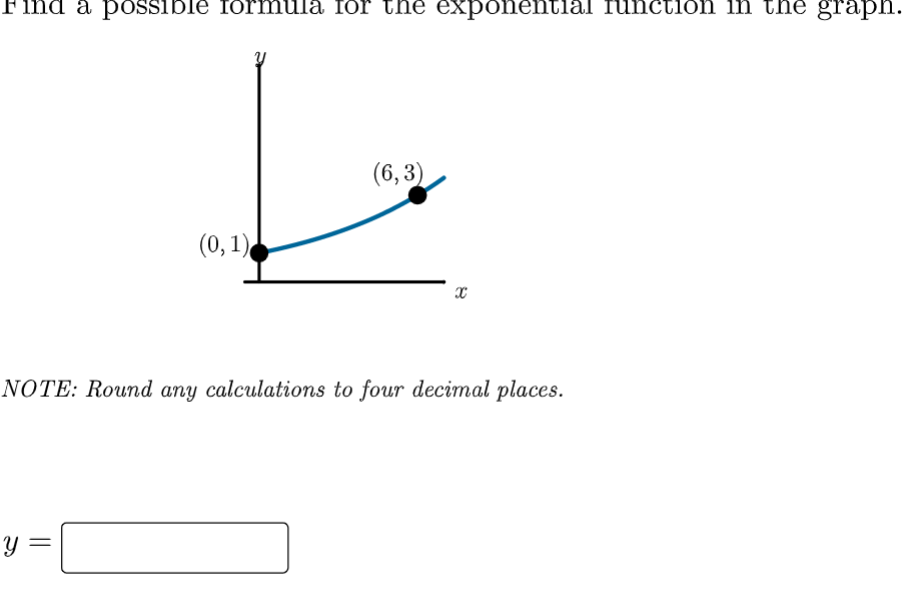
Question: 1) Find a possible formula for the exponential function in the graph. (6, 3 (0, 1) NOTE: Round any calculations to four decimal places. ycorrespond
1)
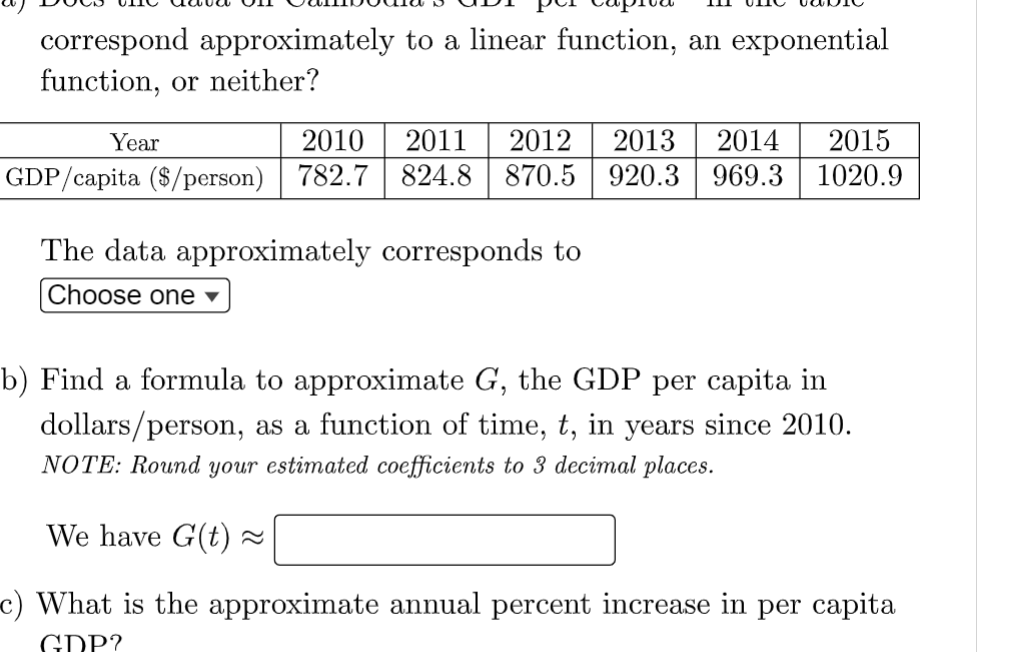
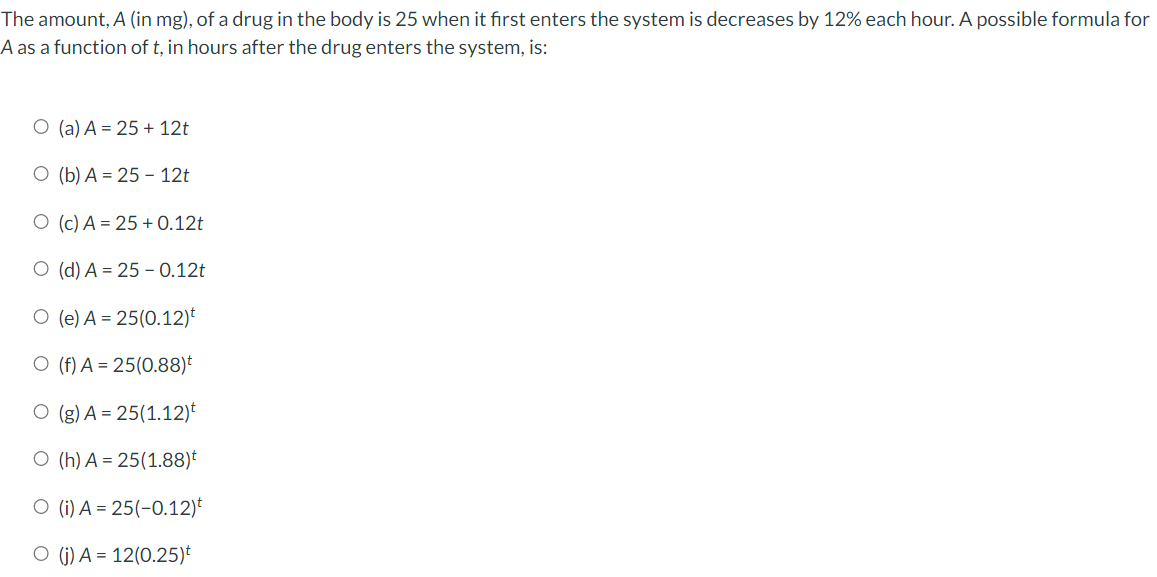
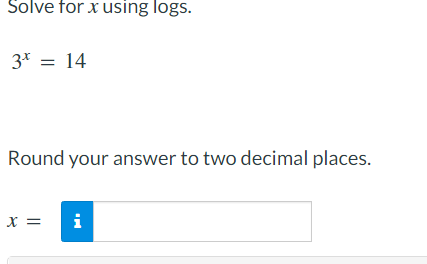
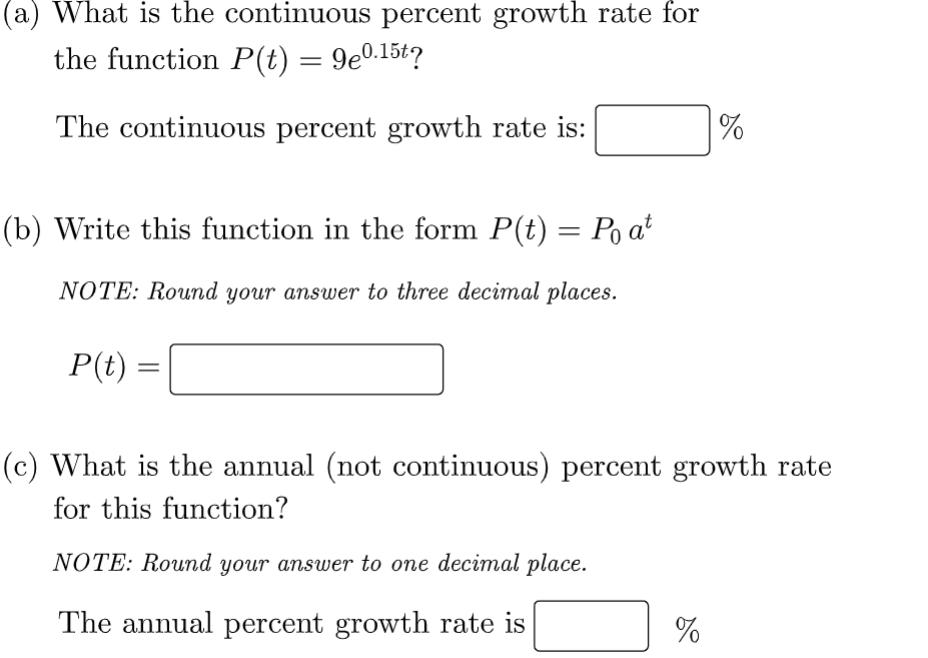
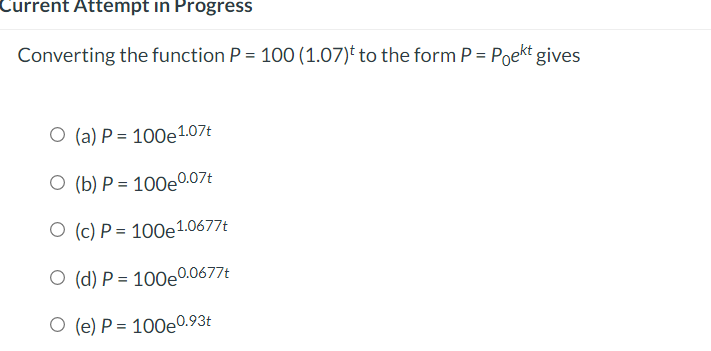
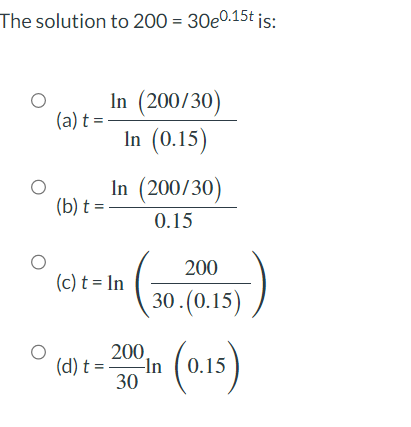
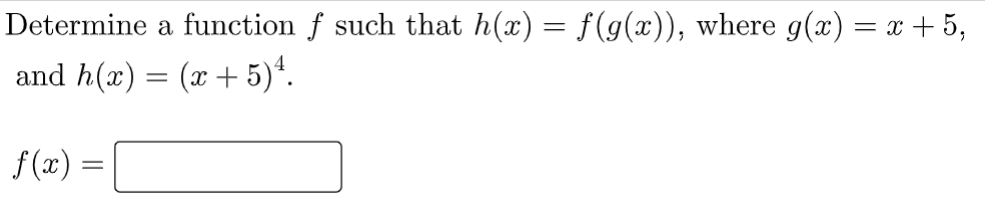
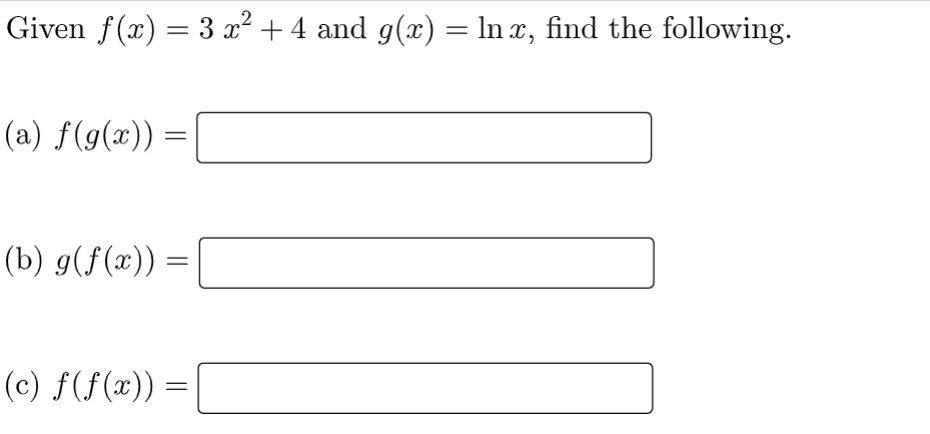
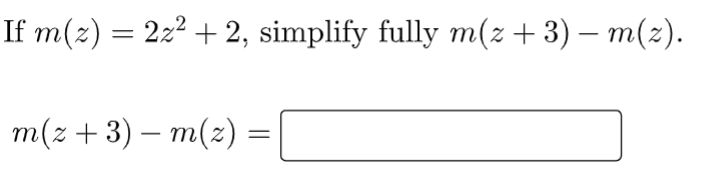
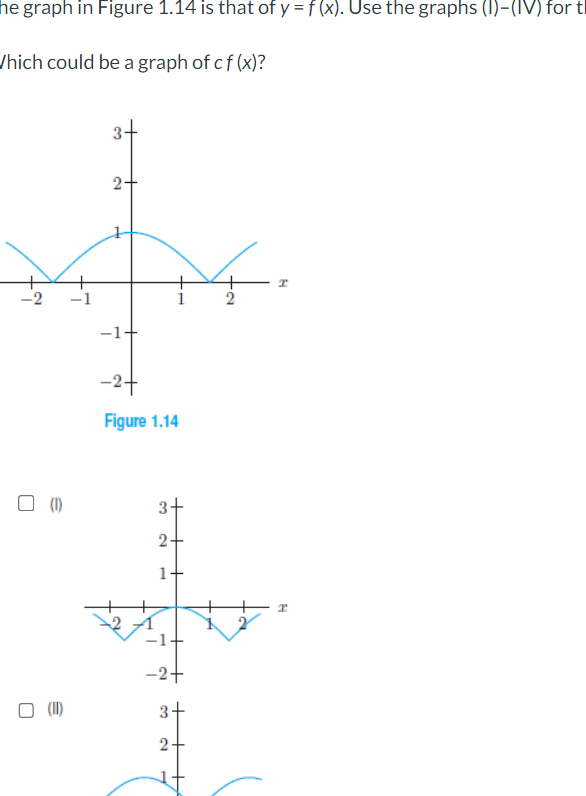
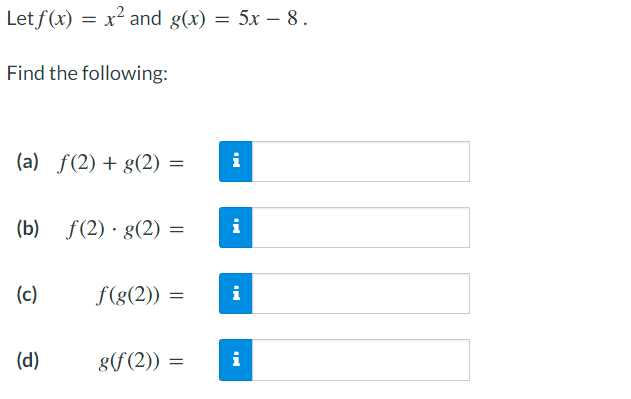
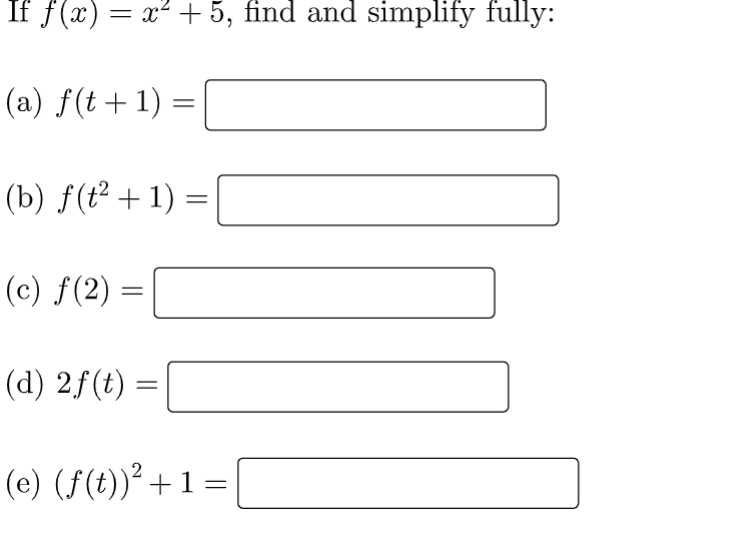
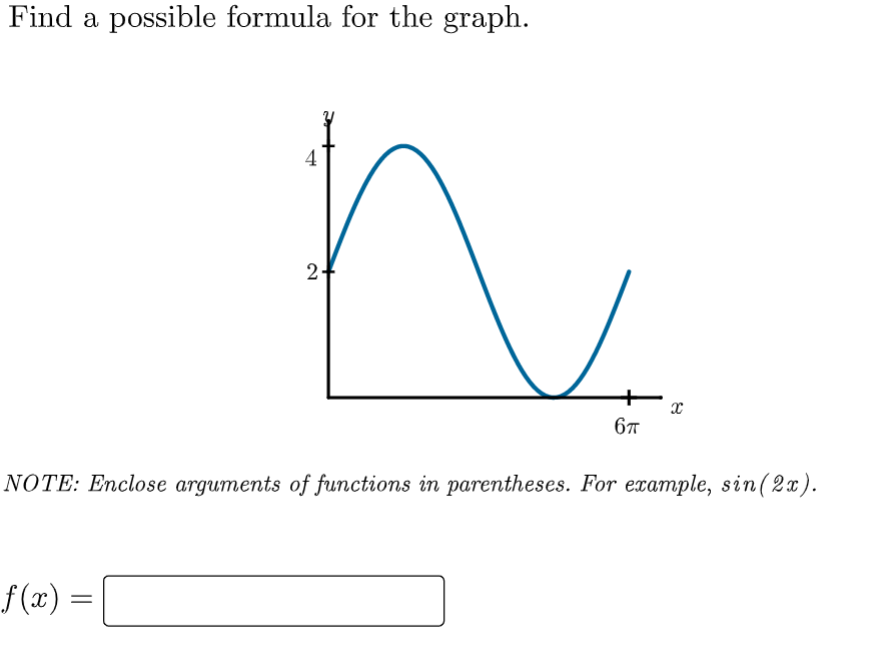
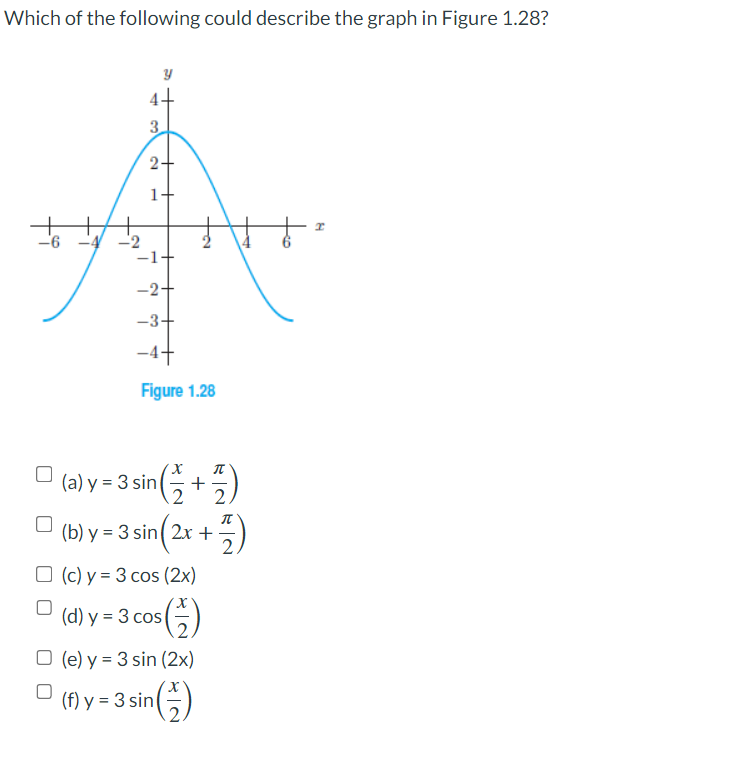
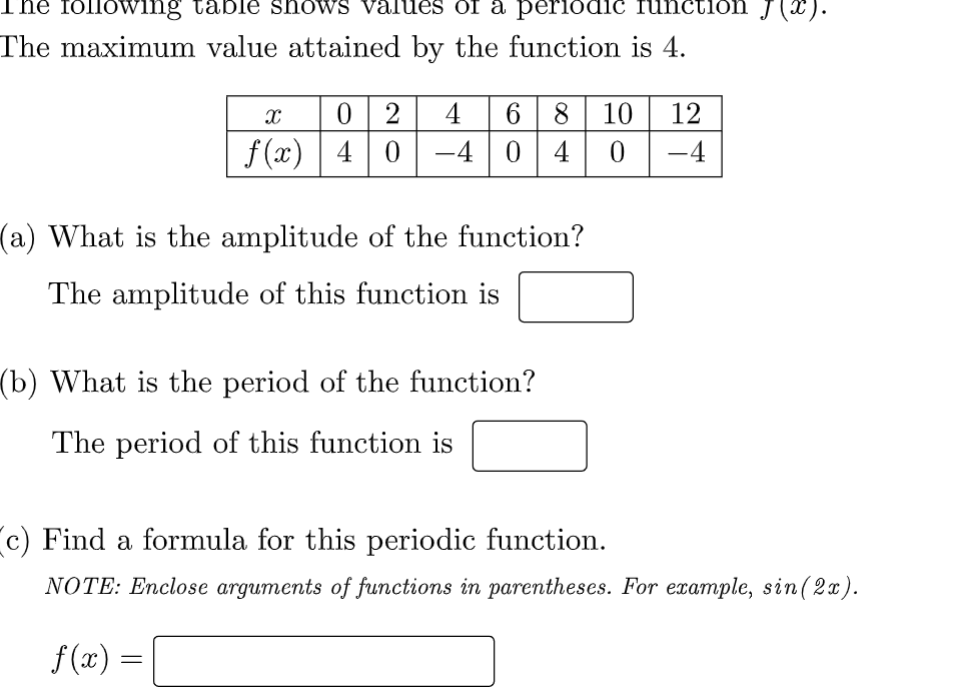
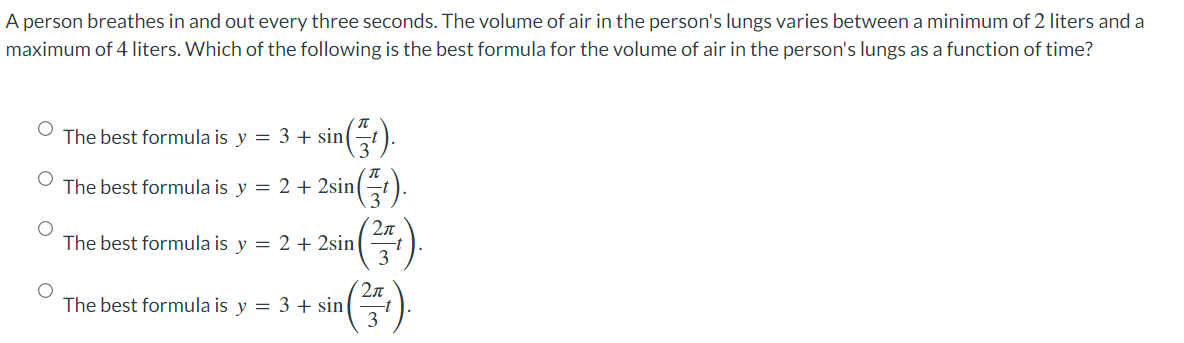
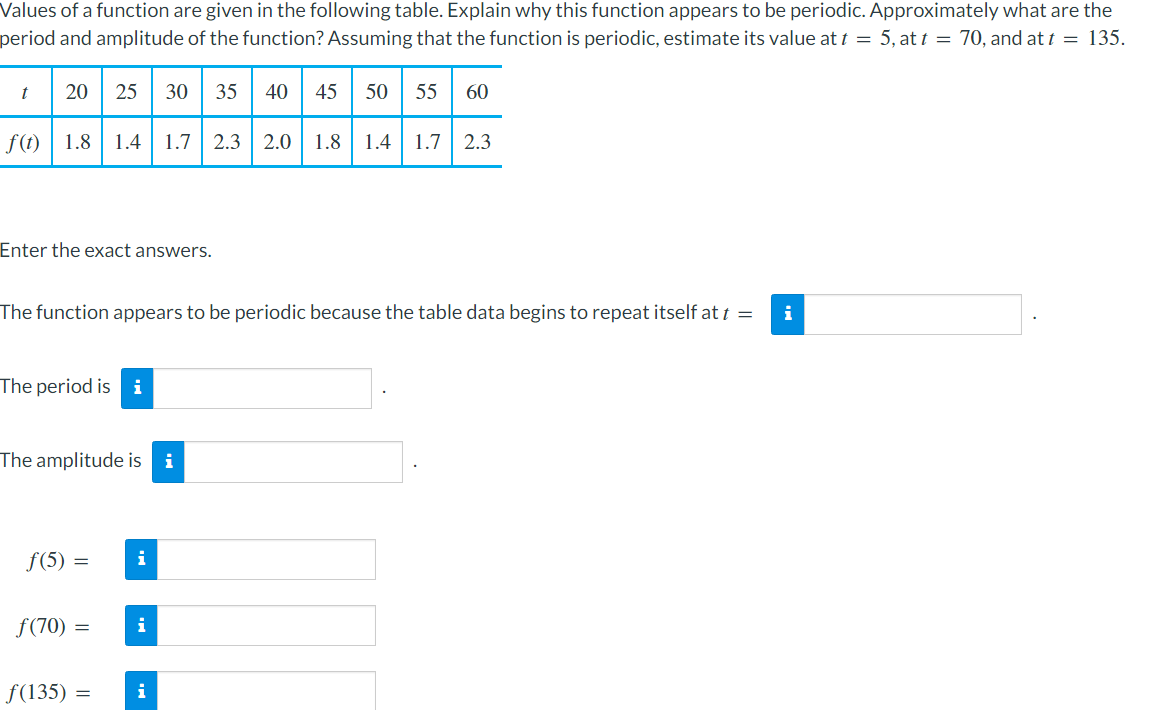
Find a possible formula for the exponential function in the graph. (6, 3 (0, 1) NOTE: Round any calculations to four decimal places. ycorrespond approximately to a linear function, an exponential function, or neither? Year 2010 2011 2012 2013 2014 2015 GDP /capita ($/person) 782.7 824.8 870.5 920.3 969.3 1020.9 The data approximately corresponds to Choose one b) Find a formula to approximate G, the GDP per capita in dollars /person, as a function of time, t, in years since 2010. NOTE: Round your estimated coefficients to 3 decimal places. We have G(t) ~ What is the approximate annual percent increase in per capita GDP?The amount, A (in mg), of a drug in the body is 25 when it first enters the system is decreases by 12% each hour. A possible formula for A as a function of t, in hours after the drug enters the system, is: O (a) A = 25 + 12t O (b) A = 25 - 12t O (c) A = 25 + 0.12t O (d) A = 25 - 0.12t O (e) A = 25(0.12)t O (f) A = 25(0.88)t O (g) A = 25(1.12) t O (h) A = 25(1.88)t O (i) A = 25(-0.12) O (j) A = 12(0.25)tSolve for x using logs. 3* = 14 Round your answer to two decimal places. X = HI(a) What is the continuous percent growth rate for the function PU) = 9e0'15t? The continuous percent growth rate is: I: % (b) Write this function in the form PUB) = pH at NOTE: Round your answer to three decimal places. (c) What is the annual (not continuous) percent growth rate for this function? NOTE: Round your answer to one decimal place. The annual percent growth rate is [:] % Current Attempt in Progress Converting the function P = 100 (1.07) to the form P = Poekt gives O (a) P = 100e1.07t O (b) P = 100-0.07t O (c) P = 100e1.0677t O (d) P = 100e0.0677t O (e) P = 100-0.93tThe solution to 200 = 30e0.15t is: O In (200/30 (a) t = - In (0.15) O In (200/30) (b) t = 0.15 O 200 (c) t = In 30. (0.15) O 200 (d) t = In 0.15 30Determine a function f such that h(x) = f(g(x)), where g(x) = x + 5, and h(x) = (x+5). f ( ac) =Given f(x) = 3 x2 + 4 and g(x) = Inx, find the following. (a) f(g(x)) = (b) g( f (a) ) = (c) f (f (2) ) =If m(z) = 222 + 2, simplify fully m(z + 3) - m(z). m(z+ 3) - m(z) =he graph in Figure 1.14 is that of y = f (x). Use the graphs (1)-(IV) for t /hich could be a graph of cf (x)? 2+ I -2 1 -1+ -2+ Figure 1.14 O (1) 3+ 2+ T 2+ it\f\fIf f (x) = x +5, find and simplify fully: (a) f(t + 1) = ( b ) f (t2 + 1 ) = ( c ) f (2) = (d) 2 f (t) = ( e) (f (t ) ) 2 + 1 =Find a possible formula for the graph. 67T NOTE: Enclose arguments of functions in parentheses. For example, sin( 2x). f ( ac ) =Which of the following could describe the graph in Figure 1.28? Figure 1.28 (a) y = 3 sin (b) y = 3 sin ( 2x + 7 O (c) y = 3 cos (2x) (d) y = 3 cos (2 O (e) y = 3 sin (2x) (f) y = 3 sin 2The following table shows values of a periodic function J ( ). The maximum value attained by the function is 4. 0 2 4 6 8 10 12 f (a) 4 0 -4 0 4 0 -4 a) What is the amplitude of the function? The amplitude of this function is (b) What is the period of the function? The period of this function is c Find a formula for this periodic function. NOTE: Enclose arguments of functions in parentheses. For example, sin ( 2x). f (ac) =A person breathes in and out every three seconds. The volume of air in the person's lungs varies between a minimum of 2 liters and a maximum of 4 liters. Which of the following is the best formula for the volume of air in the person's lungs as a function of time? The best formula is y = 3 + sin The best formula is y = 2 + 2sin O 2 1 The best formula is y = 2 + 2sin O The best formula is y = 3 + sinValues of a function are given in the fol lowing table. Explain why this function appears to be periodic. Approximately what are the period and amplitude ofthe function? Assuming that the function is periodic, estimate its value at r = 5, at I = 70. and at r = 135. manannaa mummammmmm Enter the exact answers. Thefunction appears to be periodic because the table data begins to repeat itself at t = n The period is n The amplitude is n m) = H mm = E 11135) =
Step by Step Solution
There are 3 Steps involved in it
1 Expert Approved Answer
Step: 1 Unlock
Question Has Been Solved by an Expert!
Get step-by-step solutions from verified subject matter experts
Step: 2 Unlock
Step: 3 Unlock
Students Have Also Explored These Related Mathematics Questions!









 Study Help