







Question: 1. Following are the various algorithms time complexities expressions. Find the dominant terms and specify the Big-Oh complexity of each algorithm. [10 x 4] Dominant
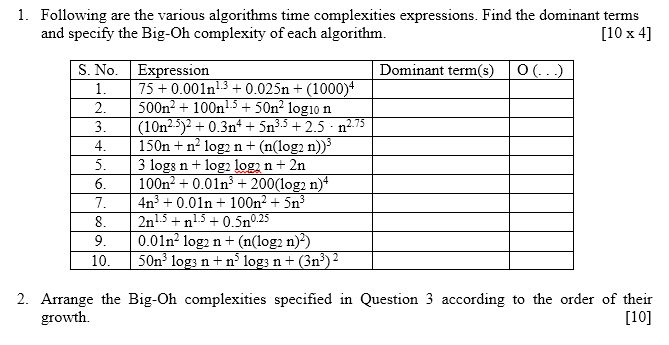
![4] Dominant term(s) O(...) S. No. Expression 1. 75 +0.001n1.3 + 0.025n+](https://dsd5zvtm8ll6.cloudfront.net/si.experts.images/questions/2024/09/66f3b209908ec_85666f3b208edc7a.jpg)
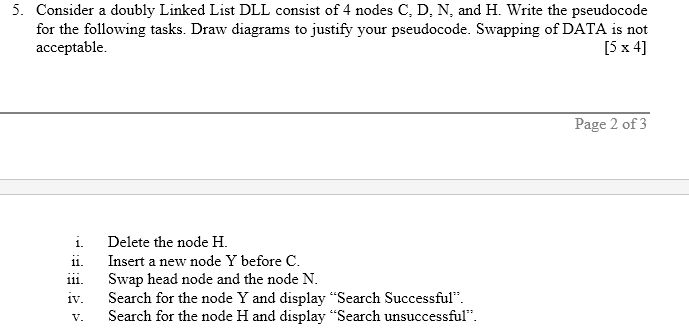
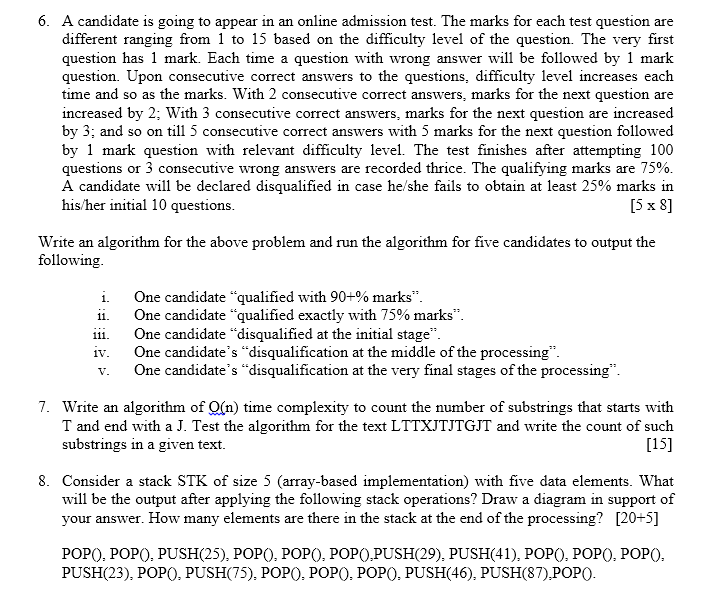
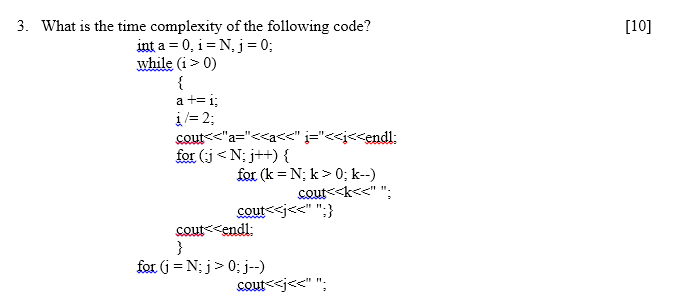
1. Following are the various algorithms time complexities expressions. Find the dominant terms and specify the Big-Oh complexity of each algorithm. [10 x 4] Dominant term(s) O(...) S. No. Expression 1. 75 +0.001n1.3 + 0.025n+ (1000)* 2. 500n2 + 100n15 + 50n- logion 3. (10n 5)2 + 0.3n+ + 5n3.5 +2.5. n2.75 4. 150n + n log2 n + (n(log2 n)) 5. 3 logs n + log2 log2 n + 2n 6. 100n + 0.01n + 200(log2 n) 7. 4n3 + 0.01n + 100n2 + 5n3 8. 2n15 + 1.3 + 0.5n0.25 9. 0.01n log2 n + (n(log2 n)) 10. 50n? log; n+ nlog3 n + (3n) 2 2. Arrange the Big-Oh complexities specified in Question 3 according to the order of their growth. [10] [10] 3. What is the time complexity of the following code? int a = 0.i=N. j = 0; while (i > 0) { a += i; i/= 2; cout0; k--) cout0:j--) cout
Step by Step Solution
There are 3 Steps involved in it

Get step-by-step solutions from verified subject matter experts
 Study Help