



Question: 1. For a sample of shipping documents selected from shipping records, trace each shipping documents to a transaction recorded in the sales journal. (1) [1]
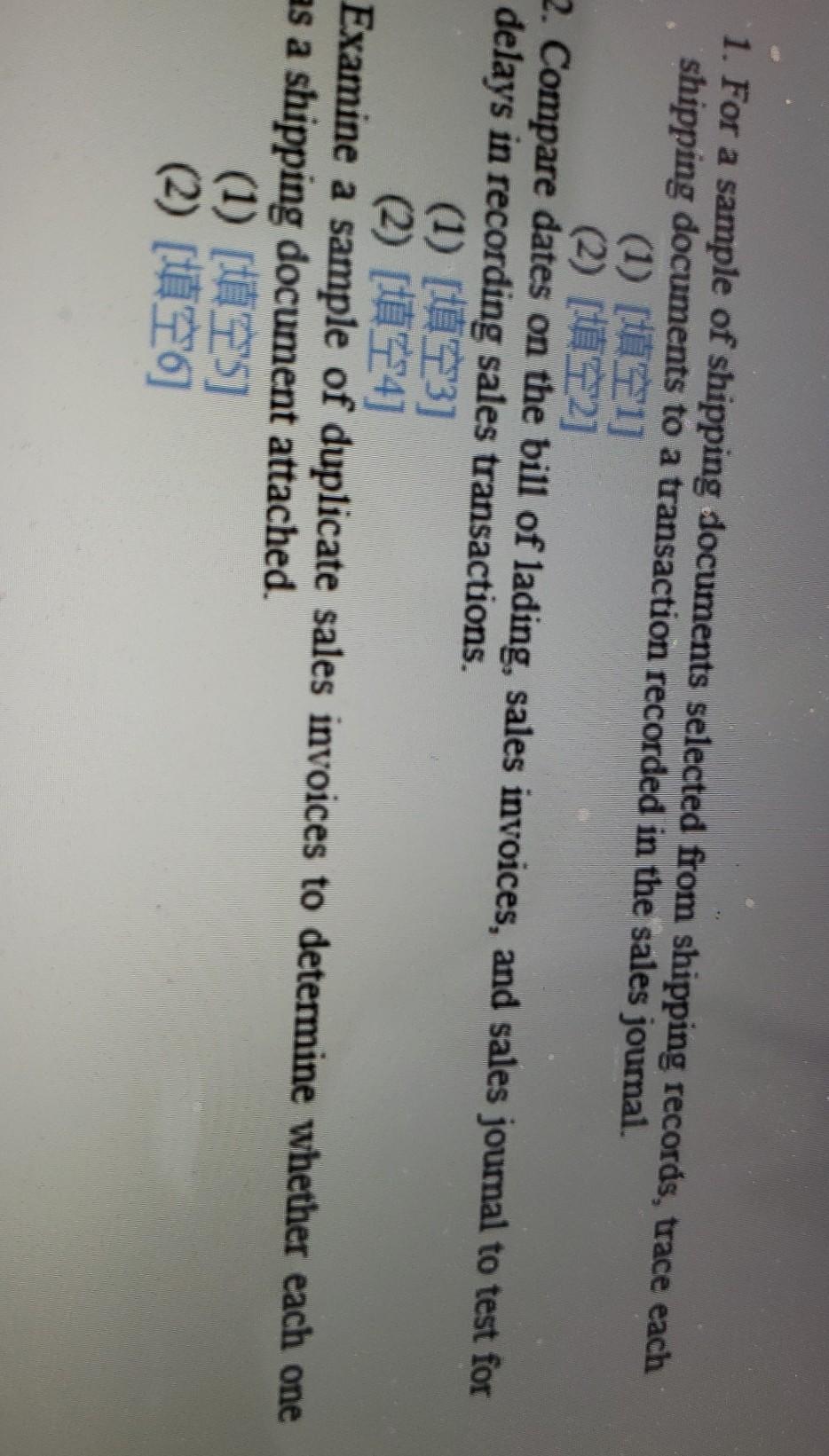
![(1) [1] (2) [2] 2. Compare dates on the bill of lading,](https://s3.amazonaws.com/si.experts.images/answers/2024/07/669e0783a4b57_643669e07830e947.jpg)
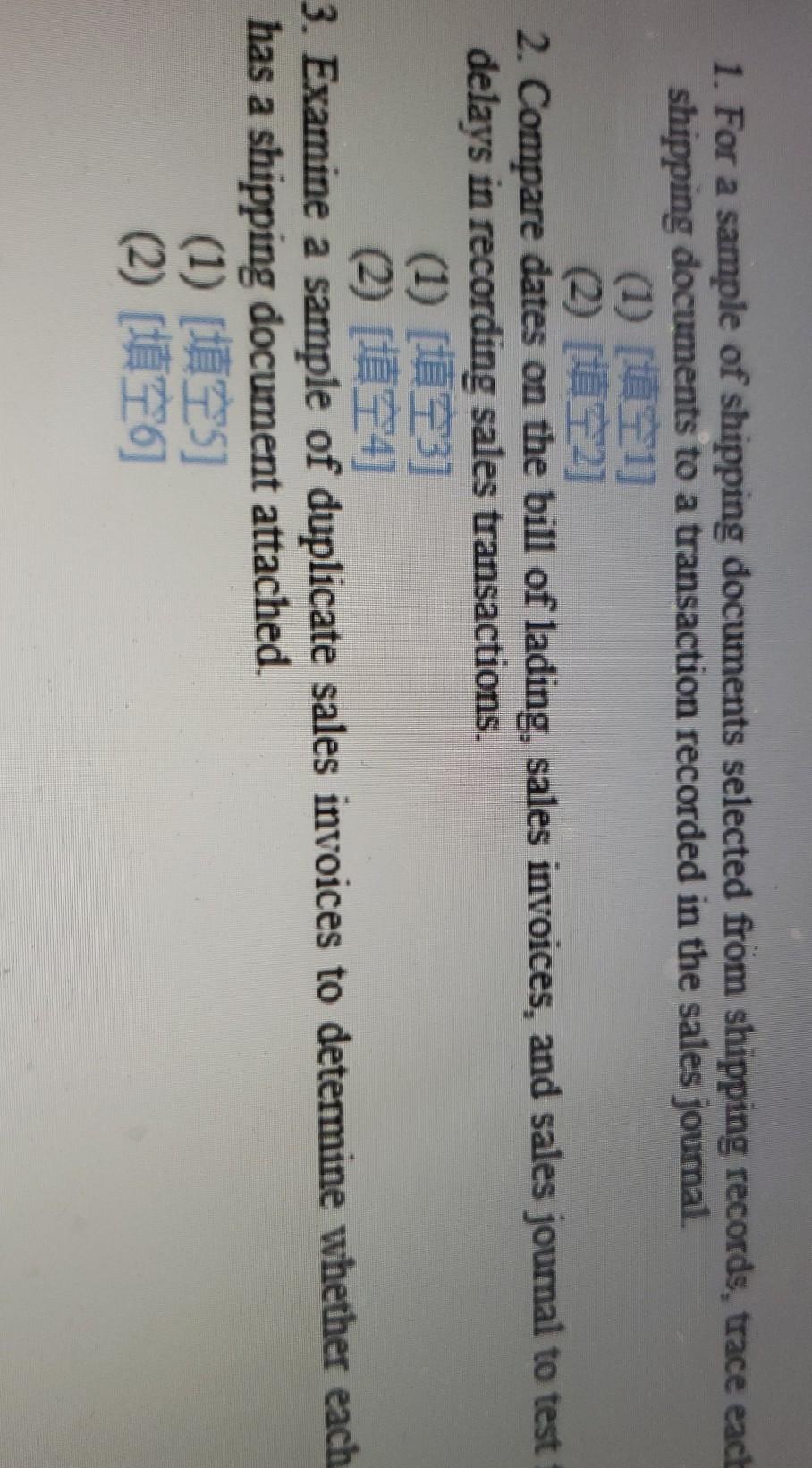
![transactions. (1) [13] (2) [14] Examine a sample of duplicate sales invoices](https://s3.amazonaws.com/si.experts.images/answers/2024/07/669e07855cec2_644669e0784c1527.jpg)
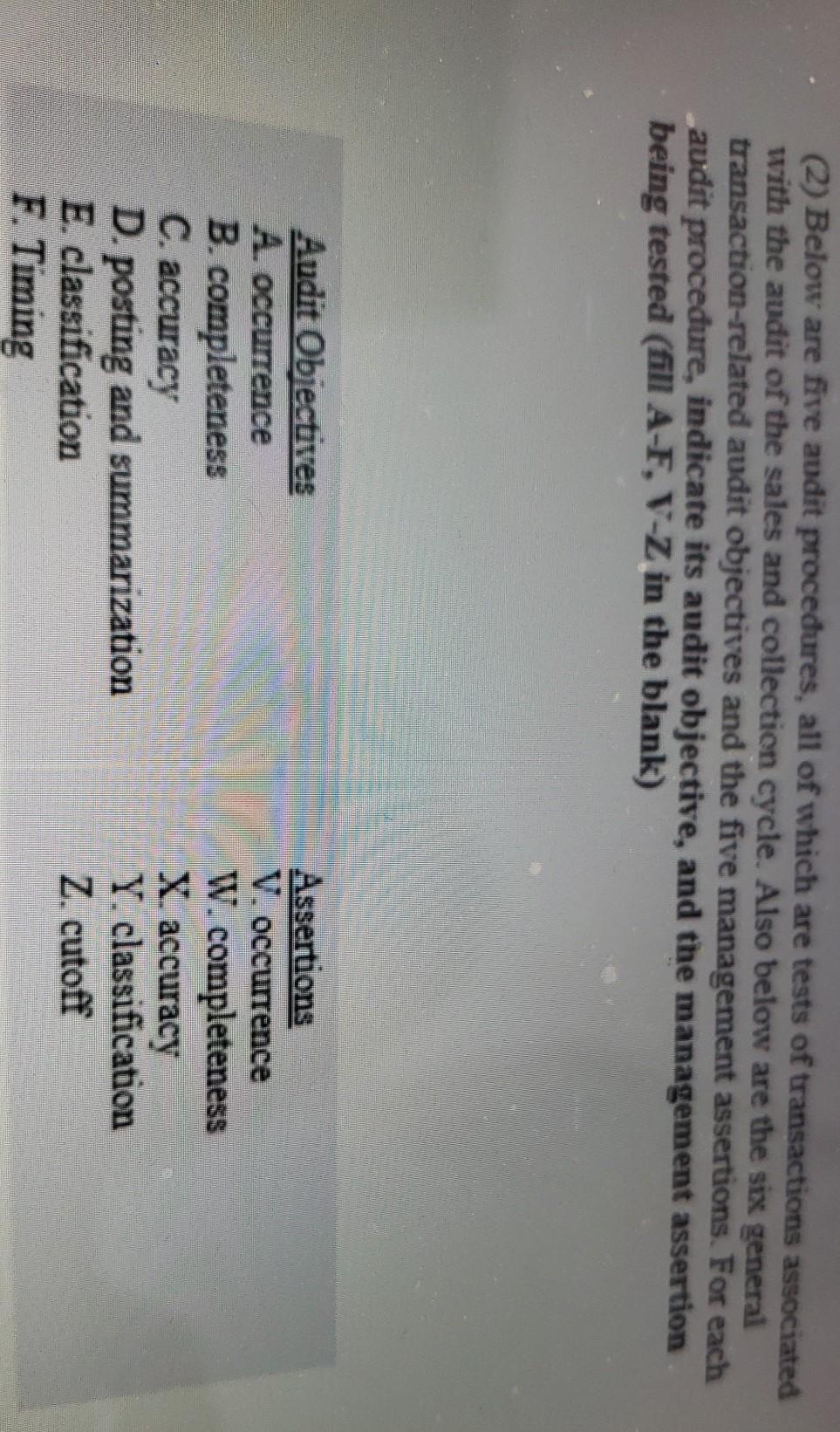
1. For a sample of shipping documents selected from shipping records, trace each shipping documents to a transaction recorded in the sales journal. (1) [1] (2) [2] 2. Compare dates on the bill of lading, sales invoices, and sales journal to test for delays in recording sales transactions. (1) [13] (2) [14] Examine a sample of duplicate sales invoices to determine whether each one as a shipping document attached. (1) [5] (2) [16] (2) Below are five audit procedures, all of which are tests of transactions associated with the audit of the sales and collection cycle. Also below are the six general transaction-related audit objectives and the five management assertions. For each audit procedure, indicate its audit objective, and the management assertion being tested (fill A-F, V-Z in the blank) Audit Objectives A occurrence B. completeness C. accuracy D. posting and summarization E. classification F. Timing Assertions V. occurrence W. completeness X accuracy Y. classification Z. cutoff (2) Below are five audit procedures, all of which are tests of transactions associated with the audit of the sales and collection cycle. Also below are the six general transaction-related audit objectives and the five management assertions. For esh audit procedure, indicate its audit objective, and the management assertion being tested (fill A-F, V-Z in the blank) Audit Obiectives A. occurrence B.completeness C. accuracy D. posting and summarization E. classification F. Timing Assertions V. occurrence W. completeness X. accuracy Y. classification Z. cutoff 1. For a sample of shipping documents selected from shipping records, trace each shipping documents to a transaction recorded in the sales journal. (1) [1] (2) [2] 2. Compare dates on the bill of lading, sales invoices, and sales journal to test delays in recording sales transactions. (1) [33] (2) [4] 3. Examine a sample of duplicate sales invoices to determine whether each has a shipping document attached. (1) [5] (2) [1] 4. Trace from a sample of prelistings of cash receipts to the cash receipts journal, testing for names, amounts, and dates. (1) [1] (2) 2] 5. Add all customer balances in the accounts receivable trial balance and agree the amount to the general ledger. (1) [13] (2) 34] 1. For a sample of shipping documents selected from shipping records, trace each shipping documents to a transaction recorded in the sales journal. (1) [1] (2) [2] 2. Compare dates on the bill of lading, sales invoices, and sales journal to test for delays in recording sales transactions. (1) [13] (2) [14] Examine a sample of duplicate sales invoices to determine whether each one as a shipping document attached. (1) [5] (2) [16] (2) Below are five audit procedures, all of which are tests of transactions associated with the audit of the sales and collection cycle. Also below are the six general transaction-related audit objectives and the five management assertions. For each audit procedure, indicate its audit objective, and the management assertion being tested (fill A-F, V-Z in the blank) Audit Objectives A occurrence B. completeness C. accuracy D. posting and summarization E. classification F. Timing Assertions V. occurrence W. completeness X accuracy Y. classification Z. cutoff (2) Below are five audit procedures, all of which are tests of transactions associated with the audit of the sales and collection cycle. Also below are the six general transaction-related audit objectives and the five management assertions. For esh audit procedure, indicate its audit objective, and the management assertion being tested (fill A-F, V-Z in the blank) Audit Obiectives A. occurrence B.completeness C. accuracy D. posting and summarization E. classification F. Timing Assertions V. occurrence W. completeness X. accuracy Y. classification Z. cutoff 1. For a sample of shipping documents selected from shipping records, trace each shipping documents to a transaction recorded in the sales journal. (1) [1] (2) [2] 2. Compare dates on the bill of lading, sales invoices, and sales journal to test delays in recording sales transactions. (1) [33] (2) [4] 3. Examine a sample of duplicate sales invoices to determine whether each has a shipping document attached. (1) [5] (2) [1] 4. Trace from a sample of prelistings of cash receipts to the cash receipts journal, testing for names, amounts, and dates. (1) [1] (2) 2] 5. Add all customer balances in the accounts receivable trial balance and agree the amount to the general ledger. (1) [13] (2) 34]
Step by Step Solution
There are 3 Steps involved in it

Get step-by-step solutions from verified subject matter experts