1.
Formulate the problem statement
2.
Define the main question of the research
3.
Outline research objectives
2.
Research Design (30 points)
1.
Select appropriate research design. Explain your selection.
2.
Describe the population you will focus on in your research
3.
Research Method (30 points)
1. Design either an experiment, or a structured interview schedule (not mo
than 5 questions/answers), or a focus group agenda. Please
remember, your research method has to align with your research
design.
2.
Answer the following question:
1.
How can you minimize bias in your results?
2.
How do you evaluate internal and external validity of the proposed
research method?
4.
Expected results (10 points)
1. Answer the following question: What do you expect to get as a result of your research question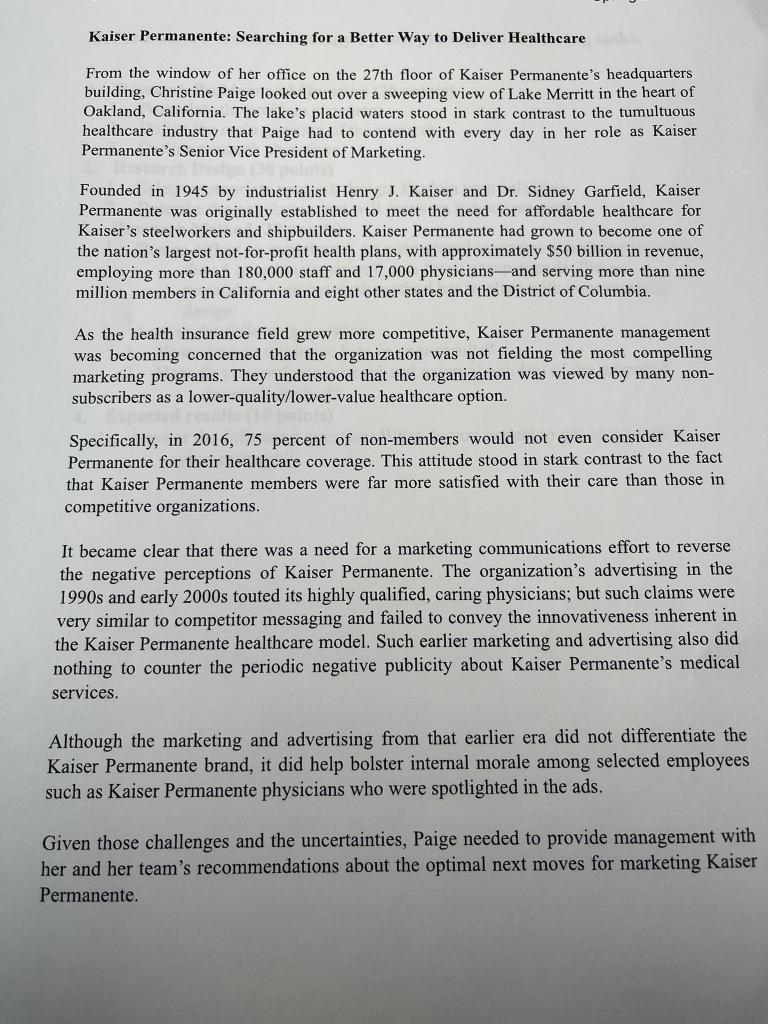
Kaiser Permanente: Searching for a Better Way to Deliver Healthcare From the window of her office on the 27th floor of Kaiser Permanente's headquarters building, Christine Paige looked out over a sweeping view of Lake Merritt in the heart of Oakland, California. The lake's placid waters stood in stark contrast to the tumultuous healthcare industry that Paige had to contend with every day in her role as Kaiser Permanente's Senior Vice President of Marketing. Founded in 1945 by industrialist Henry J. Kaiser and Dr. Sidney Garfield, Kaiser Permanente was originally established to meet the need for affordable healthcare for Kaiser's steelworkers and shipbuilders. Kaiser Permanente had grown to become one of the nation's largest not-for-profit health plans, with approximately $50 billion in revenue, employing more than 180,000 staff and 17,000 physicians and serving more than nine million members in California and eight other states and the District of Columbia. As the health insurance field grew more competitive, Kaiser Permanente management was becoming concerned that the organization was not fielding the most compelling marketing programs. They understood that the organization was viewed by many non- subscribers as a lower-quality/lower-value healthcare option. Specifically, in 2016, 75 percent of non-members would not even consider Kaiser Permane for their healthcare coverage. This attitude stood in stark contrast to the fact that Kaiser Permanente members were far more satisfied with their care than those in competitive organizations. It became clear that there was a need for a marketing communications effort to reverse the negative perceptions of Kaiser Permanente. The organization's advertising in the 1990s and early 2000s touted its highly qualified, caring physicians; but such claims were very similar to competitor messaging and failed to convey the innovativeness inherent in the Kaiser Permanente healthcare model. Such earlier marketing and advertising also did nothing to counter the periodic negative publicity about Kaiser Permanente's medical services. Although the marketing and advertising from that earlier era did not differentiate the Kaiser Permanente brand, it did help bolster internal morale among selected employees such as Kaiser Permanente physicians who were spotlighted in the ads. Given those challenges and the uncertainties, Paige needed to provide management with her and her team's recommendations about the optimal next moves for marketing Kaiser Permanente




