





Question: 1. Give a very specific example of one behavior EACH for each of the three categories of human behaviors in organizations. You must give three
1. Give a very specific example of one behavior
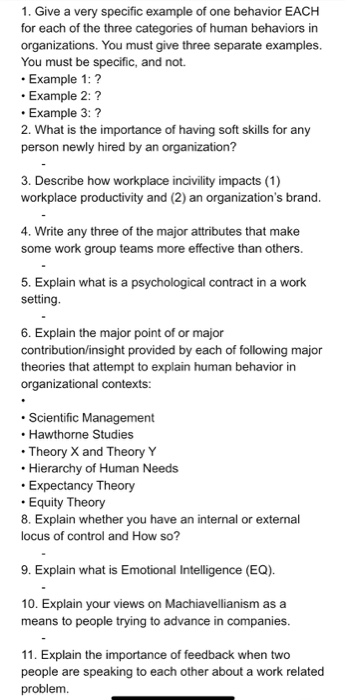
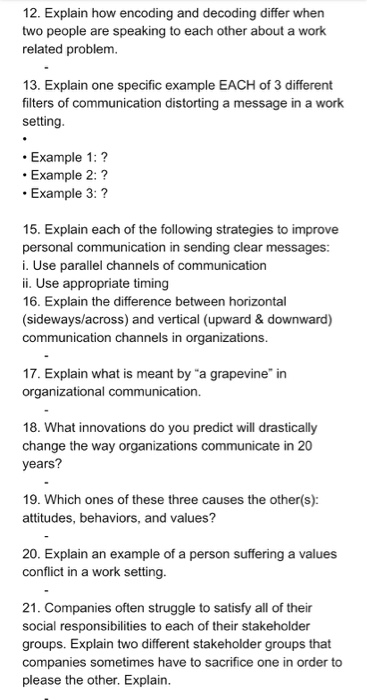
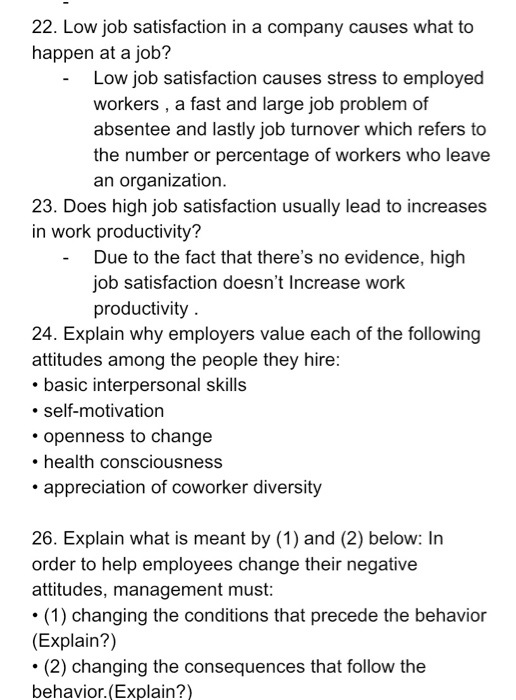
1. Give a very specific example of one behavior EACH for each of the three categories of human behaviors in organizations. You must give three separate examples. You must be specific, and not. Example 1: ? Example 2: ? Example 3: ? 2. What is the importance of having soft skills for any person newly hired by an organization? 3. Describe how workplace incivility impacts (1) workplace productivity and (2) an organization's brand, 4. Write any three of the major attributes that make some work group teams more effective than others. 5. Explain what is a psychological contract in a work setting. 6. Explain the major point of or major contribution/insight provided by each of following major theories that attempt to explain human behavior in organizational contexts: Scientific Management Hawthorne Studies Theory X and Theory Y Hierarchy of Human Needs Expectancy Theory Equity Theory 8. Explain whether you have an internal or external locus of control and How so? 9. Explain what is Emotional Intelligence (EQ). 10. Explain your views on Machiavellianism as a means to people trying to advance in companies. 11. Explain the importance of feedback when two people are speaking to each other about a work related problem. 12. Explain how encoding and decoding differ when two people are speaking to each other about a work related problem. 13. Explain one specific example EACH of 3 different filters of communication distorting a message in a work setting Example 1: ? Example 2: ? Example 3: ? 15. Explain each of the following strategies to improve personal communication in sending clear messages: i. Use parallel channels of communication ii. Use appropriate timing 16. Explain the difference between horizontal (sideways/across) and vertical (upward & downward) communication channels in organizations. 17. Explain what is meant by "a grapevine in organizational communication. 18. What innovations do you predict will drastically change the way organizations communicate in 20 years? 19. Which ones of these three causes the other(s): attitudes, behaviors, and values? 20. Explain an example of a person suffering a values conflict in a work setting. 21. Companies often struggle to satisfy all of their social responsibilities to each of their stakeholder groups. Explain two different stakeholder groups that companies sometimes have to sacrifice one in order to please the other. Explain. 22. Low job satisfaction in a company causes what to happen at a job? Low job satisfaction causes stress to employed workers, a fast and large job problem of absentee and lastly job turnover which refers to the number or percentage of workers who leave an organization. 23. Does high job satisfaction usually lead to increases in work productivity? Due to the fact that there's no evidence, high job satisfaction doesn't Increase work productivity 24. Explain why employers value each of the following attitudes among the people they hire: basic interpersonal skills self-motivation openness to change health consciousness appreciation of coworker diversity 26. Explain what is meant by (1) and (2) below: In order to help employees change their negative attitudes, management must: (1) changing the conditions that precede the behavior (Explain?) (2) changing the consequences that follow the behavior. (Explain?) 1. Give a very specific example of one behavior EACH for each of the three categories of human behaviors in organizations. You must give three separate examples. You must be specific, and not. Example 1: ? Example 2: ? Example 3: ? 2. What is the importance of having soft skills for any person newly hired by an organization? 3. Describe how workplace incivility impacts (1) workplace productivity and (2) an organization's brand, 4. Write any three of the major attributes that make some work group teams more effective than others. 5. Explain what is a psychological contract in a work setting. 6. Explain the major point of or major contribution/insight provided by each of following major theories that attempt to explain human behavior in organizational contexts: Scientific Management Hawthorne Studies Theory X and Theory Y Hierarchy of Human Needs Expectancy Theory Equity Theory 8. Explain whether you have an internal or external locus of control and How so? 9. Explain what is Emotional Intelligence (EQ). 10. Explain your views on Machiavellianism as a means to people trying to advance in companies. 11. Explain the importance of feedback when two people are speaking to each other about a work related problem. 12. Explain how encoding and decoding differ when two people are speaking to each other about a work related problem. 13. Explain one specific example EACH of 3 different filters of communication distorting a message in a work setting Example 1: ? Example 2: ? Example 3: ? 15. Explain each of the following strategies to improve personal communication in sending clear messages: i. Use parallel channels of communication ii. Use appropriate timing 16. Explain the difference between horizontal (sideways/across) and vertical (upward & downward) communication channels in organizations. 17. Explain what is meant by "a grapevine in organizational communication. 18. What innovations do you predict will drastically change the way organizations communicate in 20 years? 19. Which ones of these three causes the other(s): attitudes, behaviors, and values? 20. Explain an example of a person suffering a values conflict in a work setting. 21. Companies often struggle to satisfy all of their social responsibilities to each of their stakeholder groups. Explain two different stakeholder groups that companies sometimes have to sacrifice one in order to please the other. Explain. 22. Low job satisfaction in a company causes what to happen at a job? Low job satisfaction causes stress to employed workers, a fast and large job problem of absentee and lastly job turnover which refers to the number or percentage of workers who leave an organization. 23. Does high job satisfaction usually lead to increases in work productivity? Due to the fact that there's no evidence, high job satisfaction doesn't Increase work productivity 24. Explain why employers value each of the following attitudes among the people they hire: basic interpersonal skills self-motivation openness to change health consciousness appreciation of coworker diversity 26. Explain what is meant by (1) and (2) below: In order to help employees change their negative attitudes, management must: (1) changing the conditions that precede the behavior (Explain?) (2) changing the consequences that follow the behavior. (Explain?)
Step by Step Solution

There are 3 Steps involved in it

1 Expert Approved Answer
Step: 1 Unlock blur-text-image

Question Has Been Solved by an Expert!

Get step-by-step solutions from verified subject matter experts

Step: 2 Unlock
Step: 3 Unlock

Students Have Also Explored These Related General Management Questions!