







Question: 1. How can the topic be defined succinctly and accurately for someone unfamiliar? 2. In what ways is the topic worth knowing about? 3. What
1. How can the topic be defined succinctly and accurately for someone unfamiliar?
2. In what ways is the topic worth knowing about?
3. What examples or cases demonstrate the topic worth knowing about?
Please answer in around 100 words each.
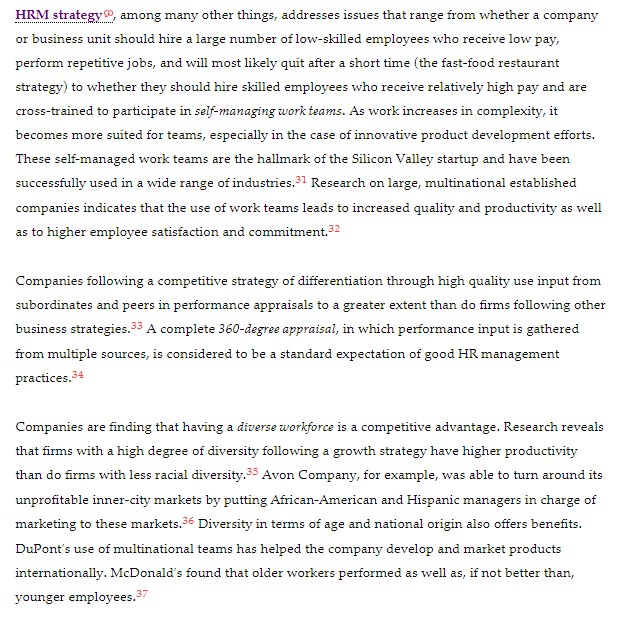
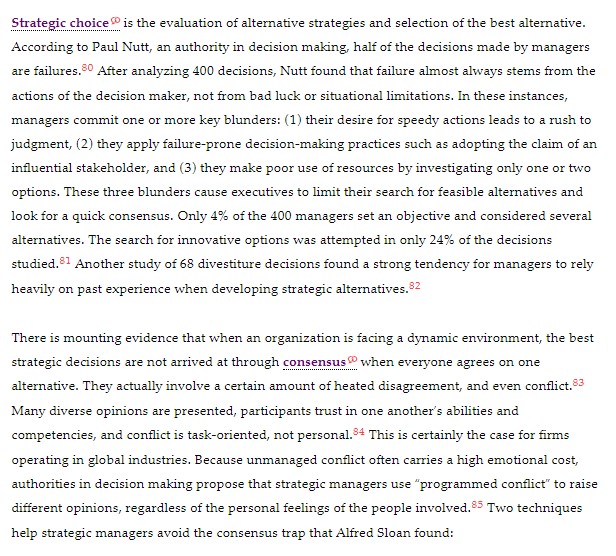
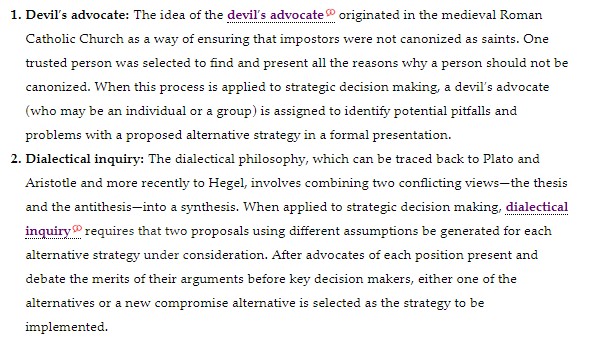
Logistics strategy deals with the flow of products into and out of the manufacturing process. Three trends related to this strategy are evident: centralization, outsourcing, and the use of the Internet. To gain logistical synergies across business units, corporations began centralizing logistics in the headquarters group. This centralized logistics group usually contains specialists with expertise in different transportation modes such as rail or trucking. They work to aggregate shipping volumes across the entire corporation to gain better contracts with shippers. Companies such as Georgia-Pacific, Marriott, and Union Carbide view the logistics function as an important way to differentiate themselves from the competition, to add value, and to reduce costs. In the past few years, a diverse set of firms from around the world have moved quickly on the logistics front pushed by Amazon's ability to provide same-day service-a logistical feat in business. Most providers cannot match Amazon's efficiency (a result of a massive investment in logistics) and have still had to create complex systems to match rising customer expectations. Amazon changed the whole game by introducing one-hour delivery in major American cities and even a series of Wi-Fi-connected buttons that allow consumers to simply push to re-order select products. 30 1. Devil's advocate: The idea of the devil's advocate originated in the medieval Roman Catholic Church as a way of ensuring that impostors were not canonized as saints. One trusted person was selected to find and present all the reasons why a person should not be canonized. When this process is applied to strategic decision making, a devil's advocate (who may be an individual or a group) is assigned to identify potential pitfalls and problems with a proposed alternative strategy in a formal presentation. 2. Dialectical inquiry: The dialectical philosophy, which can be traced back to Plato and Aristotle and more recently to Hegel, involves combining two conflicting views - the thesis and the antithesis-into a synthesis. When applied to strategic decision making, dialectical inquiry requires that two proposals using different assumptions be generated for each alternative strategy under consideration. After advocates of each position present and debate the merits of their arguments before key decision makers, either one of the alternatives or a new compromise alternative is selected as the strategy to be implemented. perform repetitive jobs, and will most likely quit after a short time (the fast-food restaurant strategy) to whether they should hire skilled employees who receive relatively high pay and are cross-trained to participate in self-managing work teams. As work increases in complexity, it becomes more suited for teams, especially in the case of innovative product development efforts. These self-managed work teams are the hallmark of the Silicon Valley startup and have been successfully used in a wide range of industries. 31 Research on large, multinational established companies indicates that the use of work teams leads to increased quality and productivity as well as to higher employee satisfaction and commitment. 32 Companies following a competitive strategy of differentiation through high quality use input from subordinates and peers in performance appraisals to a greater extent than do firms following other business strategies. 33A complete 360-degree appraisal, in which performance input is gathered from multiple sources, is considered to be a standard expectation of good HR management practices. 34 Companies are finding that having a diverse workforce is a competitive advantage. Research reveals that firms with a high degree of diversity following a growth strategy have higher productivity than do firms with less racial diversity. 35 Avon Company, for example, was able to turn around its unprofitable inner-city markets by putting African-American and Hispanic managers in charge of marketing to these markets. 36 Diversity in terms of age and national origin also offers benefits. DuPont's use of multinational teams has helped the company develop and market products internationally. McDonald's found that older workers performed as well as, if not better than, younger employees. 37 R\&D strategy @0 deals with product and process innovation and improvement. It also deals with the appropriate mix of different types of R\&D (basic, product, or process) and with the question of how new technology should be accessed-through internal development, external acquisition, or strategic alliances. RIM has floundered by going back and forth among these approaches rather than choosing an approach and investing their resources. One of the R&D choices is to be either a technological leader &, pioneering an innovation, or a Nike, Inc. has utilized a leader R&D functional strategy to achieve a differentiation competitive advantage. Nike spends more than most in the industry on R\&D to differentiate the performance of its athletic shoes from that of its competitors. As a result, its products have become the favorite of serious athletes. This happened despite the fact that Nike simultaneously pursues a low-cost manufacturing approach. An example of the use of the follower R\&D functional strategy to achieve a low-cost competitive advantage is Dean Foods Company, maker of such brands as Dairy Pure, Land O'Lakes, and TruMoo. An increasing number of companies are working with their suppliers to help them keep up with changing technology. They are beginning to realize that a firm cannot be competitive technologically only through internal development. For example, Chrysler Corporation's skillful use of parts suppliers to design everything from car seats to drive shafts has enabled it to spend consistently less money than its competitors to develop new car models. Using strategic technology alliances is one way to combine the R\&D capabilities of two companies. One UK study found that 93% of UK auto assemblers and component manufacturers use their suppliers as technology suppliers. 19 Financial strategy examines the financial implications of corporate and business-level strategic options and identifies the best financial course of action. It can also provide competitive advantage through a lower cost of funds and a flexible ability to raise capital to support a business strategy. Financial strategy usually attempts to maximize the financial value of a firm. The trade-off between achieving the desired debt-to-equity ratio and relying on internal long-term financing via cash flow is a key issue in financial strategy. Many small-and medium-sized familyowned companies try to avoid all external sources of funds in order to avoid outside entanglements and to keep control of the company within the family. Most large publicly held firms have long-term debt and keep a large amount of money in cash and short-term investments. One of these is Apple Inc., which had more than a US $215 billion cash hoard by early 2016.9 Many financial analysts believe, however, that only by financing through long-term debt can a corporation use financial leverage to boost earnings per share-thus raising stock price and the overall value of the company. Research indicates that higher debt levels not only deter takeover by other firms (by making the company less attractive) but also lead to improved productivity and improved cash flows by forcing management to focus on core businesses. 10 High debt can be a problem, however, when the economy or the company falters and a company's cash flow drops. Research reveals that a firm's financial strategy is influenced by its corporate diversification strategy. Equity financing, for example, is preferred for related diversification, whereas debt financing is preferred for unrelated diversification. 11 Strategic choice is the evaluation of alternative strategies and selection of the best alternative. According to Paul Nutt, an authority in decision making, half of the decisions made by managers are failures. 80 After analyzing 400 decisions, Nutt found that failure almost always stems from the actions of the decision maker, not from bad luck or situational limitations. In these instances, managers commit one or more key blunders: (1) their desire for speedy actions leads to a rush to judgment, (2) they apply failure-prone decision-making practices such as adopting the claim of an influential stakeholder, and (3) they make poor use of resources by investigating only one or two options. These three blunders cause executives to limit their search for feasible alternatives and look for a quick consensus. Only 4% of the 400 managers set an objective and considered several alternatives. The search for innovative options was attempted in only 24% of the decisions studied. 81 Another study of 68 divestiture decisions found a strong tendency for managers to rely heavily on past experience when developing strategic alternatives. 82 There is mounting evidence that when an organization is facing a dynamic environment, the best strategic decisions are not arrived at through consensus 0 when everyone agrees on one alternative. They actually involve a certain amount of heated disagreement, and even conflict. 83 Many diverse opinions are presented, participants trust in one another's abilities and competencies, and conflict is task-oriented, not personal. 84 This is certainly the case for firms operating in global industries. Because unmanaged conflict often carries a high emotional cost, authorities in decision making propose that strategic managers use "programmed conflict" to raise different opinions, regardless of the personal feelings of the people involved. 85 Two techniques help strategic managers avoid the consensus trap that Alfred Sloan found: Functional strategy is the approach a functional area takes to achieve corporate and business unit objectives and strategies by maximizing resource productivity. It is concerned with developing and nurturing a distinctive competence to provide a company or business unit with a competitive advantage. Just as a multidivisional corporation has several business units, each with its own business strategy, each business unit has its own set of departments, each with its own functional strategy. The orientation of a functional strategy is dictated by its parent business unit's strategy. 1 For example, a business unit following a competitive strategy of differentiation through high quality might require a manufacturing functional strategy that emphasizes expensive quality assurance processes over cheaper, high-volume production; a human resource functional strategy that emphasizes the hiring and training of a highly skilled, but costly, workforce; and a marketing functional strategy that emphasizes distribution channel "pull," using advertising to increase consumer demand, over "push," using promotional allowances to retailers. If a business unit were to follow a low-cost competitive strategy, however, a different set of functional strategies would be needed to support the business strategy. Just as competitive strategies may need to vary from one region of the world to another, functional strategies may need to vary from region to region. When Mr. Donut expanded into Japan, for example, it had to market donuts not as breakfast, but as snack food. Because the Japanese had no breakfast coffee-and-donut custom, they preferred to eat the donuts in the afternoon or evening. Mr. Donut restaurants were thus located near railroad stations and supermarkets. All signs were in English to appeal to the Western interests of the Japanese
Step by Step Solution
There are 3 Steps involved in it

Get step-by-step solutions from verified subject matter experts
 Study Help