







Question: 1. Ideal standards do not allow for machine breakdowns and other normal inefficiencies. True False 2. Jeffs Corporation is developing direct labor standards. The basic
1. Ideal standards do not allow for machine breakdowns and other normal inefficiencies.
True
False
2. Jeffs Corporation is developing direct labor standards. The basic direct labor wage rate is $14.00 per hour. Employment taxes are 11% of the basic wage rate. Fringe benefits are $3.24 per direct labor-hour. The standard rate per direct labor-hour should be:
$14.00 $9.22 $4.78 $18.78
3. A manufacturing cycle efficiency (MCE) of greater than one is impossible.
True False
4. Matt Company uses a standard cost system. Information for raw materials for Product RBI for the month of October follows:
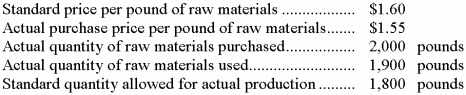
What is the materials purchase price variance?
$90 favorable $90 unfavorable $100 favorable $100 unfavorable
5. Inspection Time is generally considered to be value-added time.
True False
6. Magno Cereal Corporation uses a standard cost system to collect costs related to the production of its "crunchy pickle" cereal. The pickle (materials) standards for each batch of cereal produced are 1.4 pounds of pickles at a standard cost of $3.00 per pound. During the month of August, Magno purchased 78,000 pounds of pounds at a total cost of $253,500. Magno used all of these pickles to produce 60,000 batches of cereal. What is Magno's materials quantity variance for the month of August?
$1,500 unfavorable $18,000 favorable $19,500 unfavorable $54,000 unfavorable
7. The following labor standards have been established for a particular product

The following data pertain to operations concerning the product for the last month:

What is the labor rate variance for the month?
$687 F $2,106 F $1,410 F $2,106 U
8. Warp Manufacturing Corporation uses a standard cost system to collect costs related to the production of its ski lift chairs. Warp uses machine hours as an overhead base. The variable overhead standards for each chair are 1.2 machine hours at a standard cost of $18 per hour. During the month of September, Warp incurred 34,000 machine hours in the production of 32,000 ski lift chairs. The total variable overhead cost was $649,400. What is Warp's variable overhead spending variance for the month of September?
$37,400 unfavorable
$41,800 favorable $79,200 favorable $84,040 favorable
Step by Step Solution
There are 3 Steps involved in it

Get step-by-step solutions from verified subject matter experts
 Study Help