



Question: 1. In a command economy, the either makes most economic decisions itself or at least strongly inuences how the decisions are made. A. government B.
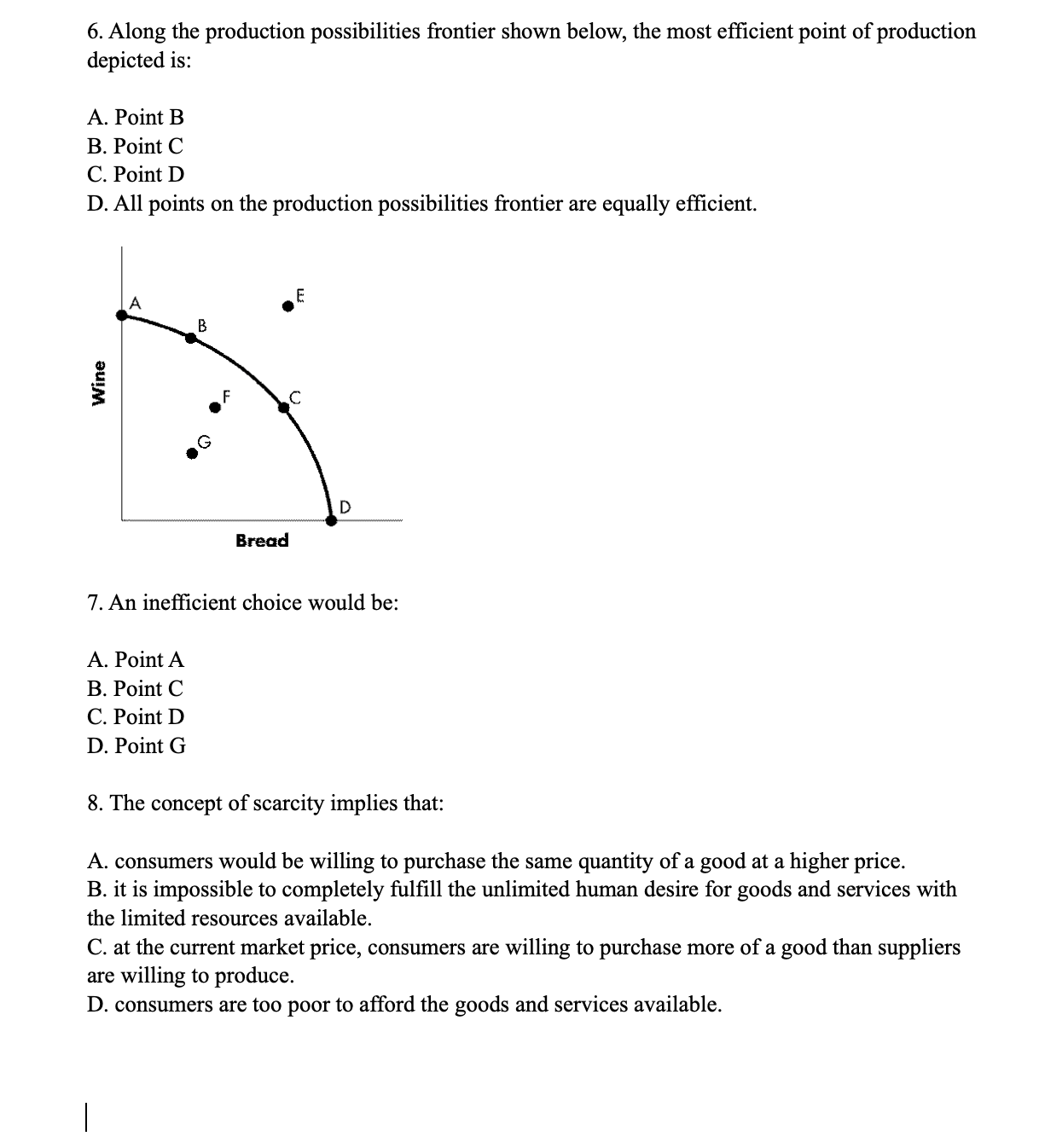
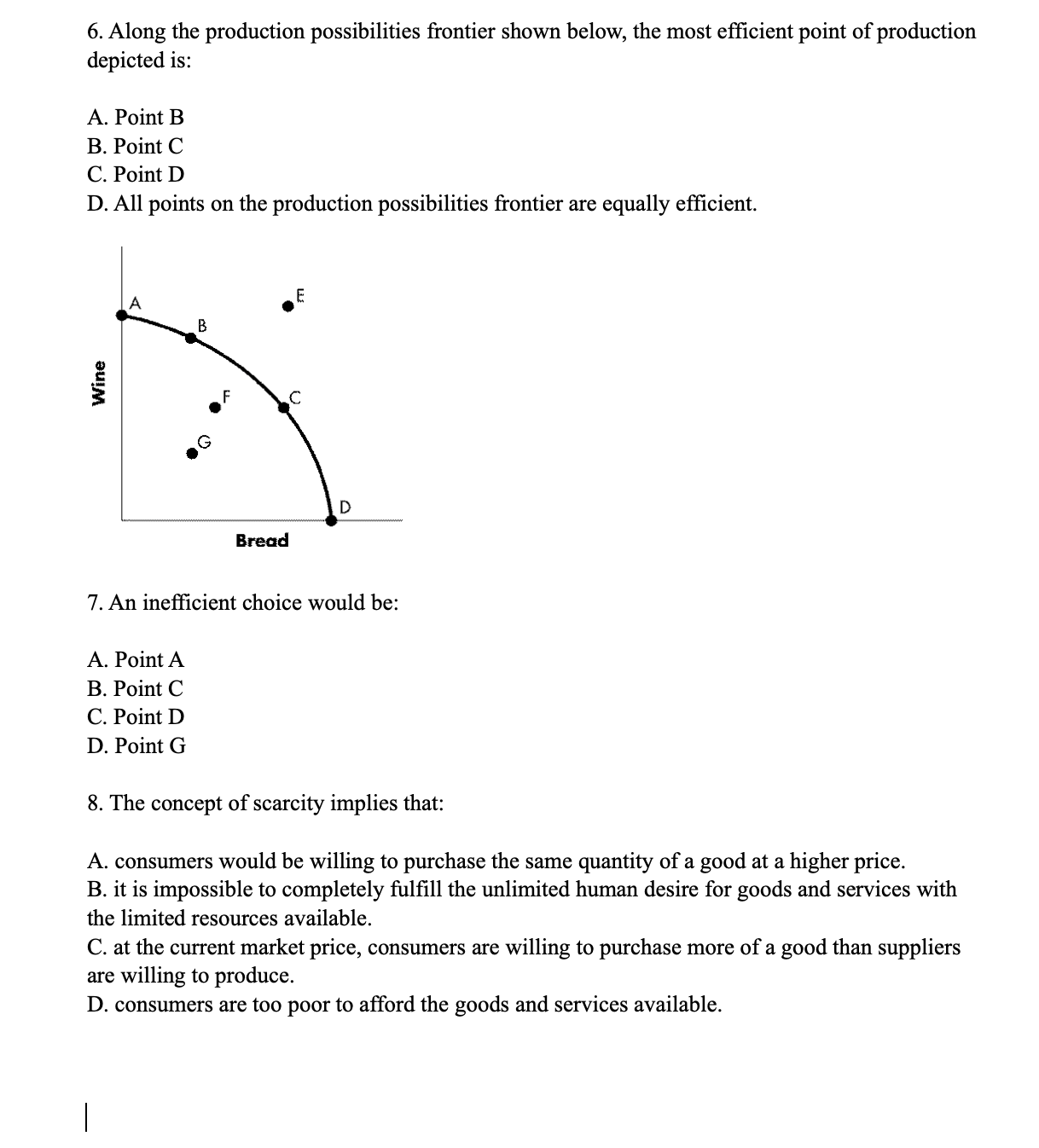
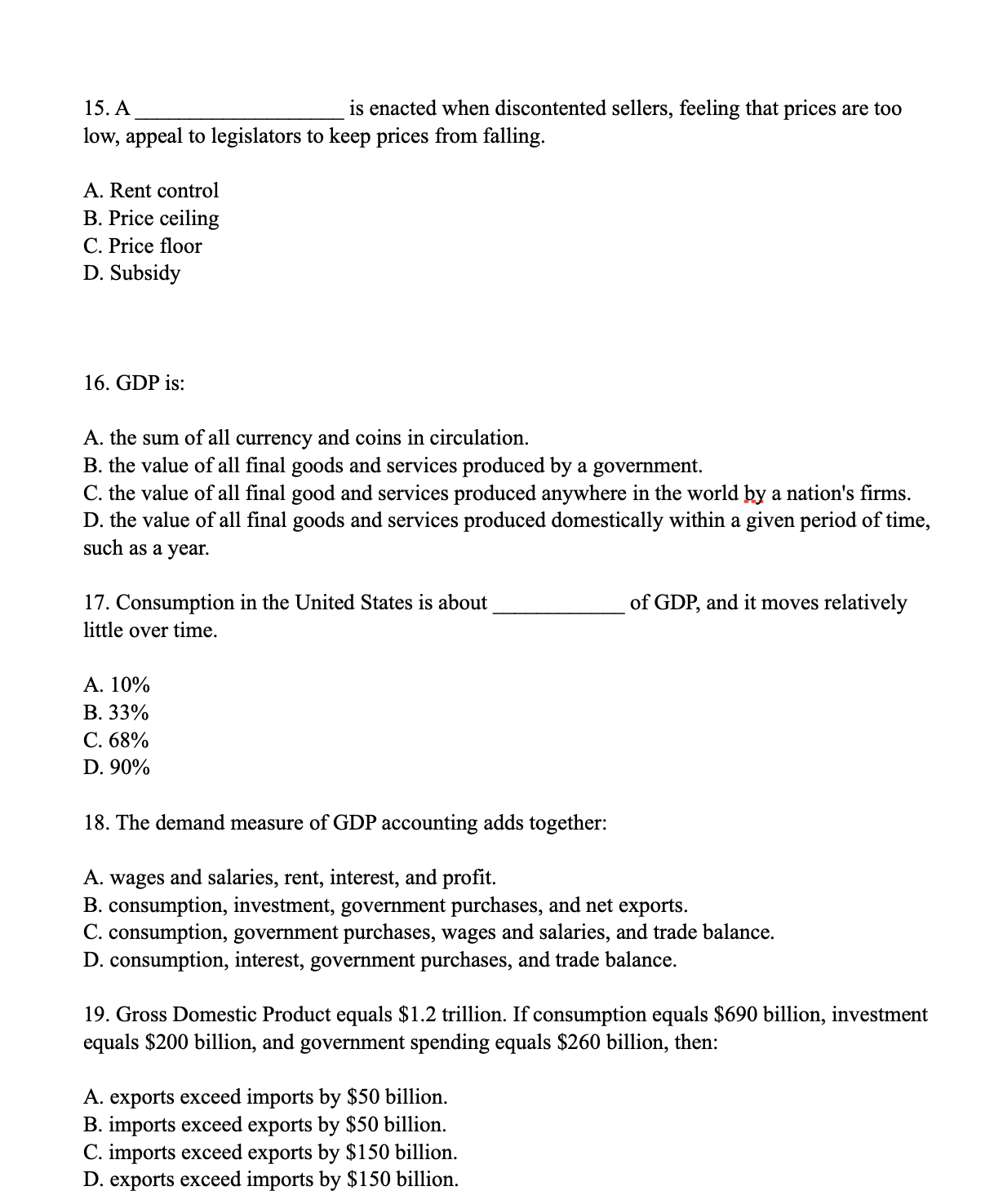
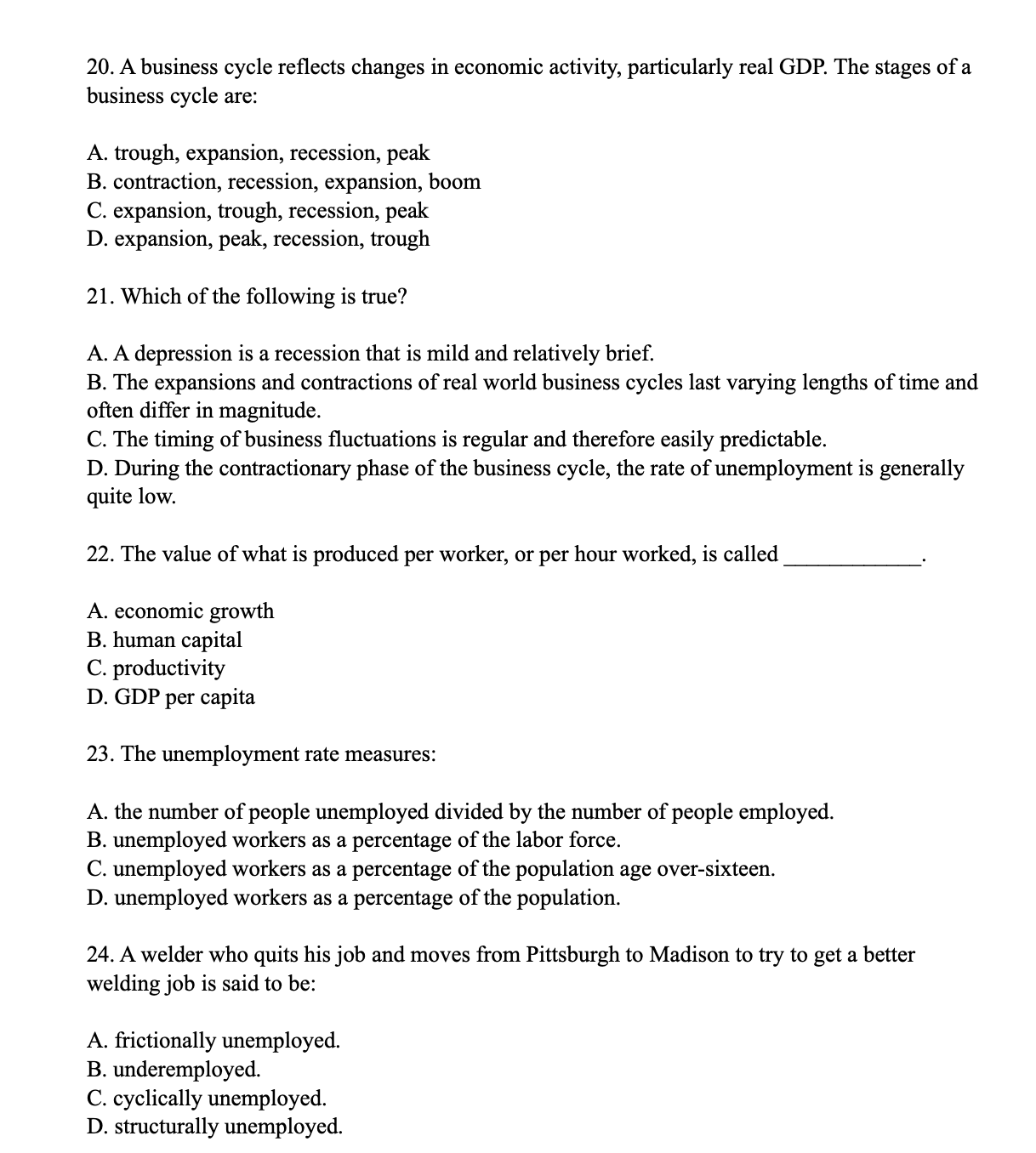
1. In a command economy, the either makes most economic decisions itself or at least strongly inuences how the decisions are made. A. government B. market C. rm D. business sector 2. In a , most economic decisions about what to produce, how to produce it, and for whom to produce it are made by buyers and sellers. A. marketoriented economy B. macroeconomy C. microsqonomy D. command economy 3. Macroeconomics primarily examines: A. the behaviour of individual households and rms. B. how prices are determined within individual markets. C. broad issues such as national output, employment and ination. D. the output levels that maximize the prots of business rms 4. In a market-oriented economy, the amount of a good that is produced is primarily decided by the interaction of: A. all consumers. B. buyers and sellers. C. producers and input suppliers. D. producers and government planning committees. 5. Philosophers draw a distinction between positive statements, which describe the world as it is, and s, which describe how the world should be. A. normative statement B. budget constraint C. trade-off D. opportunity cost 6. Along the production possibilities frontier shown below, the most efficient point of production depicted is: A. Point B B. Point C C. Point D D. All points on the production possibilities frontier are equally efficient. m A B Wine G Bread 7. An inefficient choice would be: A. Point A B. Point C C. Point D D. Point G 8. The concept of scarcity implies that: A. consumers would be willing to purchase the same quantity of a good at a higher price. B. it is impossible to completely fulfill the unlimited human desire for goods and services with the limited resources available. C. at the current market price, consumers are willing to purchase more of a good than suppliers are willing to produce. D. consumers are too poor to afford the goods and services available.9. Most choices involve , which involves comparing the benets and costs of choosing a little more or a little less of a good. A. utility B. marginal analysis C. the budget constraint D. consumption 10. The downward slope of the demand curve again illustrates the pattern that as rises, decreases. A. quantity demanded, price B. quantity supplied, quantity demanded C. price, quantity demanded D. price, quantity supplied 11. The term "ceteris paribus" means that: A. everything is variable. B. all variables except those specied are held constant. C. no one knows which variables will change and which will remain constant. D. what is true for the individual is not necessarily true for the whole. 12. When quantity demanded decreases in response to a change in price: A. the demand curve shifts to the right. B. the demand curve shifts to the left. C. there is a movement down along the demand curve. D. there is a movement up along the demand curve. 13. If new manufacturers enter the computer industry, then (ceteris paribus): A. the supply curve shifts to the left. B. the supply curve shifts to the right. C. the demand curve shifts to the left. D. some established manufacturers must exit the industry. 14. According to the law of supply: A. there is a direct relationship between price and the quantity supplied. B. there is an inverse relationship between price and the quantity supplied. C. there is a direct relationship between price and quantity demanded. D. there is an inverse relationship between price and quantity demanded. 15. A is enacted when discontented sellers, feeling that prices are too low, appeal to legislators to keep prices from falling. A. Rent control B. Price ceiling C. Price oor D. Subsidy 16. GDP is: A. the sum of all currency and coins in circulation. B. the value of all nal goods and services produced by a government. C. the value of all nal good and services produced anywhere in the world by a nation's rms. D. the value of all nal goods and services produced domestically within a given period of time, such as a year. 1?. Consumption in the United States is about of GDP, and it moves relatively little over time. A. 10% B. 33% C. 68% D. 90% 18. The demand measure of GDP accounting adds together: A. wages and salaries, rent, interest, and prot. B. consumption, investment, government purchases, and net exports. C. consumption, government purchases, wages and salaries, and trade balance. D. consumption, interest, government purchases, and trade balance. 19. Gross Domestic Product equals $1.2 trillion. If consumption equals $690 billion, investment equals $200 billion, and government spending equals $260 billion, then: A. exports exceed imports by $50 billion. B. imports exceed exports by $50 billion. C. imports exceed exports by $150 billion. D. exports exceed imports by $150 billion. 20. Abusiness cycle reects changes in economic activity, particularly real GDP. The stages of a business cycle are: A. trough, expansion, recession, peak B. contraction, recession, expansion, boom C. expansion, trough, recession, peak D. expansion, peak, recession, trough 21. Which of the following is true? A. A depression is a recession that is mild and relatively brief. B. The expansions and contractions of real world business cycles last varying lengths of time and often differ in magnitude. C. The timing of business uctuations is regular and therefore easily predictable. D. During the contractionary phase of the business cycle, the rate of unemployment is generally quite low. 22. The value of what is produced per worker, or per hour worked, is called A. economic growth B. human capital C. productivity D. GDP per capita 23. The unemployment rate measures: A. the number of people unemployed divided by the number of people employed. B. unemployed workers as a percentage of the labor force. C. unemployed workers as a percentage of the population age over-sixteen. D. unemployed workers as a percentage of the population. 24. A welder who quits his job and moves from Pittsburgh to Madison to try to get a better welding job is said to be: A. frictionally unemployed. B. underemployed. C. cyclically unemployed. D. structurally unemployed
Step by Step Solution
There are 3 Steps involved in it

Get step-by-step solutions from verified subject matter experts