







Question: 1 In your reading for this week, Jon Lewis notes that in making Easy Rider, Dennis Hopper borrowed from a number of film techniques, including
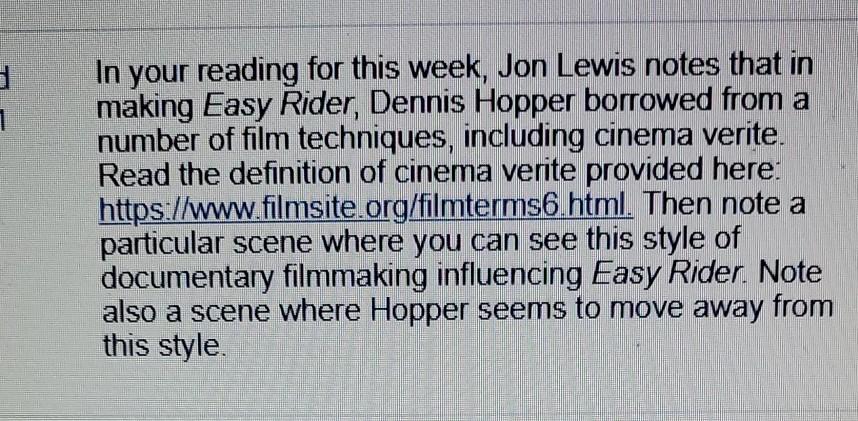
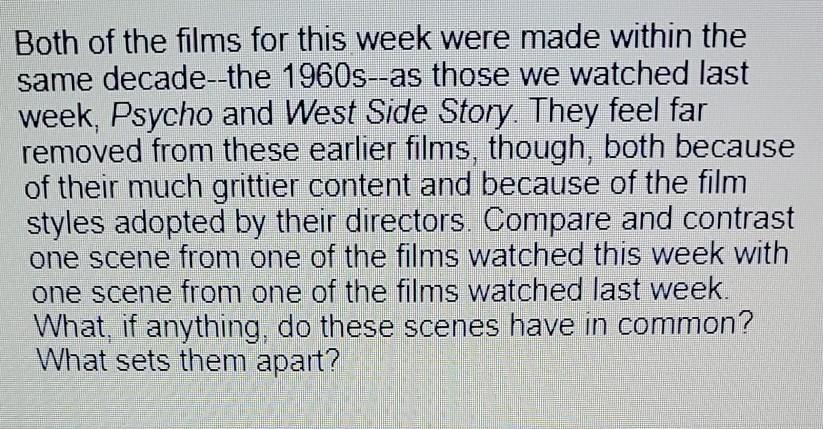
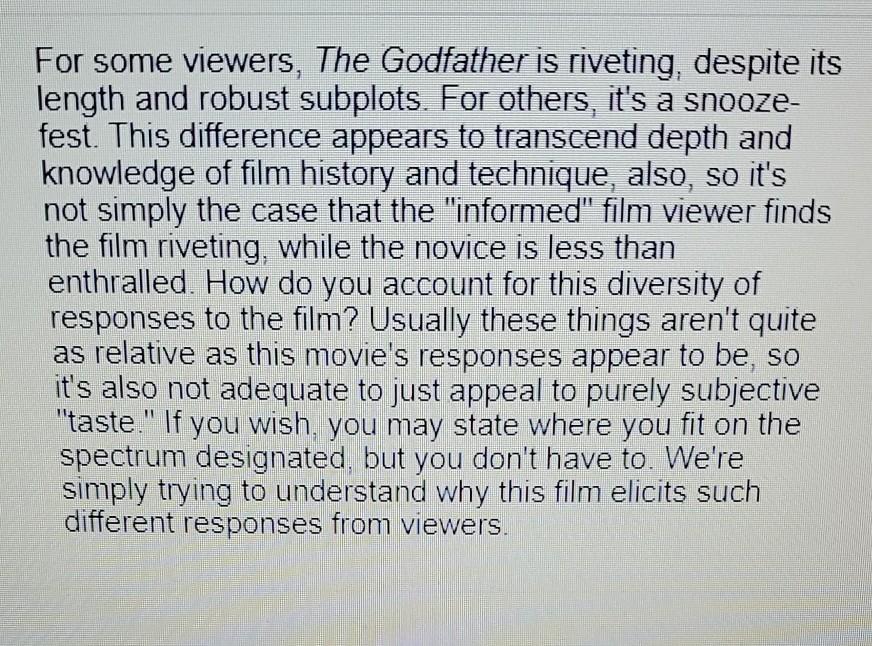
1 In your reading for this week, Jon Lewis notes that in making Easy Rider, Dennis Hopper borrowed from a number of film techniques, including cinema verite. Read the definition of cinema verite provided here: https://www.filmsite.org/filmterms6.html. Then note a particular scene where you can see this style of documentary filmmaking influencing Easy Rider. Note also a scene where Hopper seems to move away from this style. Both of the films for this week were made within the same decade--the 1960s--as those we watched last week, Psycho and West Side Story. They feel far removed from these earlier films, though, both because of their much grittier content and because of the film styles adopted by their directors. Compare and contrast one scene from one of the films watched this week with one scene from one of the films watched last week. What, if anything, do these scenes have in common? What sets them apart? For some viewers, The Godfather is riveting, despite its length and robust subplots. For others, it's a snooze- fest. This difference appears to transcend depth and knowledge of film history and technique, also, so it's not simply the case that the "informed" film viewer finds the film riveting, while the novice is less than enthralled. How do you account for this diversity of responses to the film? Usually these things aren't quite as relative as this movie's responses appear to be, so it's also not adequate to just appeal to purely subjective "taste." If you wish, you may state where you fit on the spectrum designated, but you don't have to. We're simply trying to understand why this film elicits such different responses from viewers. 1 In your reading for this week, Jon Lewis notes that in making Easy Rider, Dennis Hopper borrowed from a number of film techniques, including cinema verite. Read the definition of cinema verite provided here: https://www.filmsite.org/filmterms6.html. Then note a particular scene where you can see this style of documentary filmmaking influencing Easy Rider. Note also a scene where Hopper seems to move away from this style. Both of the films for this week were made within the same decade--the 1960s--as those we watched last week, Psycho and West Side Story. They feel far removed from these earlier films, though, both because of their much grittier content and because of the film styles adopted by their directors. Compare and contrast one scene from one of the films watched this week with one scene from one of the films watched last week. What, if anything, do these scenes have in common? What sets them apart? For some viewers, The Godfather is riveting, despite its length and robust subplots. For others, it's a snooze- fest. This difference appears to transcend depth and knowledge of film history and technique, also, so it's not simply the case that the "informed" film viewer finds the film riveting, while the novice is less than enthralled. How do you account for this diversity of responses to the film? Usually these things aren't quite as relative as this movie's responses appear to be, so it's also not adequate to just appeal to purely subjective "taste." If you wish, you may state where you fit on the spectrum designated, but you don't have to. We're simply trying to understand why this film elicits such different responses from viewers
Step by Step Solution
There are 3 Steps involved in it
1 Expert Approved Answer
Step: 1 Unlock

Question Has Been Solved by an Expert!
Get step-by-step solutions from verified subject matter experts
Step: 2 Unlock
Step: 3 Unlock
 Study Help