







Question: 1. Is there a significant difference in weight loss between the two levels of exercise program, regardless of gender? Explain your decision. Rationalize your decision
1. Is there a significant difference in weight loss between the two levels of exercise program, regardless of gender? Explain your decision. Rationalize your decision by using theappropriate p value and explaining how it was usedto make your decision
2. Is there a significant different in weight loss between the two levels of gender, regardless of exercise program? Explain your decision. Rationalize your decision by using theappropriate p valueexplaining how it was usedto make your decision
3. If you were a female looking to lose weight, which program would be more effective for you to enroll in? Explain your decision using atleastone value from SPSS.
4. If you were a male looking to lose weight, which program would be more effective for you to enroll in? Explain your decisionusing atleastone value from SPSS.
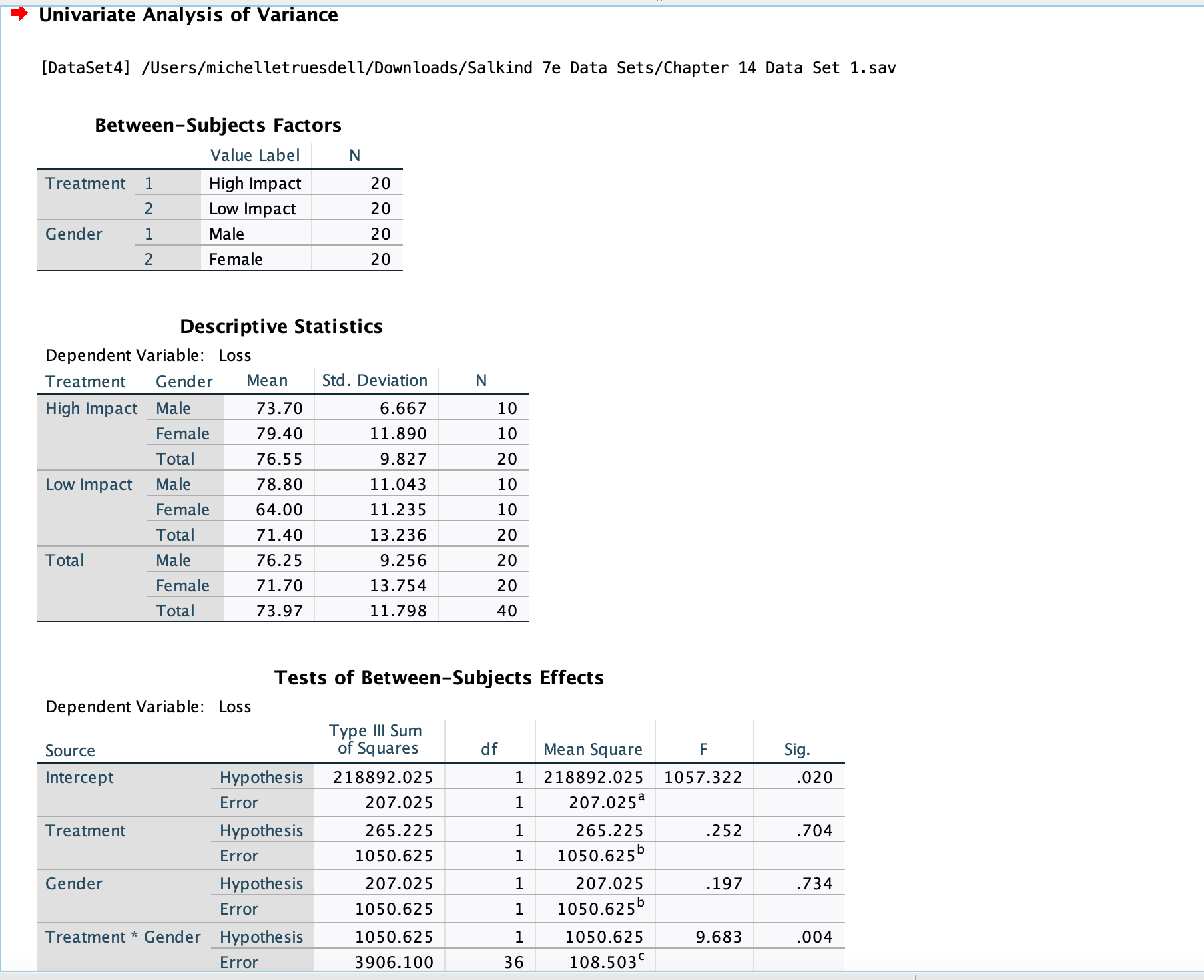
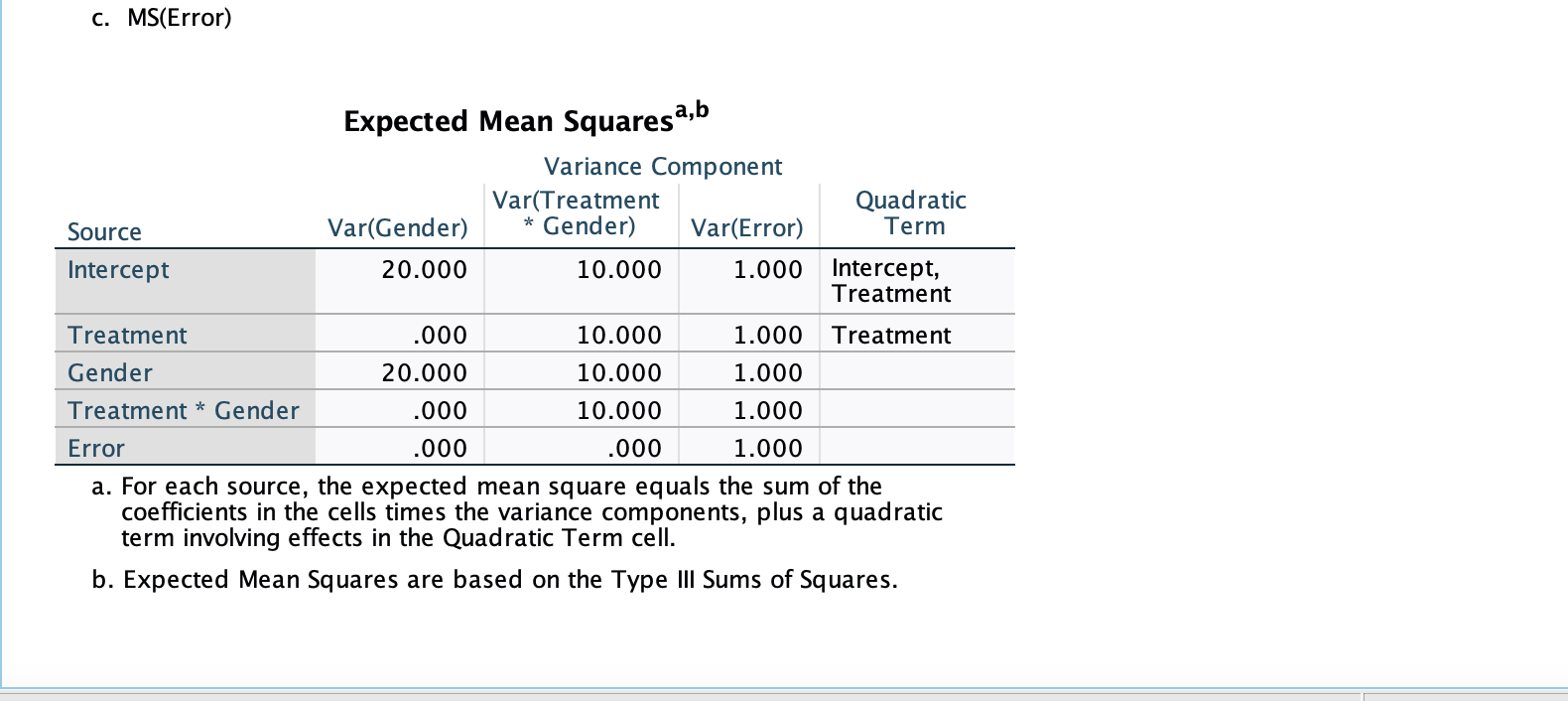
[DataSet4] /Users/miche11etruesde11/Downloads/Sa1kind 7e Data Sets/Chapter 14 Data Set 1.sav 'P Univariate Analysis of Variance BetweenSubjects Factors Value Label N Treatment 1 High Impact 20 2 Low Impact 20 Gender 1 Male 20 2 Female 20 Descriptive Statistics Mean Square F 218892.025 1057.322 2o7.o25'=1 265.225 1050.625b 207.025 1050.625b 1050.625 Dependent Variable: Loss Treatment Gender Mean Std. Deviation N High Impact Male 73.70 6.667 10 Female 79.40 11.890 10 Total 76.55 9.827 20 Low Impact Male 78.80 11.043 10 Female 64.00 11.235 10 Total 71.40 13.236 20 Total Male 76.25 9.256 20 Female 71.70 13.754 20 Total 73.97 11.798 40 Tests of BetweenSubjects Effects Dependent Variable: Loss Type III Sum Source of Squares df Intercept Hypothesis 218892.025 1 Error 207.025 1 Treatment Hypothesis 265.225 1 Error 1050.625 1 Gender Hypothesis 207.025 1 Error 1050.625 1 Treatment * Gender Hypothesis 1050.625 1 Error 3906.100 36 108.503C .252 .197 9.683 Sig. .020 .704 .734 .004 c. MS(Error) Expected Mean Squaresa' b Variance Component Var(Treatment Quadratic Source Var(Gender) * Gender) Var(Error) Term Intercept 20.000 10.000 1.000 IntercePt, Treatment Treatment .000 10.000 1.000 Treatment Gender 20.000 10.000 1.000 Treatment * Gender .000 10.000 1.000 Error .000 .000 1.000 a. For each source, the expected mean square equals the sum of the coefficients in the cells times the variance components, plus a quadratic term involving effects in the Quadratic Term cell. b. Expected Mean Squares are based on the Type III Sums of Squares
Step by Step Solution
There are 3 Steps involved in it

Get step-by-step solutions from verified subject matter experts
 Study Help