







Question: 1. Let Mm) = 1 EU) (It, for U S a: g 6, where the graph of I is the piecewise function given 0 below.
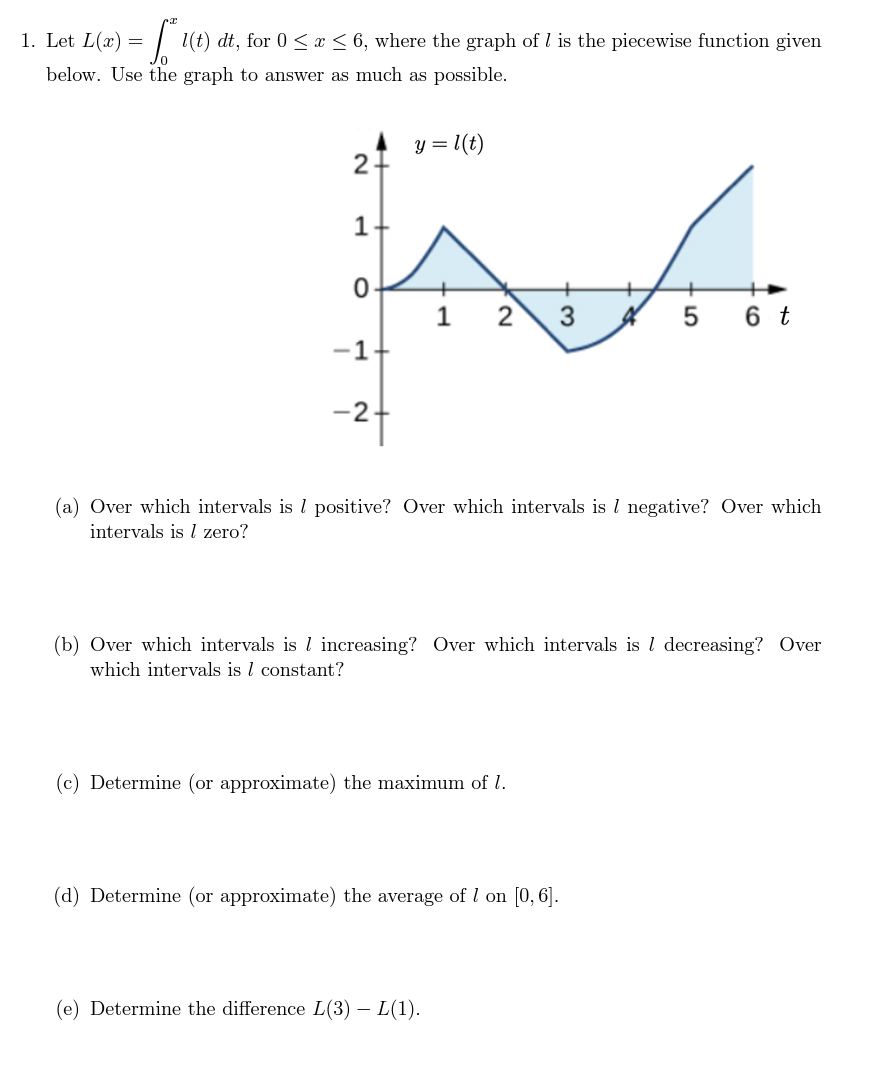
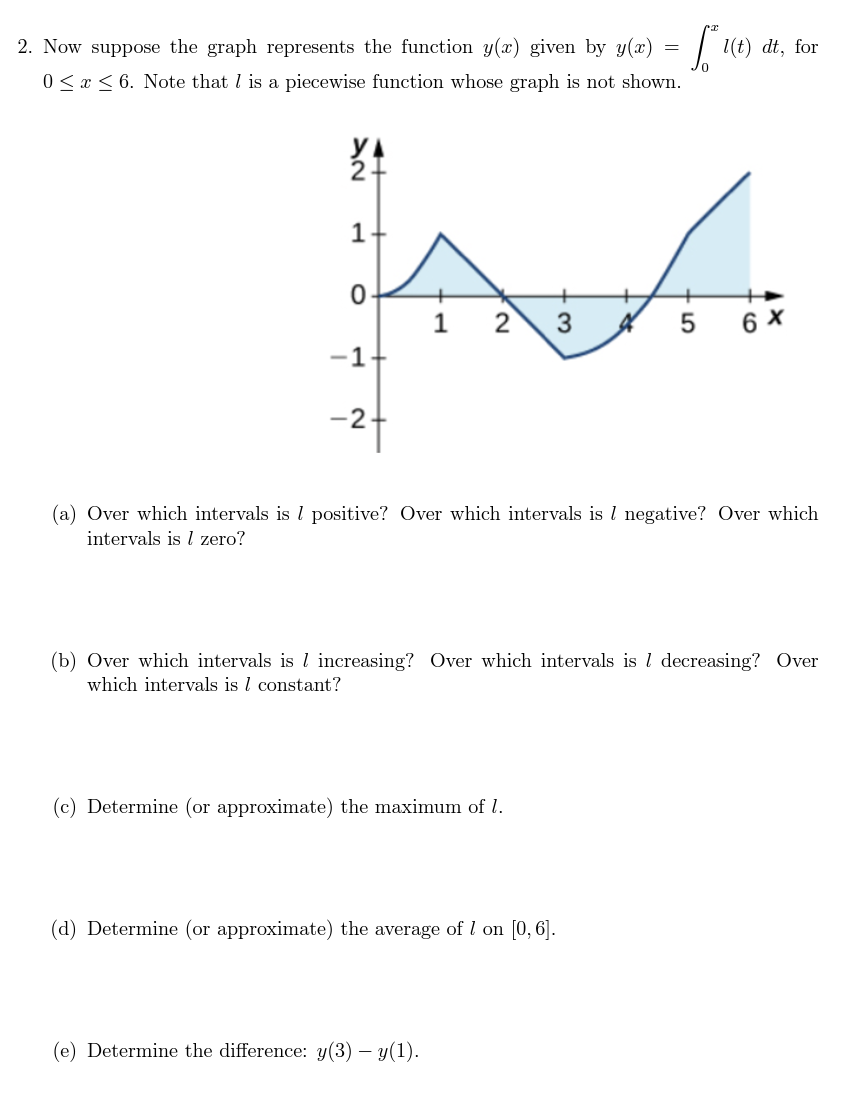
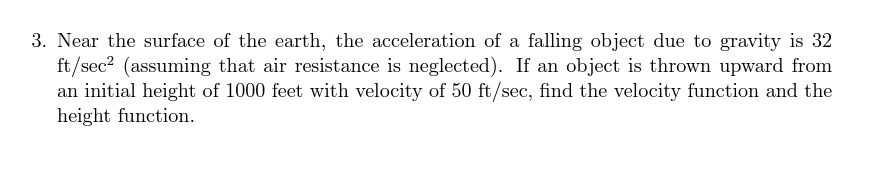
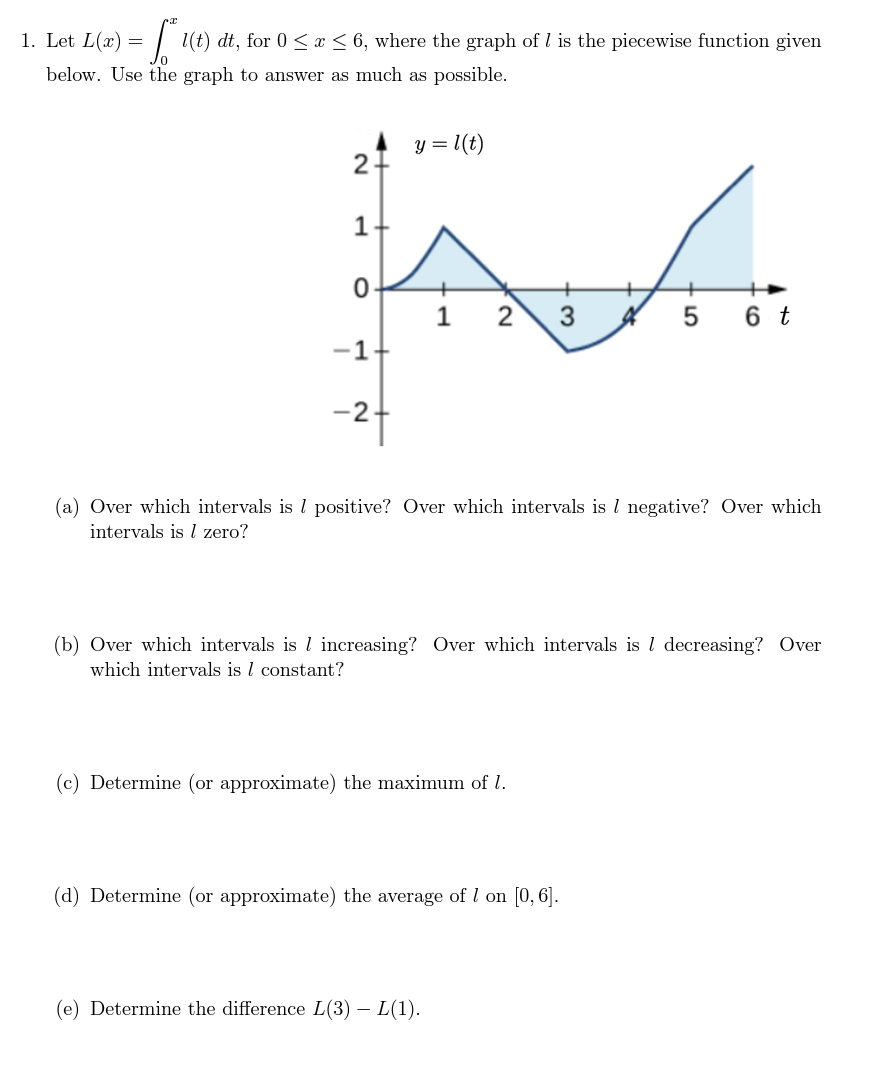
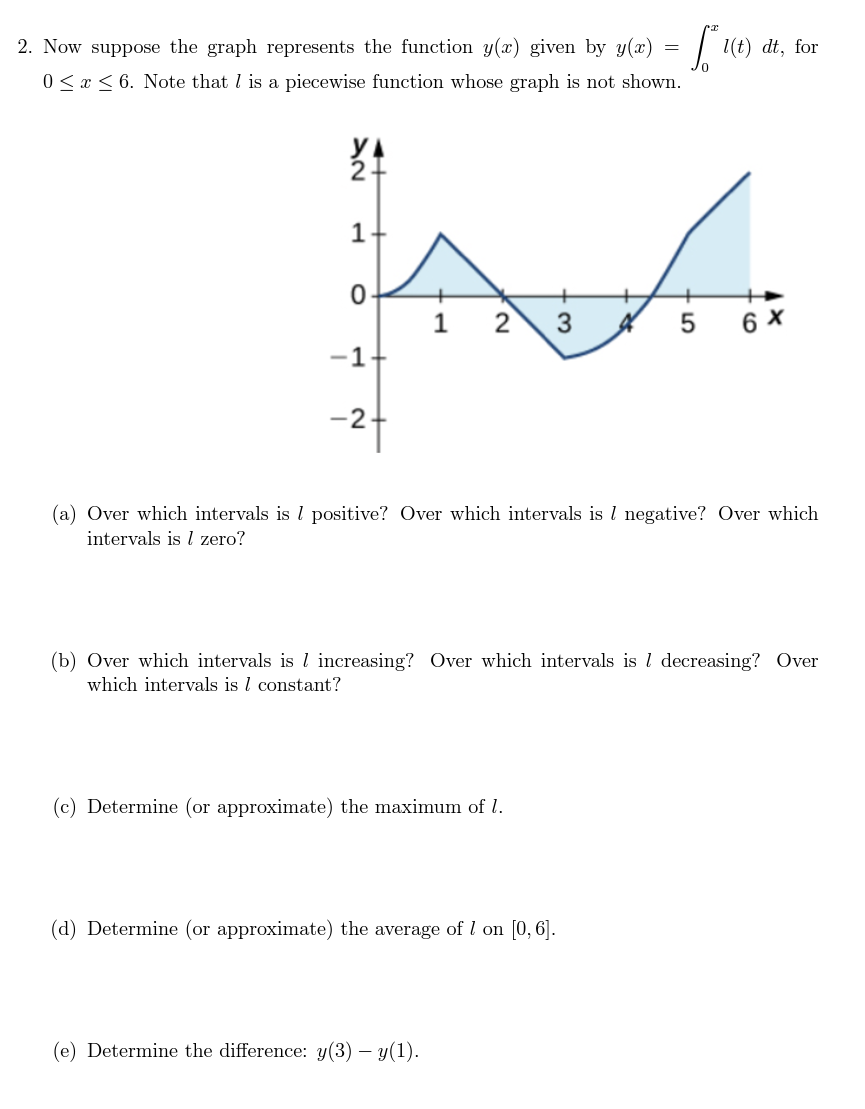
1. Let Mm) = 1 EU) (It, for U S a: g 6, where the graph of I is the piecewise function given 0 below. Use the graph to answer as much as possible. (a) Over which intervals is I positive? Over which intervals is I negative? Over which intervals is I zero? (b) Over which intervals is I increasing? Over which intervals is I decreasing? Over which intervals is I constant? (c) Determine (or approximate) the maximum of I. (cl) Determine (or approximate) the average of I on [03 6]. (9) Determine the difference L(3) LU). 2. Now suppose the graph represents the function y(.7:) given by y(a:j = / Ht) (it. for u I] S m g 6. Note that l is a piecewise function whose graph is not shown. Y 2 (a) Over which intervals is 1 positive? Over which intervals is 1 negative? Over which intervals is i zero? (b) Over which intervals is 1 increasing? Over which intervals is l decreasing? Over which intervals is i constant? (C) Determine (or approximate) the maximum of 1?. (cl) Determine [or approximate) the average of l on [0: 6]. (e) Determine the difference: y(3) 7 34(1). 3. Near the surface of the earth, the acceleration of a falling object clue to gravity is 32 ft/sec2 (assuming that air resistance is neglected). If an object is thrown upward from an initial height of 1000 feet with velocity of 50 ft/sec. nd the velocity function and the height function
Step by Step Solution
There are 3 Steps involved in it

Get step-by-step solutions from verified subject matter experts
 Study Help