







Question: 1 . ( ( mathbf { 2 0 } mathbf { ~ p t s } ) ) LUT design (
mathbfmathbf~ p t s LUT design LUT
LookUp Table
Design a digital logic circuit with three binary inputs: mathrmxmathrmy and mathrmz in decimal and the three binary outputs, A B and C When the binary input is or the binary output is greater than the input. When the binary input is or the binary output is less than the input.
Setup the appropriate truth table, simplify using Kmaps. Implement, using LogiSim, the simplified logic circuit with optimal number of logic gates.
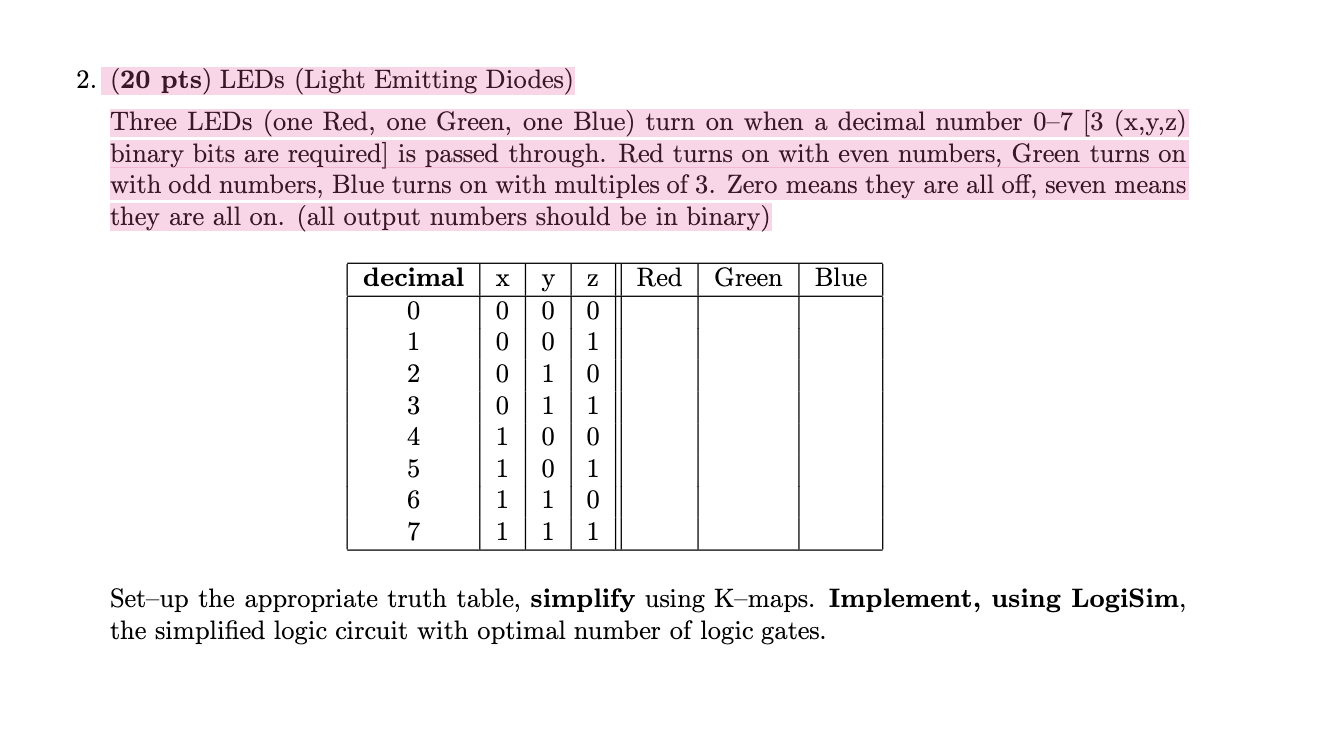
pts LEDs Light Emitting Diodes
Three LEDs one Red, one Green, one Blue turn on when a decimal number xyz
binary bits are required is passed through. Red turns on with even numbers, Green turns on
with odd numbers, Blue turns on with multiples of Zero means they are all off, seven means
they are all onall output numbers should be in binary
Setup the appropriate truth table, simplify using Kmaps. Implement, using LogiSim,
the simplified logic circuit with optimal number of logic gates.
Step by Step Solution
There are 3 Steps involved in it
1 Expert Approved Answer
Step: 1 Unlock

Question Has Been Solved by an Expert!
Get step-by-step solutions from verified subject matter experts
Step: 2 Unlock
Step: 3 Unlock
 Study Help