Question: 1. Perception (Ch 3) Explain how self-concept, complexity, consistency, and clarity are presented in this case for Bill. 2. Personality (ch 2) In Type A
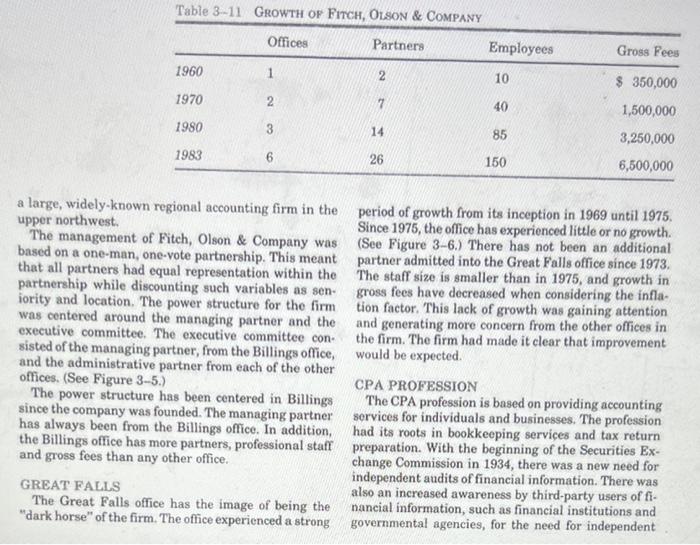
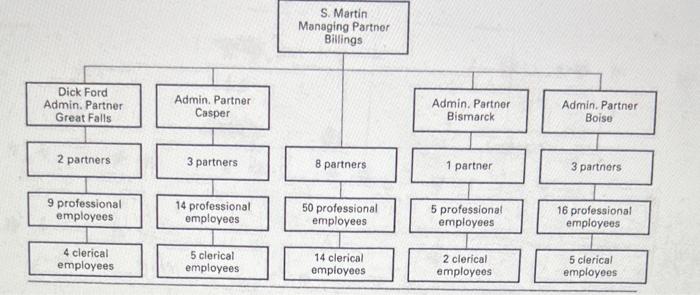
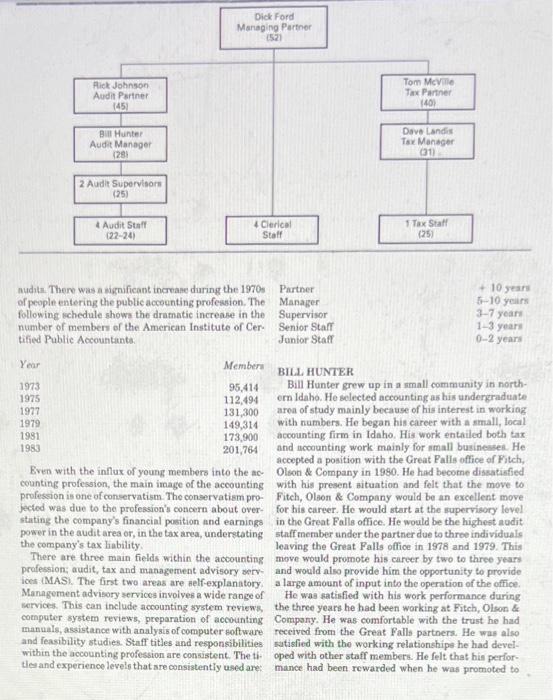
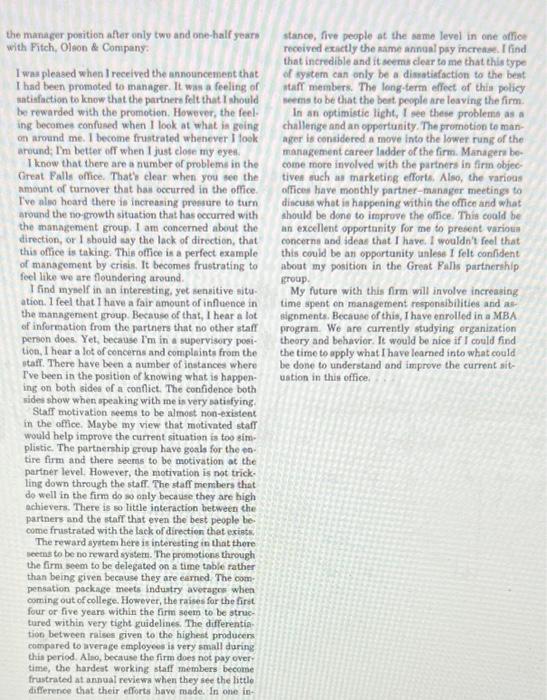
1. Perception (Ch 3) Explain how self-concept, complexity, consistency, and clarity are presented in this case for Bill. 2. Personality (ch 2) In Type A and Type B personality quiz (from class) if this was given to Bill do you think he would be a type a or type b? Explain. 3. From Chapter 4, Was cognitive dissonance felt by Bill when he received his promotion? How could he handle the situation presented by his promotion? 4. From Chapter 4 What stressors is inherent in this case? 5. Which role pressures (role conflict, overload, ambiguity) exist for Bill in the case? Explain by giving specific examples. FinTRODUCTION, Olson \& Company was a professional partner- Bill Hunter looked at his clock and sighed. It was ship of certified public accountants based in Billings, 11:00 P.M. and there were still four unfinished projects Montana. The company was started by Jim Fitch and that were sitting on his desk that would have to wait Harold Olson in 1962 when they decided to leave the until another day. As he was walking out of the office, Big-Eight accounting firm of Arthur Anderson to form he noticed that the light was on in the office of Dave their own office. Their objective was to remain asmaller Landis. accounting firm which could provide personalized, yet high-quality, accounting services for its clientele. The Bill: "What are you doing up here this time of night, company expanded to start an office in Great Palls, Dave: "I suppose that I am in the same situation that expansion to Wyoming had proved to be quite profitable you are. There are a number of things that just because of the energy-related boom that occurred in don't seem to get out. I'm trying to clean up Wyoming during the late 1970s. In 1979, Steve Martin some projects so 1 can see my desk again." replaced Harold Olson as the managing partner of the accounting firm. Martin had been primarily responsible Bill mumbled goodbye and decided to head home. Bill's for exploring the possibilities of expanding into Wyomind was recalling the events of the past few weeks. ming and for finalizing the merger with another acHe had been promoted by the partnership group of Fitch, counting firm in Casper. Even though Martin was the Olson \& Company to a management position within the third youngest partner at 37, his foresight of the profit firm. He had perceived his promotion to be an important potential of an expansion into Wyoming had given him milestone in his accounting career. This was a pro- a quick ticket to the top of the company. In 1980, the motion that had to be approved by the partner group. firm approved an aggressive expansion policy for the Secondly, the criteria established to meet the require- next ten years. There were mergers with other accountments of a manager were quite detailed. However, he ing firms in 1981, 1982 and 1983 that increased the direction supplied by the partners for the office and the geographical market of Fitch, Olson \& Company to Bisabsence of a clearly defined set of objectives for the rado. (See Table 3-11.) Once again the expansion to future. Bill had originally felt that the recent promotion Bismarck, North Dakota, was influenced by the energywould give him the opportunity to share his concerns related boom that was occurring in Western North Daand ideas to improve the undesired situations occurring kota. The firm decided in 1982 to establish its expansion in the office that seemed to be ignored instead of being plans for larger market areas. The long-term objectives addressed. became geared toward making Fitch, Olson \& Company Table 3-11 Growtu ne Fenver no ener a a large, widely-known regional accounting firm in the period of growth from its inception in 1969 until 1975. upper northwest. The management of Fitch, Olson \& Company was (See Figure 3-6.) There has not been an additional that all partners had equal representation within the partner admitted into the Great Falls office since 1973. that all partners had equal representation within the The staff size is smaller than in 1975, and growth in partnership while discounting such variables as sen- gross fees have decreased when considering the inflawas centered around the managing partner and the tion factor. This lack of growth was gaining attention executive committee. The executive committee con. and generating more concern from the other offices in sisted of the managing partner, from the Billings office, would be expected. sisted of the managing partner, from the Billings office, would be expected. and the administrative partner from each of the other offices. (See Figure 3-5.) CPA PROFESSION since the company was foun been centered in Billings The CPA profession is based on providing accounting since the company was founded. The managing partner sorvices for individuals and businesses. The profession has always been from the Billings office. In addition, had its roots in bookkeeping services and tax return the Billings office has more partners, professional staff preparation. With the beginning of the Securities Exand gross fees than any other office. change Commission in 1934, there was a new need for also an increased awareness by third-party users of f. GREAT FALLS nancial information, such as financial institutions and The Great Falls office has the image of being the nancial information, such as financial institutions and "dark horse" of the firm. The office experienced a strong governmental agencies, for the need for independent nudita. There was a eignificant increase during the 1970 s of people entering the public accounting profession. The following schedule shows the dratnatic increase in the number of members of the American Institute of Cer. tified Public Accountinta. Even with the influx of young members into the accounting profession, the main image of the accounting profession is one of conservatism. The conservatism projected was due to the profession's concern about overstating the company's financial position and earnings power in the audit area or, in the tax area, understating the company's tax liability. There are three main fields within the accounting profession; audit, tax and management advisory servioes (MASi. The first two areas are nelf-explanatory. Management advisory services involves a wide range of services. This can include accounting system teviewi, cotnputer system reviews, preparation of accounting manuals, assistance with analysis of computer softwart and feasibility studies. Staff titles and responsibilities within the accounting profession are consistent. The ti. ties and experience levels that sre consistentiy used are: the manager position after only twv and one-half years stance, five people at the aame level in one office with Fitch, Olson \& Company. recoived exactly the aame annual pay increase. I find That incredible and it seems clear to me that this type I was pleased when I received the mnnouncement that, of system can only be a dissatinfaction to the bent I had been promoted to manager. It was a feeling of ataff members. The lang-term effect of thin policy satiafaction to know that the partners felt that I should seems to be that the best. people are leaving the firm. be rewarded with the promotion. However, the feel. In an optimietic light, I see these problems as a ing becomes confused when I look at what is going challenge and an opportunity. The promotion to manTve been in the position of knowing what is happen- uation in thill office. ing on both sides of a conflict. The confidence both sides show when opeaking with me is very satiefying: Staff motivation seems to be almost non-existent in the office. Maybe my view that motivated staff would help improve the current situation is too sim. plistic. The parthership group have goals for the ontire firm and there seems to be motivation at the partner level. However, the motivation is not trick. ling down through the staff. The staff members that achievers. There is so little interaction between the partners and the staff that even the best people be. come frustrated with the lack of direction that exiats., The reward syatem here is interesting in that there veens to be no reward sydetem. The promotions through the firm seem to be delegated on a time toble rather than being given because they are eerned. The com: penation package meets industry averagos when coming out of college. However, the raises for the firet four or five years within the firm seem to be struetured within very tight guidelines. The differentia: tion between raises given to the highent producens cotripared to average employes is very small daring this period. Also, because the firm does not pay overtime, the hardest working staff members become frustrated at ansual reviewa when they see the little 1. Perception (Ch 3) Explain how self-concept, complexity, consistency, and clarity are presented in this case for Bill. 2. Personality (ch 2) In Type A and Type B personality quiz (from class) if this was given to Bill do you think he would be a type a or type b? Explain. 3. From Chapter 4, Was cognitive dissonance felt by Bill when he received his promotion? How could he handle the situation presented by his promotion? 4. From Chapter 4 What stressors is inherent in this case? 5. Which role pressures (role conflict, overload, ambiguity) exist for Bill in the case? Explain by giving specific examples. FinTRODUCTION, Olson \& Company was a professional partner- Bill Hunter looked at his clock and sighed. It was ship of certified public accountants based in Billings, 11:00 P.M. and there were still four unfinished projects Montana. The company was started by Jim Fitch and that were sitting on his desk that would have to wait Harold Olson in 1962 when they decided to leave the until another day. As he was walking out of the office, Big-Eight accounting firm of Arthur Anderson to form he noticed that the light was on in the office of Dave their own office. Their objective was to remain asmaller Landis. accounting firm which could provide personalized, yet high-quality, accounting services for its clientele. The Bill: "What are you doing up here this time of night, company expanded to start an office in Great Palls, Dave: "I suppose that I am in the same situation that expansion to Wyoming had proved to be quite profitable you are. There are a number of things that just because of the energy-related boom that occurred in don't seem to get out. I'm trying to clean up Wyoming during the late 1970s. In 1979, Steve Martin some projects so 1 can see my desk again." replaced Harold Olson as the managing partner of the accounting firm. Martin had been primarily responsible Bill mumbled goodbye and decided to head home. Bill's for exploring the possibilities of expanding into Wyomind was recalling the events of the past few weeks. ming and for finalizing the merger with another acHe had been promoted by the partnership group of Fitch, counting firm in Casper. Even though Martin was the Olson \& Company to a management position within the third youngest partner at 37, his foresight of the profit firm. He had perceived his promotion to be an important potential of an expansion into Wyoming had given him milestone in his accounting career. This was a pro- a quick ticket to the top of the company. In 1980, the motion that had to be approved by the partner group. firm approved an aggressive expansion policy for the Secondly, the criteria established to meet the require- next ten years. There were mergers with other accountments of a manager were quite detailed. However, he ing firms in 1981, 1982 and 1983 that increased the direction supplied by the partners for the office and the geographical market of Fitch, Olson \& Company to Bisabsence of a clearly defined set of objectives for the rado. (See Table 3-11.) Once again the expansion to future. Bill had originally felt that the recent promotion Bismarck, North Dakota, was influenced by the energywould give him the opportunity to share his concerns related boom that was occurring in Western North Daand ideas to improve the undesired situations occurring kota. The firm decided in 1982 to establish its expansion in the office that seemed to be ignored instead of being plans for larger market areas. The long-term objectives addressed. became geared toward making Fitch, Olson \& Company Table 3-11 Growtu ne Fenver no ener a a large, widely-known regional accounting firm in the period of growth from its inception in 1969 until 1975. upper northwest. The management of Fitch, Olson \& Company was (See Figure 3-6.) There has not been an additional that all partners had equal representation within the partner admitted into the Great Falls office since 1973. that all partners had equal representation within the The staff size is smaller than in 1975, and growth in partnership while discounting such variables as sen- gross fees have decreased when considering the inflawas centered around the managing partner and the tion factor. This lack of growth was gaining attention executive committee. The executive committee con. and generating more concern from the other offices in sisted of the managing partner, from the Billings office, would be expected. sisted of the managing partner, from the Billings office, would be expected. and the administrative partner from each of the other offices. (See Figure 3-5.) CPA PROFESSION since the company was foun been centered in Billings The CPA profession is based on providing accounting since the company was founded. The managing partner sorvices for individuals and businesses. The profession has always been from the Billings office. In addition, had its roots in bookkeeping services and tax return the Billings office has more partners, professional staff preparation. With the beginning of the Securities Exand gross fees than any other office. change Commission in 1934, there was a new need for also an increased awareness by third-party users of f. GREAT FALLS nancial information, such as financial institutions and The Great Falls office has the image of being the nancial information, such as financial institutions and "dark horse" of the firm. The office experienced a strong governmental agencies, for the need for independent nudita. There was a eignificant increase during the 1970 s of people entering the public accounting profession. The following schedule shows the dratnatic increase in the number of members of the American Institute of Cer. tified Public Accountinta. Even with the influx of young members into the accounting profession, the main image of the accounting profession is one of conservatism. The conservatism projected was due to the profession's concern about overstating the company's financial position and earnings power in the audit area or, in the tax area, understating the company's tax liability. There are three main fields within the accounting profession; audit, tax and management advisory servioes (MASi. The first two areas are nelf-explanatory. Management advisory services involves a wide range of services. This can include accounting system teviewi, cotnputer system reviews, preparation of accounting manuals, assistance with analysis of computer softwart and feasibility studies. Staff titles and responsibilities within the accounting profession are consistent. The ti. ties and experience levels that sre consistentiy used are: the manager position after only twv and one-half years stance, five people at the aame level in one office with Fitch, Olson \& Company. recoived exactly the aame annual pay increase. I find That incredible and it seems clear to me that this type I was pleased when I received the mnnouncement that, of system can only be a dissatinfaction to the bent I had been promoted to manager. It was a feeling of ataff members. The lang-term effect of thin policy satiafaction to know that the partners felt that I should seems to be that the best. people are leaving the firm. be rewarded with the promotion. However, the feel. In an optimietic light, I see these problems as a ing becomes confused when I look at what is going challenge and an opportunity. The promotion to manTve been in the position of knowing what is happen- uation in thill office. ing on both sides of a conflict. The confidence both sides show when opeaking with me is very satiefying: Staff motivation seems to be almost non-existent in the office. Maybe my view that motivated staff would help improve the current situation is too sim. plistic. The parthership group have goals for the ontire firm and there seems to be motivation at the partner level. However, the motivation is not trick. ling down through the staff. The staff members that achievers. There is so little interaction between the partners and the staff that even the best people be. come frustrated with the lack of direction that exiats., The reward syatem here is interesting in that there veens to be no reward sydetem. The promotions through the firm seem to be delegated on a time toble rather than being given because they are eerned. The com: penation package meets industry averagos when coming out of college. However, the raises for the firet four or five years within the firm seem to be struetured within very tight guidelines. The differentia: tion between raises given to the highent producens cotripared to average employes is very small daring this period. Also, because the firm does not pay overtime, the hardest working staff members become frustrated at ansual reviewa when they see the little









 Study Help