







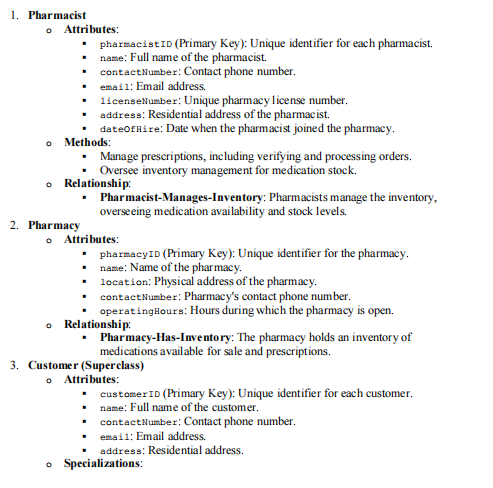
Question: 1 . Pharmacist - Attributes: - pharmacistID ( Primary Key ) : Unique identifier for each pharmacist. - name: Full name of the pharmacist. -
Pharmacist
Attributes:
pharmacistID Primary Key: Unique identifier for each pharmacist.
name: Full name of the pharmacist.
contactNumber: Contact phone number.
email: Email address.
licenseNumber: Unique pharmacy license number.
address: Residential address of the pharmacist.
dateofHire: Date when the pharmacist joined the pharmacy.
Methods:
Manage prescriptions, including verifying and processing orders.
Oversee inventory management for medication stock.
Relationship.
PharmacistManagesInventory: Pharmacists manage the inventory, overseeing medication availability and stock levels.
Pharmacy
Attributes:
pharmacyID Primary Key: Unique identifier for the pharmacy.
name: Name of the pharmacy.
location: Physical address of the pharmacy.
contactNumber: Pharmacy's contact phone number.
operatingHours: Hours during which the pharmacy is open.
Relationship.
PharmacyHasInventory: The pharmacy holds an inventory of medications available for sale and prescriptions.
Customer Superclass
Attributes:
customerID Primary Key: Unique identifier for each customer.
name: Full name of the customer.
contactNumber: Contact phone number.
emain: Email address.
address: Residential address.
Specializations: Regular Customer
Attributes: loyaltyPoints points accumulated for purchases
Prescription Customer
Attributes: prescriptionID, insuranceProvider insurance company covering prescriptions
Methods:
Register and manage customer accounts.
View order history and prescription status.
Relationship.
CustomerOrdersMedication: Customers place orders for medications, which may or may not require a prescription.
Medication Superclass
Attributes:
medicationID Primary Key: Unique identifier for each medication.
name: Name of the medication.
dosage: Standard dosage for the medication.
price: Price of the medication.
isPrescriptionRequired: Boolean indicating if a prescription is required.
quantityInStock: Number of units available in stock.
Specializations:
Prescription Medication: Attributes include prescribingDoctor, contraindications, sideEffects.
OvertheCounter Medication: Attributes include
storageRequirements, shelfLife.
Relationship.
MedicationSuppliedBySupplier: Medications are supplied by various suppliers who provide stock to the pharmacy.
Prescription
Attributes:
prescriptionId Primary Key: Unique identifier for each prescription.
issuedate: Date the prescription was issued.
expirationDate: Date the prescription expires.
doctorName: Name of the prescribing doctor.
medicationsList: List of medications prescribed. Methods:
Track prescriptions and their validity.
Relationship:
PrescriptionContainsMedications: A prescription includes multiple medications, required for specific customers.
Supplier
Attributes:
supplierId Primary Key: Unique identifier for each supplier.
name: Name of the supplier company.
contactNumber: Contact phone number for the supplier.
email: Supplier's email address.
address: Business address of the supplier.
Methods:
Supply medications to pharmacies and manage delivery schedules.
Relationship.
SupplierSuppliesMedication: Suppliers provide medications to pharmacies, ensuring that inventory is maintained.
Inventory
Attributes:
inventoryID Primary Key: Unique identifier for the inventory record.
pharmacyID: Links to the pharmacy holding this inventory.
medicationID: Links to the medication in stock.
quantity: Current quantity of medication in stock.
lastOpdated: Date when inventory was last updated.
InventoryHoldsMedications: Inventory maintains records of all medications available in the pharmacy.
Key Relationships and Operations
Relationships:
PharmacistManagesInventory: Pharmacists are responsible for managing and updating inventory.
PharmacyHasInventory: The pharmacy contains an inventory of various medications.
CustomerOrdersMedication: Customers place orders for medication, tracked through the system.
MedicationSuppliedBySupplier: Medications are supplied to the pharmacy by suppliers.
PrescriptionContainsMedications: Prescriptions include multiple medications.
SupplierSuppliesMedication: Suppliers provide medications to pharmacies to ensure adequate stock.
Operations:
Authentication and Registration: Customers register with the pharmacy system for purchases or prescriptions.
Inventory Management: Pharmacists can add, delete, or update stock levels for medications.
Prescription Validation: Pharmacists verify and process prescriptions for medications requiring doctor authorization.
Order Processing: Customers can order medications, with prescriptions verified for restricted drugs.
Supplier Coordination: Suppliers provide stock to the pharmacy based on demand. Instructions
Using the information provided:
EER Diagram: Create an ER and EER diagram that includes the entities, attributes, and hierarchical relationships within the Pharmacy Management System. Be sure to represent:
Special izations eg Regular Customer and Prescription Customer under Customer, Prescription Medication an
Step by Step Solution
There are 3 Steps involved in it
1 Expert Approved Answer
Step: 1 Unlock

Question Has Been Solved by an Expert!
Get step-by-step solutions from verified subject matter experts
Step: 2 Unlock
Step: 3 Unlock
 Study Help