







Question: 1. Player A and Player B are playing a game involving several rounds of a prisoner's dilemma where their choices are to cooperate or defect.
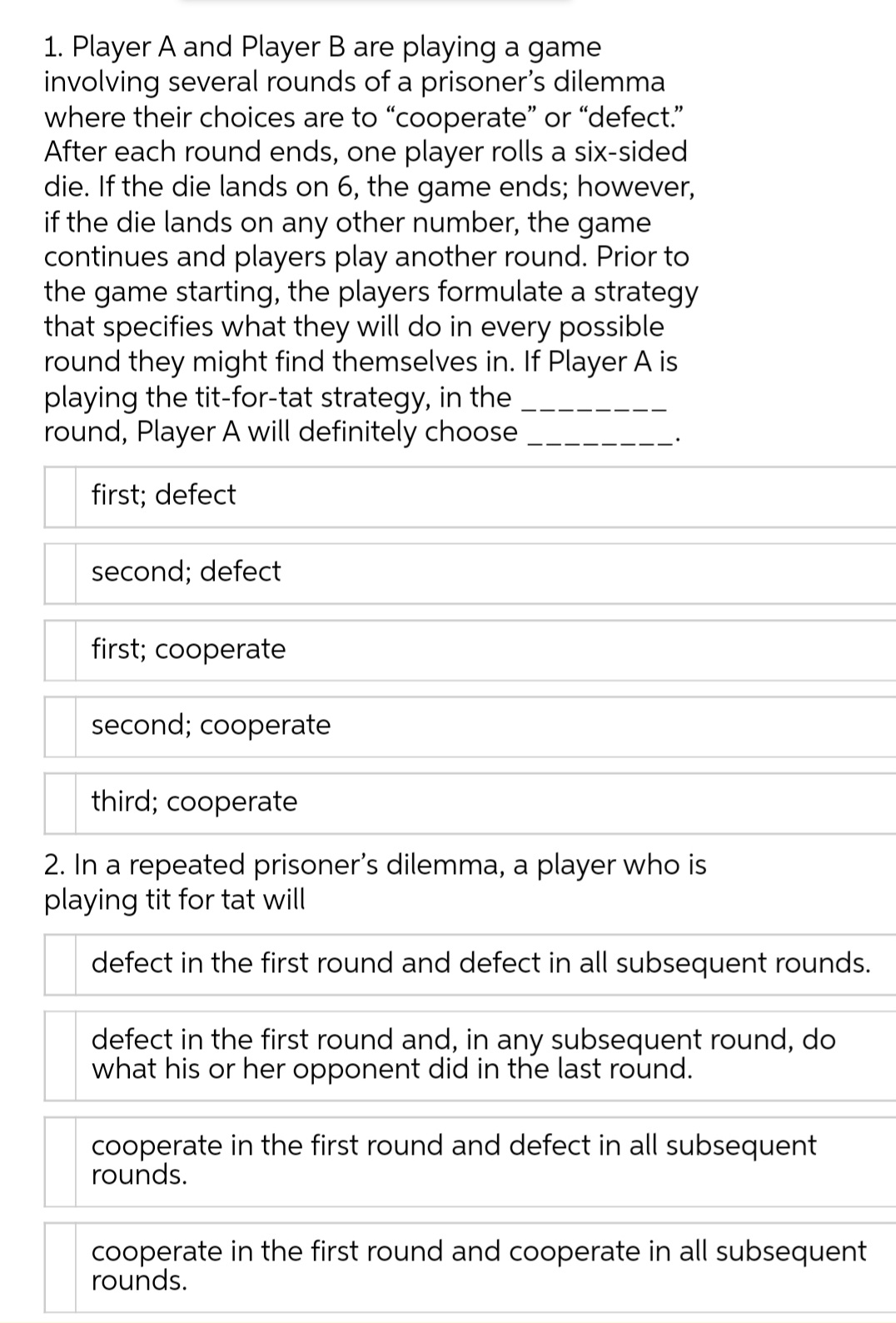
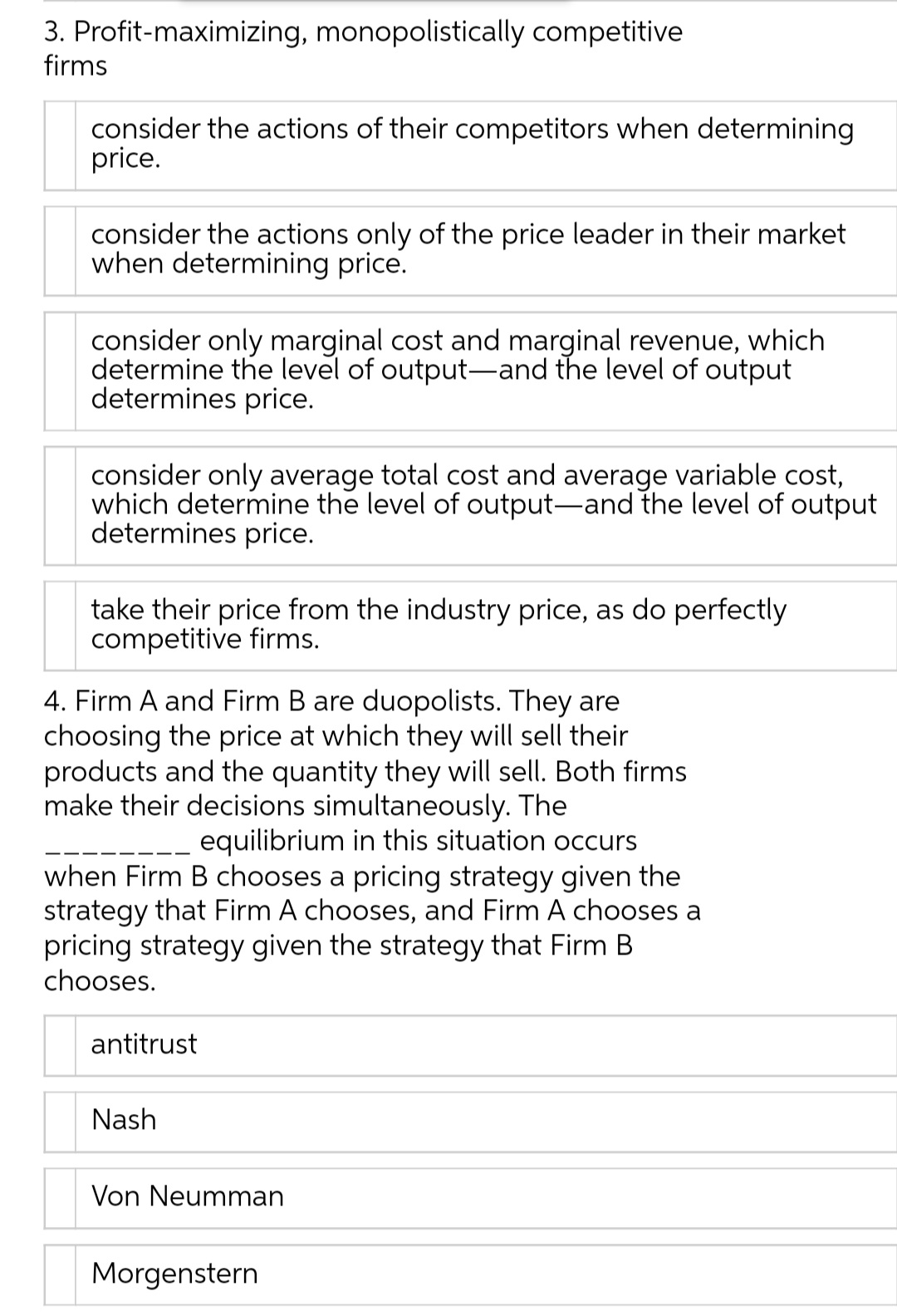
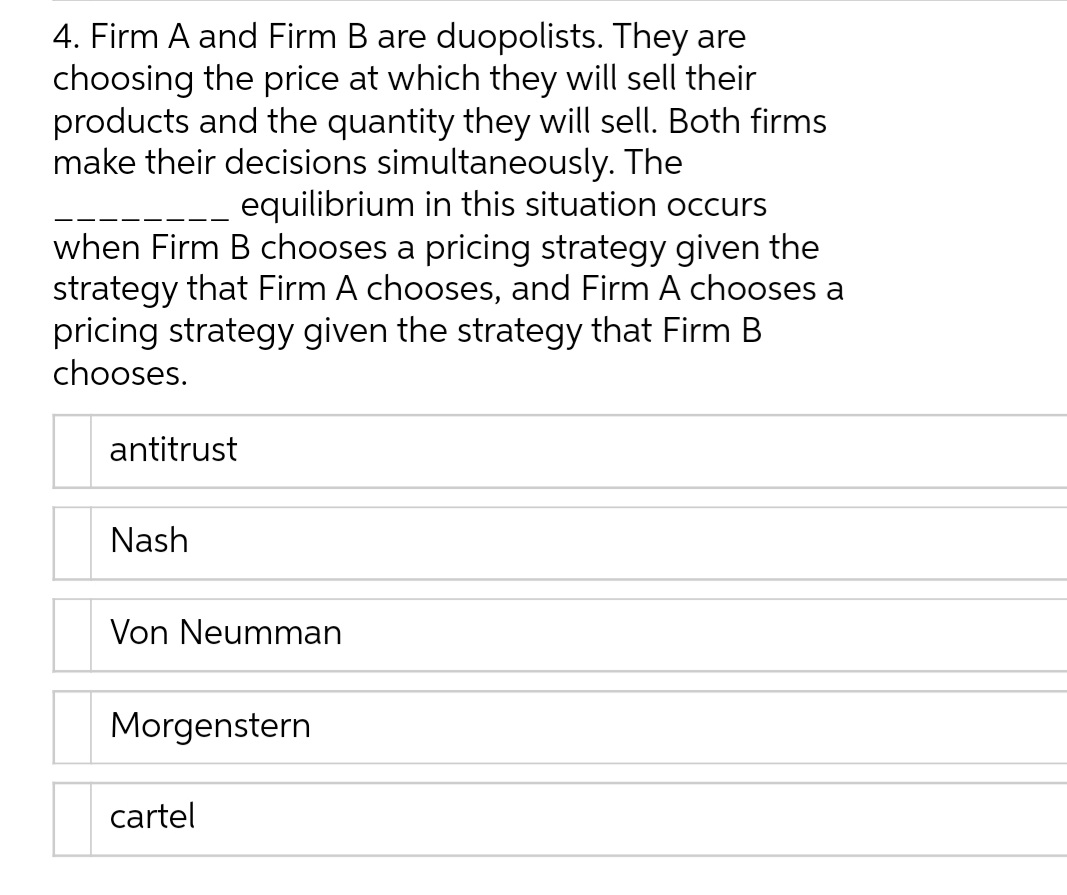
1. Player A and Player B are playing a game involving several rounds of a prisoner's dilemma where their choices are to \"cooperate\" or "defect.\" After each round ends, one player rolls a six-sided die. If the die lands on 6, the game ends; however, if the die lands on any other number, the game continues and players play another round. Prior to the game starting, the players formulate a strategy that specifies what they will do in every possible round they might find themselves in. If Player A is playing the tit-for-tat strategy, in the ________ round, Player A will definitely choose ________ . first; defect second; defect first; cooperate second; cooperate third; cooperate 2. In a repeated prisoner's dilemma, a player who is playing tit for tat will defect in the first round and defect in all subsequent rounds. defect in the first round and, in any subsequent round, do what his or her opponent did in the last round. cooperate in the first round and defect in all subsequent rounds. cooperate in the first round and cooperate in all subsequent rounds. 3. Profit-maximizing, monopolistically competitive firms consider the actions of their competitors when determining price. consider the actions only of the price leader in their market when determining price. consider only marginal cost and mar inal revenue, which determine the level of outputand t e level of output determines price. consider only average total cost and average variable cost, which determine the level of outputand the level of output determines price. take their price from the industry price, as do perfectly competitive firms. 4. Firm A and Firm B are duopolists. They are choosing the price at which they will sell their products and the quantity they will sell. Both firms make their decisions simultaneously. The ________ equilibrium in this situation occurs when Firm B chooses a pricing strategy given the strategy that Firm A chooses, and Firm A chooses a pricing strategy given the strategy that Firm B chooses. antitrust Nash Von Neumman Morgenstern 4. Firm A and Firm B are duopolists. They are choosing the price at which they will sell their products and the quantity they will sell. Both firms make their decisions simultaneously. The ________ equilibrium in this situation occurs when Firm B chooses a pricing strategy given the strategy that Firm A chooses, and Firm A chooses a pricing strategy given the strategy that Firm B chooses. antitrust Nash Von Neumman Morgenstern cael
Step by Step Solution
There are 3 Steps involved in it

Get step-by-step solutions from verified subject matter experts
 Study Help