







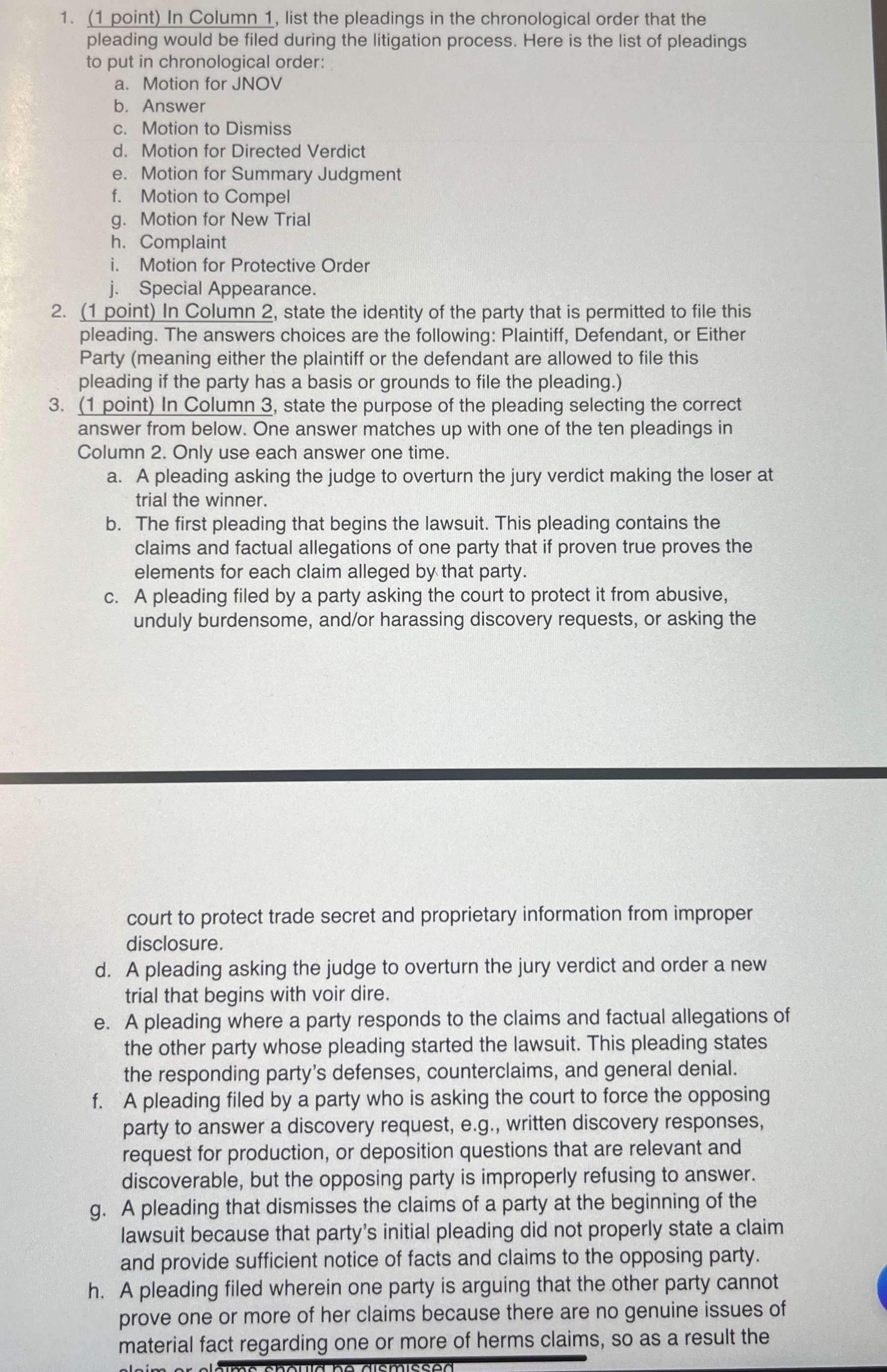
Question: ( 1 point ) In Column 1 , list the pleadings in the chronological order that the pleading would be filed during the litigation process.
point In Column list the pleadings in the chronological order that the pleading would be filed during the litigation process. Here is the list of pleadings to put in chronological order:
a Motion for JNOV
b Answer
c Motion to Dismiss
d Motion for Directed Verdict
e Motion for Summary Judgment
f Motion to Compel
g Motion for New Trial
h Complaint
i Motion for Protective Order
j Special Appearance.
point In Column state the identity of the party that is permitted to file this pleading. The answers choices are the following: Plaintiff, Defendant, or Either Party meaning either the plaintiff or the defendant are allowed to file this pleading if the party has a basis or grounds to file the pleading.
point In Column state the purpose of the pleading selecting the correct answer from below. One answer matches up with one of the ten pleadings in Column Only use each answer one time.
a A pleading asking the judge to overturn the jury verdict making the loser at trial the winner.
b The first pleading that begins the lawsuit. This pleading contains the claims and factual allegations of one party that if proven true proves the elements for each claim alleged by that party.
c A pleading filed by a party asking the court to protect it from abusive, unduly burdensome, andor harassing discovery requests, or asking the
court to protect trade secret and proprietary information from improper disclosure.
d A pleading asking the judge to overturn the jury verdict and order a new trial that begins with voir dire.
e A pleading where a party responds to the claims and factual allegations of the other party whose pleading started the lawsuit. This pleading states the responding party's defenses, counterclaims, and general denial.
f A pleading filed by a party who is asking the court to force the opposing party to answer a discovery request, eg written discovery responses, request for production, or deposition questions that are relevant and discoverable, but the opposing party is improperly refusing to answer.
g A pleading that dismisses the claims of a party at the beginning of the lawsuit because that party's initial pleading did not properly state a claim and provide sufficient notice of facts and claims to the opposing party.
h A pleading filed wherein one party is arguing that the other party cannot prove one or more of her claims because there are no genuine issues of material fact regarding one or more of herms claims, so as a result the
Step by Step Solution
There are 3 Steps involved in it
1 Expert Approved Answer
Step: 1 Unlock

Question Has Been Solved by an Expert!
Get step-by-step solutions from verified subject matter experts
Step: 2 Unlock
Step: 3 Unlock
 Study Help