



Question: 1. Pricing foreign goods The nominal exchange rate is the price of one currency in terms of another currency. A nominal exchange rate specifies how
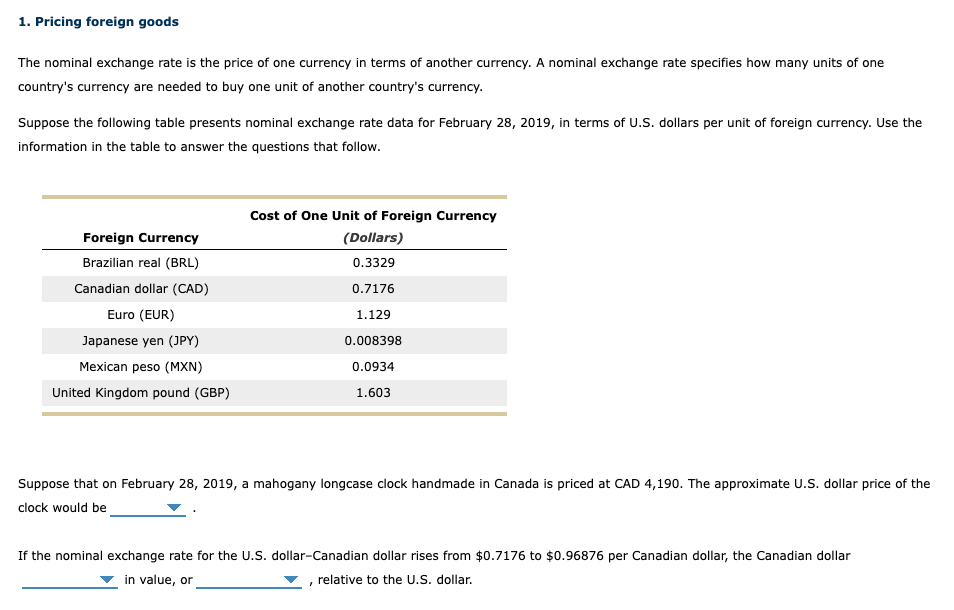
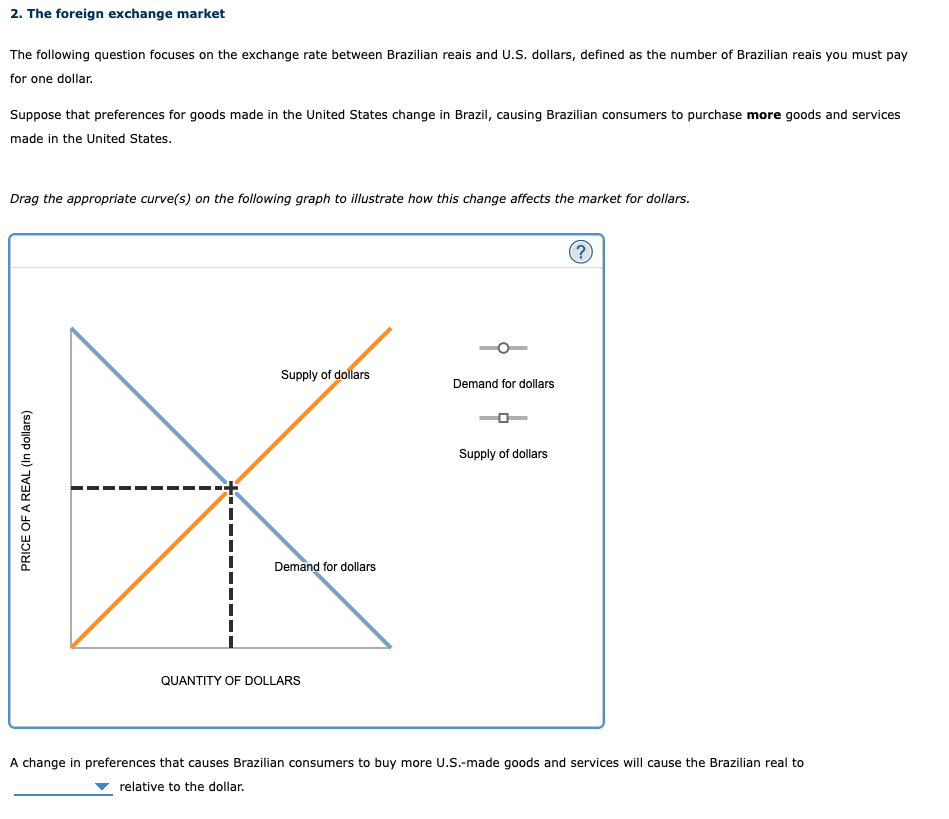
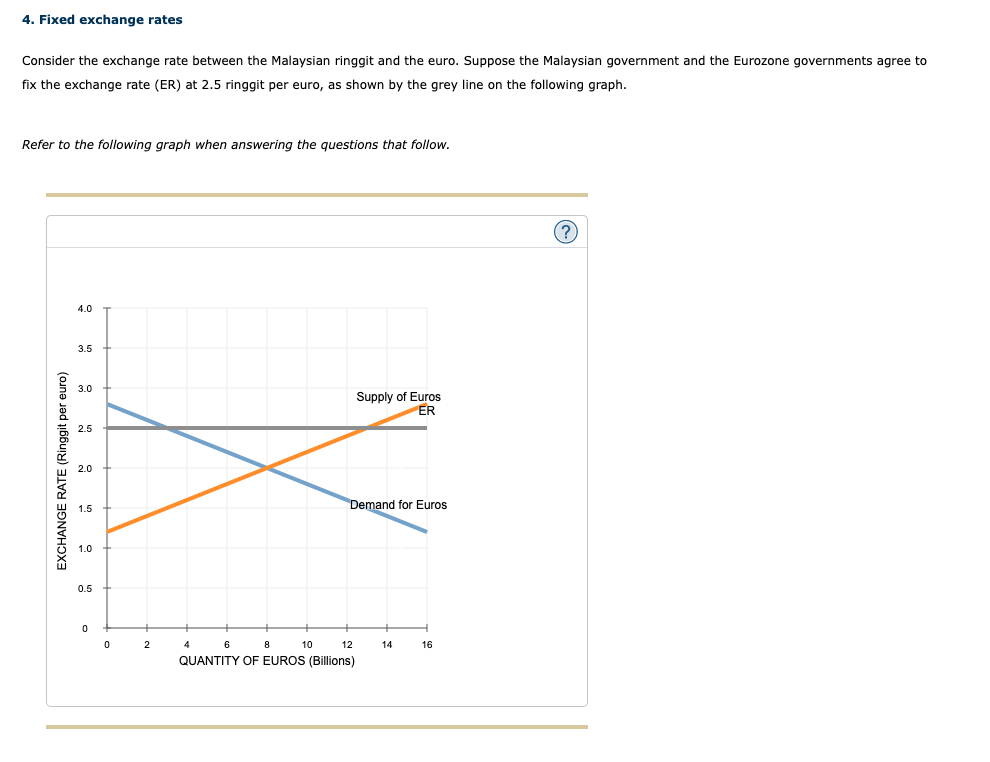

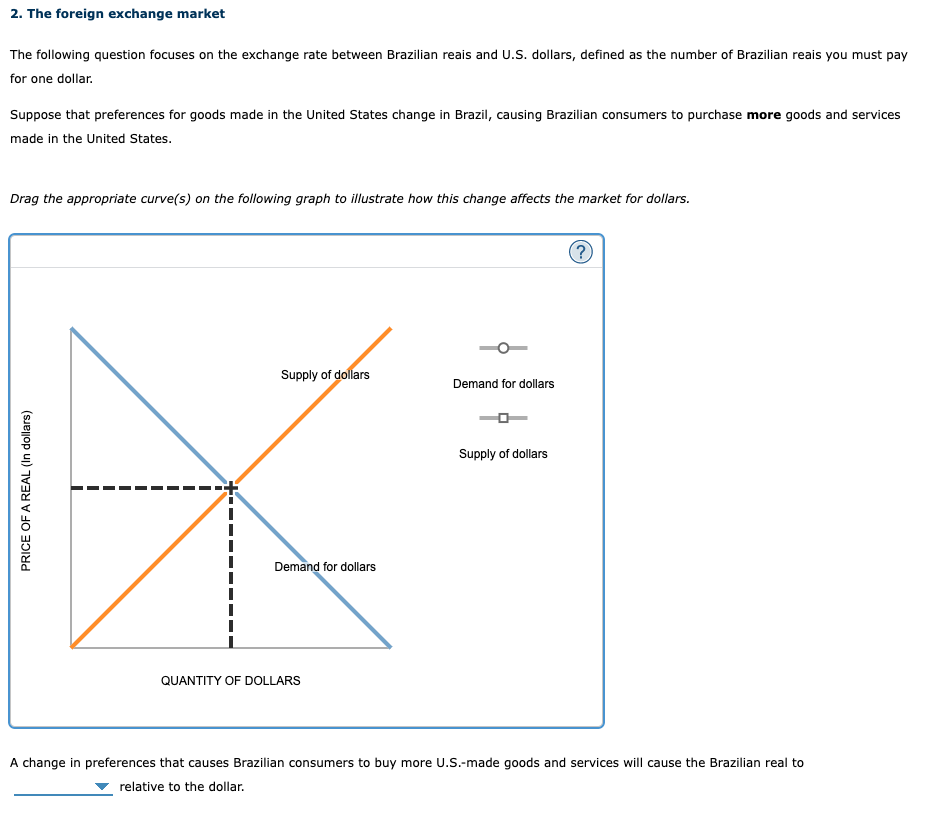
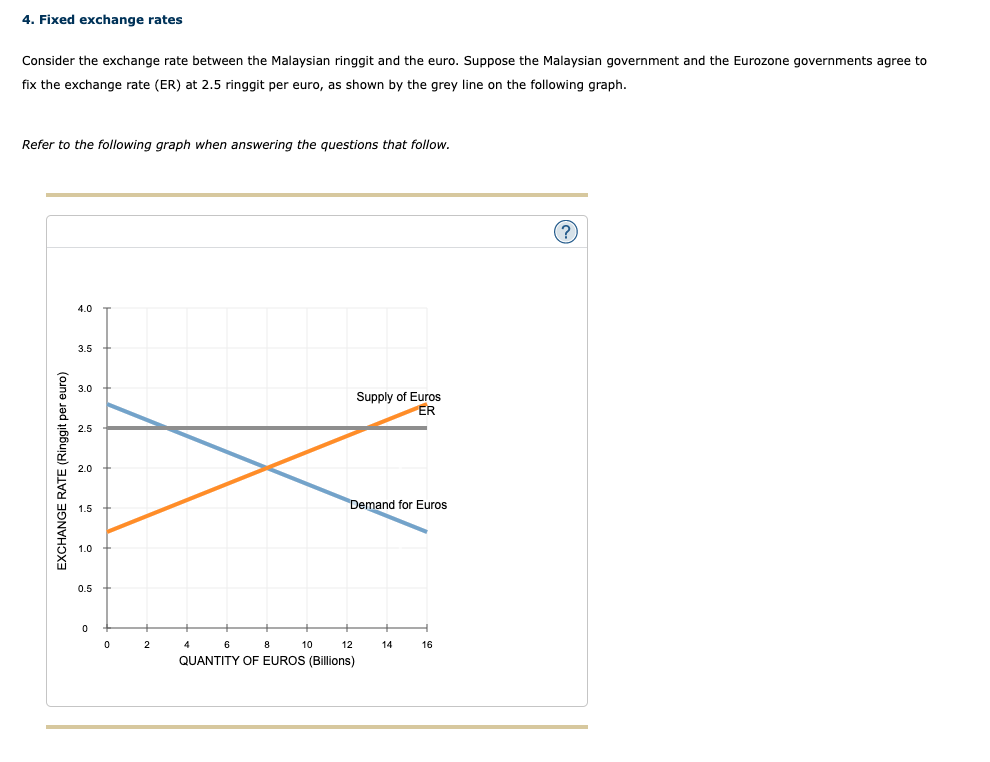

1. Pricing foreign goods The nominal exchange rate is the price of one currency in terms of another currency. A nominal exchange rate specifies how many units of one country's currency are needed to buy one unit of another country's currency. Suppose the following table presents nominal exchange rate data for February 28, 2019, in terms of U.S. dollars per unit of foreign currency. Use the information in the table to answer the questions that follow. Cost of One Unit of Foreign Currency Foreign Currency (Dollars) Brazilian real (BRL) 0.3329 Canadian dollar (CAD) 0.7176 Euro (EUR) 1.129 Japanese yen (JPY) 0.008398 Mexican peso (MXN) 0.0934 United Kingdom pound (GBP) 1.603 Suppose that on February 28, 2019, a mahogany longcase clock handmade in Canada is priced at CAD 4,190. The approximate U.S. dollar price of the clock would be If the nominal exchange rate for the U.S. dollar-Canadian dollar rises from $0.7176 to $0.96876 per Canadian dollar, the Canadian dollar in value, or , relative to the U.S. dollar.2. The foreign exchange market The following question focuses on the exchange rate between Brazilian reais and U.S. dollars, defined as the number of Brazilian reais you must pay for one dollar. Suppose that preferences for goods made in the United States change in Brazil, causing Brazilian consumers to purchase more goods and services made in the United States. Drag the appropriate curve(s) on the following graph to illustrate how this change affects the market for dollars. Supply of dollars Demand for dollars Supply of dollars PRICE OF A REAL (In dollars) Demand for dollars QUANTITY OF DOLLARS A change in preferences that causes Brazilian consumers to buy more U.S.-made goods and services will cause the Brazilian real to relative to the dollar.4. Fixed exchange rates Consider the exchange rate between the Malaysian ringgit and the euro. Suppose the Malaysian government and the Eurozone governments agree to x the exchange rate (ER) at 2.5 ringgit per euro, as shown by the greyr line on the following graph. Refer to the following graph when answering the questions that follow. 4.0 3.5 3'0 Supply of Euros ER 2.5 2.0 1.5 Demand for Euros 1.0 EXCHANGE RATE {Ringgit per euro} 0.5 l] 2 I E E 10 12 14 16 QUANTITY OF EUROS {Billions} At the official exchange rate of 2.5 ringgit per euro, the euro is _overvalued ,and the Malaysian ringgit is undervalued , which means that Malaysians pay more * for European exports than they would with a free-floating exchange rate. At the official ringgit price of euros, there is a surplus of euros in the foreign exchange market. Suppose the governments of the Eurozone and Malaysia reevaluate their currencies so that their official exchange rate is now 1 ringgit per 1 euro. This action results in depreciation of the euro
Step by Step Solution
There are 3 Steps involved in it

Get step-by-step solutions from verified subject matter experts