



Question: 1. Quantitative research has been criticized because: a) the measurement process suggests a false and artificial sense of accuracy. b) the reliance on instruments and
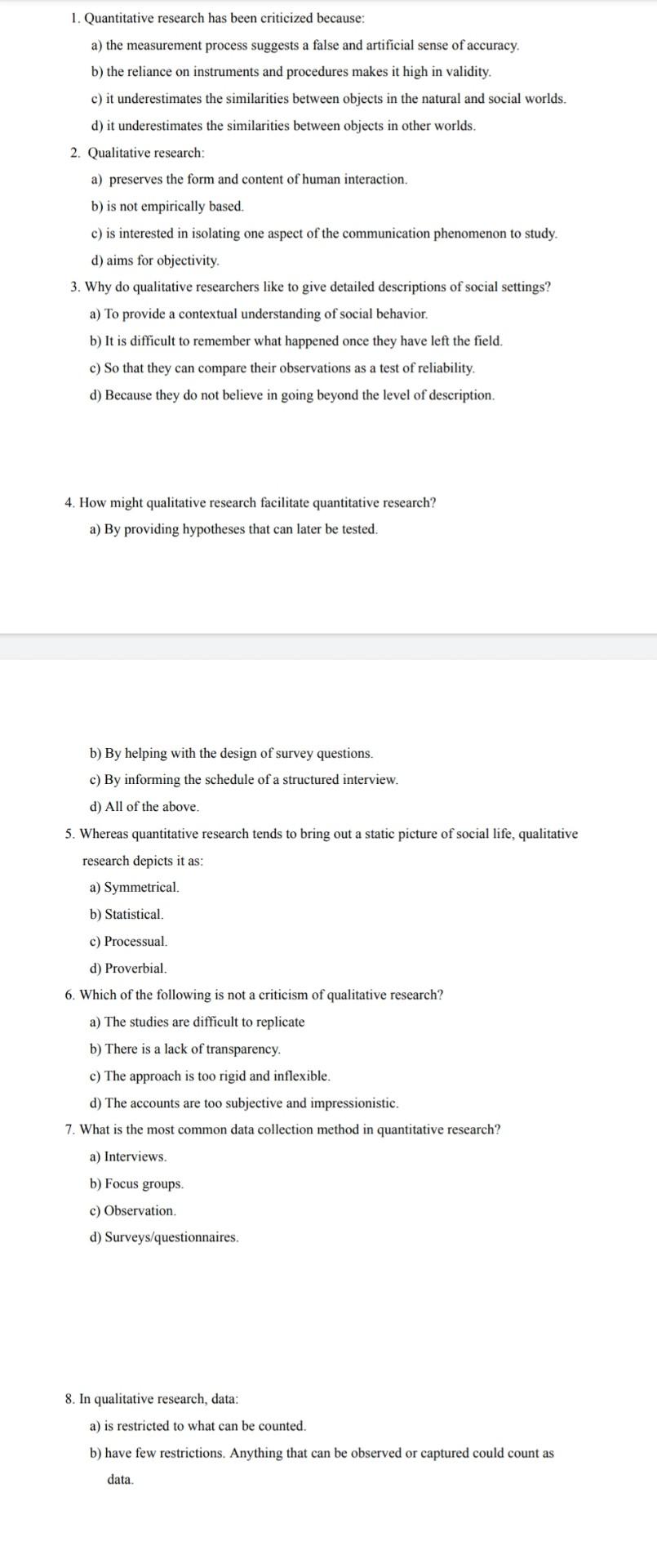
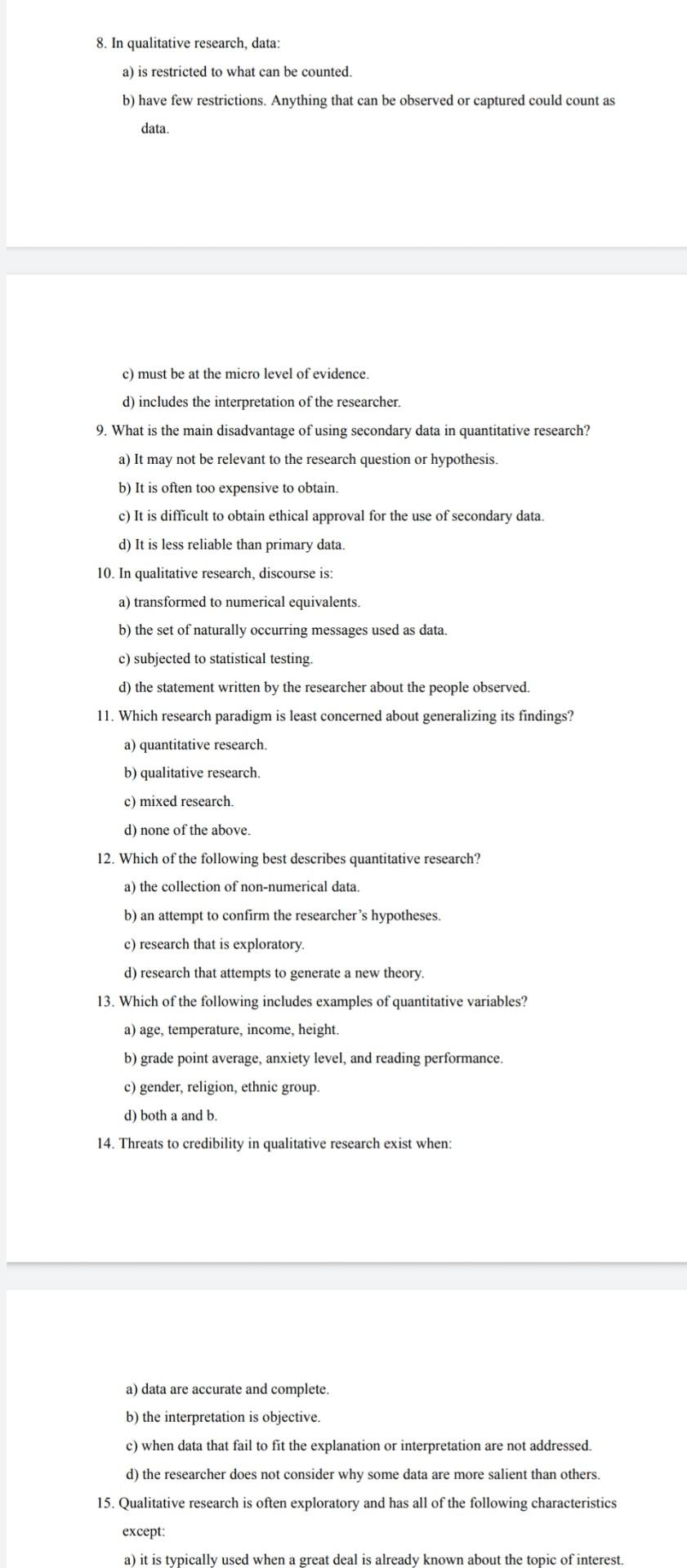
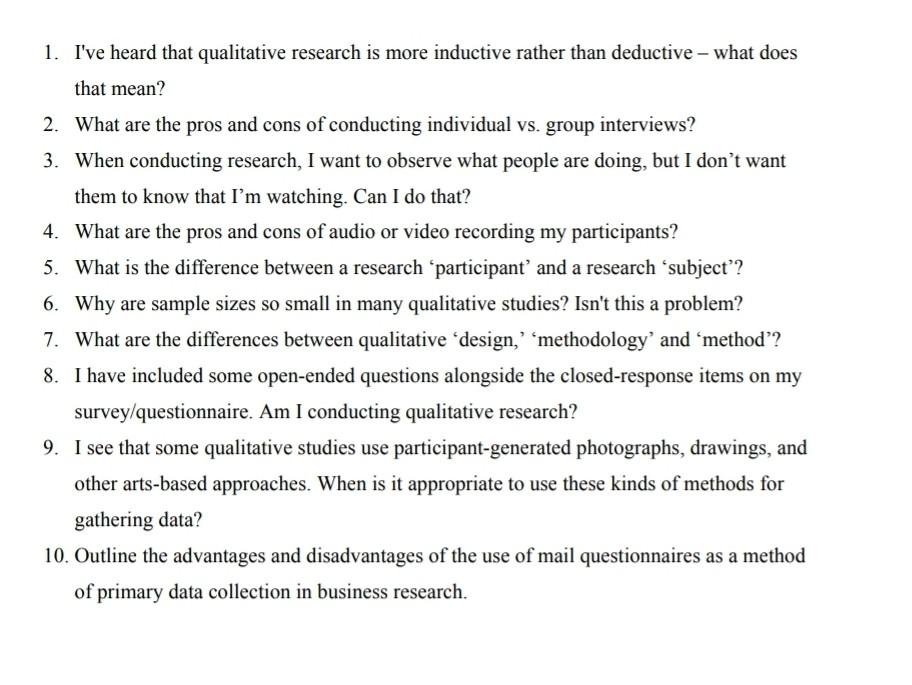
1. Quantitative research has been criticized because: a) the measurement process suggests a false and artificial sense of accuracy. b) the reliance on instruments and procedures makes it high in validity. c) it underestimates the similarities between objects in the natural and social worlds. d) it underestimates the similarities between objects in other worlds. 2. Qualitative research: a) preserves the form and content of human interaction. b) is not empirically based. c) is interested in isolating one aspect of the communication phenomenon to study. d) aims for objectivity. 3. Why do qualitative researchers like to give detailed descriptions of social settings? a) To provide a contextual understanding of social behavior. b) It is difficult to remember what happened once they have left the field. c) So that they can compare their observations as a test of reliability. d) Because they do not believe in going beyond the level of description. 4. How might qualitative research facilitate quantitative research? a) By providing hypotheses that can later be tested. b) By helping with the design of survey questions. c) By informing the schedule of a structured interview. d) All of the above. 5. Whereas quantitative research tends to bring out a static picture of social life, qualitative research depicts it as: a) Symmetrical. b) Statistical. c) Processual. d) Proverbial. 6. Which of the following is not a criticism of qualitative research? a) The studies are difficult to replicate b) There is a lack of transparency. c) The approach is too rigid and inflexible. d) The accounts are too subjective and impressionistic. 7. What is the most common data collection method in quantitative research? a) Interviews. b) Focus groups. c) Observation. d) Surveys/questionnaires. 8. In qualitative research, data: a) is restricted to what can be counted. b) have few restrictions. Anything that can be observed or captured could count as data. 8. In qualitative research, data: a) is restricted to what can be counted. b) have few restrictions. Anything that can be observed or captured could count as data. c) must be at the micro level of evidence. d) includes the interpretation of the researcher. 9. What is the main disadvantage of using secondary data in quantitative research? a) It may not be relevant to the research question or hypothesis. b) It is often too expensive to obtain. c) It is difficult to obtain ethical approval for the use of secondary data. d) It is less reliable than primary data. 10. In qualitative research, discourse is: a) transformed to numerical equivalents. b) the set of naturally occurring messages used as data. c) subjected to statistical testing. d) the statement written by the researcher about the people observed. 11. Which research paradigm is least concerned about generalizing its findings? a) quantitative research. b) qualitative research. c) mixed research. d) none of the above. 12. Which of the following best describes quantitative research? a) the collection of non-numerical data. b) an attempt to confirm the researcher's hypotheses. c) research that is exploratory. d) research that attempts to generate a new theory. 13. Which of the following includes examples of quantitative variables? a) age, temperature, income, height. b) grade point average, anxiety level, and reading performance. c) gender, religion, ethnic group. d) both a and b. 14. Threats to credibility in qualitative research exist when: a) data are accurate and complete. b) the interpretation is objective. c) when data that fail to fit the explanation or interpretation are not addressed. d) the researcher does not consider why some data are more salient than others. 15. Qualitative research is often exploratory and has all of the following characteristics except: a) it is typically used when a great deal is already known about the topic of interest
Step by Step Solution
There are 3 Steps involved in it

Get step-by-step solutions from verified subject matter experts