Question: 1. Question 11 pts Which is not an objective or activity of risk management Group of answer choices A. Identify, analyze, treat, and monitor risk
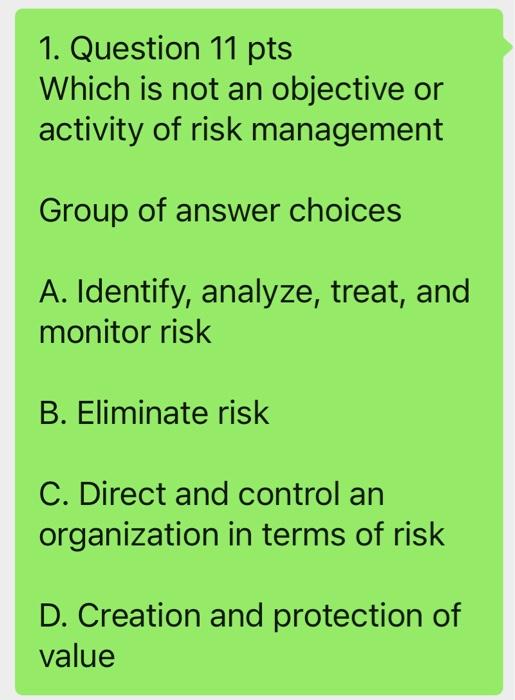
1. Question 11 pts Which is not an objective or
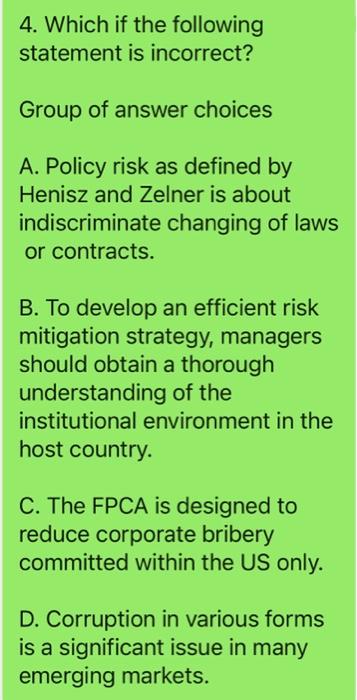
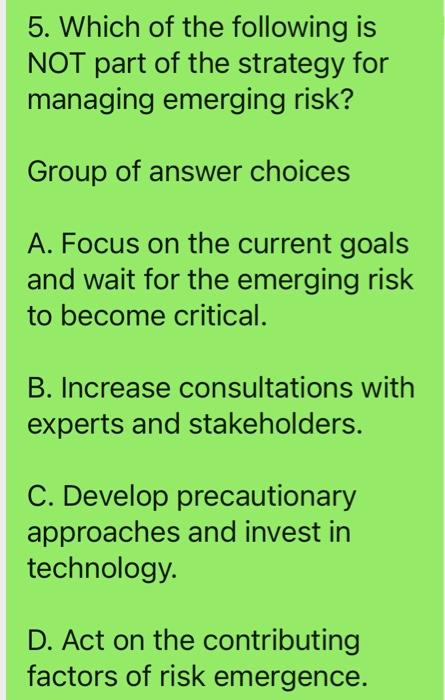
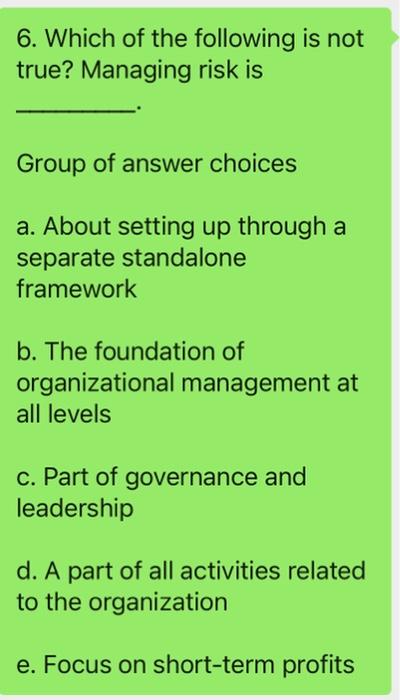
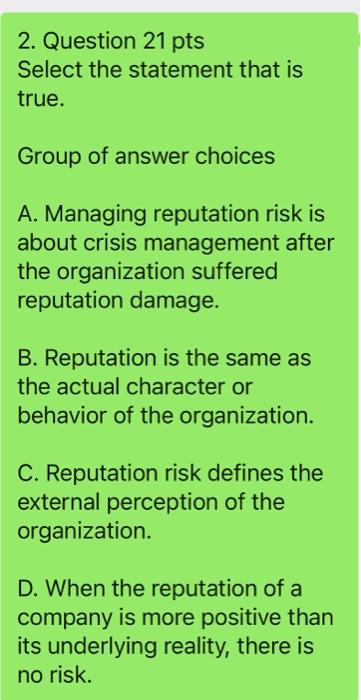
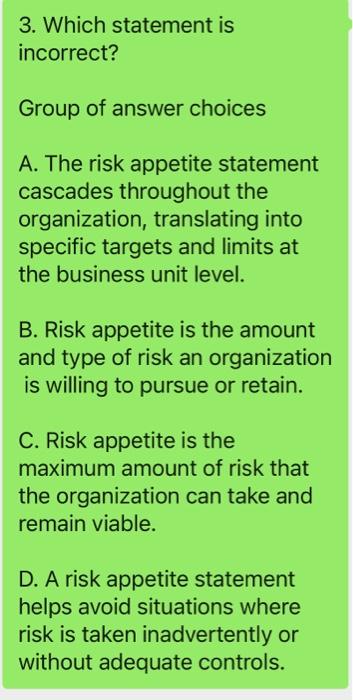
1. Question 11 pts Which is not an objective or activity of risk management Group of answer choices A. Identify, analyze, treat, and monitor risk B. Eliminate risk C. Direct and control an organization in terms of risk D. Creation and protection of value A. Managing reputation risk is about crisis management after the organization suffered reputation damage. B. Reputation is the same as the actual character or behavior of the organization. C. Reputation risk defines the external perception of the organization. D. When the reputation of a company is more positive than its underlying reality, there is no risk. 3. Which statement is incorrect? Group of answer choices A. The risk appetite statement cascades throughout the organization, translating into specific targets and limits at the business unit level. B. Risk appetite is the amount and type of risk an organization is willing to pursue or retain. C. Risk appetite is the maximum amount of risk that the organization can take and remain viable. D. A risk appetite statement helps avoid situations where risk is taken inadvertently or without adequate controls. 4. Which if the following statement is incorrect? Group of answer choices A. Policy risk as defined by Henisz and Zelner is about indiscriminate changing of laws or contracts. B. To develop an efficient risk mitigation strategy, managers should obtain a thorough understanding of the institutional environment in the host country. C. The FPCA is designed to reduce corporate bribery committed within the US only. D. Corruption in various forms is a significant issue in many emerging markets. 5. Which of the following is NOT part of the strategy for managing emerging risk? Group of answer choices A. Focus on the current goals and wait for the emerging risk to become critical. B. Increase consultations with experts and stakeholders. C. Develop precautionary approaches and invest in technology. D. Act on the contributing factors of risk emergence. 6. Which of the following is not true? Managing risk is Group of answer choices a. About setting up through a separate standalone framework b. The foundation of organizational management at all levels c. Part of governance and leadership d. A part of all activities related to the organization e. Focus on short-term profits
Step by Step Solution

There are 3 Steps involved in it

1 Expert Approved Answer
Step: 1 Unlock blur-text-image

Question Has Been Solved by an Expert!

Get step-by-step solutions from verified subject matter experts

Step: 2 Unlock
Step: 3 Unlock

Students Have Also Explored These Related General Management Questions!