







Question: 1. Rank all the programs 1 - 12, with the most cost-effective as measured by cost per life saved (cost per life saved =
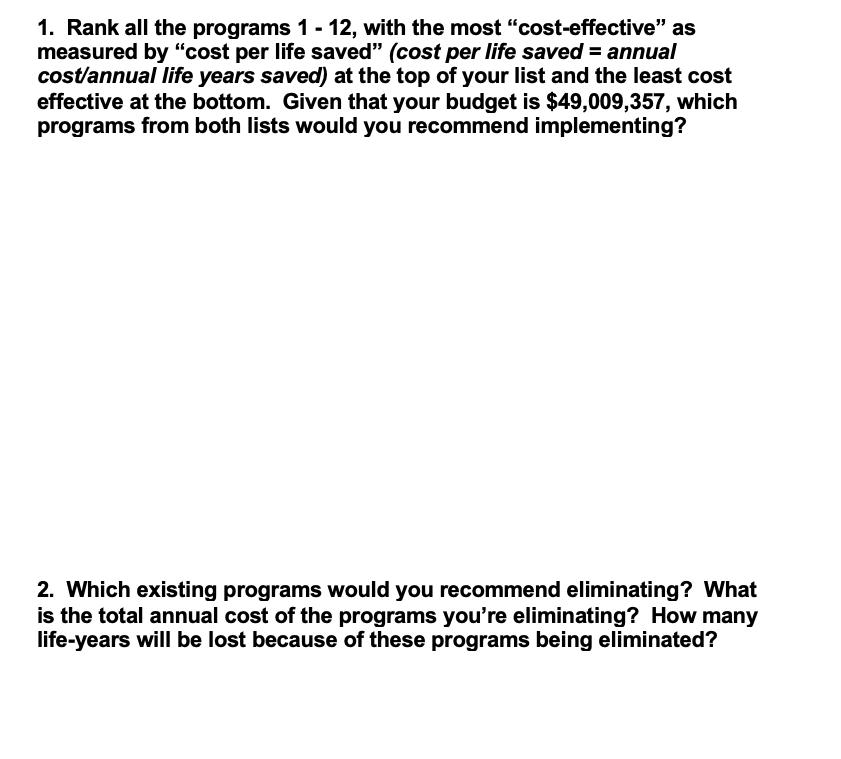
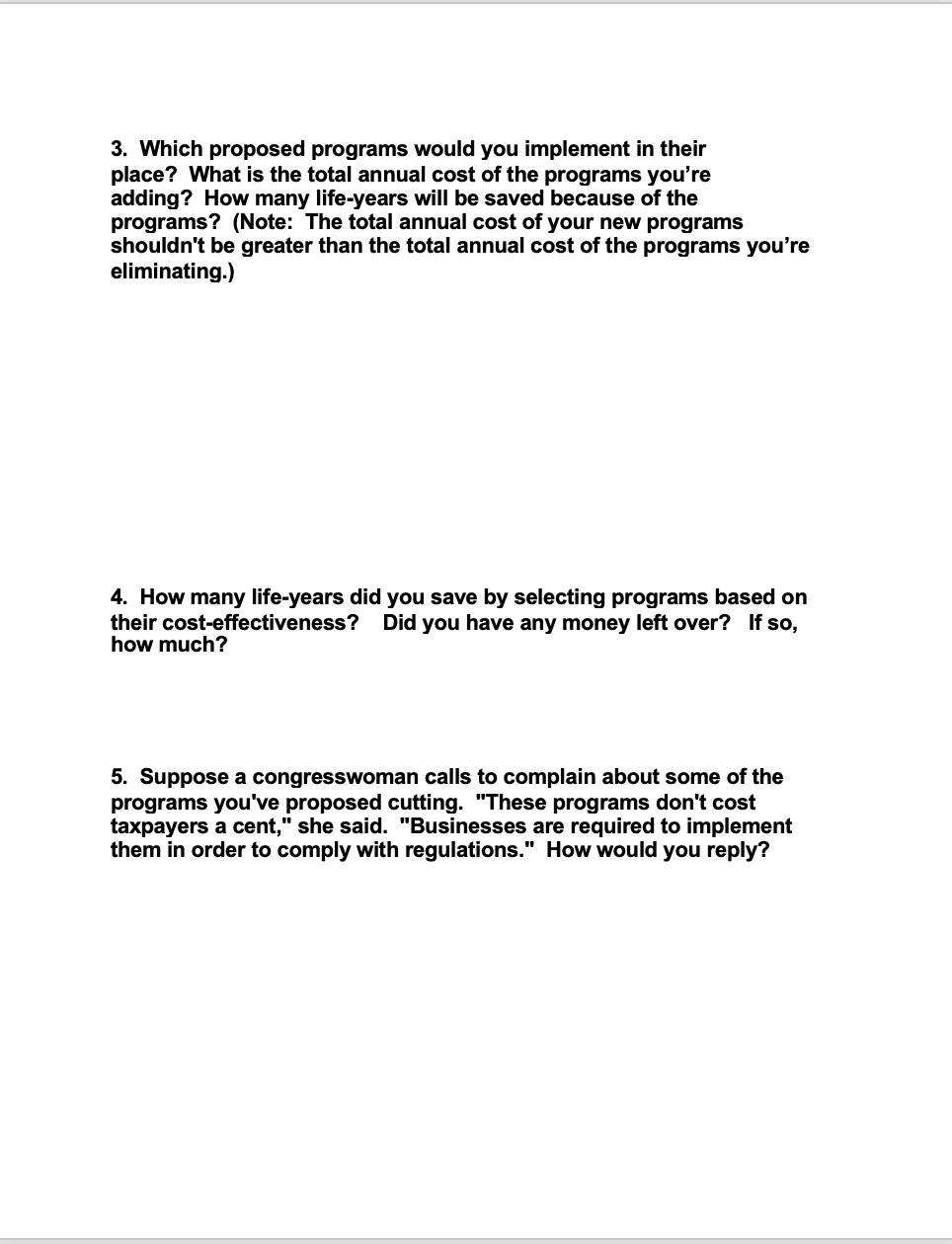
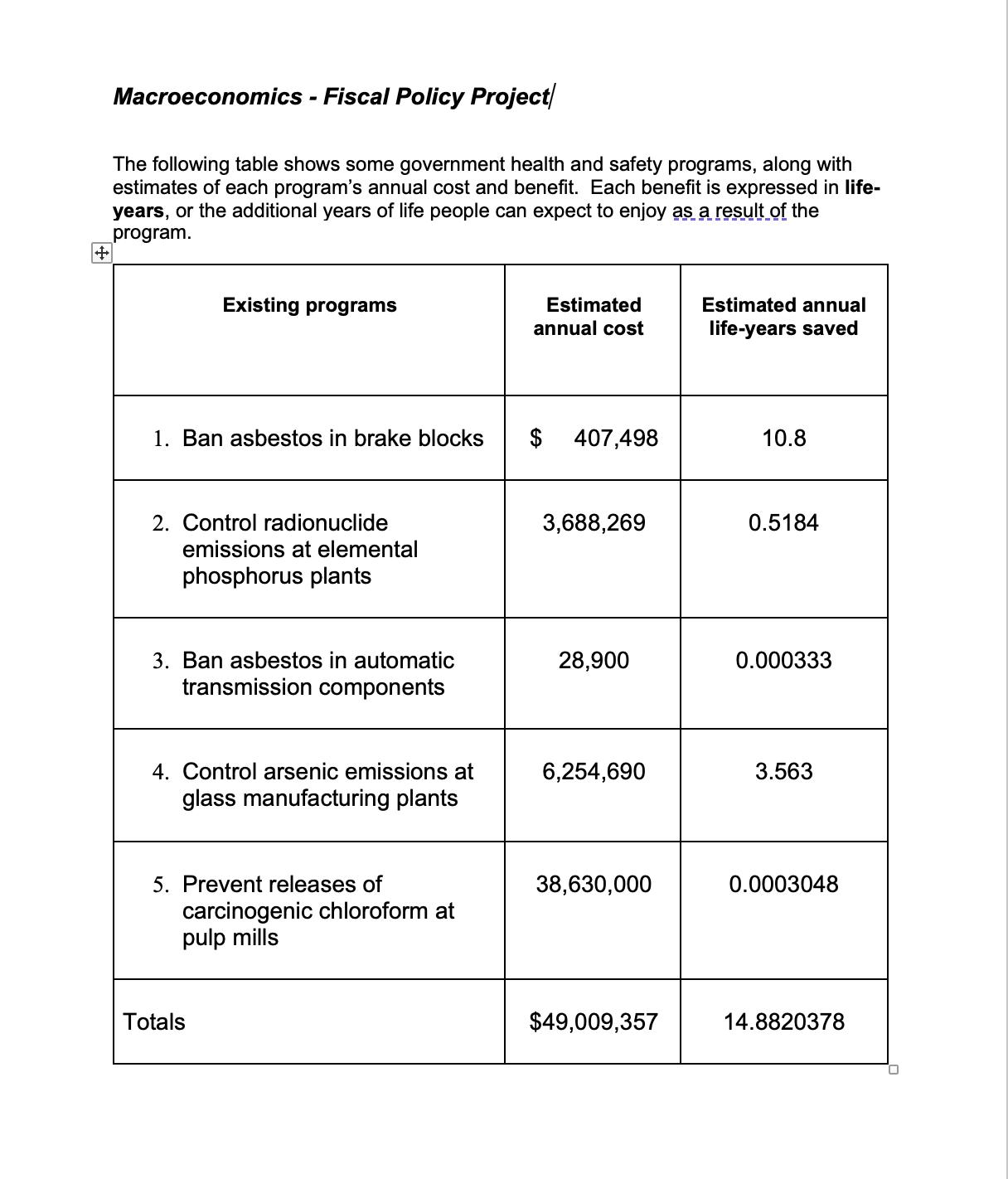
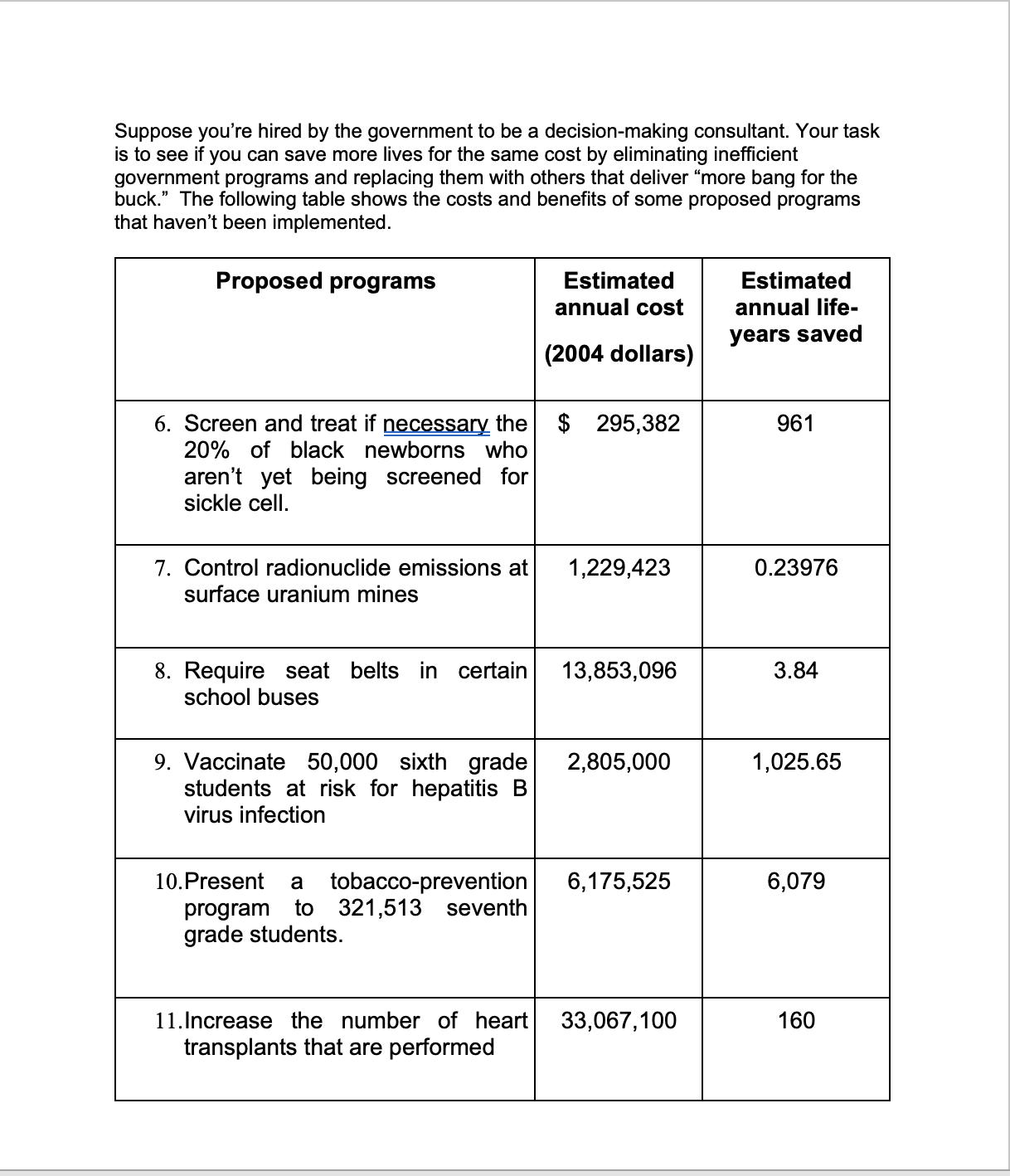

1. Rank all the programs 1 - 12, with the most "cost-effective" as measured by "cost per life saved" (cost per life saved = annual cost/annual life years saved) at the top of your list and the least cost effective at the bottom. Given that your budget is $49,009,357, which programs from both lists would you recommend implementing? 2. Which existing programs would you recommend eliminating? What is the total annual cost of the programs you're eliminating? How many life-years will be lost because of these programs being eliminated? 3. Which proposed programs would you implement in their place? What is the total annual cost of the programs you're adding? How many life-years will be saved because of the programs? (Note: The total annual cost of your new programs shouldn't be greater than the total annual cost of the programs you're eliminating.) 4. How many life-years did you save by selecting programs based on their cost-effectiveness? Did you have any money left over? If so, how much? 5. Suppose a congresswoman calls to complain about some of the programs you've proposed cutting. "These programs don't cost taxpayers a cent," she said. "Businesses are required to implement them in order to comply with regulations." How would you reply? Macroeconomics - Fiscal Policy Project The following table shows some government health and safety programs, along with estimates of each program's annual cost and benefit. Each benefit is expressed in life- years, or the additional years of life people can expect to enjoy as a result of the program. Existing programs 1. Ban asbestos in brake blocks 2. Control radionuclide emissions at elemental phosphorus plants 3. Ban asbestos in automatic transmission components 4. Control arsenic emissions at glass manufacturing plants 5. Prevent releases of carcinogenic chloroform at pulp mills Totals Estimated annual cost $ 407,498 3,688,269 28,900 6,254,690 38,630,000 $49,009,357 Estimated annual life-years saved 10.8 0.5184 0.000333 3.563 0.0003048 14.8820378 Suppose you're hired by the government to be a decision-making consultant. Your task is to see if you can save more lives for the same cost by eliminating inefficient government programs and replacing them with others that deliver "more bang for the buck." The following table shows the costs and benefits of some proposed programs that haven't been implemented. Proposed programs 6. Screen and treat if necessary the 20% of black newborns who aren't yet being screened for sickle cell. 7. Control radionuclide emissions at surface uranium mines 8. Require seat belts in certain school buses 9. Vaccinate 50,000 sixth grade students at risk for hepatitis B virus infection 10. Present a tobacco-prevention program to 321,513 seventh grade students. 11. Increase the number of heart transplants that are performed Estimated annual cost (2004 dollars) $ 295,382 1,229,423 13,853,096 2,805,000 6,175,525 33,067,100 Estimated annual life- years saved 961 0.23976 3.84 1,025.65 6,079 160 12. Triple wind-resistant the capabilities of some new buildings to protect occupants in the event of a hurricane 15,684,000 4.616
Step by Step Solution
There are 3 Steps involved in it

Get step-by-step solutions from verified subject matter experts
 Study Help