







Question: 1. Recall the cookie problem from lecture. We have two bowls, Bowl 1 and Bowl 2. Bowl 1 contains 25% chocolate and 75% vanilla cookies;
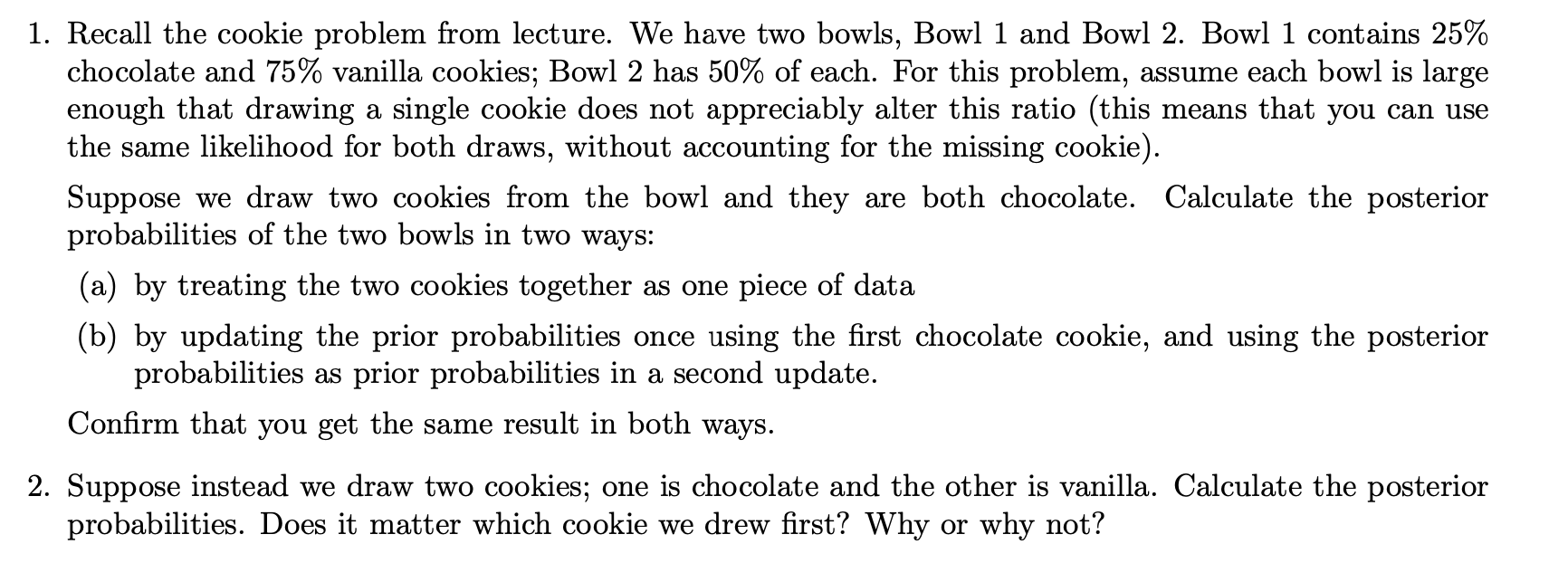
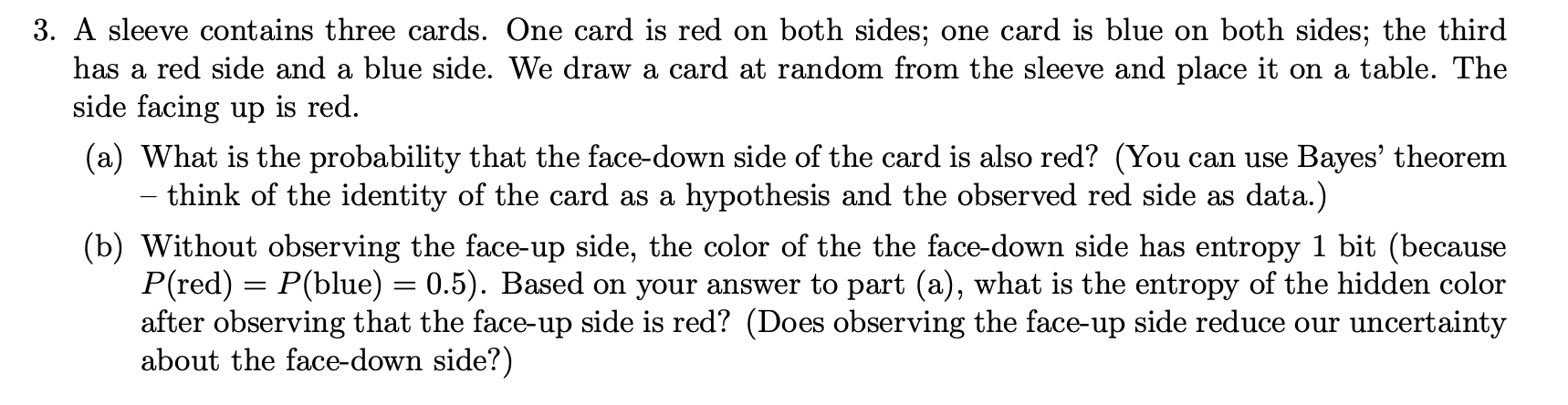
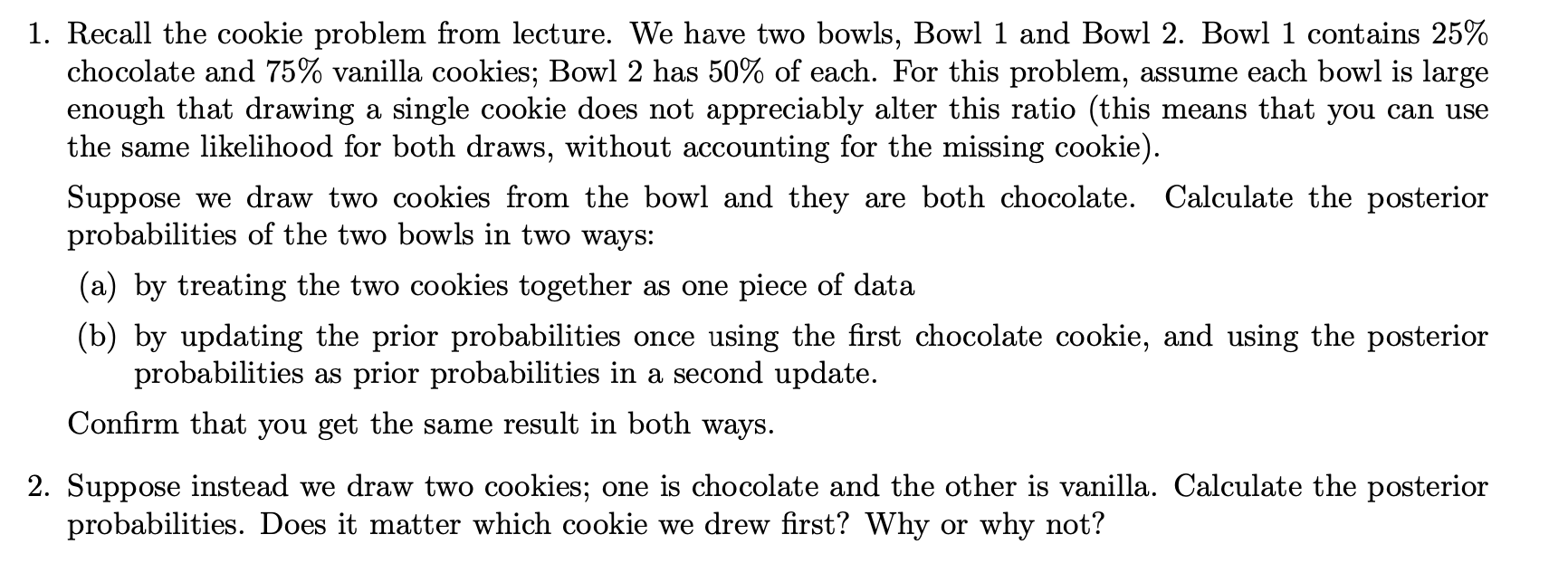
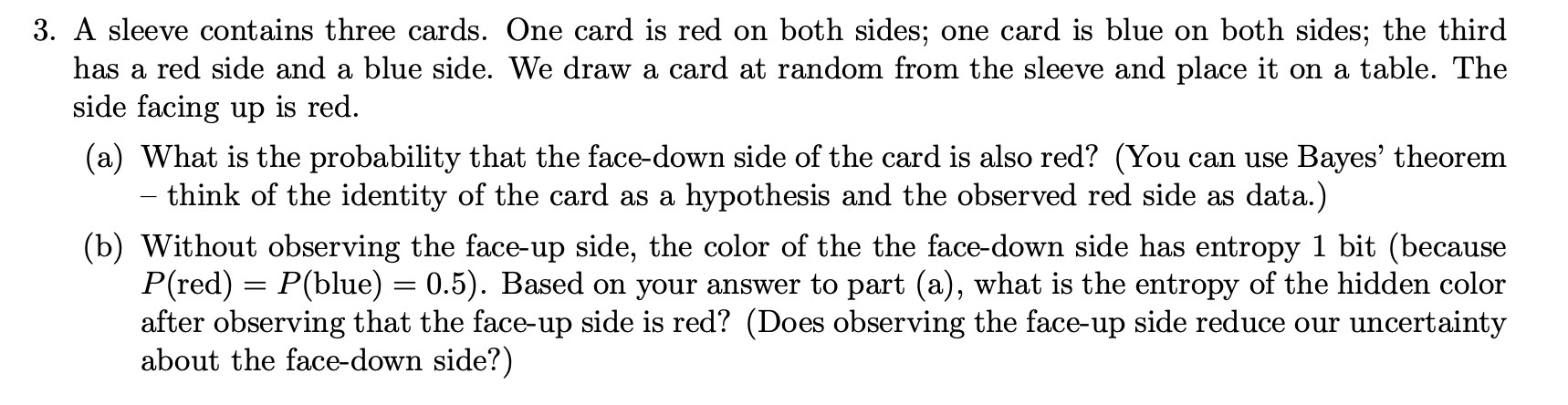
1. Recall the cookie problem from lecture. We have two bowls, Bowl 1 and Bowl 2. Bowl 1 contains 25% chocolate and 75% vanilla cookies; Bowl 2 has 50% of each. For this problem, assume each bowl is large enough that drawing a single cookie does not appreciably alter this ratio (this means that you can use the same likelihood for both draws, without accounting for the missing cookie). Suppose we draw two cookies from the bowl and they are both chocolate. Calculate the posterior probabilities of the two bowls in two ways: (a) by treating the two cookies together as one piece of data (b) by updating the prior probabilities once using the first chocolate cookie, and using the posterior probabilities as prior probabilities in a second update. Confirm that you get the same result in both ways. 2. Suppose instead we draw two cookies; one is chocolate and the other is vanilla. Calculate the posterior probabilities. Does it matter which cookie we drew first? Why or why not?3. A sleeve contains three cards. One card is red on both sides; one card is blue on both sides; the third has a red side and a blue side. We draw a card at random from the sleeve and place it on a table. The side facing up is red. (a) What is the probability that the face-down side of the card is also red? (You can use Bayes' theorem think of the identity of the card as a hypothesis and the observed red side as data.) (b) Without observing the face-up side, the color of the the face-down side has entropy 1 bit (because P(red) = P(blue) = 0.5). Based on your answer to part (a), what is the entropy of the hidden color after observing that the face-up side is red? (Does observing the face-up side reduce our uncertainty about the face-down side?)
Step by Step Solution
There are 3 Steps involved in it

Get step-by-step solutions from verified subject matter experts
 Study Help