







Question: 1. Risk avoidance is an appropriate strategy when the potential losses seriously outweigh the likely benefits. What factors should be considered on the cost and
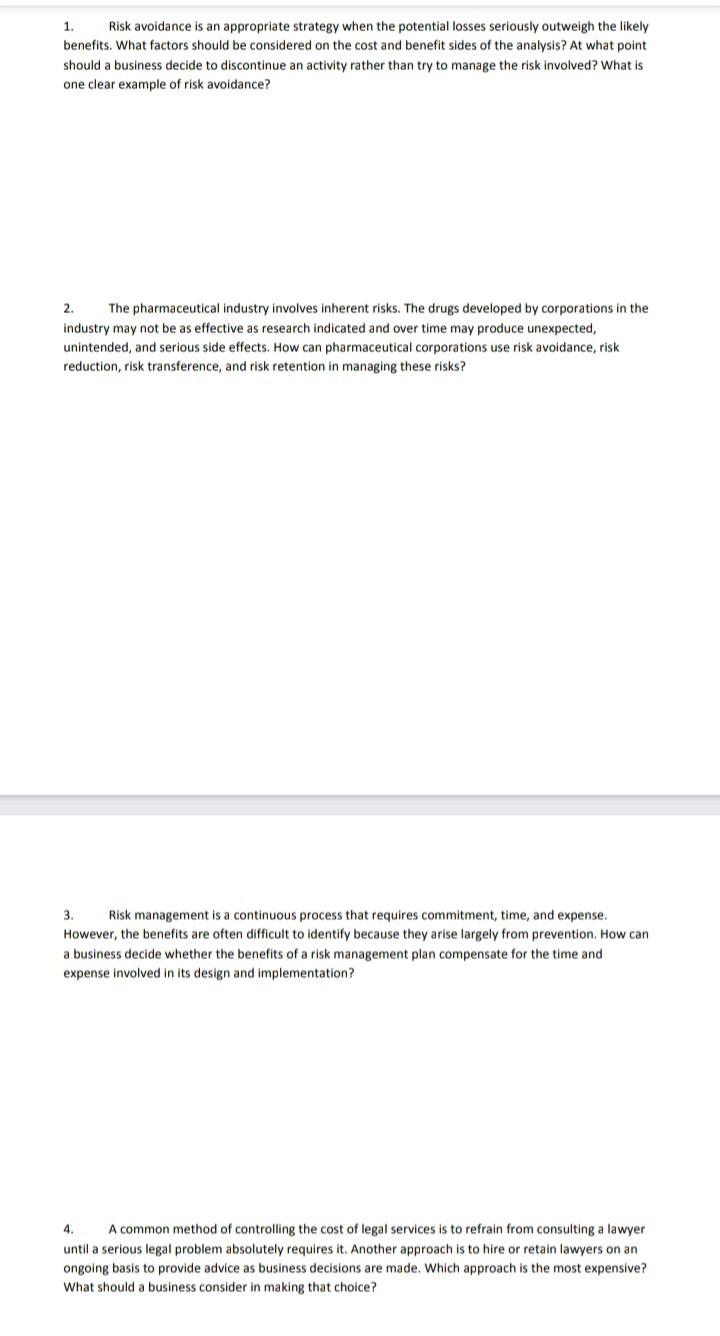
1. Risk avoidance is an appropriate strategy when the potential losses seriously outweigh the likely benefits. What factors should be considered on the cost and benefit sides of the analysis? At what point should a business decide to discontinue an activity rather than try to manage the risk involved? What is one clear example of risk avoidance? 2. The pharmaceutical industry involves inherent risks. The drugs developed by corporations in the industry may not be as effective as research indicated and over time may produce unexpected, unintended, and serious side effects. How can pharmaceutical corporations use risk avoidance, risk reduction, risk transference, and risk retention in managing these risks? 3. Risk management is a continuous process that requires commitment, time, and expense. However, the benefits are often difficult to identify because they arise largely from prevention. How can a business decide whether the benefits of a risk management plan compensate for the time and expense involved in its design and implementation? 4. A common method of controlling the cost of legal services is to refrain from consulting a lawyer until a serious legal problem absolutely requires it. Another approach is to hire or retain lawyers on an ongoing basis to provide advice as business decisions are made. Which approach is the most expensive? What should a business consider in making that choice
Step by Step Solution
There are 3 Steps involved in it

Get step-by-step solutions from verified subject matter experts
 Study Help