







Question: 1. Technician(tID, firstName, lastName, startDate, endDate, trainingLevel) 2. Sample(patientID, ID, date, time) patientID refers to healthNum in Patient tID refers to tiD in Technician 3.
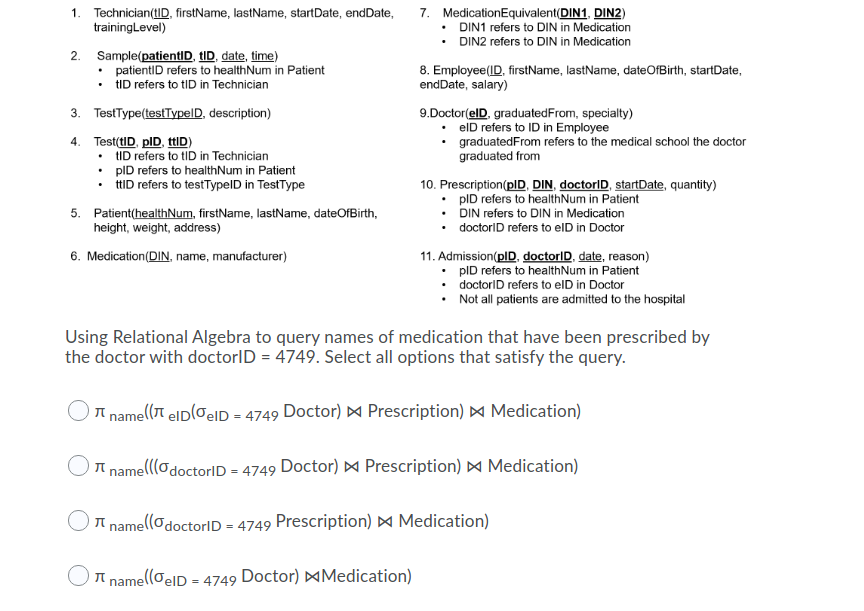
1. Technician(tID, firstName, lastName, startDate, endDate, trainingLevel) 2. Sample(patientID, ID, date, time) patientID refers to healthNum in Patient tID refers to tiD in Technician 3. TestType(testTypeID, description) 4. Test(tID PID, ID) tID refers to tiD in Technician PID refers to healthNum in Patient ftID refers to testTypeID in TestType 5. Patient(healthNum, firstName, lastName, dateOfBirth, height, weight, address) 6. Medication (DIN, name, manufacturer) 7. MedicationEquivalent (DIN1, DIN2) DIN1 refers to DIN in Medication DIN2 refers to DIN in Medication 8. Employee(ID, firstName, lastName, dateOfBirth, startDate, endDate, salary) 9.Doctor(eID, graduated from, specialty) el refers to ID in Employee graduated From refers to the medical school the doctor graduated from 10. Prescription (pID, DIN, doctorld, startDate, quantity) pID refers to healthNum in Patient DIN refers to DIN in Medication . doctorID refers to eld in Doctor 11. Admission(plD, doctorID, date, reason) PID refers to healthNum in Patient doctorID refers to eld in Doctor Not all patients are admitted to the hospital Using Relational Algebra to query names of medication that have been prescribed by the doctor with doctorlD = 4749. Select all options that satisfy the query. I namellrteldoeld = 4749 Doctor) Prescription) Medication) namel(lodoctorID = 4749 Doctor) Prescription) A Medication) On namello doctorID = 4749 Prescription) Medication) A namelloeld = 4749 Doctor) Medication)
Step by Step Solution
There are 3 Steps involved in it

Get step-by-step solutions from verified subject matter experts
 Study Help