







Question: 1. The basic component for undertaking quality improvement is the quality improvement team (QIT). It comprises: A. Managers who know the process well because they
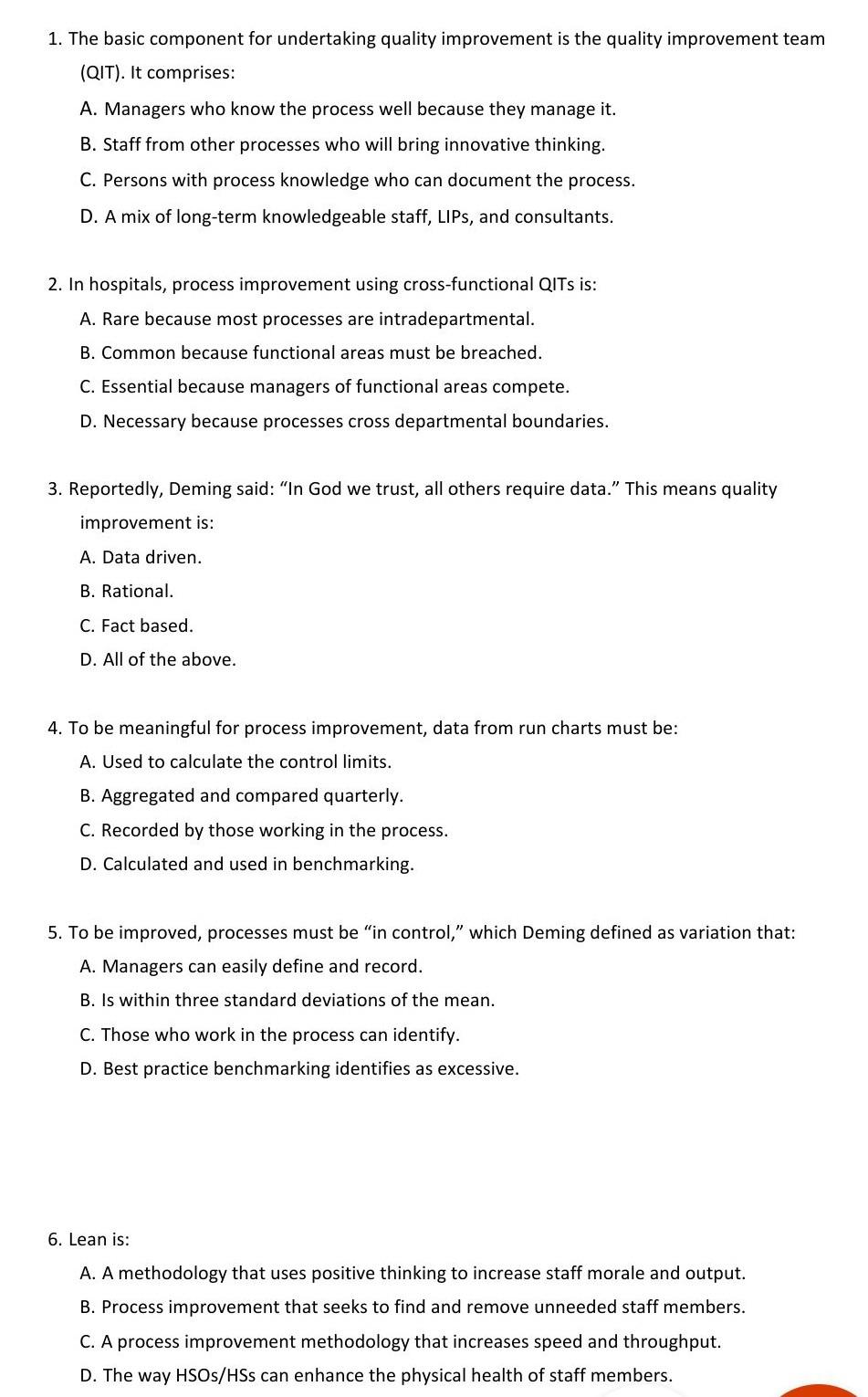
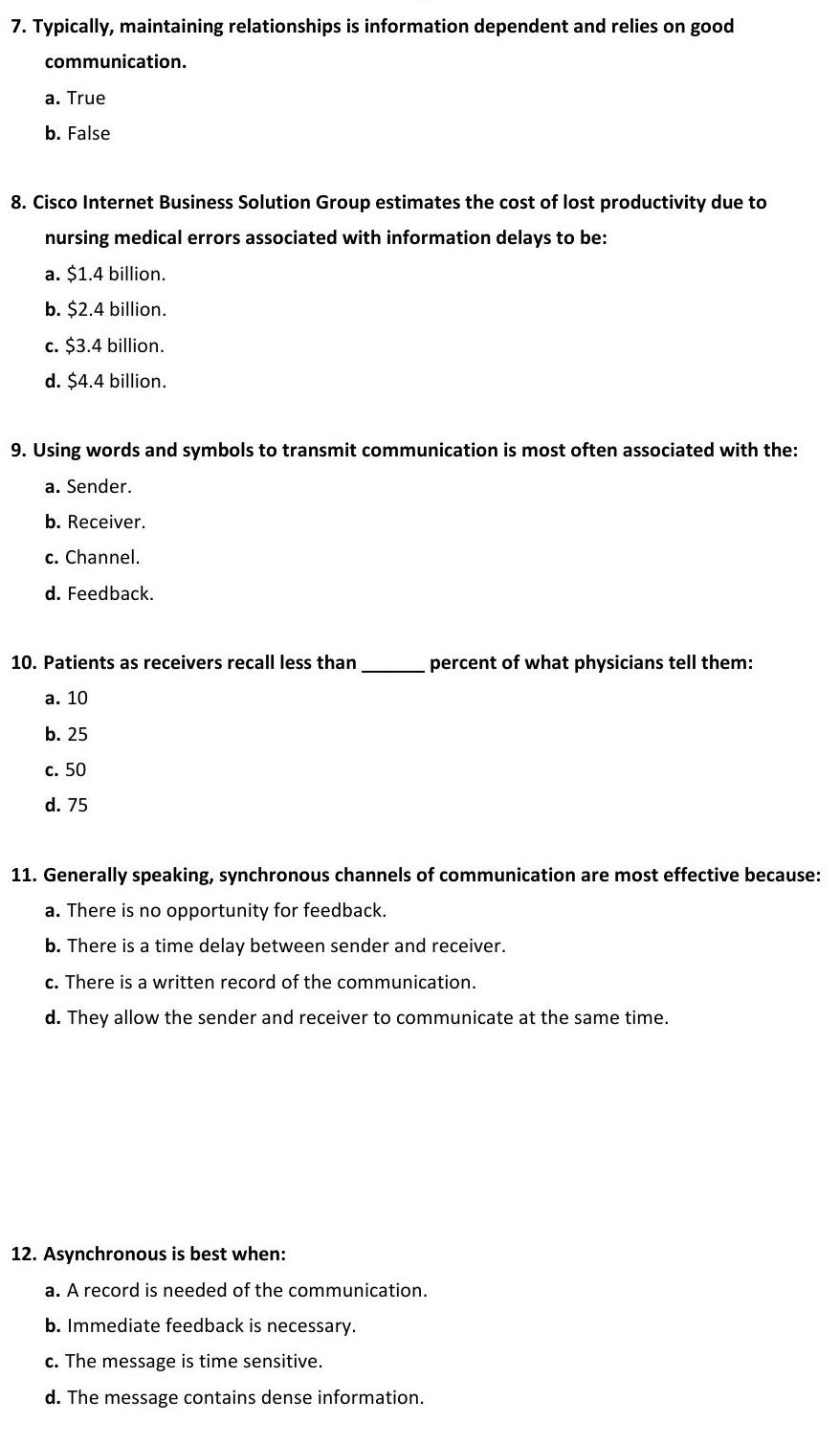
1. The basic component for undertaking quality improvement is the quality improvement team (QIT). It comprises: A. Managers who know the process well because they manage it. B. Staff from other processes who will bring innovative thinking. C. Persons with process knowledge who can document the process. D. A mix of long-term knowledgeable staff, LIPs, and consultants. 2. In hospitals, process improvement using cross-functional QITs is: A. Rare because most processes are intradepartmental. B. Common because functional areas must be breached. C. Essential because managers of functional areas compete. D. Necessary because processes cross departmental boundaries. 3. Reportedly, Deming said: "In God we trust, all others require data." This means quality improvement is: A. Data driven. B. Rational. C. Fact based. D. All of the above. 4. To be meaningful for process improvement, data from run charts must be: A. Used to calculate the control limits. B. Aggregated and compared quarterly. C. Recorded by those working in the process. D. Calculated and used in benchmarking. 5. To be improved, processes must be "in control," which Deming defined as variation that: A. Managers can easily define and record. B. Is within three standard deviations of the mean. C. Those who work in the process can identify. D. Best practice benchmarking identifies as excessive. 6. Lean is: A. A methodology that uses positive thinking to increase staff morale and output. B. Process improvement that seeks to find and remove unneeded staff members. C. A process improvement methodology that increases speed and throughput. D. The way HSOs/HSs can enhance the physical health of staff members. 7. Typically, maintaining relationships is information dependent and relies on good communication. a. True b. False 8. Cisco Internet Business Solution Group estimates the cost of lost productivity due to nursing medical errors associated with information delays to be: a. $1.4 billion. b. $2.4 billion. c. $3.4 billion. d. $4.4 billion. 9. Using words and symbols to transmit communication is most often associated with the: a. Sender. b. Receiver. c. Channel. d. Feedback. 10. Patients as receivers recall less than percent of what physicians tell them: a. 10 b. 25 c. 50 d. 75 11. Generally speaking, synchronous channels of communication are most effective because: a. There is no opportunity for feedback. b. There is a time delay between sender and receiver. c. There is a written record of the communication. d. They allow the sender and receiver to communicate at the same time. 12. Asynchronous is best when: a. A record is needed of the communication. b. Immediate feedback is necessary. c. The message is time sensitive. d. The message contains dense information
Step by Step Solution
There are 3 Steps involved in it
1 Expert Approved Answer
Step: 1 Unlock

Question Has Been Solved by an Expert!
Get step-by-step solutions from verified subject matter experts
Step: 2 Unlock
Step: 3 Unlock
 Study Help