



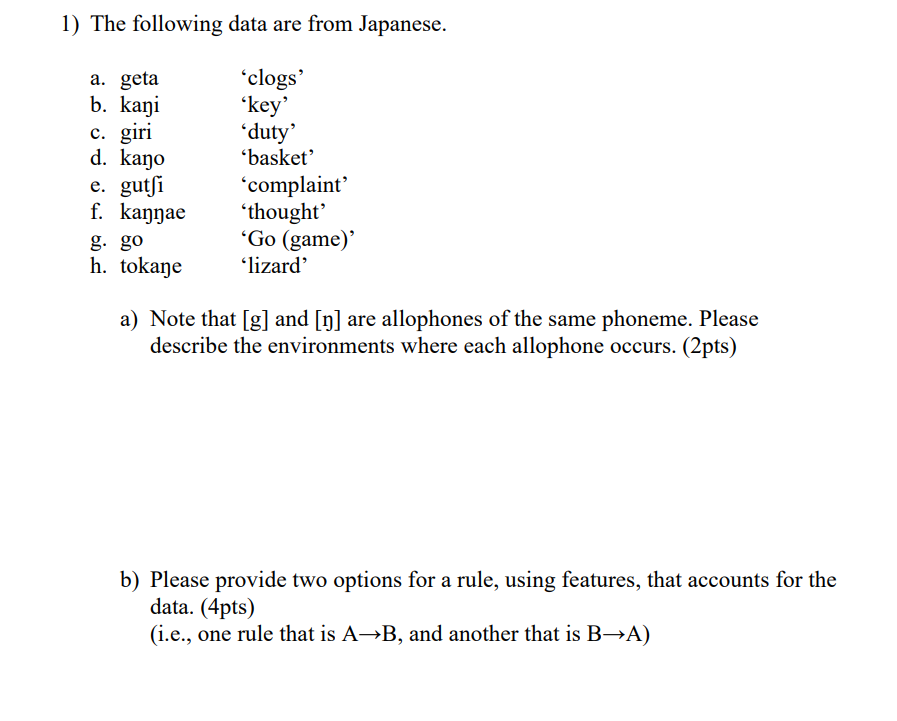
Question: 1) The following data are from Japanese. a. geta 'clogs' b. kani 'key' c. giri duty' d. kano 'basket' e. gutfi 'complaint' f. kannae 'thought'
![[g] and [n] are allophones of the same phoneme. Please describe the](https://dsd5zvtm8ll6.cloudfront.net/si.experts.images/questions/2024/10/671216653a404_629671216650ca45.jpg)
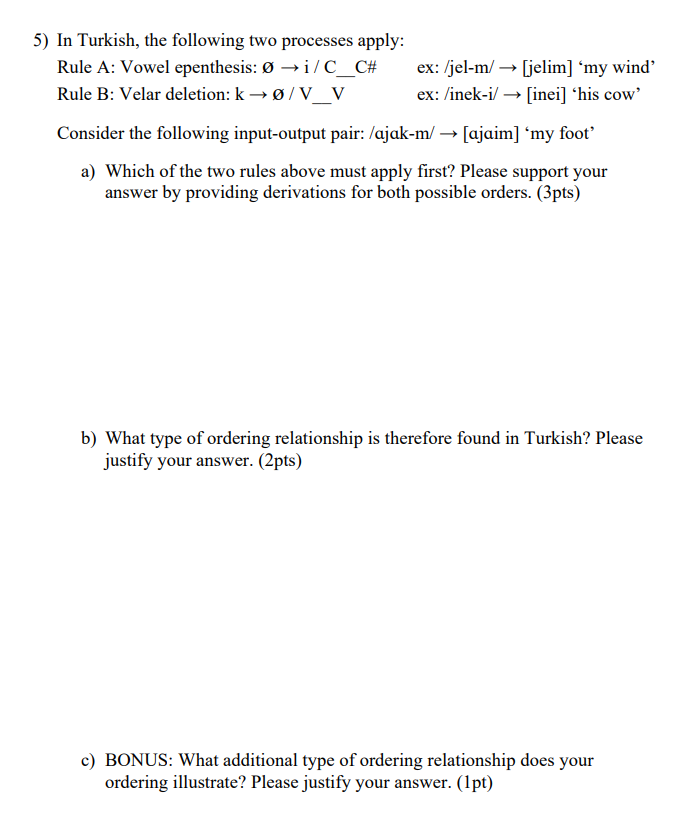
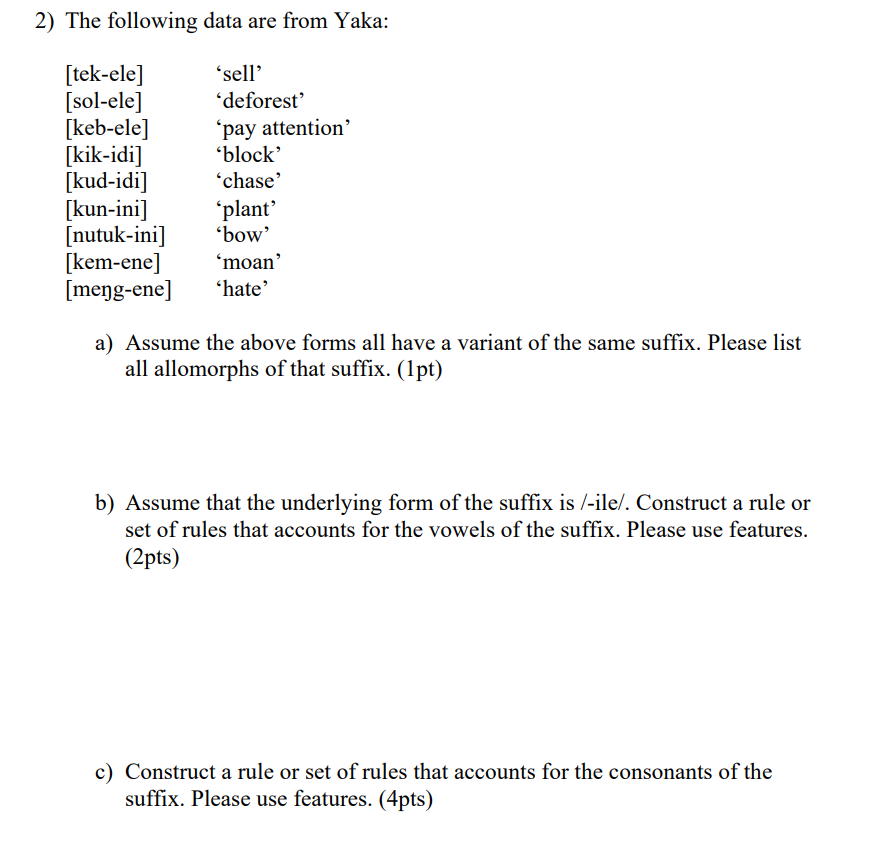
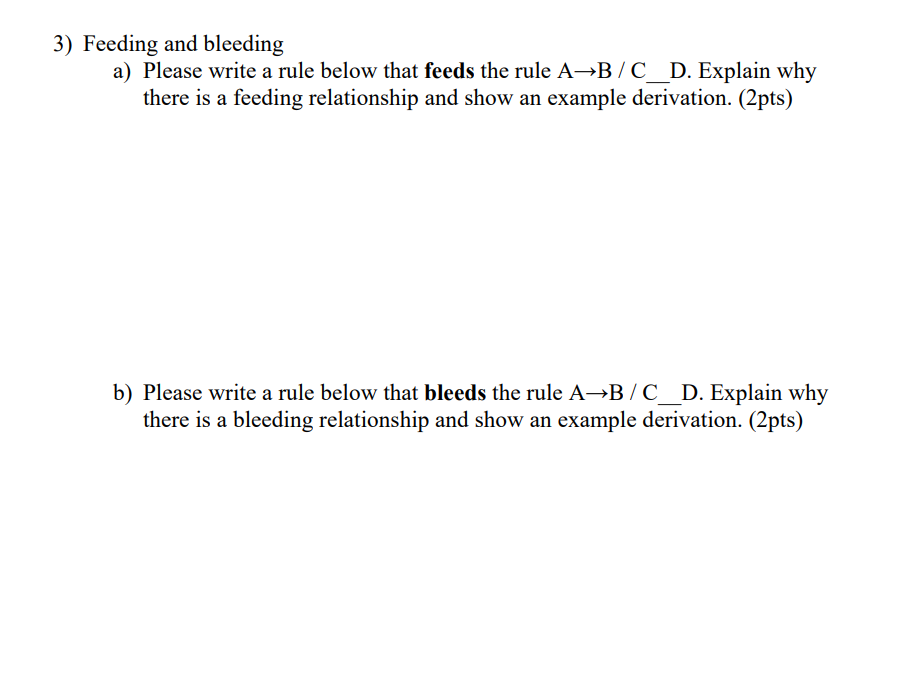
1) The following data are from Japanese. a. geta 'clogs' b. kani 'key' c. giri duty' d. kano 'basket' e. gutfi 'complaint' f. kannae 'thought' g. go 'Go (game)' h. tokane 'lizard' a) Note that [g] and [n] are allophones of the same phoneme. Please describe the environments where each allophone occurs. (2pts) b) Please provide two options for a rule, using features, that accounts for the data. (4pts) (i.e., one rule that is A-B, and another that is B-A)2) The following data are from Yaka: [tek-ele] 'sell' [sol-ele] 'deforest' [keb-ele] 'pay attention' [kik-idi] block' [kud-idi] 'chase' [kun-ini] 'plant' [nutuk-ini] 'bow' [kem-ene ] 'moan' [meng-ene ] 'hate' a) Assume the above forms all have a variant of the same suffix. Please list all allomorphs of that suffix. (1pt) b) Assume that the underlying form of the suffix is /-ile/. Construct a rule or set of rules that accounts for the vowels of the suffix. Please use features. (2pts) c) Construct a rule or set of rules that accounts for the consonants of the suffix. Please use features. (4pts)3) Feeding and bleeding a) Please write a rule below that feeds the rule AB /C D. Explain why there is a feeding relationship and show an example derivation. (2pts) b) Please write a rule below that bleeds the rule AB /C D. Explain why there is a bleeding relationship and show an example derivation. (2pts) 4) The following data are from Kikuyu. You will be asked to account for two types of alternations. (Note: Assume that [r] has the same features as [I].) Imperative Isg. imperfect gloss a. Bur-a m-bur-eete lop off b. tem-a n-dem-eetc cut c. reg-a n-deg-eetc 'pay' d. kom-a 1-gom-eete 'sleep' e. yor-a n-gor-eetc buy' a) Prefix alternations: i. List all of the Isg. imperfect prefix allomorphs. (1pt) ii. Write a rule that accounts for the alternations. (2pts) b) Root alternations: i . Note that there are several alternations in the roots in the above data. List the underlying forms of all five roots. (1pt) ii. Write a rule that accounts for the root alternations. (2pts) c) Does the order of your two rules above matter? If so, what type of ordering relationship is it? Please justify all aspects of your answer.5) In Turkish, the following two processes apply: Rule A: Vowel epenthesis: 0 - i/C_C# ex: /jel-m/ - [jelim] 'my wind' Rule B: Velar deletion: k - o / V V ex: /inek-i/ - [inei] 'his cow' Consider the following input-output pair: /ajak-m/ - [ajaim] 'my foot' a) Which of the two rules above must apply first? Please support your answer by providing derivations for both possible orders. (3pts) b) What type of ordering relationship is therefore found in Turkish? Please justify your answer. (2pts) c) BONUS: What additional type of ordering relationship does your ordering illustrate? Please justify your answer. (1pt)
Step by Step Solution
There are 3 Steps involved in it

Get step-by-step solutions from verified subject matter experts