







Question: 1. The return provided by Treasury bonds is considered as risk-free return and provides a basis to compare the return offered by corponte bonds. Refer
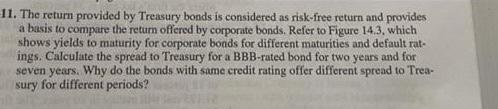
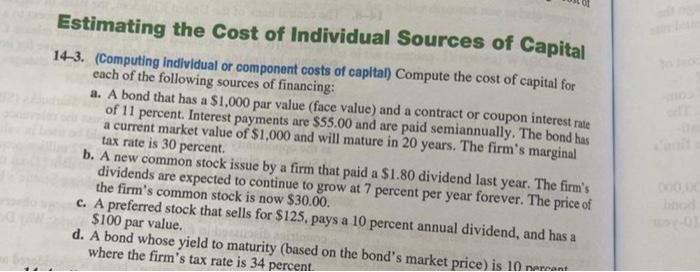
1. The return provided by Treasury bonds is considered as risk-free return and provides a basis to compare the return offered by corponte bonds. Refer to Figure 14,3, which shows yields to maturity for corporate bonds for different maturities and default ratings. Calculate the spread to Treasury for a BBB-rated bond for two years and for seven years. Why do the bonds with sume credit rating offer different spread to Treasury for different periods? Estimating the Cost of Individual Sources of Capital 14-3. (Computing individual or component costs of capital) Compute the cost of capital for each of the following sources of financing: a. A bond that has a $1,000 par value (face value) and a contract or coupon interest rate of 11 percent. Interest payments are $55.00 and are paid semiannually. The bond has a current market value of $1,000 and will mature in 20 years. The firm's marginal b. A new common stock issue by a firm that paid a $1.80 dividend last year. The firm's dividends are expected to continue to grow at 7 percent per year forever. The price of the firm's common stock is now $30.00. c. A preferred stock that sells for \$125, pays a 10 percent annual dividend, and has a $100 par value. d. A bond whose yield to maturity (based on the bond's market price) is 10 narant. where the firm's tax rate is 34 percent 1. The return provided by Treasury bonds is considered as risk-free return and provides a basis to compare the return offered by corponte bonds. Refer to Figure 14,3, which shows yields to maturity for corporate bonds for different maturities and default ratings. Calculate the spread to Treasury for a BBB-rated bond for two years and for seven years. Why do the bonds with sume credit rating offer different spread to Treasury for different periods? Estimating the Cost of Individual Sources of Capital 14-3. (Computing individual or component costs of capital) Compute the cost of capital for each of the following sources of financing: a. A bond that has a $1,000 par value (face value) and a contract or coupon interest rate of 11 percent. Interest payments are $55.00 and are paid semiannually. The bond has a current market value of $1,000 and will mature in 20 years. The firm's marginal b. A new common stock issue by a firm that paid a $1.80 dividend last year. The firm's dividends are expected to continue to grow at 7 percent per year forever. The price of the firm's common stock is now $30.00. c. A preferred stock that sells for \$125, pays a 10 percent annual dividend, and has a $100 par value. d. A bond whose yield to maturity (based on the bond's market price) is 10 narant. where the firm's tax rate is 34 percent
Step by Step Solution
There are 3 Steps involved in it

Get step-by-step solutions from verified subject matter experts
 Study Help