



Question: 1. Using the information in the graphic below, calculate the cycle time and output rate. Assume the process is in steady state and a linked
1. Using the information in the graphic below, calculate the cycle time and output rate. Assume the process is in steady state and a linked line operating at capacity.

2. Using the information in the graphic above, recalculate assuming a paced line. The boss wants the process to work up to, but not exceed 80% utilization. In steady state calculate the cycle time and output rate.
3. Using the paced line calculation, if the system has to be emptied out after each batch, how long would a single batch (BS = 50) take to be processed from start to finish?
4. Using the graphic and information below, answer the following questions.
Product X which is produced by Patriot Inc., which has a Fabrication Department and Assembly Department. They produce in a batch size of 20. NOTE that only Fabrication has set-up times. Fabrication produces three parts needed for Product X: a batch of Part 1 is made by Machine A and then transported to Machine B, a batch of Part 2 is made by Machine C, and a batch of Part 3 is made by Machine D. A batch containing all three parts are completed by Fabrication and then sent to the WIP queue in front of Assembly.
In Assembly, the transfer batch size is 1 kit (one each of Part 1 , Part 2, and Part 3). Assembly 1 attaches all three parts to create an initial Product X. Assembly 2 completes all other assembly actions. Assembly operates as a paced line with no queues between the assembly workers. Assume an 8 hour workday. Only one batch is allowed in each department at one time.
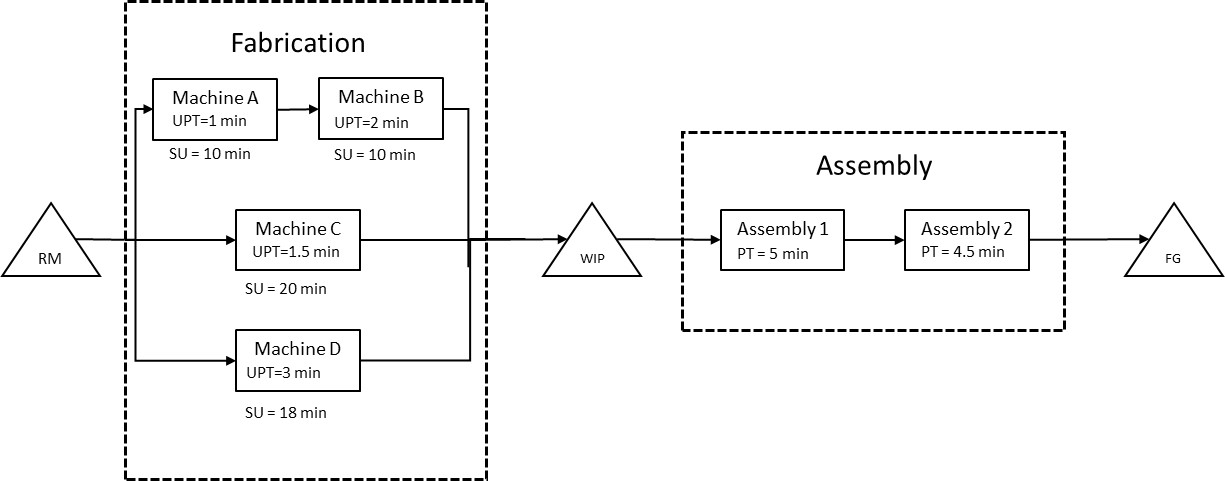
4a. Calculate the BPT for each of the three parts in the Fabrication Department. Which part is the bottleneck?
4b. If only one batch is allowed in each department at a time, how long would a batch of 20 take to process through Assembly?
4c. What is the minimum MTT for a batch of Product X?
4d. What is the capacity of this entire process in batches per day (assuming an 8 hour day)?
Step by Step Solution
There are 3 Steps involved in it

Get step-by-step solutions from verified subject matter experts