



Question: 1. Visit the toy section in a large department store such as Target or Walmart. Identify the different sections or aisles of the store
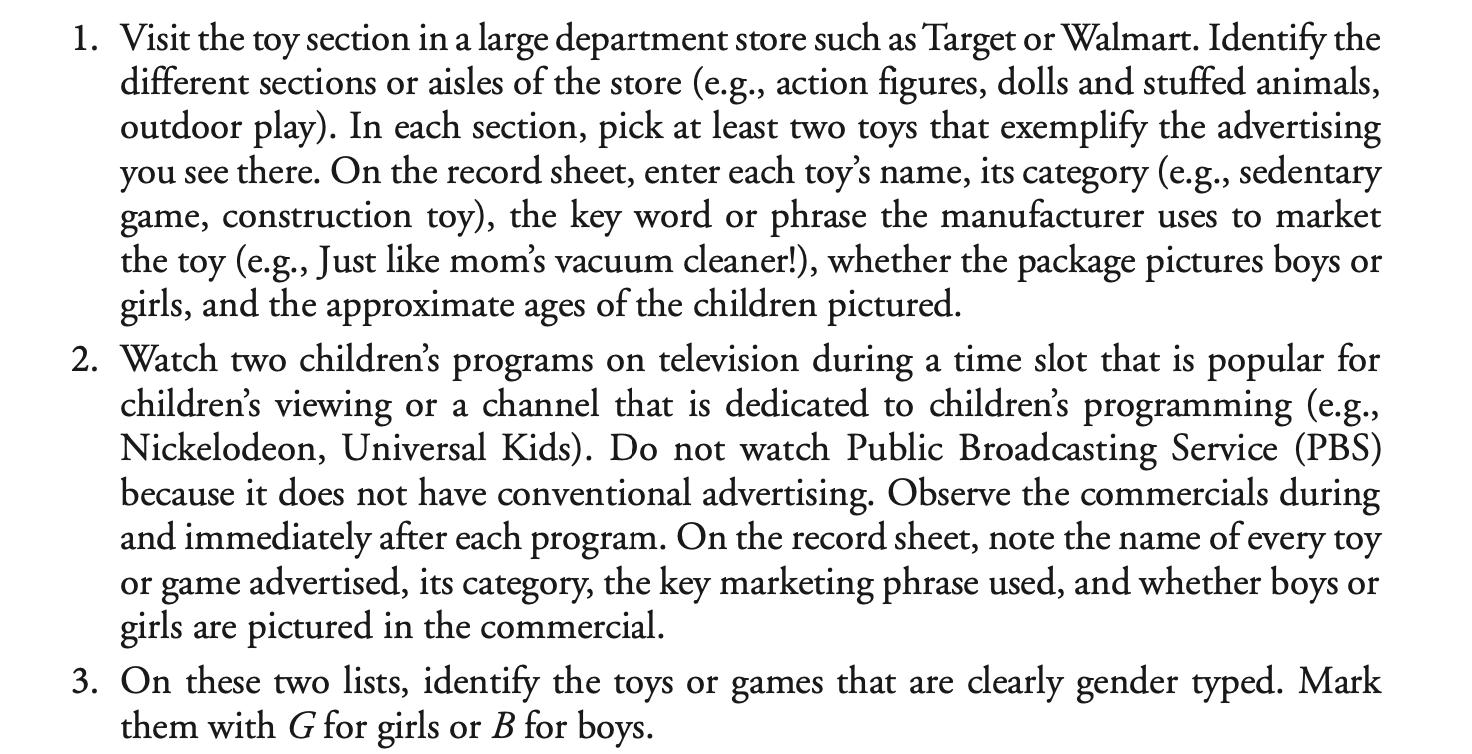
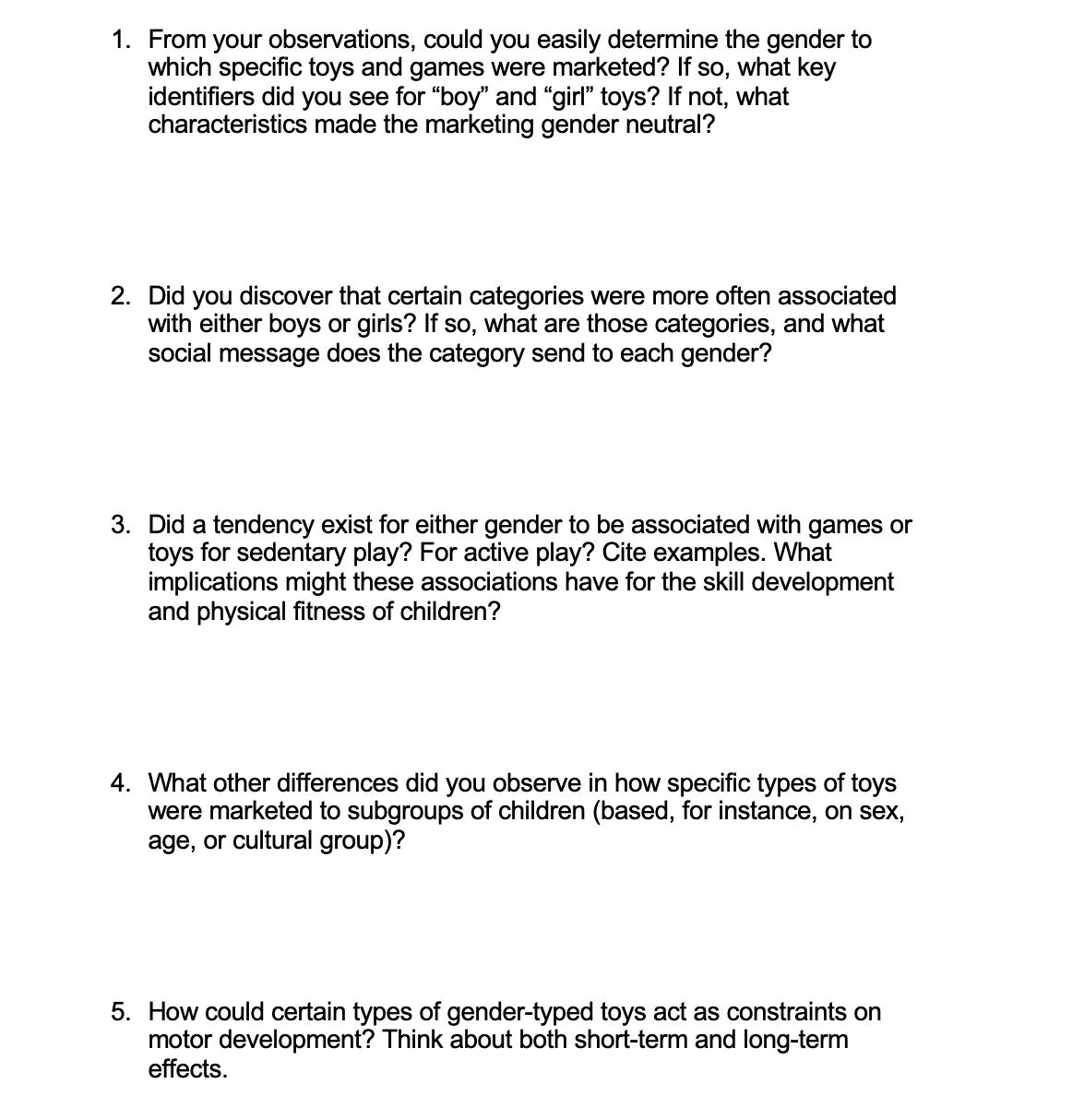
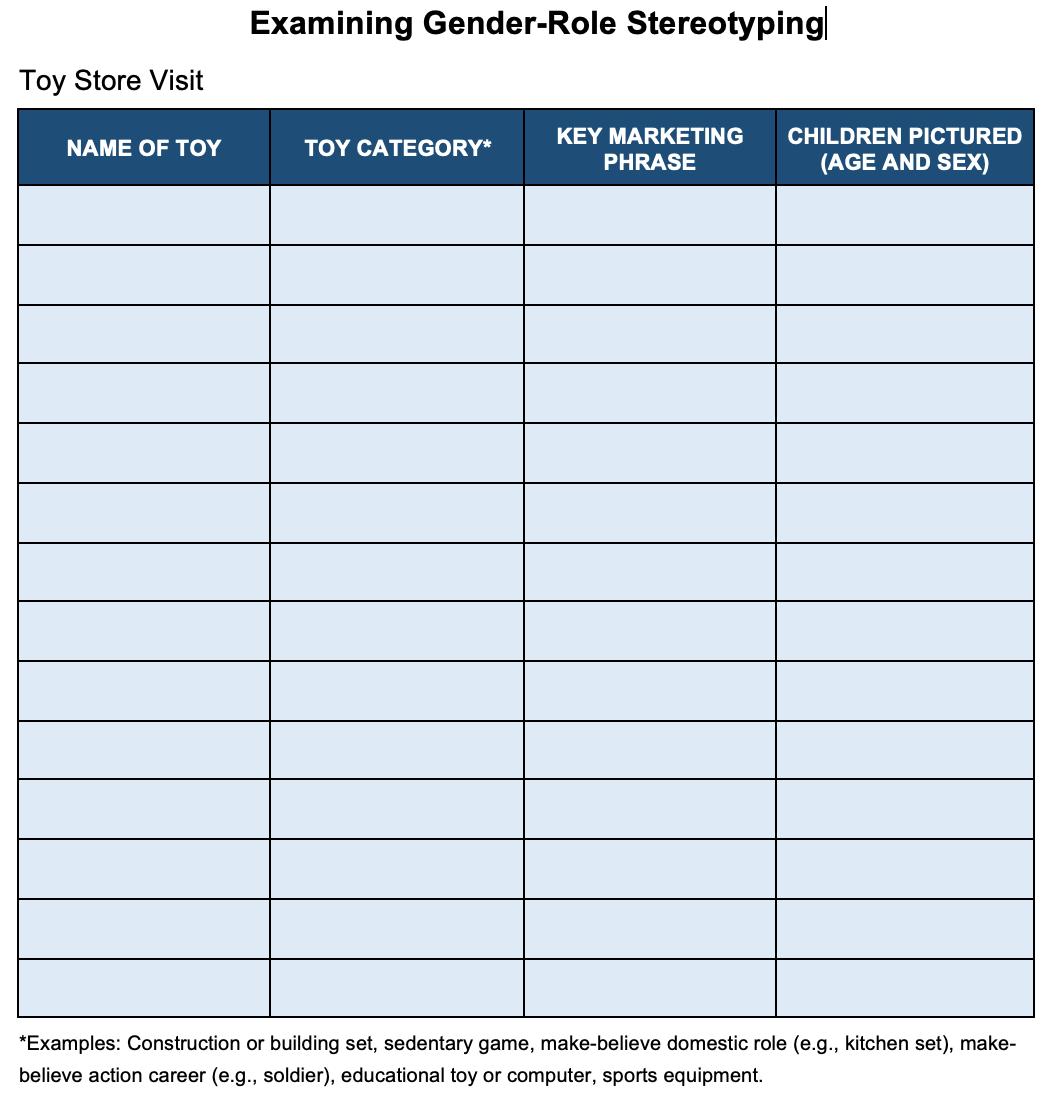
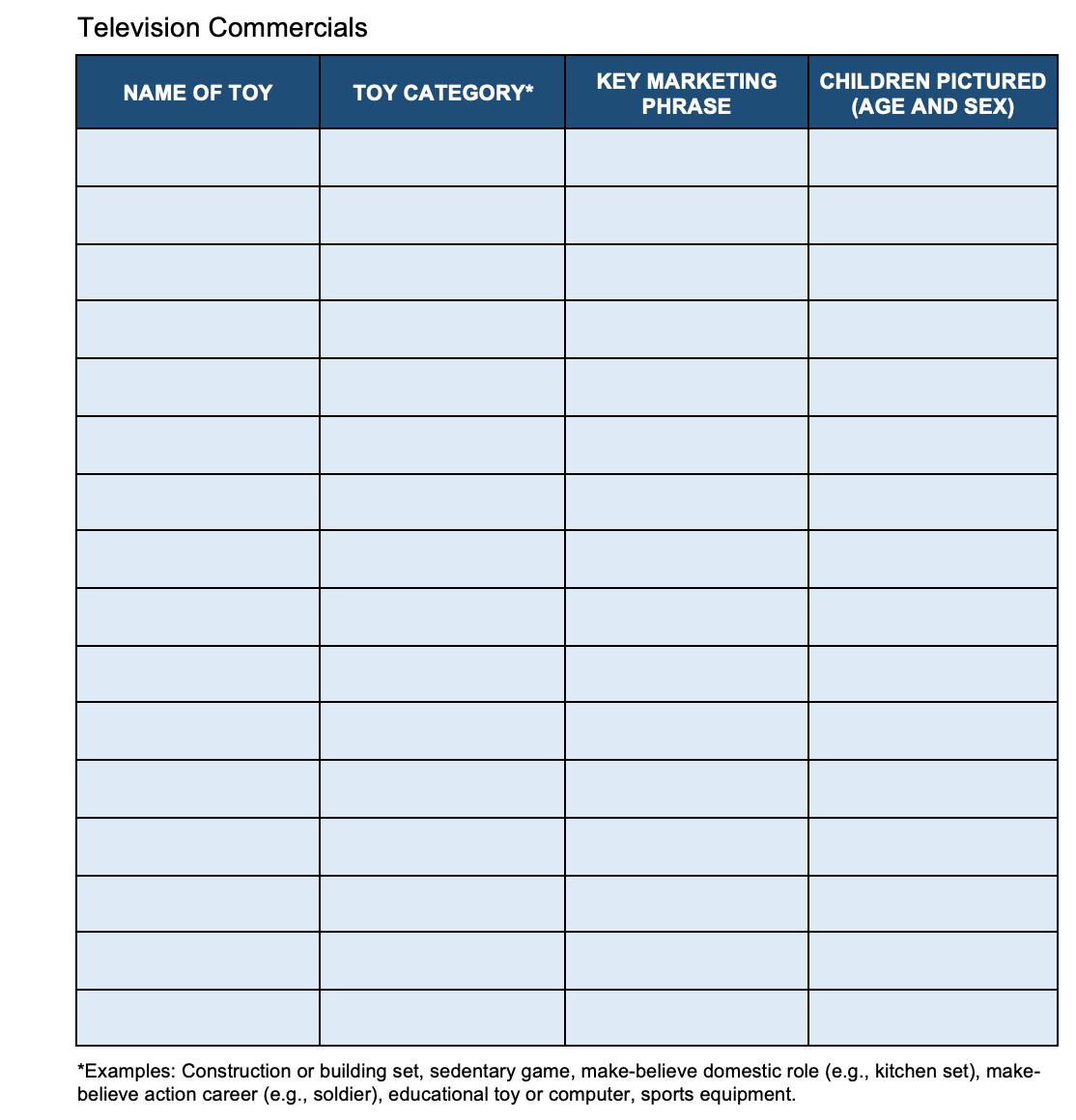
1. Visit the toy section in a large department store such as Target or Walmart. Identify the different sections or aisles of the store (e.g., action figures, dolls and stuffed animals, outdoor play). In each section, pick at least two toys that exemplify the advertising you see there. On the record sheet, enter each toy's name, its category (e.g., sedentary game, construction toy), the key word or phrase the manufacturer uses to market the toy (e.g., Just like mom's vacuum cleaner!), whether the package pictures boys or girls, and the approximate ages of the children pictured. 2. Watch two children's programs on television during a time slot that is popular for children's viewing or a channel that is dedicated to children's programming (e.g., Nickelodeon, Universal Kids). Do not watch Public Broadcasting Service (PBS) because it does not have conventional advertising. Observe the commercials during and immediately after each program. On the record sheet, note the name of every toy or game advertised, its category, the key marketing phrase used, and whether boys or girls are pictured in the commercial. 3. On these two lists, identify the toys or games that are clearly gender typed. Mark them with G for girls or B for boys. 1. From your observations, could you easily determine the gender to which specific toys and games were marketed? If so, what key identifiers did you see for "boy" and "girl" toys? If not, what characteristics made the marketing gender neutral? 2. Did you discover that certain categories were more often associated with either boys or girls? If so, what are those categories, and what social message does the category send to each gender? 3. Did a tendency exist for either gender to be associated with games or toys for sedentary play? For active play? Cite examples. What implications might these associations have for the skill development and physical fitness of children? 4. What other differences did you observe in how specific types of toys were marketed to subgroups of children (based, for instance, on sex, age, or cultural group)? 5. How could certain types of gender-typed toys act as constraints on motor development? Think about both short-term and long-term effects. Examining Gender-Role Stereotyping| Toy Store Visit KEY MARKETING NAME OF TOY TOY CATEGORY* PHRASE CHILDREN PICTURED (AGE AND SEX) *Examples: Construction or building set, sedentary game, make-believe domestic role (e.g., kitchen set), make- believe action career (e.g., soldier), educational toy or computer, sports equipment. Television Commercials KEY MARKETING NAME OF TOY TOY CATEGORY* PHRASE CHILDREN PICTURED (AGE AND SEX) *Examples: Construction or building set, sedentary game, make-believe domestic role (e.g., kitchen set), make- believe action career (e.g., soldier), educational toy or computer, sports equipment.
Step by Step Solution
There are 3 Steps involved in it

Get step-by-step solutions from verified subject matter experts