







Question: 1) What are the basic objectives in the use of standard costs? 2) What is meant by reporting by the principle of exceptions, as the
1) What are the basic objectives in the use of standard costs?
2) What is meant by reporting by the principle of exceptions, as the term is used in reference to cost control?
3) What are the two variances between the actual cost and the standard cost for direct materials?
4) The materials cost variance report for Nickols Inc. indicates a large favorable materials price variance and a significant unfavorable materials quantity variance. What might have caused these offsetting variances?
5 - a) What are the two variances between the actual cost and the standard cost for direct labor?
5 - b) Who generally has control over the direct labor cost variances?
6) A new assistant controller recently was heard to remark: All the assembly workers in this plant are covered by union contracts, so there should be no labor variances. Was the controller's remark correct? Discuss.
7) Would the use of standards be appropriate in a nonmanufacturing setting, such as a fast-food restaurant?
8 - a) Describe the two variances between the actual costs and the standard costs for factory overhead.
8 - b) What is a factory overhead cost variance report?
9) If variances are recorded in the accounts at the time the manufacturing costs are incurred, what does a debit balance in Direct Materials Price Variance represent?
10) Briefly explain why firms might use nonfinancial performance measures.
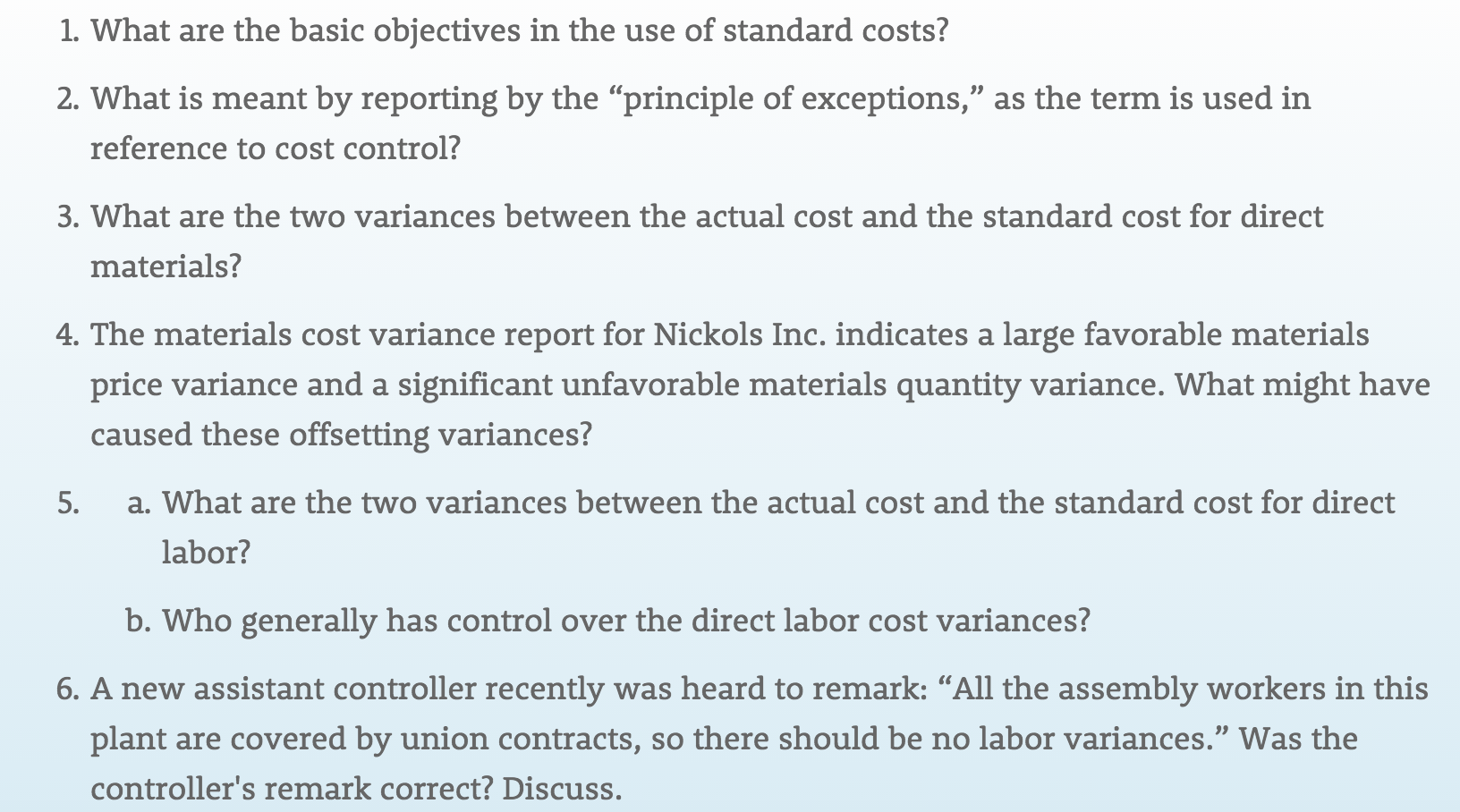
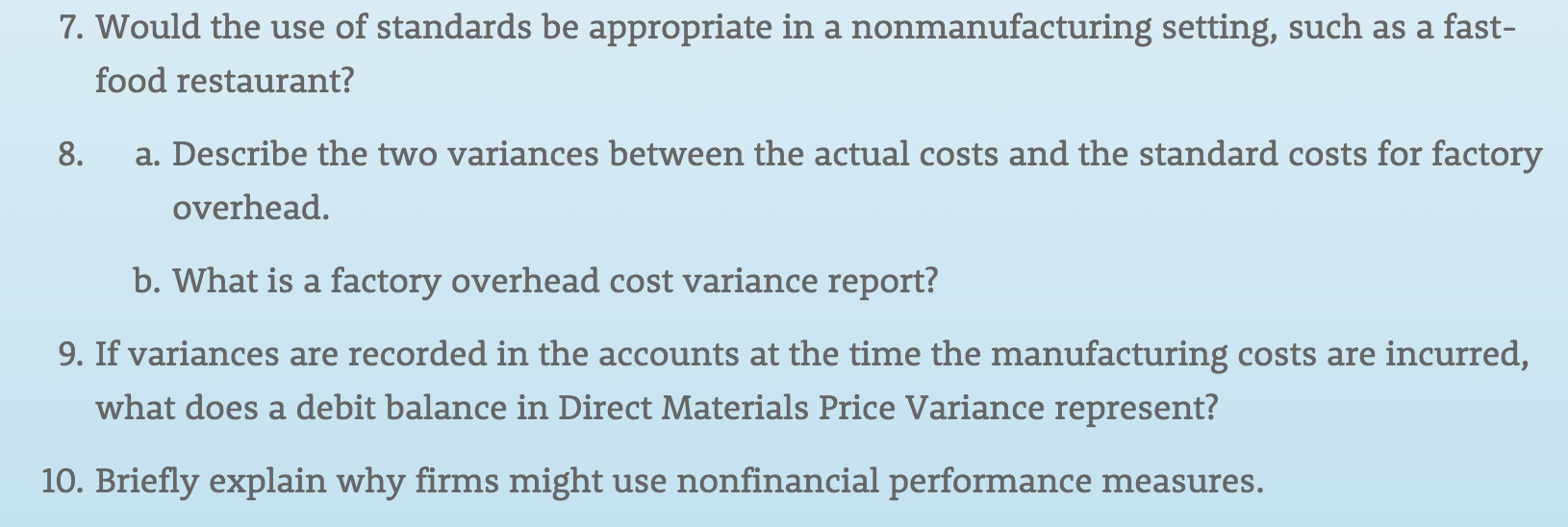
1 What are the basic objectives in the use of standard costs? 2. What is meant by reporting by the "principle of exceptions," as the term is used in reference to cost control? 3. What are the two variances between the actual cost and the standard cost for direct materials? 4. The materials cost variance report for Nickols Inc. indicates a large favorable materials price variance and a significant unfavorable materials quantity variance. What might have caused these offsetting variances? 5. a. What are the two variances between the actual cost and the standard cost for direct labor? b. Who generally has control over the direct labor cost variances? 6. A new assistant controller recently was heard to remark: "All the assembly workers in this plant are covered by union contracts, so there should be no labor variances." Was the controller's remark correct? Discuss
Step by Step Solution
There are 3 Steps involved in it

Get step-by-step solutions from verified subject matter experts
 Study Help