



Question: 1. What is literary analysis? a. Being able to summarize the major plot points and identify the literary devices used in a text b. Actively
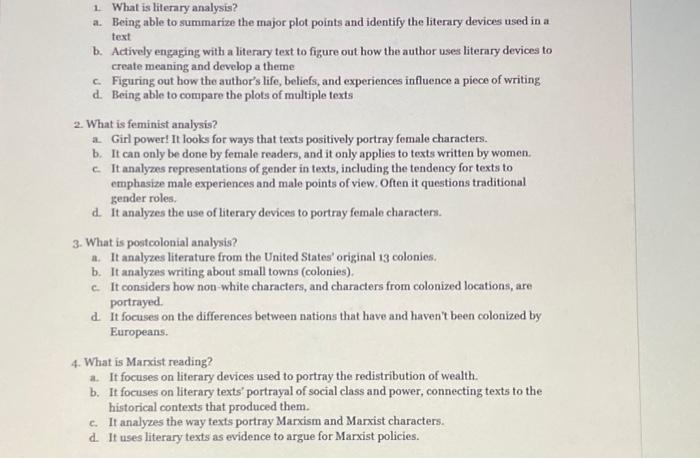
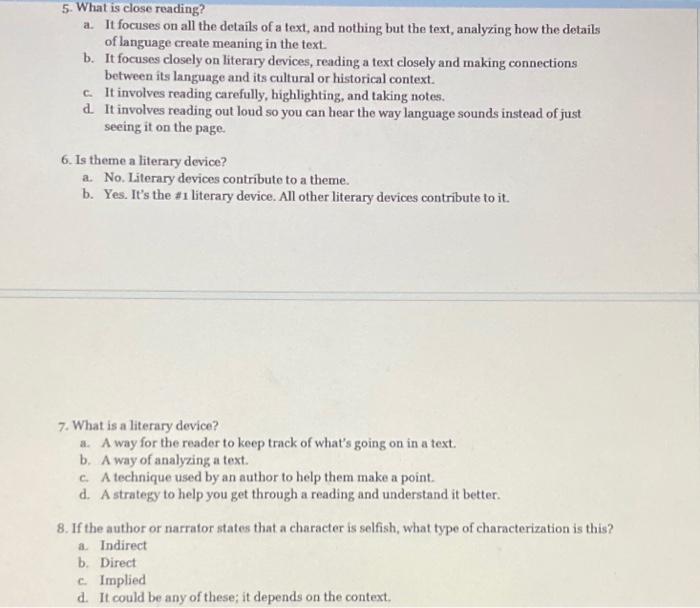
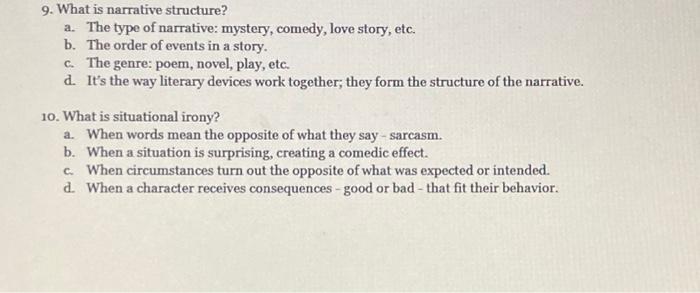
1. What is literary analysis? a. Being able to summarize the major plot points and identify the literary devices used in a text b. Actively engaging with a literary text to figure out how the author uses literary devices to create meaning and develop a theme c. Figuring out bow the author's life, beliefs, and experiences influence a piece of writing d. Being able to compare the plots of multiple texts 2. What is feminist analysis? a. Girl power! It looks for ways that texts positively portray female characters. b. It can only be done by female readers, and it only applies to texts written by women. c. It analyzes representations of gender in texts, including the tendency for texts to emphasize male experiences and male points of view. Often it questions traditional gender roles. d. It analyzes the use of literary devices to portray female characters. 3. What is postcolonial analysis? a. It analyzes literature from the United States' original 13 colonies. b. It analyzes writing about small towns (colonies). c. It considers how non-white characters, and characters from colonized locations, are portrayed. d. It focuses on the differences between nations that have and haven't been colonized by Europeans. 4. What is Marxist reading? a. It focuses on literary devices used to portray the redistribution of wealth. b. It focuses on literary texts' portrayal of social class and power, connecting texts to the historical contexts that produced them. c. It analyzes the way texts portray Marxism and Marxist characters. d. It uses literary texts as evidence to argue for Marxist policies. 5. What is close reading? a. It focuses on all the details of a text, and nothing but the text, analyzing how the details of language create meaning in the text b. It focuses closely on literary devices, reading a text closely and making connections between its language and its cultural or historical context. c. It involves reading carefully, highlighting, and taking notes. d. It involves reading out loud so you can hear the way language sounds instead of just seeing it on the page. 6. Is theme a literary device? a. No. Literary devices contribute to a theme. b. Yes. It's the al a literary device. All other literary devices contribute to it. 7. What is a literary device? a. A way for the reader to keep track of what's going on in a text. b. A way of analyzing a text. c. A technique used by an author to help them make a point. d. A strategy to help you get through a reading and understand it better. 8. If the author or narrator states that a character is selfish, what type of characterization is this? a. Indirect b. Direct c. Implied d. It could be any of these; it depends on the context. 9. What is narrative structure? a. The type of narrative: mystery, comedy, love story, etc. b. The order of events in a story. c. The genre: poem, novel, play, etc. d. It's the way literary devices work together; they form the structure of the narrative. 10. What is situational irony? a. When words mean the opposite of what they say-sarcasm. b. When a situation is surprising, creating a comedic effect. c. When circumstances turn out the opposite of what was expected or intended. d. When a character receives consequences - good or bad - that fit their behavior
Step by Step Solution
There are 3 Steps involved in it

Get step-by-step solutions from verified subject matter experts