Question: 1. What is the main difference between: a. a business model and the Altman Z? (2 pts) b. Economies of scale and economies of scope?
1. What is the main difference between: a. a1. What is the main difference between: a. a1. What is the main difference between: a. a1. What is the main difference between: a. a1. What is the main difference between: a. a1. What is the main difference between: a. a1. What is the main difference between: a. a1. What is the main difference between: a. a1. What is the main difference between: a. a1. What is the main difference between: a. a

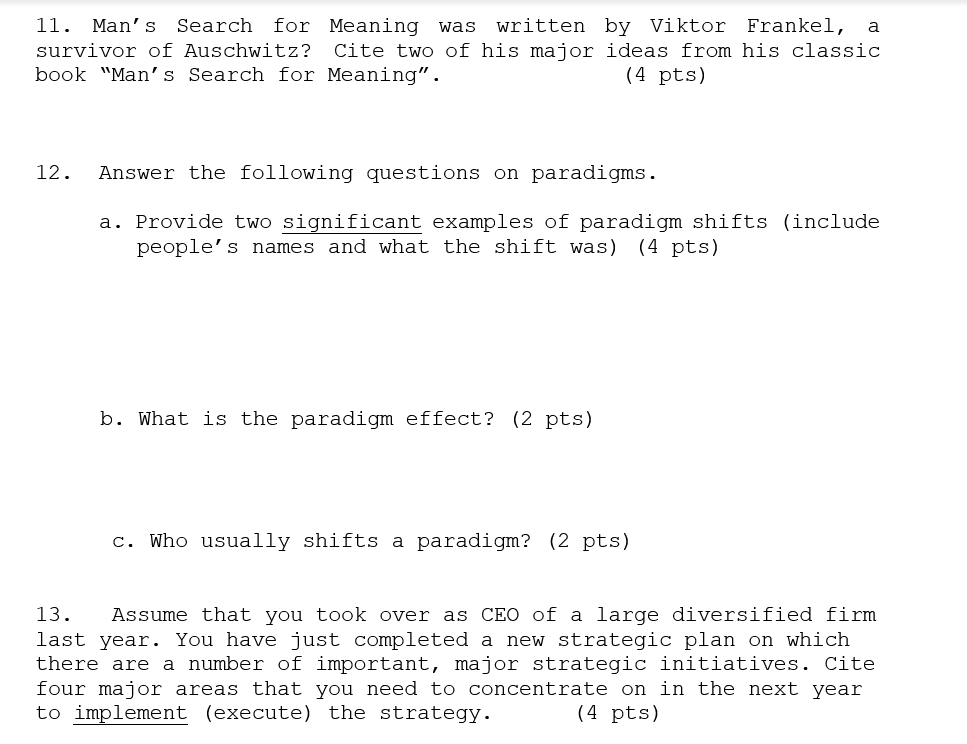
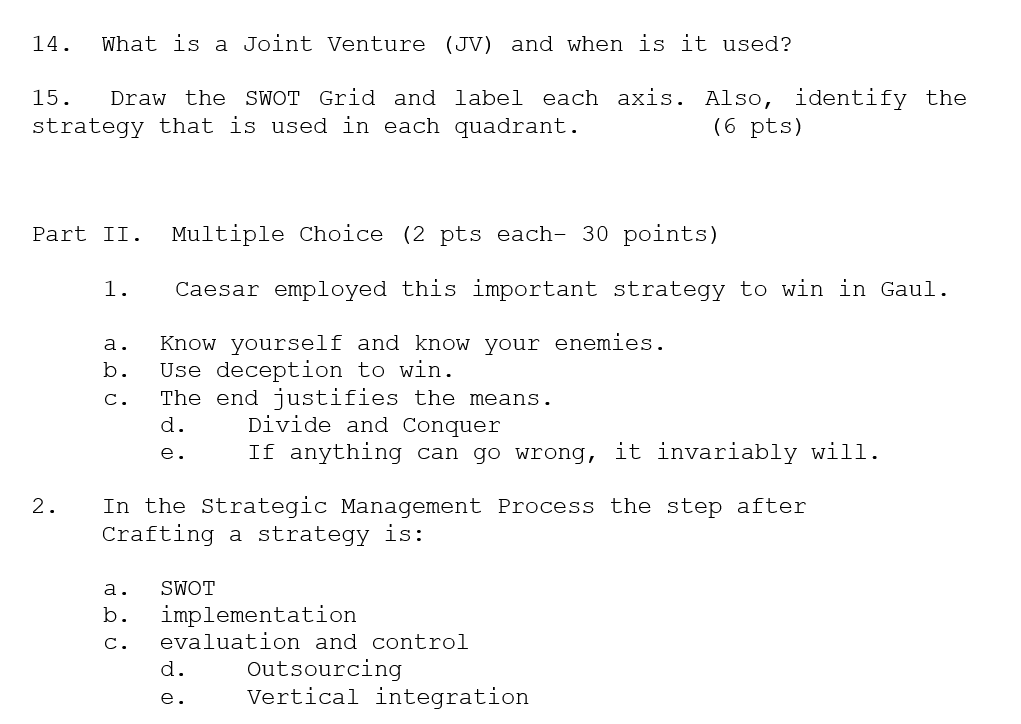
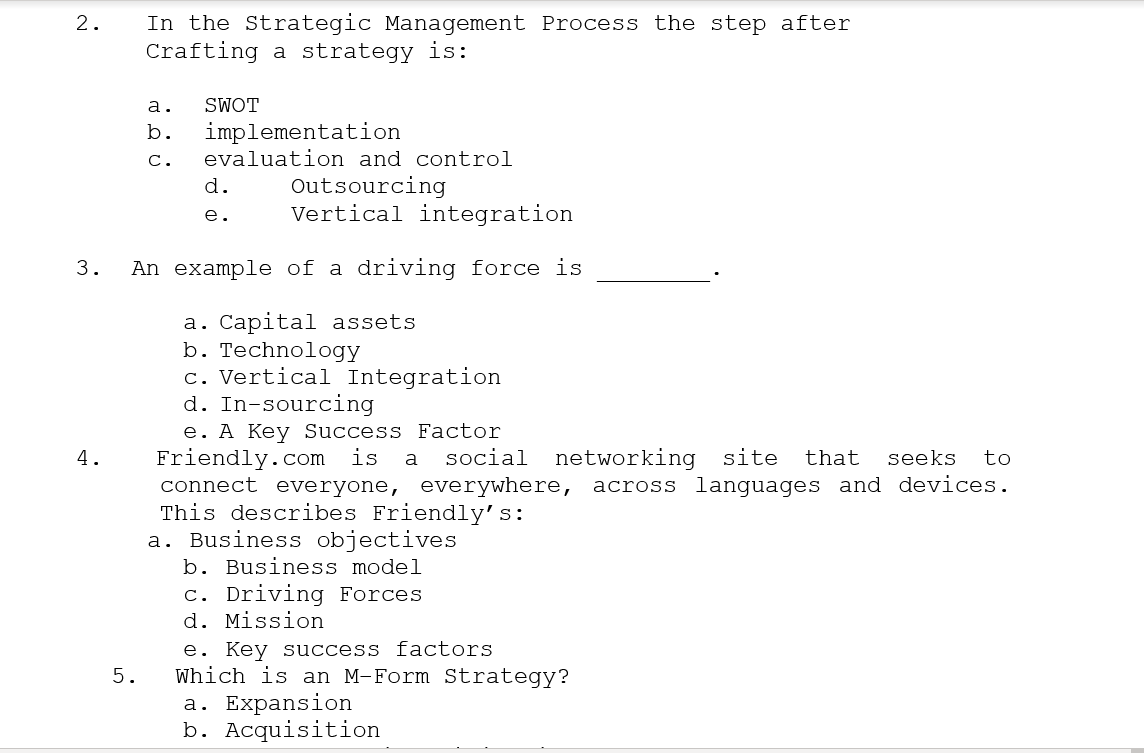
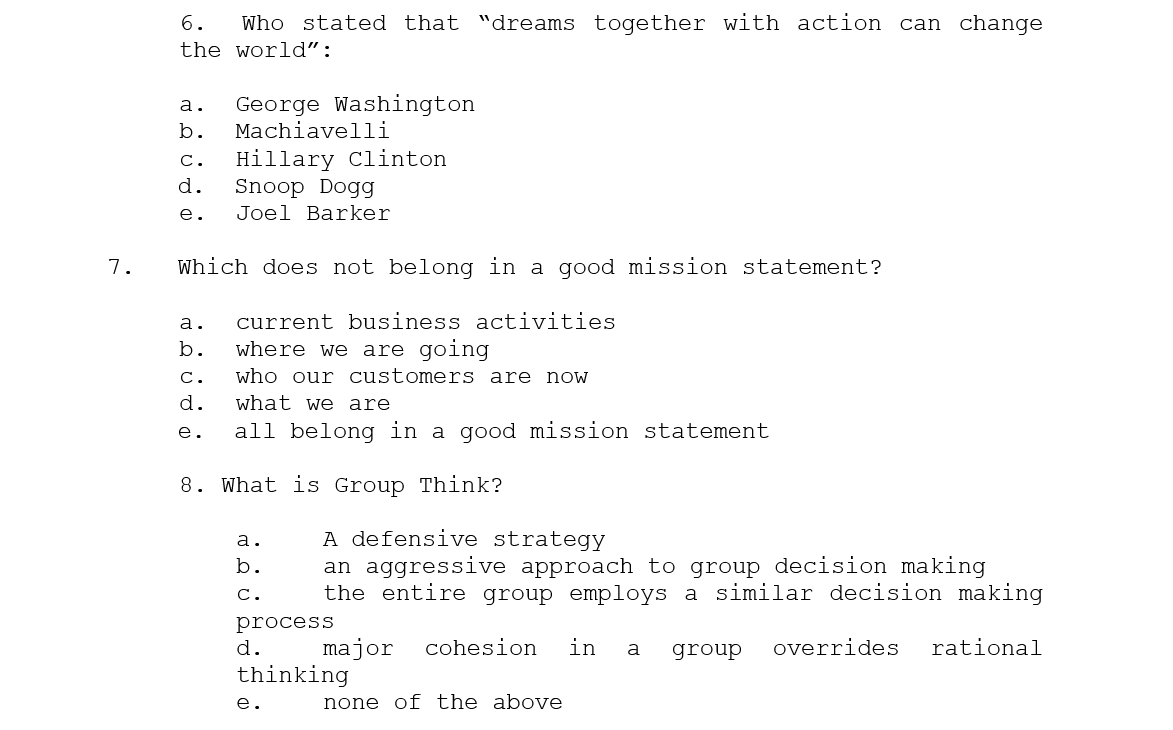
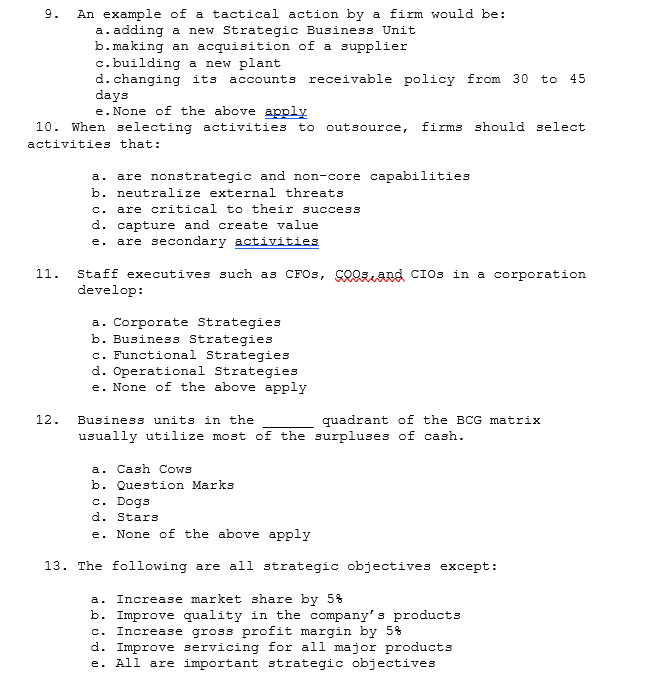
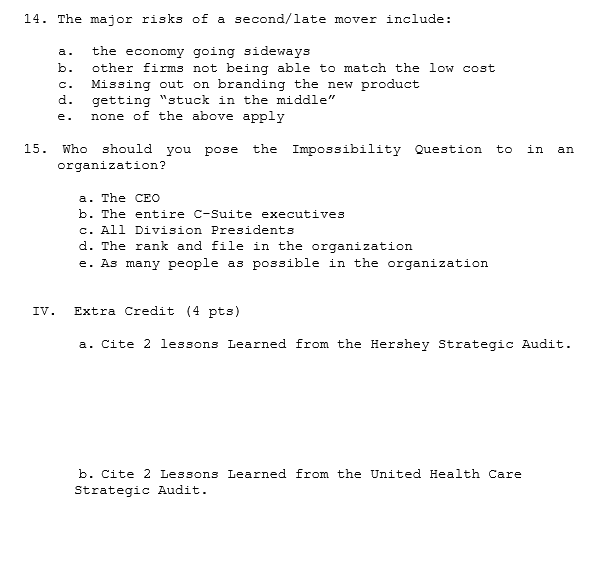
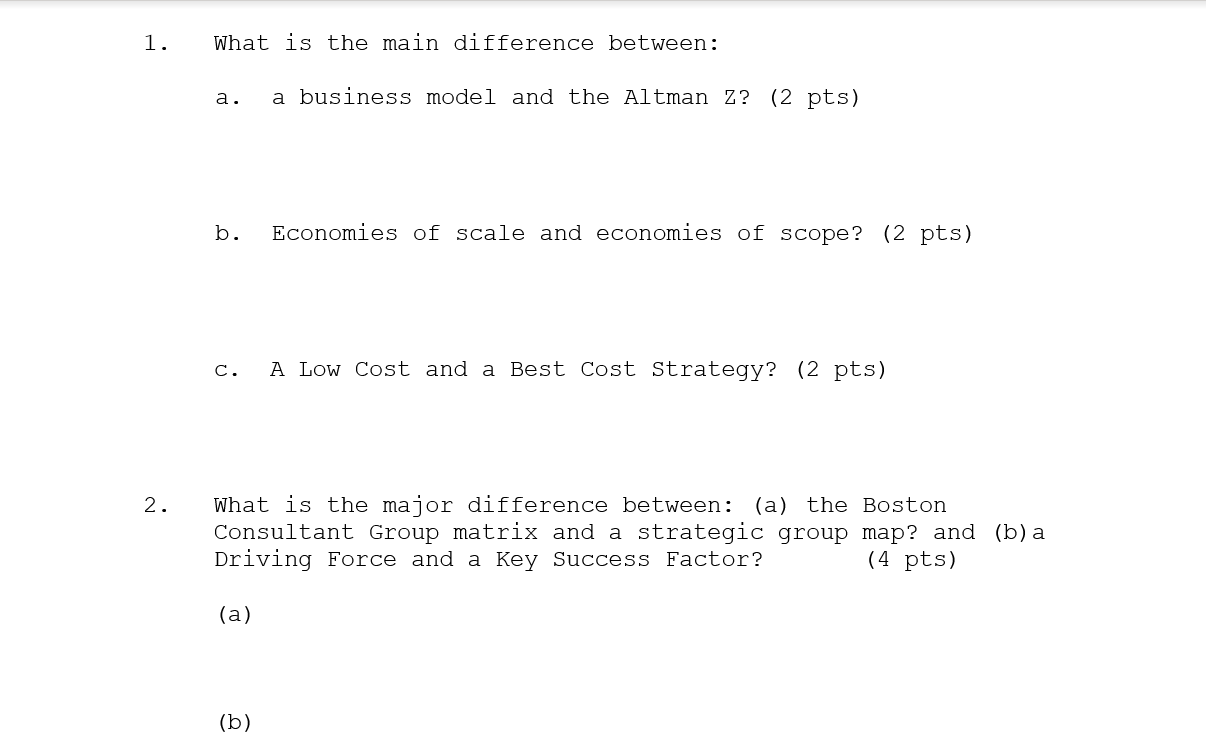
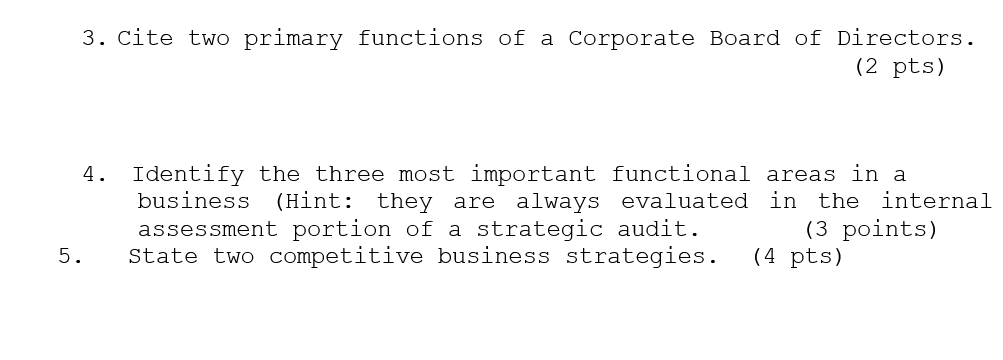
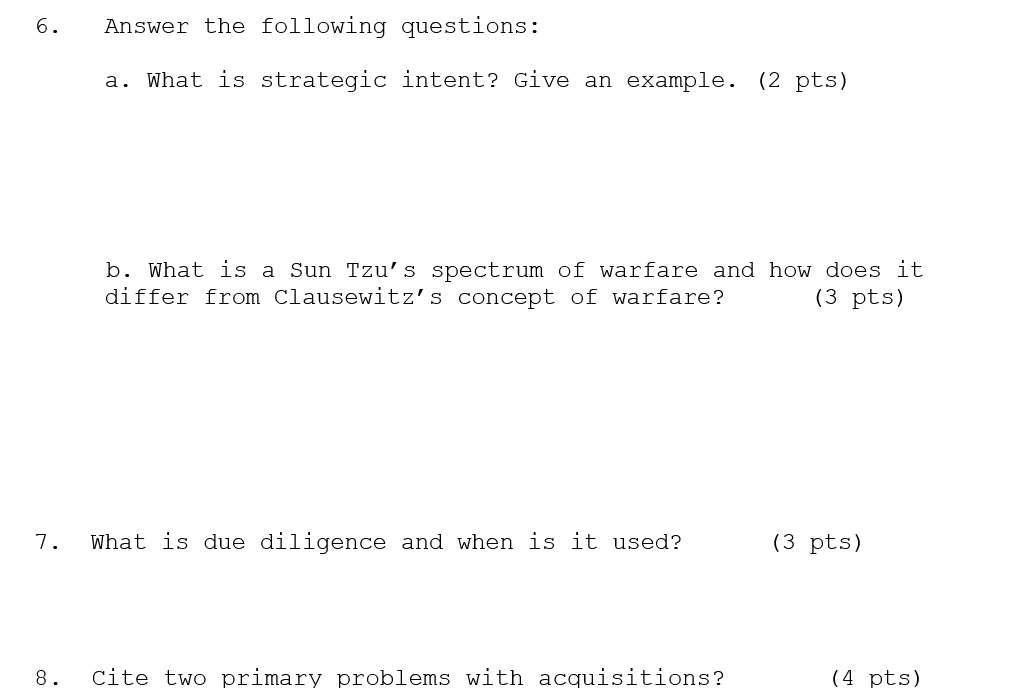
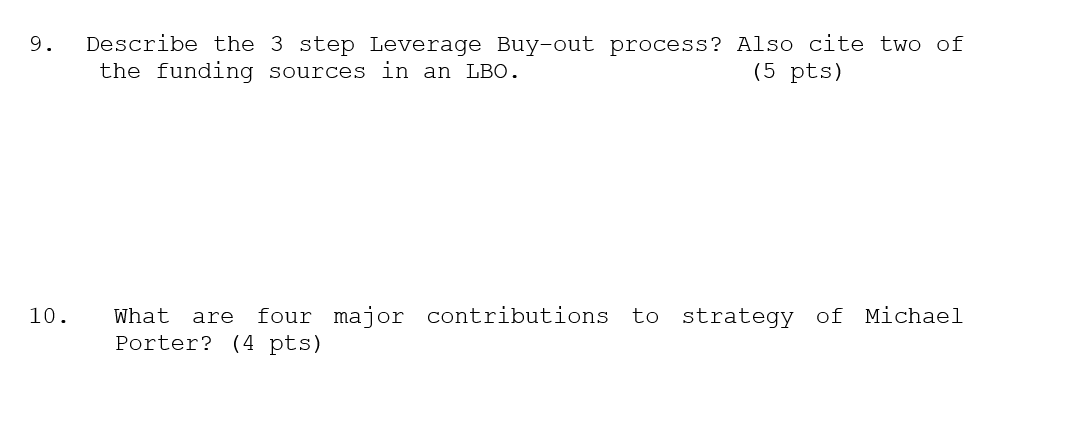
1. What is the main difference between: a. a business model and the Altman Z? (2 pts) b. Economies of scale and economies of scope? (2 pts) C. A Low Cost and a Best Cost Strategy? (2 pts) 2. What is the major difference between: (a) the Boston Consultant Group matrix and a strategic group map? and (b) a Driving Force and a Key Success Factor? (4 pts) (a) (b) 3. Cite two primary functions of a Corporate Board of Directors. (2 pts) 4. Identify the three most important functional areas in a business (Hint: they are always evaluated in the internal assessment portion of a strategic audit. (3 points) 5. State two competitive business strategies. (4 pts) 6. Answer the following questions: a. What is strategic intent? Give an example. (2 pts) b. What is a Sun Tzu's spectrum of warfare and how does it differ from Clausewitz's concept of warfare? (3 pts) 7. What is due diligence and when is it used? (3 pts) 8. Cite two primary problems with acquisitions? (4 pts) 9. Describe the 3 step Leverage Buy-out process? Also cite two of the funding sources in an LBO. (5 pts) 10. What are four major contributions Porter? (4 pts) to strategy of Michael 11. Man's Search for Meaning was written by Viktor Frankel, survivor of Auschwitz? Cite two of his major ideas from his classic book "Man's Search for Meaning". (4 pts) 12. Answer the following questions on paradigms. a. Provide two significant examples of paradigm shifts (include people's names and what the shift was) (4 pts) b. What is the paradigm effect? (2 pts) c. Who usually shifts a paradigm? (2 pts) 13. Assume that you took over as CEO of a large diversified firm last year. You have just completed a new strategic plan on which there are a number of important, major strategic initiatives. Cite four major areas that you need to concentrate on in the next year to implement (execute) the strategy. (4 pts) 14. What is a Joint Venture (JV) and when is it used? 15. Draw the SWOT Grid and label each axis. Also, identify the strategy that is used in each quadrant. (6 pts) Part II. Multiple Choice (2 pts each- 30 points) 1. Caesar employed this important strategy to win in Gaul. a. b. C. Know yourself and know your enemies. Use deception to win. The end justifies the means. d. Divide and Conquer e. If anything can go wrong, it invariably will. 2. In the strategic Management Process the step after Crafting a strategy is: a. b. C. SWOT implementation evaluation and control Outsourcing e. Vertical integration d. 2. In the Strategic Management Process the step after Crafting a strategy is: a. b. c. SWOT implementation evaluation and control d. Outsourcing e. Vertical integration 3. An example of a driving force is 4. a a. Capital assets b. Technology c. Vertical Integration d. In-sourcing e. A Key Success Factor Friendly.com is social networking site that seeks to connect everyone, everywhere, across languages and devices. This describes Friendly's: a. Business objectives b. Business model c. Driving Forces d. Mission e. Key success factors Which is an M-Form Strategy? a. Expansion b. Acquisition 5. 6. Who stated that "dreams together with action can change the world" : a. b. C. d. e. George Washington Machiavelli Hillary Clinton Snoop Dogg Joel Barker 7. Which does not belong in a good mission statement? a. b. C. d. current business activities where we are going who our customers are now what we are all belong in a good mission statement e. 8. What is Group Think? a. A defensive strategy b. an aggressive approach to group decision making C. the entire group employs a similar decision making process d. major cohesion in group overrides rational thinking e. none of the above a 9. An example of a tactical action by a firm would be: a. adding a new Strategic Business Unit b.making an acquisition of a supplier c.building a new plant d. changing its accounts receivable policy from 30 to 45 days e. None of the above apply 10. When selecting activities to outsource, firms should select activities that: are nonstrategic and non-core capabilities b. neutralize external threats are critical to their success d. capture and create value are secondary activities 11. Staff executives such as CFOs, Codreans CIOs in a corporation develop: a. Corporate Strategies b. Business Strategies c. Functional Strategies d. Operational Strategies e. None of the above apply 12. Business units in the quadrant of the BCG matrix usually utilize most of the surpluses of cash. a. Cash Cows b. Question Marks c. Dogs d. Stars e. None of the above apply 13. The following are all strategic objectives except: a. Increase market share by 5% b. Improve quality in the company's products Increase gross profit margin by 5% d. Improve servicing for all major products e. All are important strategic objectives 14. The major risks of a second/late mover include: b. C. the economy going sideways other firms not being able to match the low cost Missing out on branding the new product getting "stuck in the middle" none of the above apply e. 15. the Impossibility Question co in Who should you pose organization? an a. The CEO b. The entire C-Suite executives c. All Division Presidents d. The rank and file in the organization e. As many people as possible in the organization IV. Extra Credit (4 pts) a. Cite 2 lessons Learned from the Hershey Strategic Audit. b. Cite 2 Lessons Learned from the United Health Care Strategic Audit. 1. What is the main difference between: a. a business model and the Altman Z? (2 pts) b. Economies of scale and economies of scope? (2 pts) C. A Low Cost and a Best Cost Strategy? (2 pts) 2. What is the major difference between: (a) the Boston Consultant Group matrix and a strategic group map? and (b) a Driving Force and a Key Success Factor? (4 pts) (a) (b) 3. Cite two primary functions of a Corporate Board of Directors. (2 pts) 4. Identify the three most important functional areas in a business (Hint: they are always evaluated in the internal assessment portion of a strategic audit. (3 points) 5. State two competitive business strategies. (4 pts) 6. Answer the following questions: a. What is strategic intent? Give an example. (2 pts) b. What is a Sun Tzu's spectrum of warfare and how does it differ from Clausewitz's concept of warfare? (3 pts) 7. What is due diligence and when is it used? (3 pts) 8. Cite two primary problems with acquisitions? (4 pts) 9. Describe the 3 step Leverage Buy-out process? Also cite two of the funding sources in an LBO. (5 pts) 10. What are four major contributions Porter? (4 pts) to strategy of Michael 11. Man's Search for Meaning was written by Viktor Frankel, survivor of Auschwitz? Cite two of his major ideas from his classic book "Man's Search for Meaning". (4 pts) 12. Answer the following questions on paradigms. a. Provide two significant examples of paradigm shifts (include people's names and what the shift was) (4 pts) b. What is the paradigm effect? (2 pts) c. Who usually shifts a paradigm? (2 pts) 13. Assume that you took over as CEO of a large diversified firm last year. You have just completed a new strategic plan on which there are a number of important, major strategic initiatives. Cite four major areas that you need to concentrate on in the next year to implement (execute) the strategy. (4 pts) 14. What is a Joint Venture (JV) and when is it used? 15. Draw the SWOT Grid and label each axis. Also, identify the strategy that is used in each quadrant. (6 pts) Part II. Multiple Choice (2 pts each- 30 points) 1. Caesar employed this important strategy to win in Gaul. a. b. C. Know yourself and know your enemies. Use deception to win. The end justifies the means. d. Divide and Conquer e. If anything can go wrong, it invariably will. 2. In the strategic Management Process the step after Crafting a strategy is: a. b. C. SWOT implementation evaluation and control Outsourcing e. Vertical integration d. 2. In the Strategic Management Process the step after Crafting a strategy is: a. b. c. SWOT implementation evaluation and control d. Outsourcing e. Vertical integration 3. An example of a driving force is 4. a a. Capital assets b. Technology c. Vertical Integration d. In-sourcing e. A Key Success Factor Friendly.com is social networking site that seeks to connect everyone, everywhere, across languages and devices. This describes Friendly's: a. Business objectives b. Business model c. Driving Forces d. Mission e. Key success factors Which is an M-Form Strategy? a. Expansion b. Acquisition 5. 6. Who stated that "dreams together with action can change the world" : a. b. C. d. e. George Washington Machiavelli Hillary Clinton Snoop Dogg Joel Barker 7. Which does not belong in a good mission statement? a. b. C. d. current business activities where we are going who our customers are now what we are all belong in a good mission statement e. 8. What is Group Think? a. A defensive strategy b. an aggressive approach to group decision making C. the entire group employs a similar decision making process d. major cohesion in group overrides rational thinking e. none of the above a 9. An example of a tactical action by a firm would be: a. adding a new Strategic Business Unit b.making an acquisition of a supplier c.building a new plant d. changing its accounts receivable policy from 30 to 45 days e. None of the above apply 10. When selecting activities to outsource, firms should select activities that: are nonstrategic and non-core capabilities b. neutralize external threats are critical to their success d. capture and create value are secondary activities 11. Staff executives such as CFOs, Codreans CIOs in a corporation develop: a. Corporate Strategies b. Business Strategies c. Functional Strategies d. Operational Strategies e. None of the above apply 12. Business units in the quadrant of the BCG matrix usually utilize most of the surpluses of cash. a. Cash Cows b. Question Marks c. Dogs d. Stars e. None of the above apply 13. The following are all strategic objectives except: a. Increase market share by 5% b. Improve quality in the company's products Increase gross profit margin by 5% d. Improve servicing for all major products e. All are important strategic objectives 14. The major risks of a second/late mover include: b. C. the economy going sideways other firms not being able to match the low cost Missing out on branding the new product getting "stuck in the middle" none of the above apply e. 15. the Impossibility Question co in Who should you pose organization? an a. The CEO b. The entire C-Suite executives c. All Division Presidents d. The rank and file in the organization e. As many people as possible in the organization IV. Extra Credit (4 pts) a. Cite 2 lessons Learned from the Hershey Strategic Audit. b. Cite 2 Lessons Learned from the United Health Care Strategic Audit
Step by Step Solution

There are 3 Steps involved in it

1 Expert Approved Answer
Step: 1 Unlock blur-text-image

Question Has Been Solved by an Expert!

Get step-by-step solutions from verified subject matter experts

Step: 2 Unlock
Step: 3 Unlock

Students Have Also Explored These Related General Management Questions!