







Question: 1. while learning 'buliding customer loyalty', what is the most important learning you gained? 2. Why is this learning Building customer loyalty important? For
1. while learning 'buliding customer loyalty', what is the most important learning you gained? 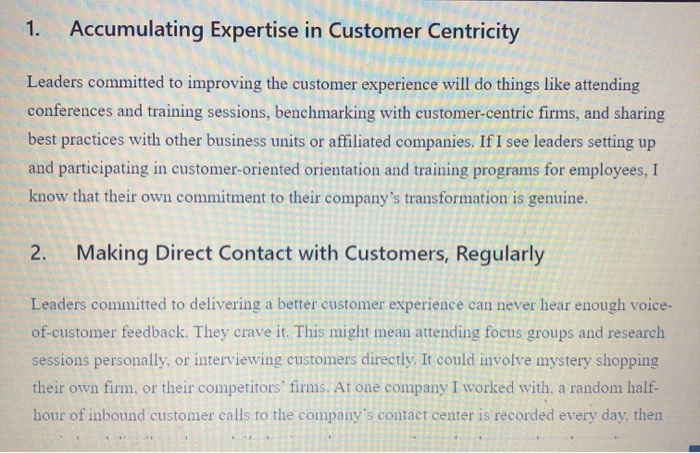
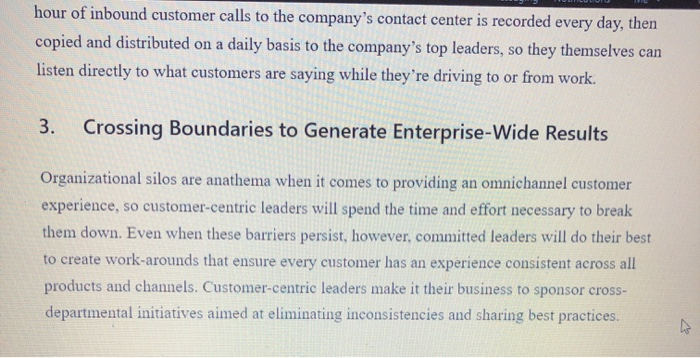
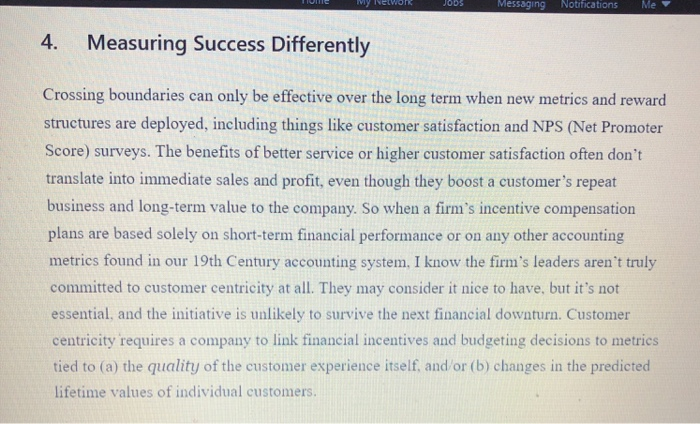
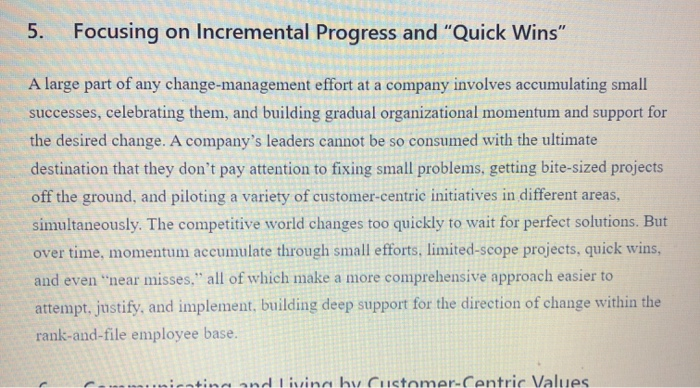
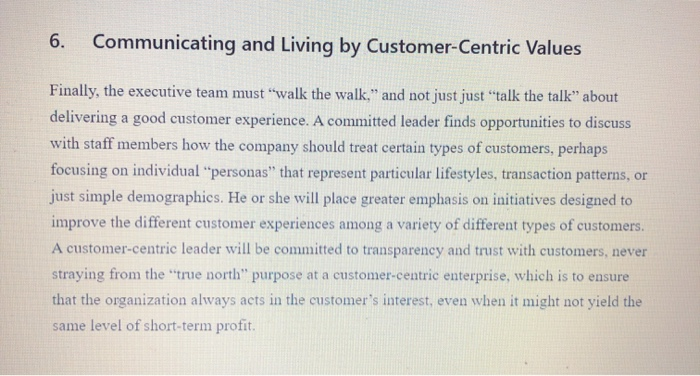
1. Accumulating Expertise in Customer Centricity Leaders committed to improving the customer experience will do things like attending conferences and training sessions, benchmarking with customer-centric firms, and sharing best practices with other business units or affiliated companies. If I see leaders setting up and participating in customer-oriented orientation and training programs for employees, I know that their own commitment to their company's transformation is genuine. 2. Making Direct Contact with Customers, Regularly Leaders committed to delivering a better customer experience can never hear enough voice- of-customer feedback. They crave it. This might mean attending focus groups and research sessions personally, or interviewing customers directly. It could involve mystery shopping their own firm, or their competitors' firms. At one company I worked with, a random half- hour of inbound customer calls to the company's contact center is recorded every day, then hour of inbound customer calls to the company's contact center is recorded every day, then copied and distributed on a daily basis to the company's top leaders, so they themselves can listen directly to what customers are saying while they're driving to or from work. 3. Crossing Boundaries to Generate Enterprise-Wide Results Organizational silos are anathema when it comes to providing an omnichannel customer experience, so customer-centric leaders will spend the time and effort necessary to break them down. Even when these barriers persist, however, committed leaders will do their best to create work-arounds that ensure every customer has an experience consistent across all products and channels. Customer-centric leaders make it their business to sponsor cross- departmental initiatives aimed at eliminating inconsistencies and sharing best practices. MY NELWORK JODS Messaging Notifications Me 4. Measuring Success Differently Crossing boundaries can only be effective over the long term when new metrics and reward structures are deployed, including things like customer satisfaction and NPS (Net Promoter Score) surveys. The benefits of better service or higher customer satisfaction often don't translate into immediate sales and profit, even though they boost a customer's repeat business and long-term value to the company. So when a firm's incentive compensation plans are based solely on short-term financial performance or on any other accounting metrics found in our 19th Century accounting system. I know the firm's leaders aren't truly committed to customer centricity at all. They may consider it nice to have, but it's not essential, and the initiative is unlikely to survive the next financial downturn. Customer centricity requires a company to link financial incentives and budgeting decisions to metrics tied to (a) the quality of the customer experience itself, and/or (b) changes in the predicted lifetime values of individual customers. 5. Focusing on Incremental Progress and "Quick Wins A large part of any change management effort at a company involves accumulating small successes, celebrating them, and building gradual organizational momentum and support for the desired change. A company's leaders cannot be so consumed with the ultimate destination that they don't pay attention to fixing small problems, getting bite-sized projects off the ground, and piloting a variety of customer-centric initiatives in different areas. simultaneously. The competitive world changes too quickly to wait for perfect solutions. But over time, momentum accumulate through small efforts, limited-scope projects, quick wins, and even "near misses," all of which make a more comprehensive approach easier to attempt.justify, and implement, building deep support for the direction of change within the rank-and-file employee base. c n icating and livind hy Customer-centric Values 6. Communicating and Living by Customer-Centric Values Finally, the executive team must "walk the walk," and not just just talk the talk" about delivering a good customer experience. A committed leader finds opportunities to discuss with staff members how the company should treat certain types of customers, perhaps focusing on individual personas" that represent particular lifestyles, transaction patterns, or just simple demographics. He or she will place greater emphasis on initiatives designed to improve the different customer experiences among a variety of different types of customers. A customer-centric leader will be committed to transparency and trust with customers, never straying from the true north" purpose at a customer-centric enterprise, which is to ensure that the organization always acts in the customer's interest, even when it might not yield the same level of short-term profit
2. Why is this learning " Building customer loyalty" important? For example, think about how you can apply the learning to your current job or how you can take the learning and apply it in a job interview. You may also want to think of how the learning can help businesses or how they can go about applying it.
3. After reading Six leadership behaviours found at a customer- centric company(attached below in the picture) please answer why this is important and how companies can implement the leadership. behaviour mentioned in the article?
4. How is IKEA never ending list of all the improvements it has made for people and the environment so far a great example of a customer-centric organization?
Step by Step Solution
There are 3 Steps involved in it
1 Expert Approved Answer
Step: 1 Unlock

Question Has Been Solved by an Expert!
Get step-by-step solutions from verified subject matter experts
Step: 2 Unlock
Step: 3 Unlock
 Study Help