







Question: 1. Why can't a % error be calculated for the angle? Use an example to justify your answer. 2. Explain how the preceding calculations and
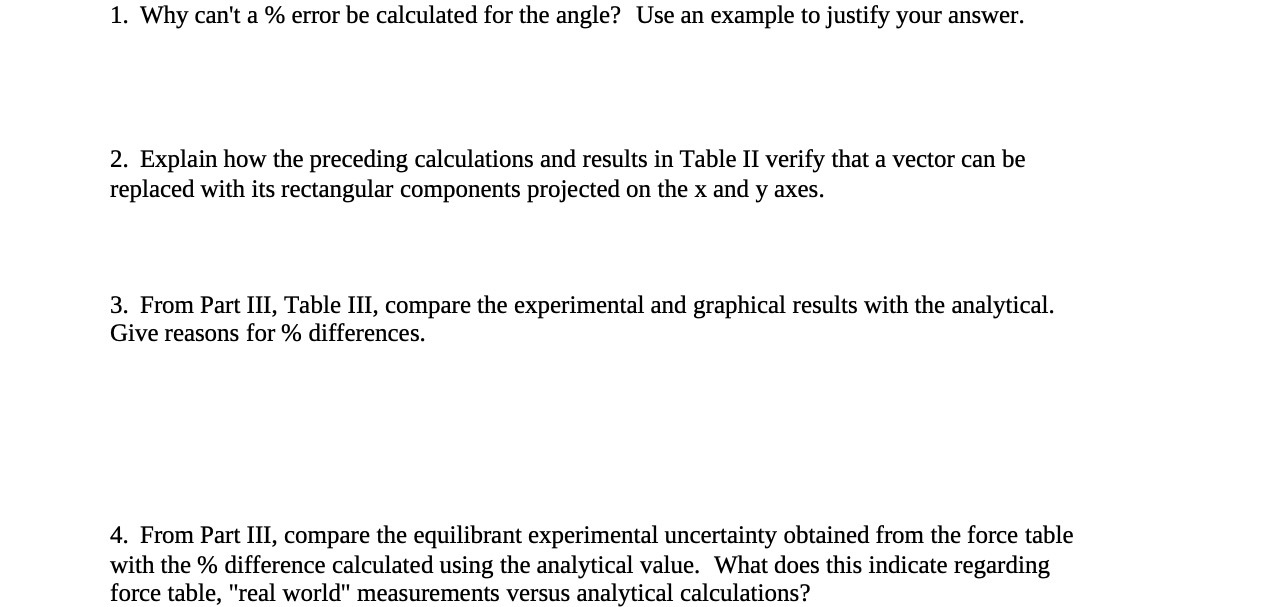
1. Why can't a % error be calculated for the angle? Use an example to justify your answer. 2. Explain how the preceding calculations and results in Table II verify that a vector can be replaced with its rectangular components projected on the x and y axes. 3. From Part III, Table III, compare the experimental and graphical results with the analytical. Give reasons for % differences. 4. From Part III, compare the equilibrant experimental uncertainty obtained from the force table with the % difference calculated using the analytical value. What does this indicate regarding force table, \"real world" measurements versus analytical calculations
Step by Step Solution
There are 3 Steps involved in it

Get step-by-step solutions from verified subject matter experts
 Study Help