







Question: 1. Without expanding, state the degree, the leading coefficient, and the end behaviours of the polynomial function g(x) = 2(x + 1)(3 - x) (x
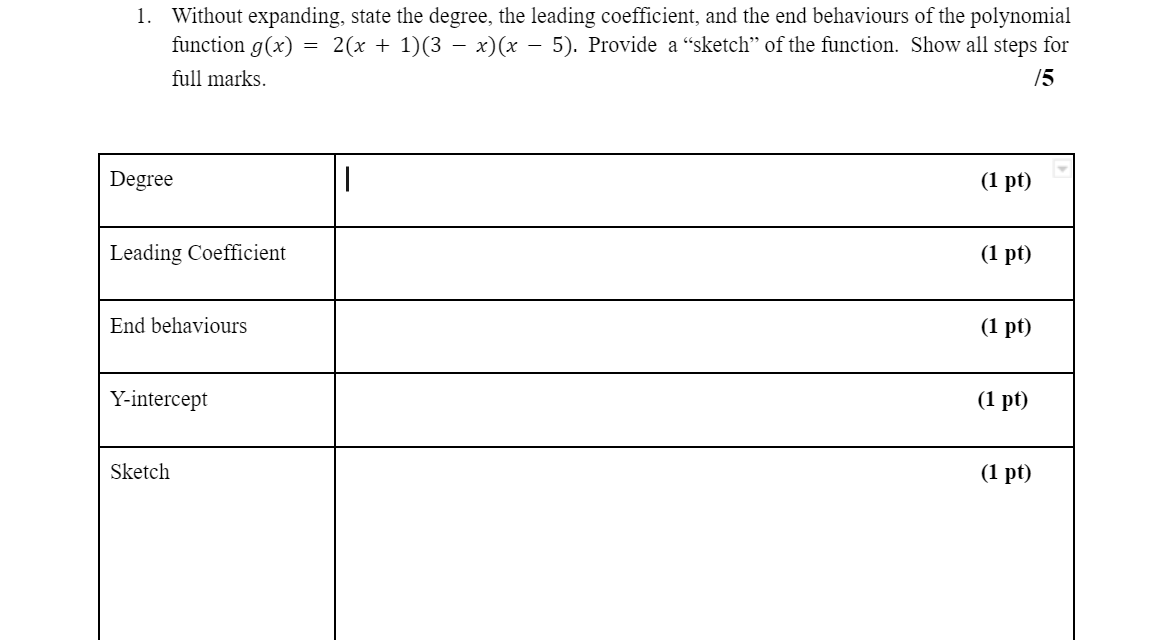
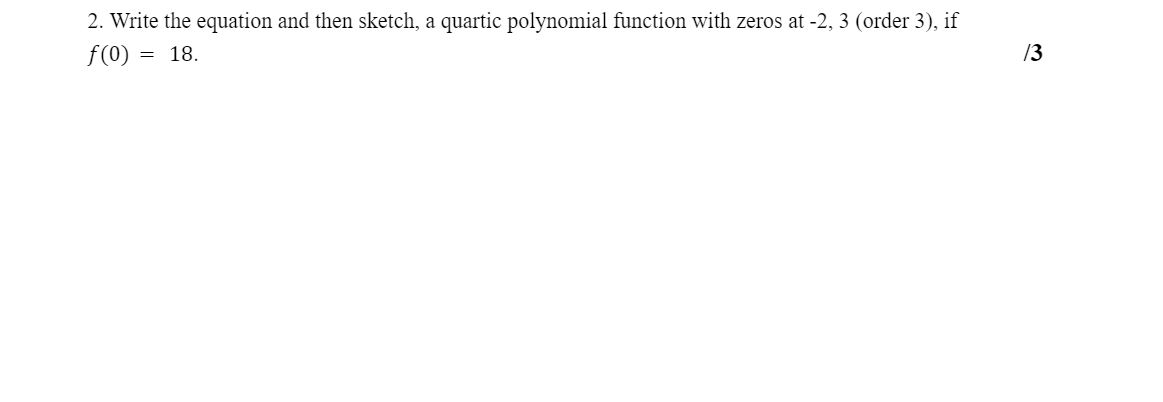
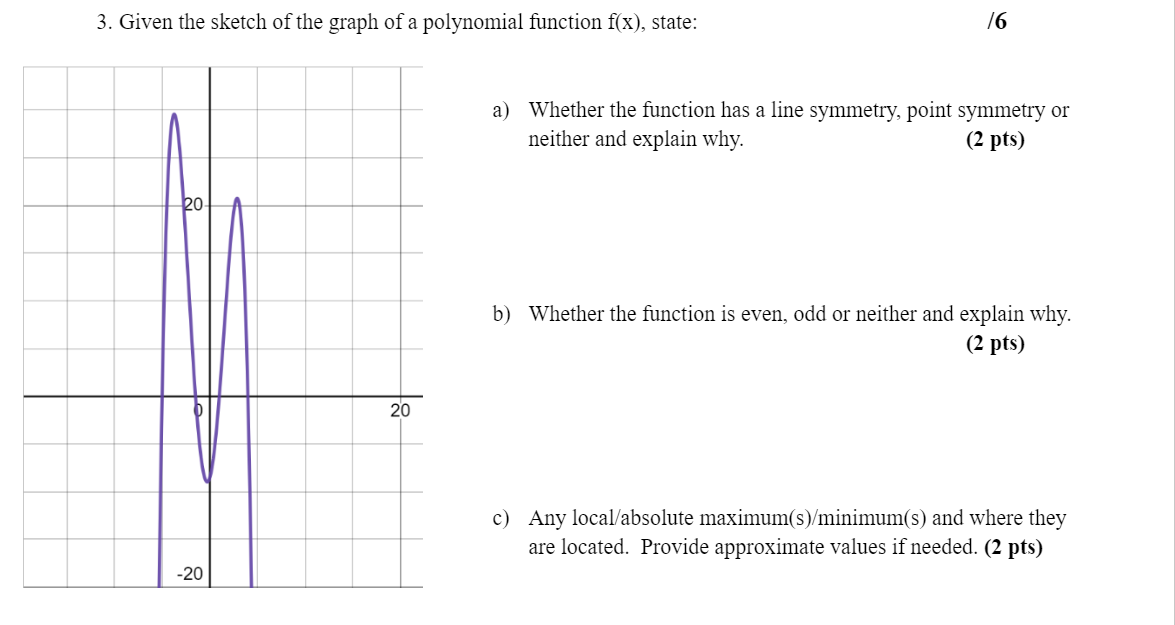
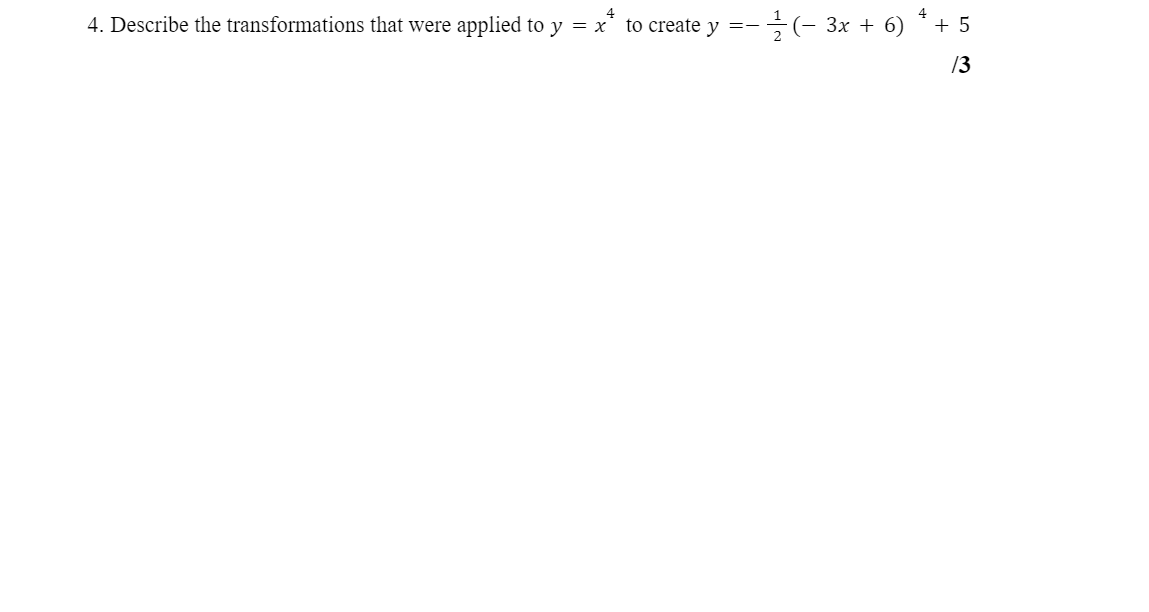
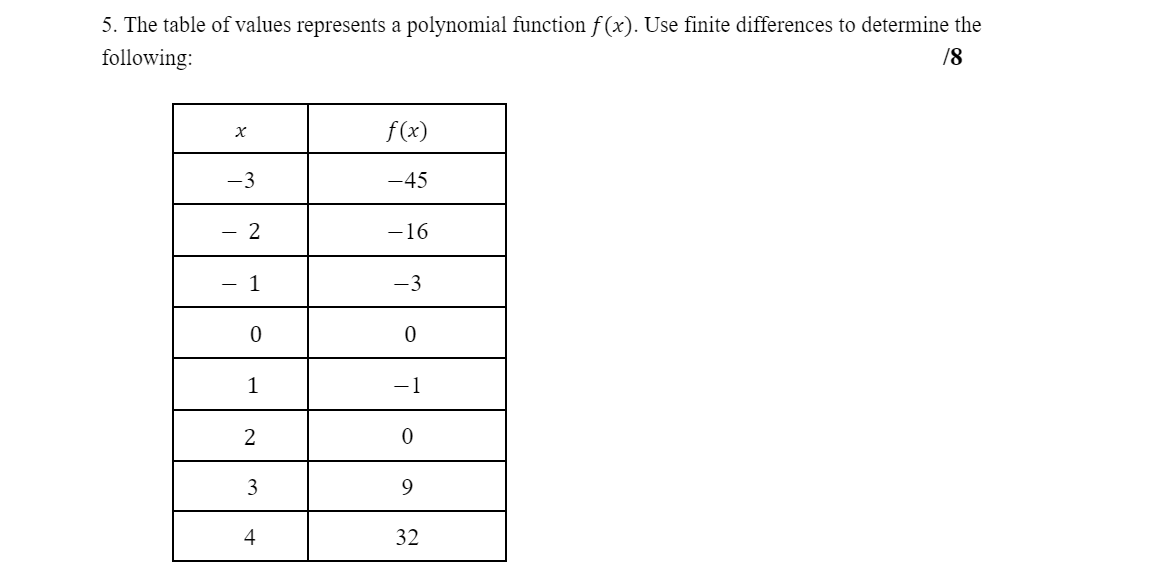
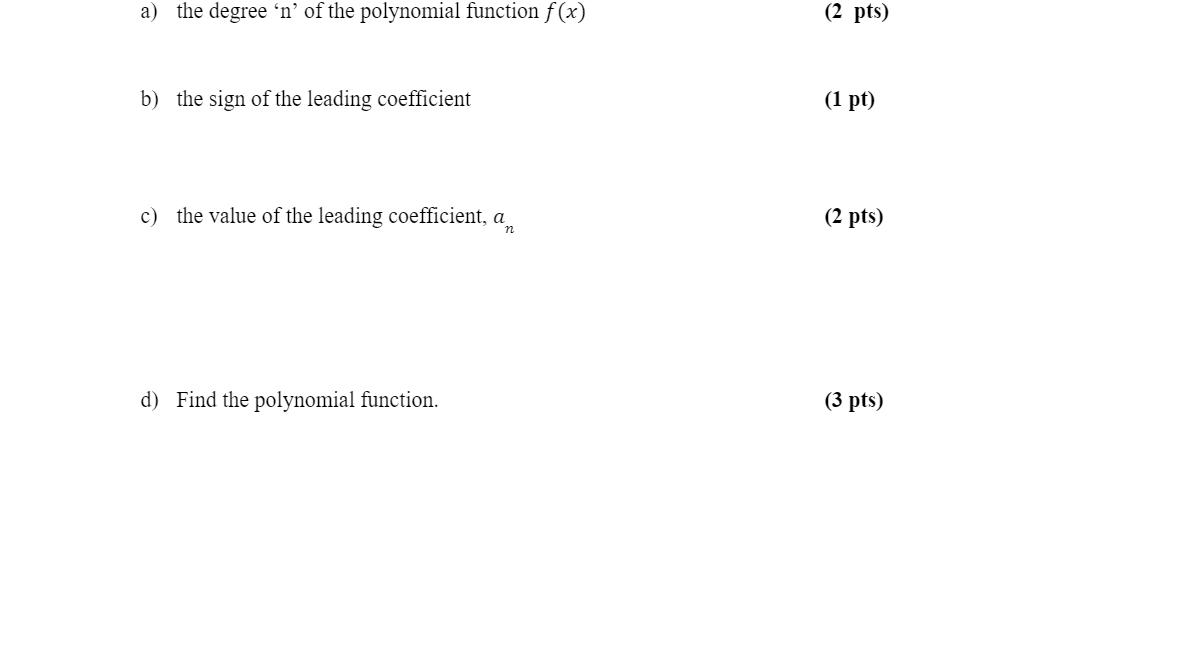
1. Without expanding, state the degree, the leading coefficient, and the end behaviours of the polynomial function g(x) = 2(x + 1)(3 - x) (x - 5). Provide a "sketch" of the function. Show all steps for full marks. 15 Degree (1 pt) Leading Coefficient (1 pt) End behaviours (1 pt) Y-intercept (1 pt) Sketch (1 pt)2. Write the equation and then sketch, :1 quartic polynomial function with zeros at -2. 3 (order 3). if f(0) = 18. f3 3. Given the sketch of the graph of a polynomial function f( x), state: f6 b) Whether the function has a line symmetry, point symmetry or neither and explain why. (2 pts) Whether the function is even, odd or neither and explain why. (2 PM Any local/absolute maximum(s)/minimum(s) and where they are located. Provide approximate values if needed. (2 pts) \f5. The table of values represents a polynomial function f (x). Use finite differences to determine the following: 18 X f (x) -3 -45 - 2 -16 - 1 -3 0 0 1 2 0 3 9 4 32m b) d} the degree 'n' of the polynomial function f (x) the Sign of the leading coefficient the value of the leading coefficient. an Find the polynomial function. (2 INS) (1 Pt) (2 INS) (3 pts)
Step by Step Solution
There are 3 Steps involved in it

Get step-by-step solutions from verified subject matter experts
 Study Help