







Question: 10. Audit procedures include direct evidence such as documentation and client interviews, but not any theoretical or computational analysis. 11. Comparison of the client's balance
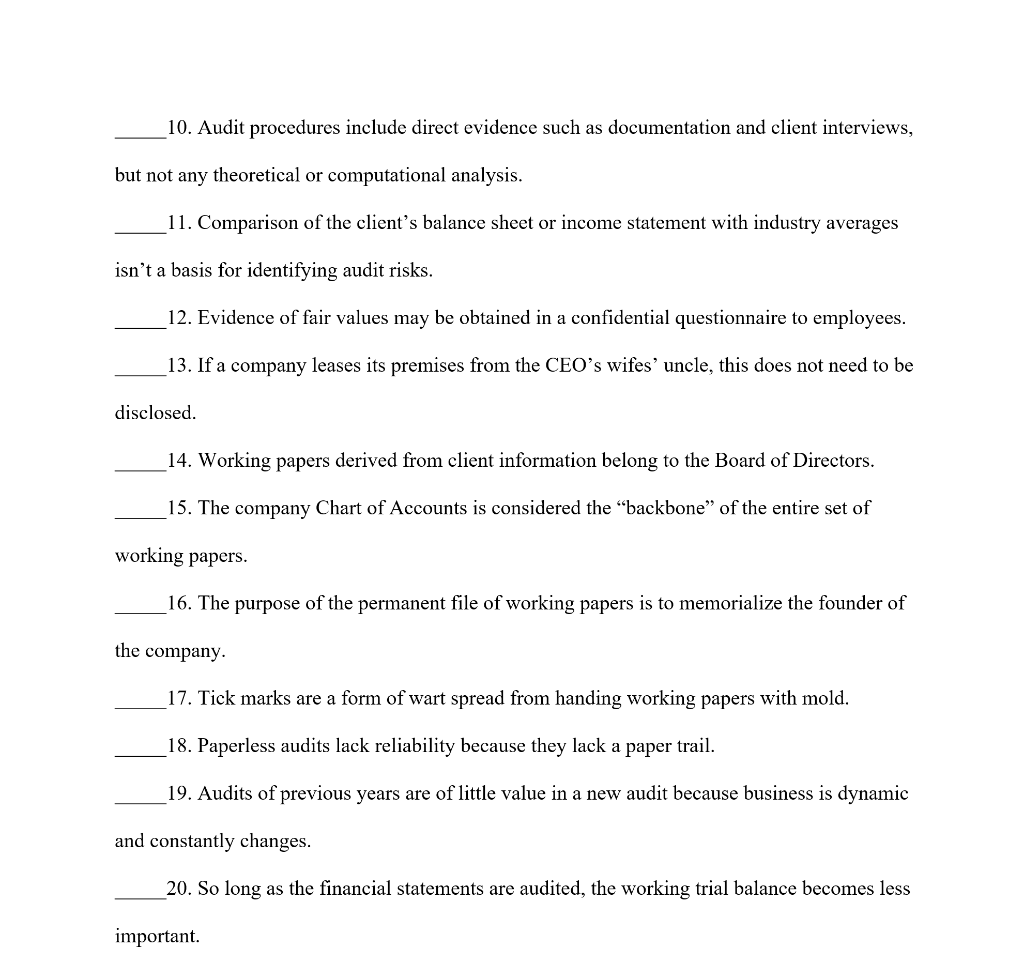
10. Audit procedures include direct evidence such as documentation and client interviews, but not any theoretical or computational analysis. 11. Comparison of the client's balance sheet or income statement with industry averages isn't a basis for identifying audit risks. 12. Evidence of fair values may be obtained in a confidential questionnaire to employees. 13. If a company leases its premises from the CEO's wifes' uncle, this does not need to be disclosed. 14. Working papers derived from client information belong to the Board of Directors. 15. The company Chart of Accounts is considered the "backbone of the entire set of working papers. 16. The purpose of the permanent file of working papers is to memorialize the founder of the company. 17. Tick marks are a form of wart spread from handing working papers with mold. 18. Paperless audits lack reliability because they lack a paper trail. 19. Audits of previous years are of little value in a new audit because business is dynamic and constantly changes. 20. So long as the financial statements are audited, the working trial balance becomes less important
Step by Step Solution
There are 3 Steps involved in it

Get step-by-step solutions from verified subject matter experts
 Study Help