







Question: (10 points) Question2 Consider the following relations Emp(eid: integer, ename: varchar, sal: integer, age: integer, did: integer) Dept(did: integer, budget: integer, floor: integer, mgr eid:
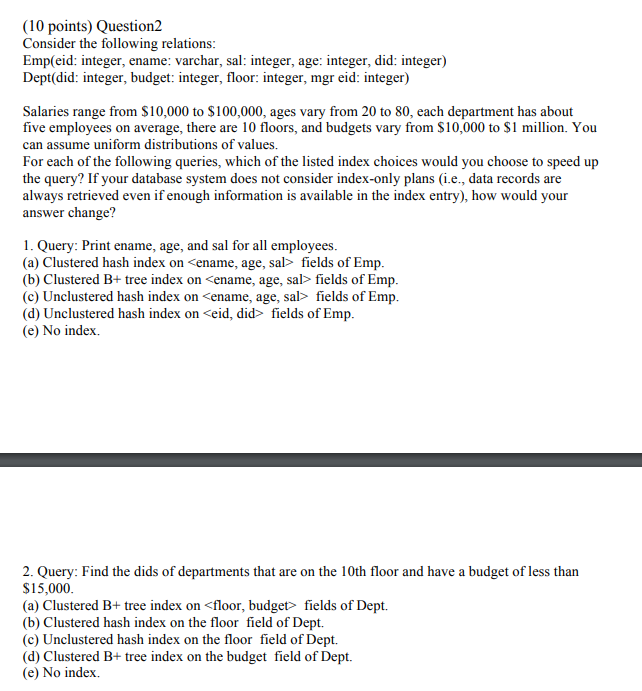
(10 points) Question2 Consider the following relations Emp(eid: integer, ename: varchar, sal: integer, age: integer, did: integer) Dept(did: integer, budget: integer, floor: integer, mgr eid: integer) Salaries range from $10,000 to $100,000, ages vary from 20 to 80, each department has about five employees on average, there are 10 floors, and budgets vary from $10,000 to $1 million. You can assume uniform distributions of values. For each of the following queries, which of the listed index choices would you choose to speed up the query? If your database system does not consider index-only plans (i.e., data records are always retrieved even if enough information is available in the index entry), how would your answer change? 1. Query: Print ename, age, and sal for all employees. (a) Clustered hash index on
Step by Step Solution
There are 3 Steps involved in it

Get step-by-step solutions from verified subject matter experts
 Study Help