





Question: 10. The compensation theory seeks to explain how managers differ from owners in using pay and other forms of compensation to effectively run the organization
10. The compensation theory seeks to explain how
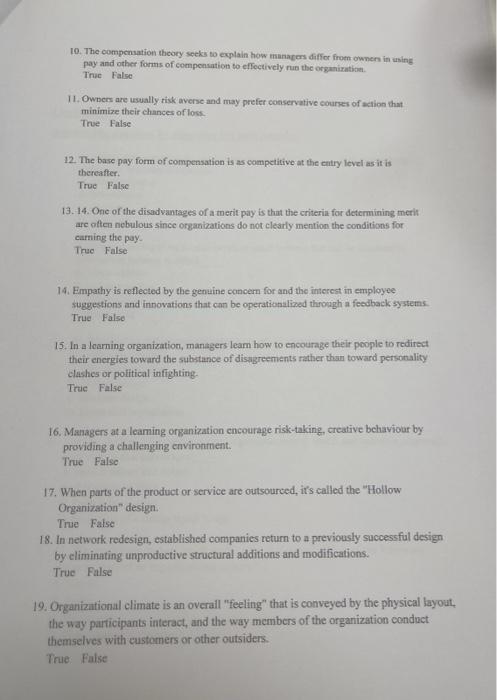
10. The compensation theory seeks to explain how managers differ from owners in using pay and other forms of compensation to effectively run the organization True False 11. Owners are usually risk averse and may prefer conservative courses of action that minimize their chances of loss. True False 12. The base pay form of compensation is as competitive at the entry level as it is thereafter. True False 13.14. One of the disadvantages of a merit pay is that the criteria for determining merit are often nebulous since organizations do not clearly mention the conditions for camning the pay True False 14. Empathy is reflected by the genuine concern for and the interest in employee suggestions and innovations that can be operationalized through a feedback systems True False 15. In a learning organization, managers learn how to encourage their poople to redirect their energies toward the substance of disagreements rather than toward personality clashes or political infighting True False 16. Managers at a leaming organization encourage risk-taking, creative bchaviour by providing a challenging environment. True False 17. When parts of the product or service are outsourced, it's called the "Hollow Organization" design True False 18. In network redesign, established companies return to a previously successful design by eliminating unproductive structural additions and modifications. True False 19. Organizational climate is an overall "feeling" that is conveyed by the physical layout, the way participants interact, and the way members of the organization conduct themselves with customers or other outsiders. True False 10. The compensation theory seeks to explain how managers differ from owners in using pay and other forms of compensation to effectively ran the organization. True False 11. Owners are usually risk averse and may prefer conservative courses of action that minimize their chances of loss True False 12. The base pay form of compensation is as competitive at the entry level as it is thereafter True False 13. 14. One of the disadvantages of a merit pay is that the criteria for determining merit are often nebulous since organizations do not clearly mention the conditions for earning the pay True False 14. Empathy is reflected by the genuine concer for and the interest in employee suggestions and innovations that can be operationalized through a feedback systems. True False 15. In a leaming organization, managers learn how to encourage their people to redirect their energies toward the substance of disagreements rather than toward personality clashes or political infighting True False 16. Managers at a learning organization encourage risk-taking, creative behaviour by providing a challenging environment True False 17. When parts of the product or service are outsourced, it's called the "Hollow Organization" design True False 18. In network redesign, established companies return to a previously successful design by eliminating unproductive structural additions and modifications. True False 19. Organizational climate is an overall "feeling that is conveyed by the physical layout, the way participants interact, and the way members of the organization conduct themselves with customers or other outsiders. True False

Step by Step Solution

There are 3 Steps involved in it

1 Expert Approved Answer
Step: 1 Unlock blur-text-image

Question Has Been Solved by an Expert!

Get step-by-step solutions from verified subject matter experts

Step: 2 Unlock
Step: 3 Unlock

Students Have Also Explored These Related General Management Questions!