


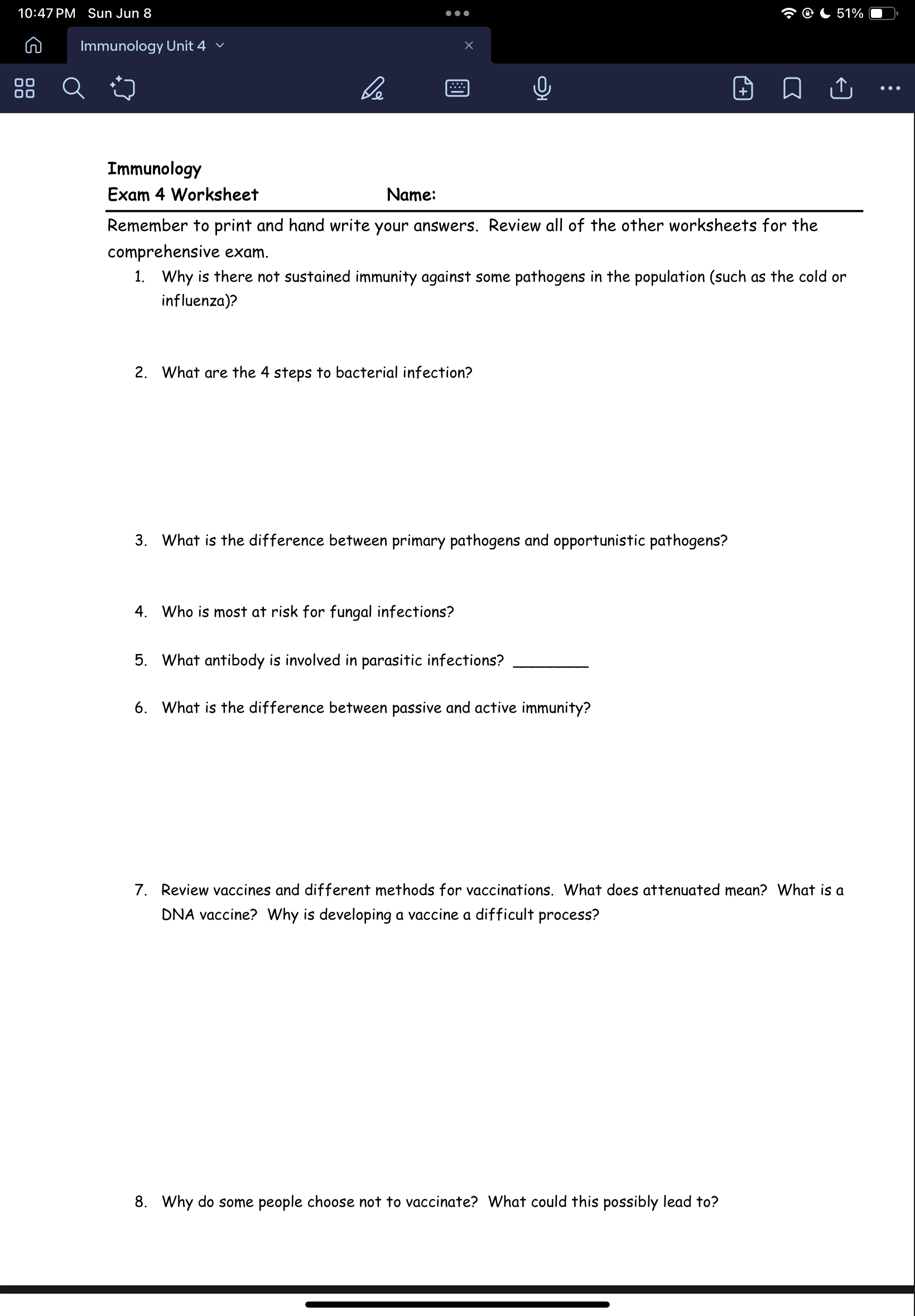
Question: 10:47 PM Sun Jun 8 @ 51% n Immunology Unit 4 v X 88 Q 3 ... Immunology Exam 4 Worksheet Name: Remember to print
10:47 PM Sun Jun 8 @ 51% n Immunology Unit 4 v X10:47 PM Sun Jun 8 @ 51% n Immunology Unit 4 v X10:47 PM Sun Jun 8 @ 51% n Immunology Unit 4 v X
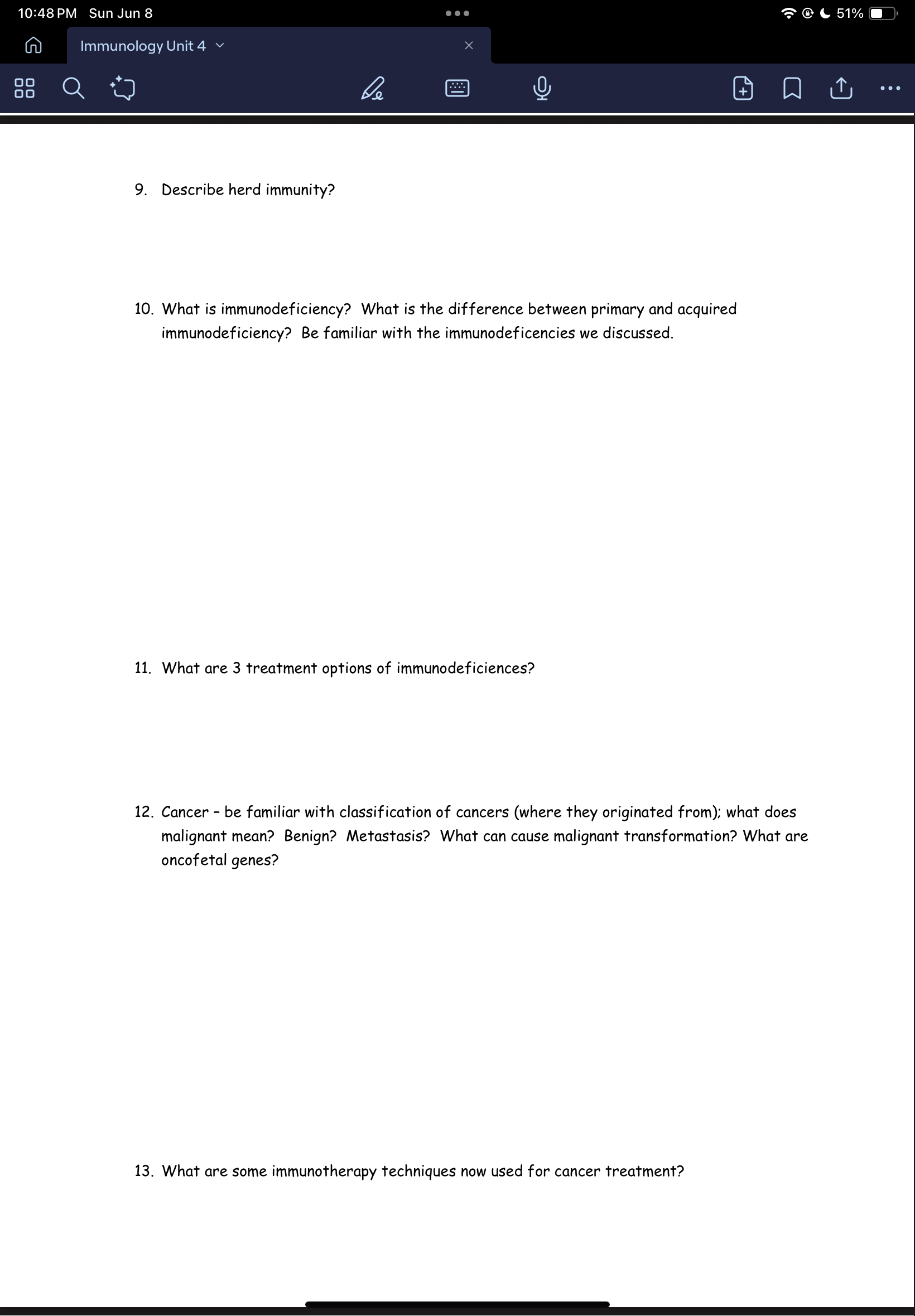
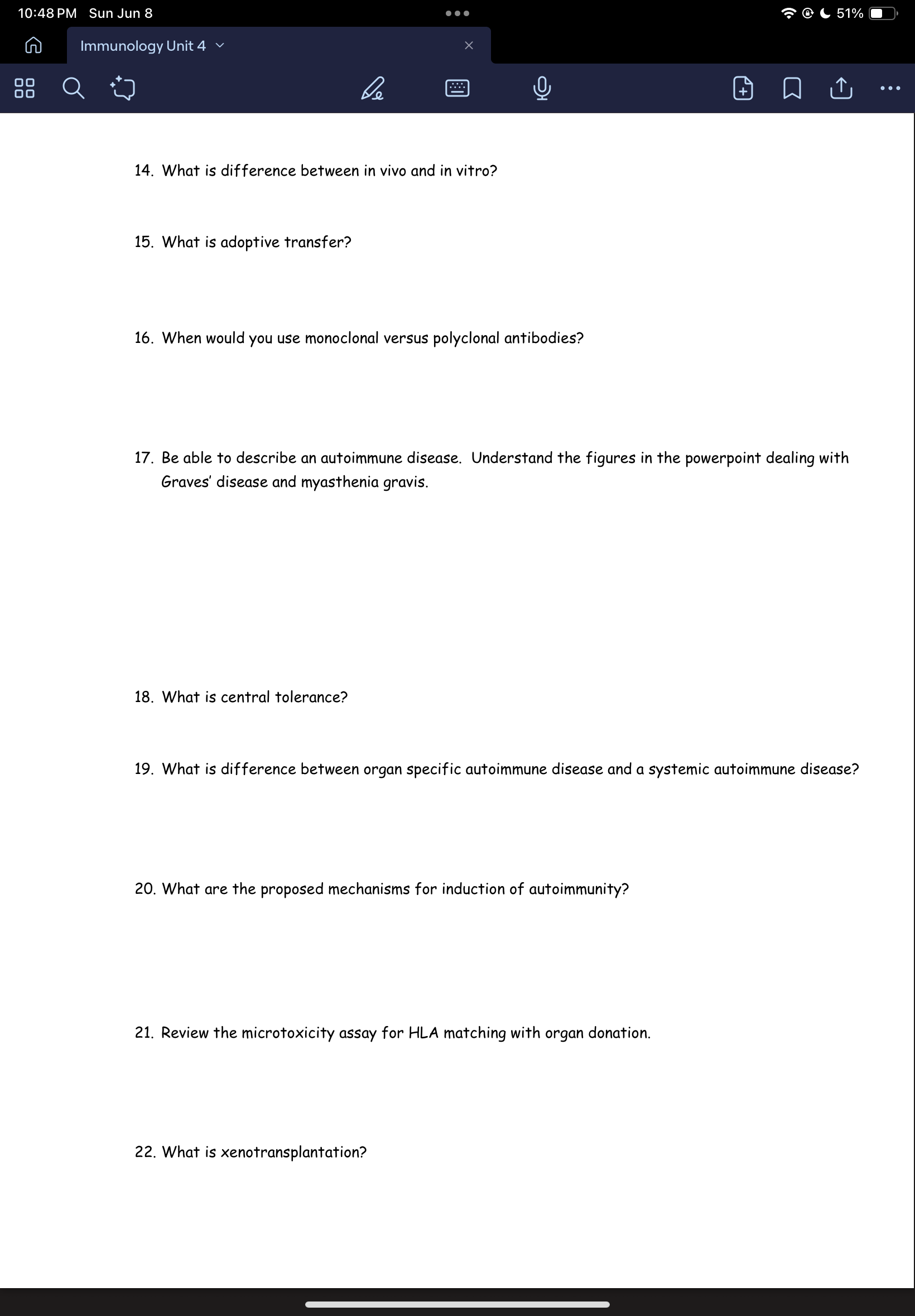
10:47 PM Sun Jun 8 @ 51% n Immunology Unit 4 v X 88 Q 3 ... Immunology Exam 4 Worksheet Name: Remember to print and hand write your answers. Review all of the other worksheets for the comprehensive exam. 1. Why is there not sustained immunity against some pathogens in the population (such as the cold or influenza)? 2. What are the 4 steps to bacterial infection? 3. What is the difference between primary pathogens and opportunistic pathogens? 4. Who is most at risk for fungal infections? 5. What antibody is involved in parasitic infections? 6. What is the difference between passive and active immunity? 7. Review vaccines and different methods for vaccinations. What does attenuated mean? What is a DNA vaccine? Why is developing a vaccine a difficult process? 8. Why do some people choose not to vaccinate? What could this possibly lead to?10:48 PM Sun Jun 8 51% n Immunology Unit 4 X 88 O ... 9. Describe herd immunity? 10. What is immunodeficiency? What is the difference between primary and acquired immunodeficiency? Be familiar with the immunodeficencies we discussed. 11. What are 3 treatment options of immunodeficiencys? 12. Cancer - be familiar with classification of cancers (where they originated from); what does malignant mean? Benign? Metastasis? What can cause malignant transformation? What are oncofetal genes? 13. What are some immunotherapy techniques now used for cancer treatment?10:48 PM Sun Jun 8 @ 51% n Immunology Unit 4 v X 88 Q q O ... 14. What is difference between in vivo and in vitro? 15. What is adoptive transfer? 16. When would you use monoclonal versus polyclonal antibodies? 17. Be able to describe an autoimmune disease. Understand the figures in the powerpoint dealing with Graves' disease and myasthenia gravis. 18. What is central tolerance? 19. What is difference between organ specific autoimmune disease and a systemic autoimmune disease? 20. What are the proposed mechanisms for induction of autoimmunity? 21. Review the microtoxicity assay for HLA matching with organ donation. 22. What is xenotransplantation
Step by Step Solution

There are 3 Steps involved in it

1 Expert Approved Answer
Step: 1 Unlock blur-text-image

Question Has Been Solved by an Expert!

Get step-by-step solutions from verified subject matter experts

Step: 2 Unlock
Step: 3 Unlock

Students Have Also Explored These Related Accounting Questions!