Question: 10:48 ull @ DO - Random Assignment & Co... . 1. Overview Welcome to the Random Assignment and Correlation Lab activity. This lab has been
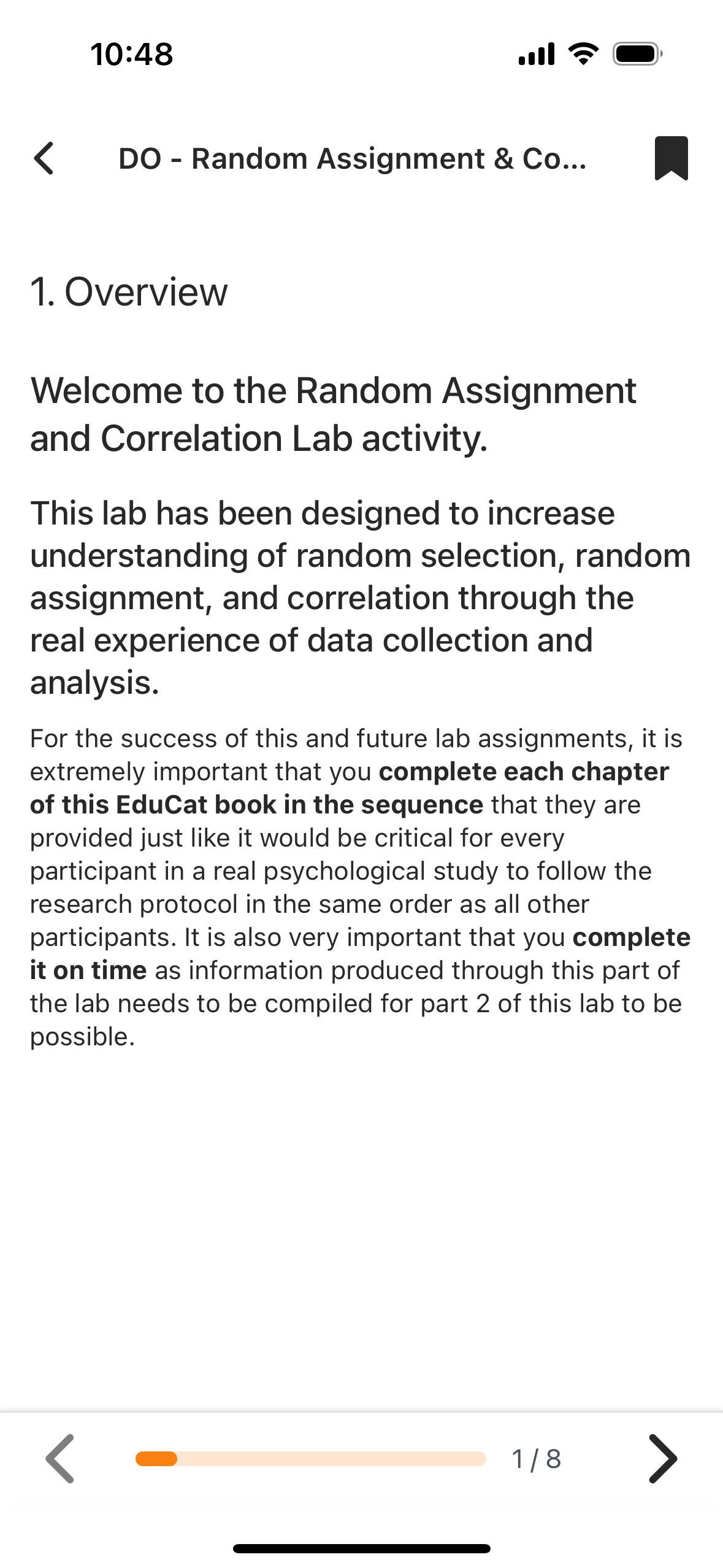
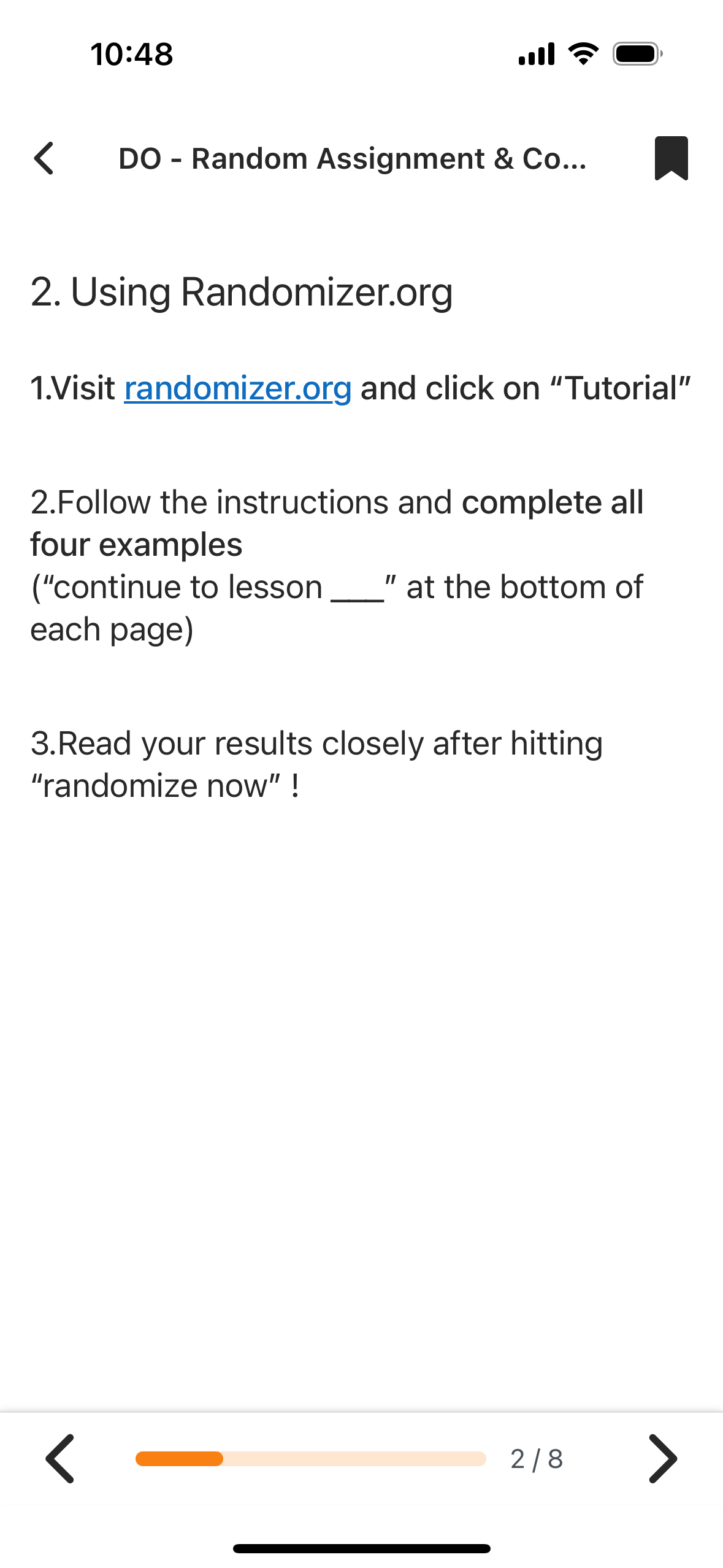
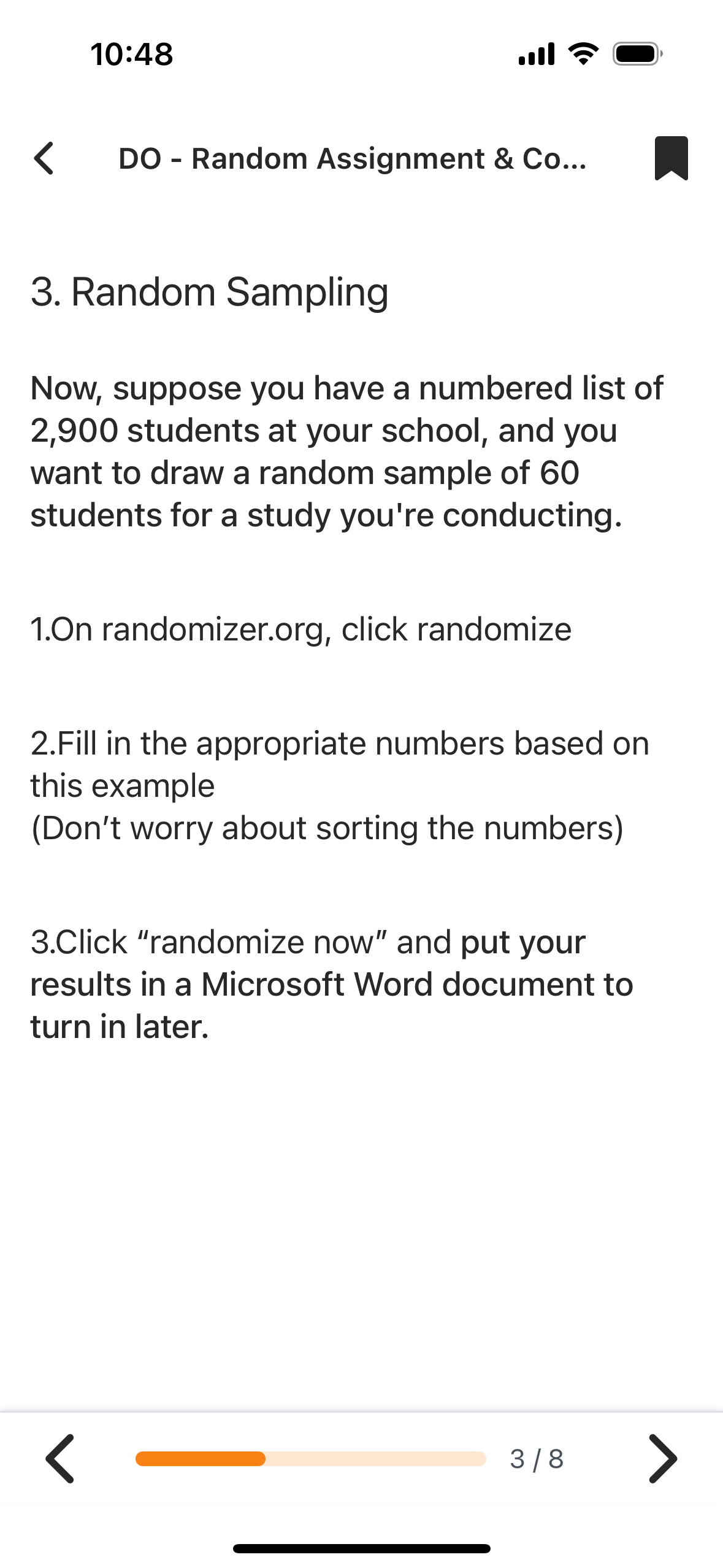
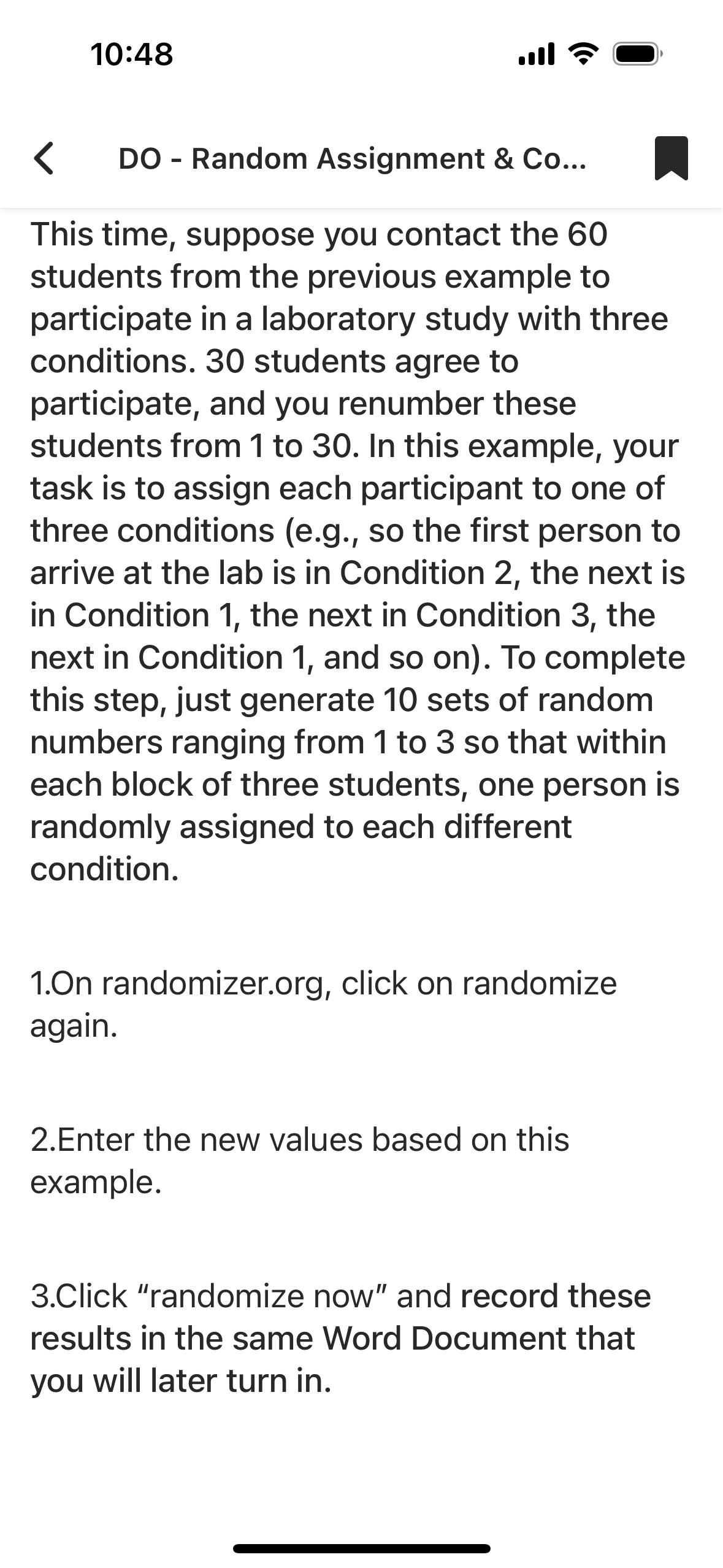
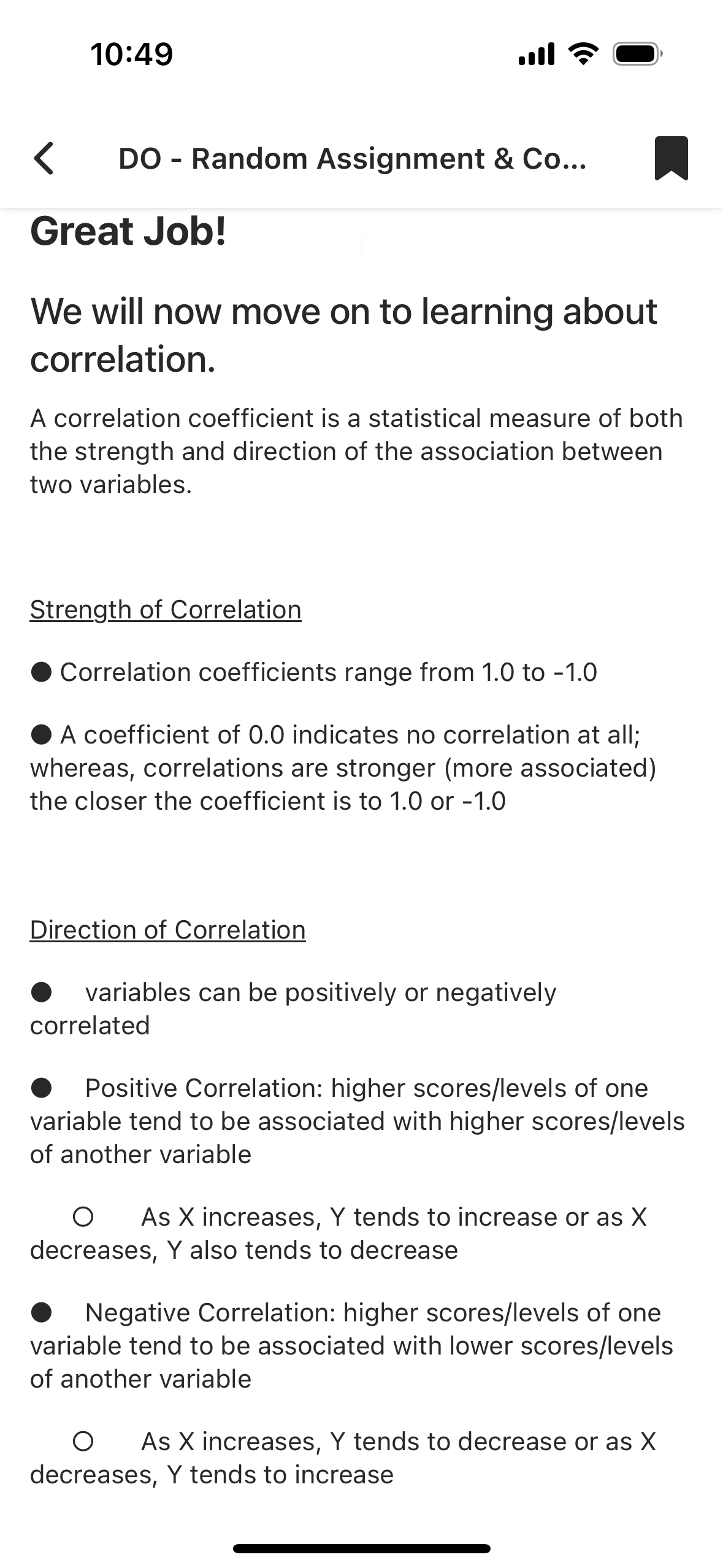
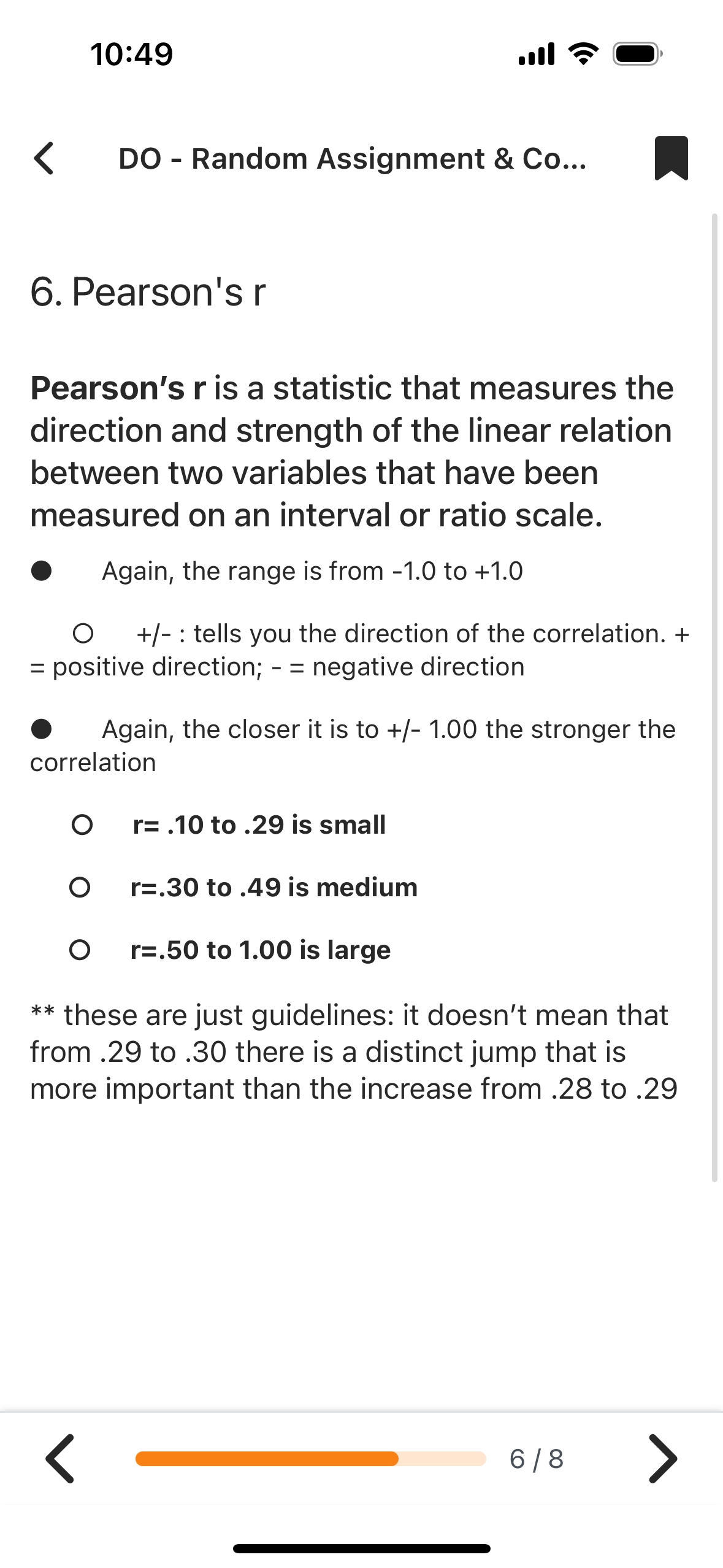
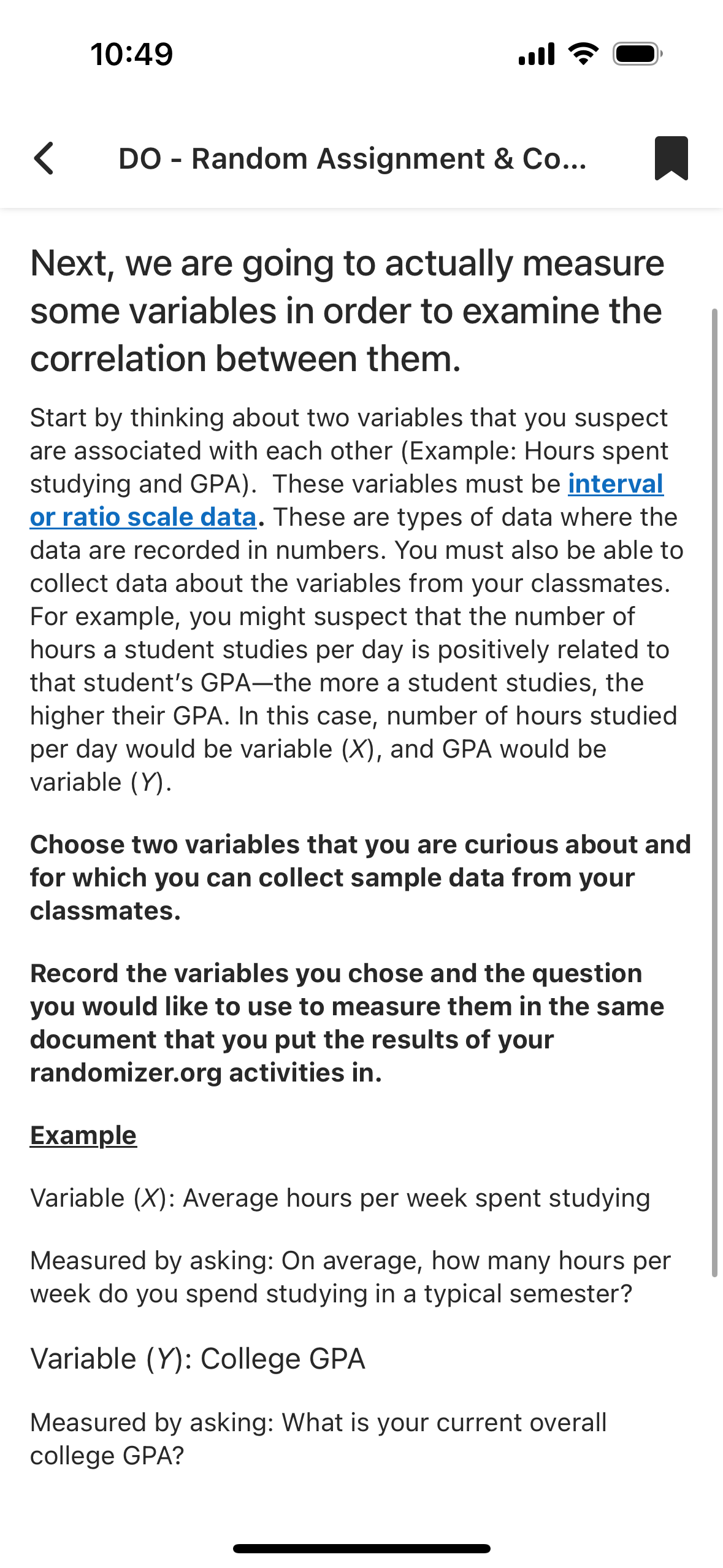
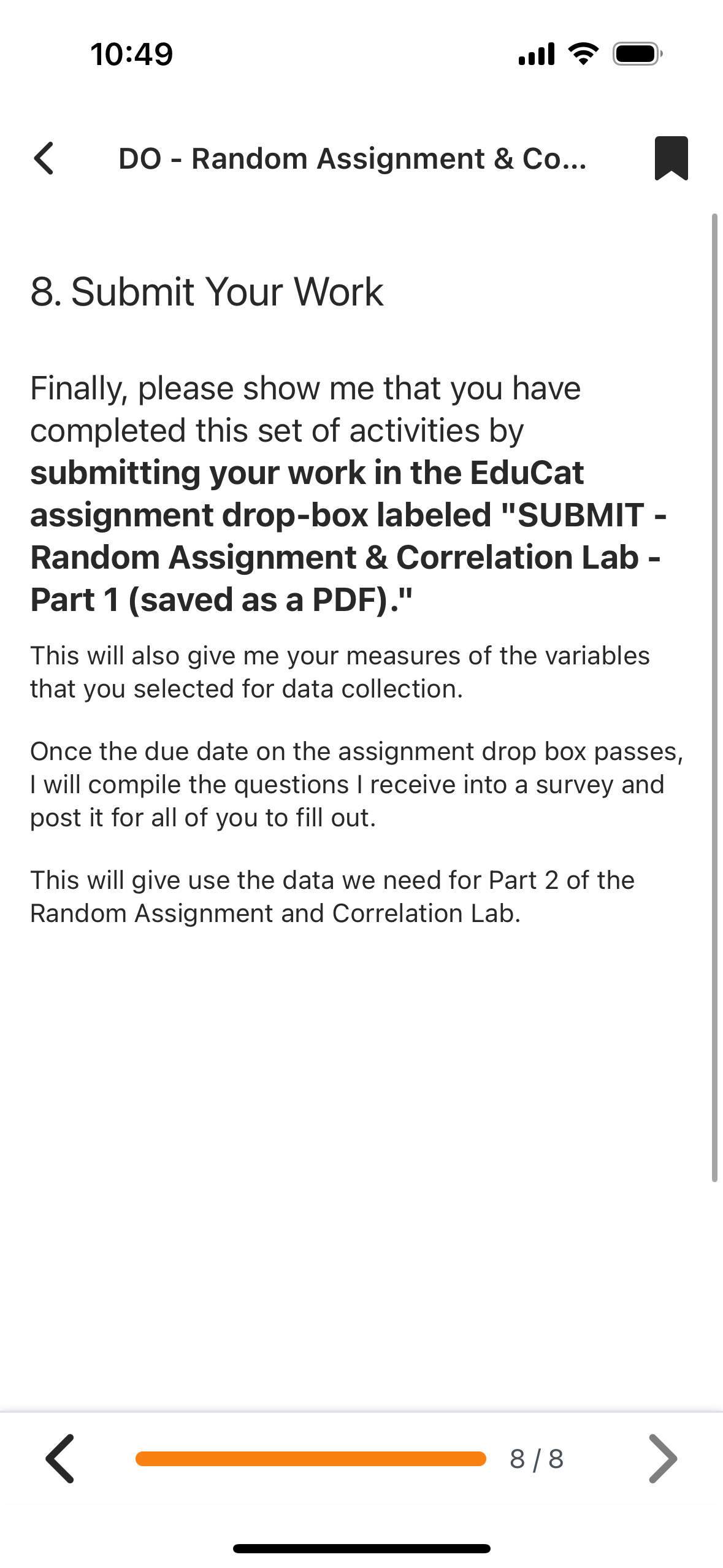
10:48 ull @ DO - Random Assignment & Co... . 1. Overview Welcome to the Random Assignment and Correlation Lab activity. This lab has been designed to increase understanding of random selection, random assignment, and correlation through the real experience of data collection and analysis. For the success of this and future lab assignments, it is extremely important that you complete each chapter of this EduCat book in the sequence that they are provided just like it would be critical for every participant in a real psychological study to follow the research protocol in the same order as all other participants. It is also very important that you complete it on time as information produced through this part of the lab needs to be compiled for part 2 of this lab to be possible. 10:48 ull @ DO - Random Assignment & Co... . 2. Using Randomizer.org 1.Visit randomizer.org and click on "Tutorial\" 2.Follow the instructions and complete all four examples (\"continue to lesson ___" at the bottom of each page) 3.Read your results closely after hitting \"randomize now" ! 10:48 ull @ DO - Random Assignment & Co... . 3. Random Sampling Now, suppose you have a numbered list of 2,900 students at your school, and you want to draw a random sample of 60 students for a study you're conducting. 1.0n randomizer.org, click randomize 2.Fill in the appropriate numbers based on this example (Don't worry about sorting the numbers) 3.Click \"randomize now" and put your results in a Microsoft Word document to turn in later. 10:48 ull @ DO - Random Assignment & Co... . This time, suppose you contact the 60 students from the previous example to participate in a laboratory study with three conditions. 30 students agree to participate, and you renumber these students from 1 to 30. In this example, your task is to assign each participant to one of three conditions (e.g., so the first person to arrive at the lab is in Condition 2, the next is in Condition 1, the next in Condition 3, the next in Condition 1, and so on). To complete this step, just generate 10 sets of random numbers ranging from 1 to 3 so that within each block of three students, one person is randomly assigned to each different condition. 1.0n randomizer.org, click on randomize again. 2.Enter the new values based on this example. 3.Click "randomize now" and record these results in the same Word Document that you will later turn in. 10:49 ull @ DO - Random Assignment & Co... . Great Job! We will now move on to learning about correlation. A correlation coefficient is a statistical measure of both the strength and direction of the association between two variables. Strength of Correlation @ Correlation coefficients range from 1.0 to -1.0 @ A coefficient of 0.0 indicates no correlation at all; whereas, correlations are stronger (more associated) the closer the coefficient is to 1.0 or -1.0 Direction of Correlation @ variables can be positively or negatively correlated @ Positive Correlation: higher scores/levels of one variable tend to be associated with higher scores/levels of another variable O As X increases, Y tends to increase or as X decreases, Y also tends to decrease @ Negative Correlation: higher scores/levels of one variable tend to be associated with lower scores/levels of another variable O As Xincreases, Y tends to decrease or as X decreases, Y tends to increase 10:49 ull @ DO - Random Assignment & Co... . 6. Pearson'sr Pearson''sr is a statistic that measures the direction and strength of the linear relation between two variables that have been measured on an interval or ratio scale. o Again, the range is from -1.0 to +1.0 O +/-:tells you the direction of the correlation. + = positive direction; - = negative direction o Again, the closer it is to +/- 1.00 the stronger the correlation O r=.10t0.29is small O r=.30t0.49is medium O r=.50t01.00is large ** these are just guidelines: it doesn't mean that from .29 to .30 there is a distinct jump that is more important than the increase from .28 to .29 10:49 all @ DO - Random Assignment & Co... . Next, we are going to actually measure some variables in order to examine the correlation between them. Start by thinking about two variables that you suspect are associated with each other (Example: Hours spent studying and GPA). These variables must be interval or ratio scale data. These are types of data where the data are recorded in numbers. You must also be able to collect data about the variables from your classmates. For example, you might suspect that the number of hours a student studies per day is positively related to that student's GPAthe more a student studies, the higher their GPA. In this case, number of hours studied per day would be variable (X), and GPA would be variable (Y). Choose two variables that you are curious about and for which you can collect sample data from your classmates. Record the variables you chose and the question you would like to use to measure them in the same document that you put the results of your randomizer.org activities in. Example Variable (X): Average hours per week spent studying Measured by asking: On average, how many hours per week do you spend studying in a typical semester? Variable (Y): College GPA Measured by asking: What is your current overall college GPA? 10:49 ll = @ DO - Random Assignment & Co... . 8. Submit Your Work Finally, please show me that you have completed this set of activities by submitting your work in the EduCat assignment drop-box labeled "SUBMIT - Random Assignment & Correlation Lab - Part 1 (saved as a PDF)." This will also give me your measures of the variables that you selected for data collection. Once the due date on the assignment drop box passes, | will compile the questions | receive into a survey and post it for all of you to fill out. This will give use the data we need for Part 2 of the Random Assignment and Correlation Lab
Step by Step Solution
There are 3 Steps involved in it
1 Expert Approved Answer
Step: 1 Unlock
Question Has Been Solved by an Expert!
Get step-by-step solutions from verified subject matter experts
Step: 2 Unlock
Step: 3 Unlock
Students Have Also Explored These Related Mathematics Questions!









 Study Help