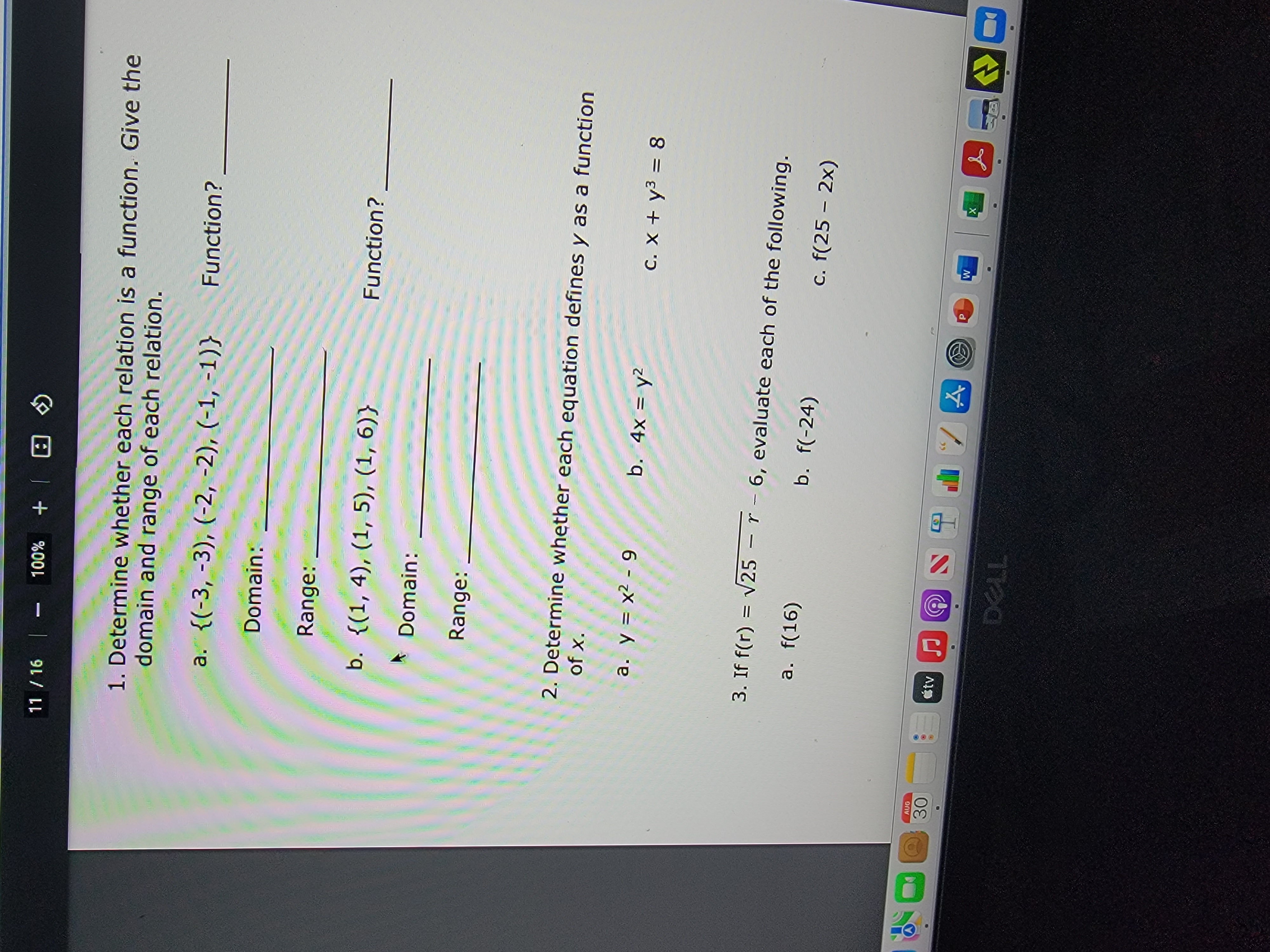
Question: 11 / 16 100% + 1. Determine whether each relation is a function. Give the domain and range of each relation. a. { (-3, -3),
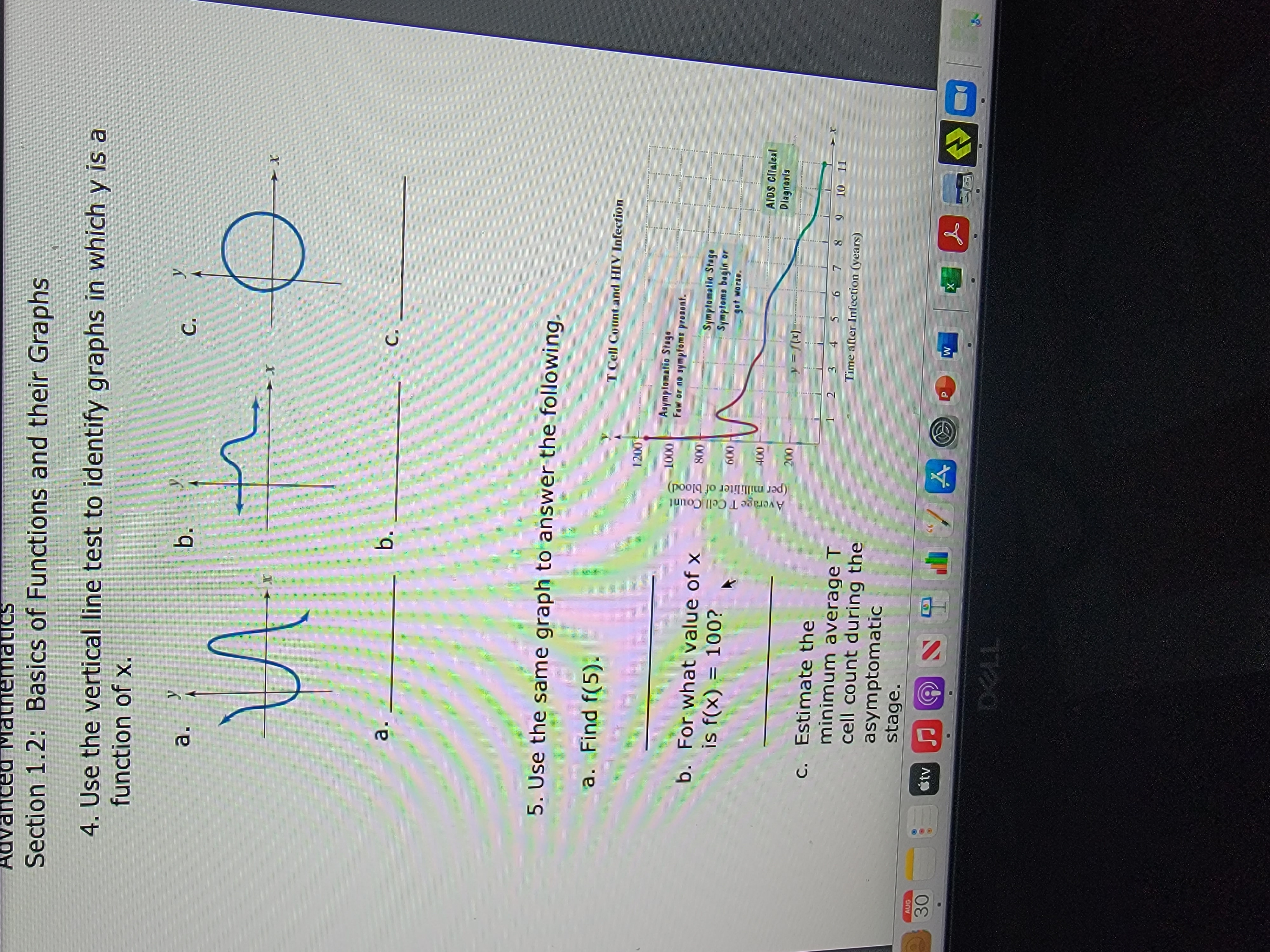
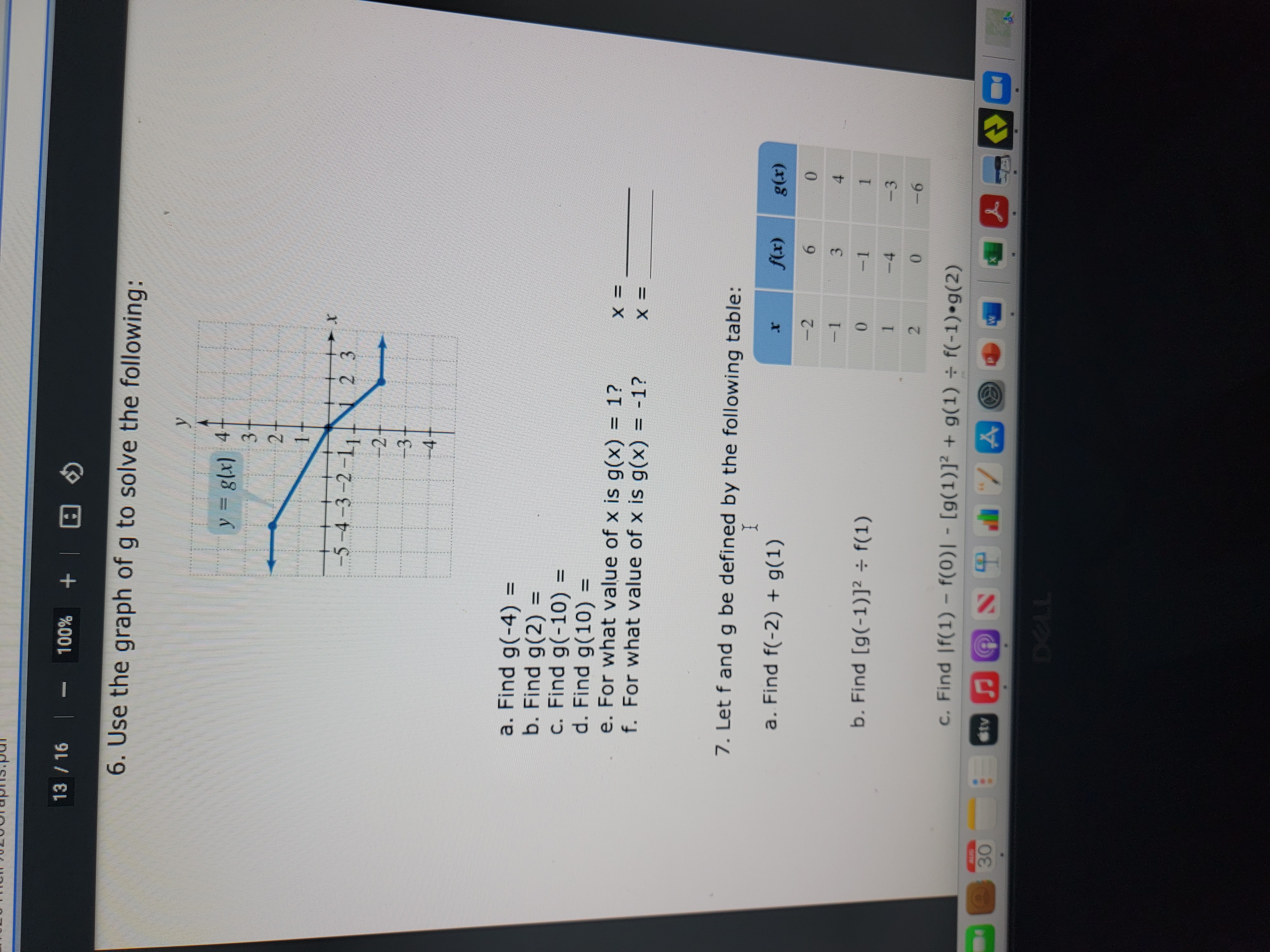
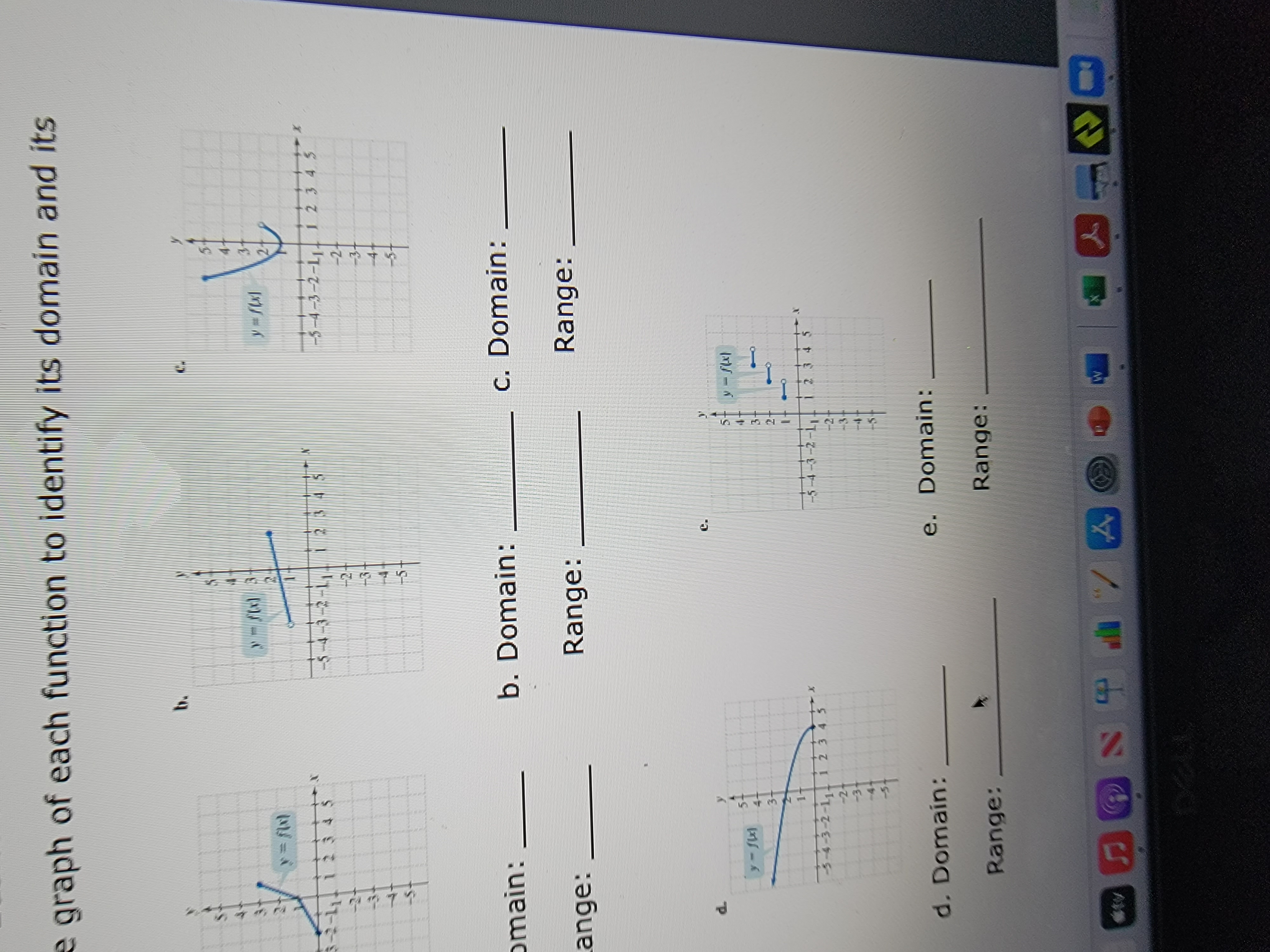
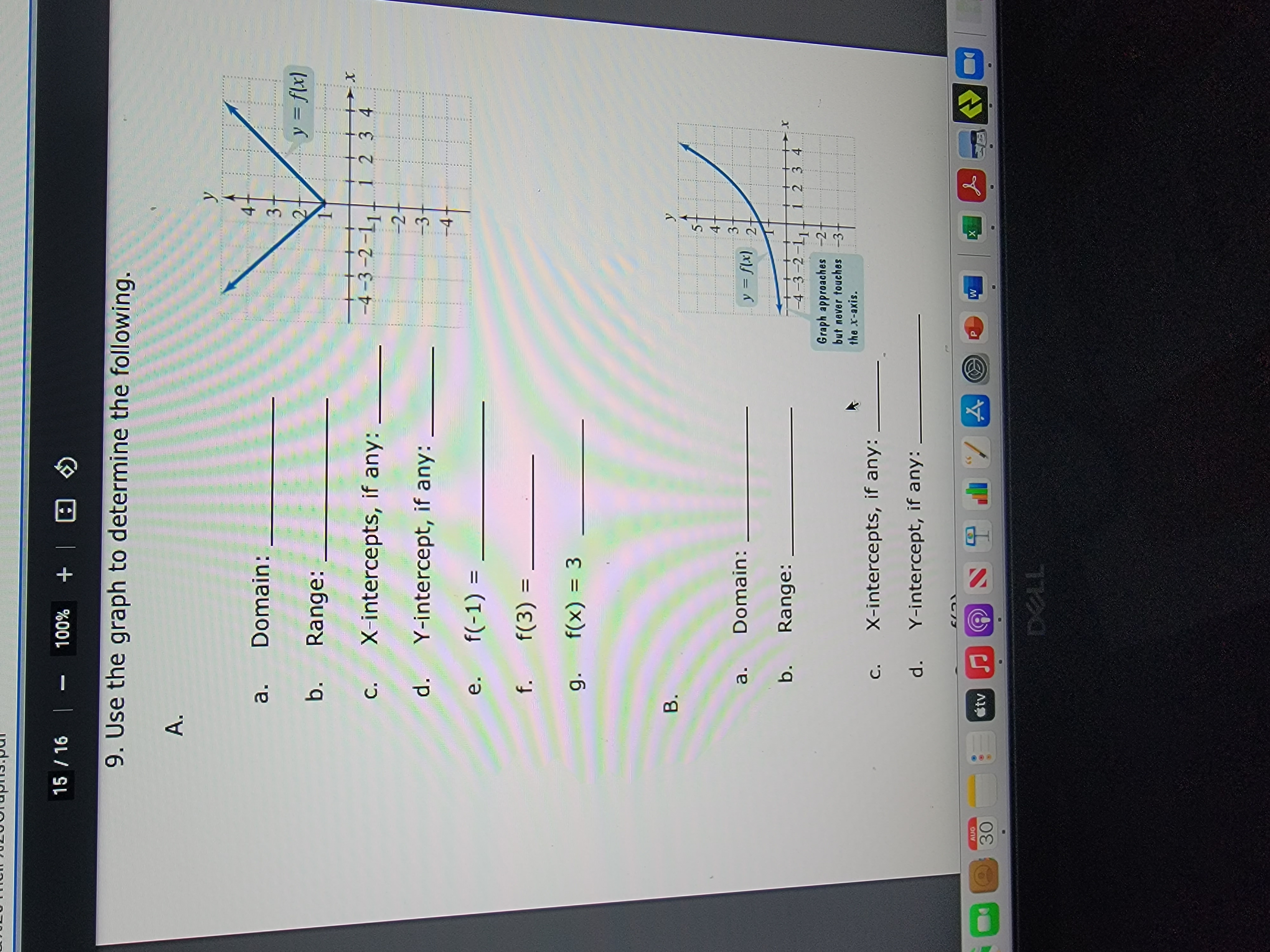
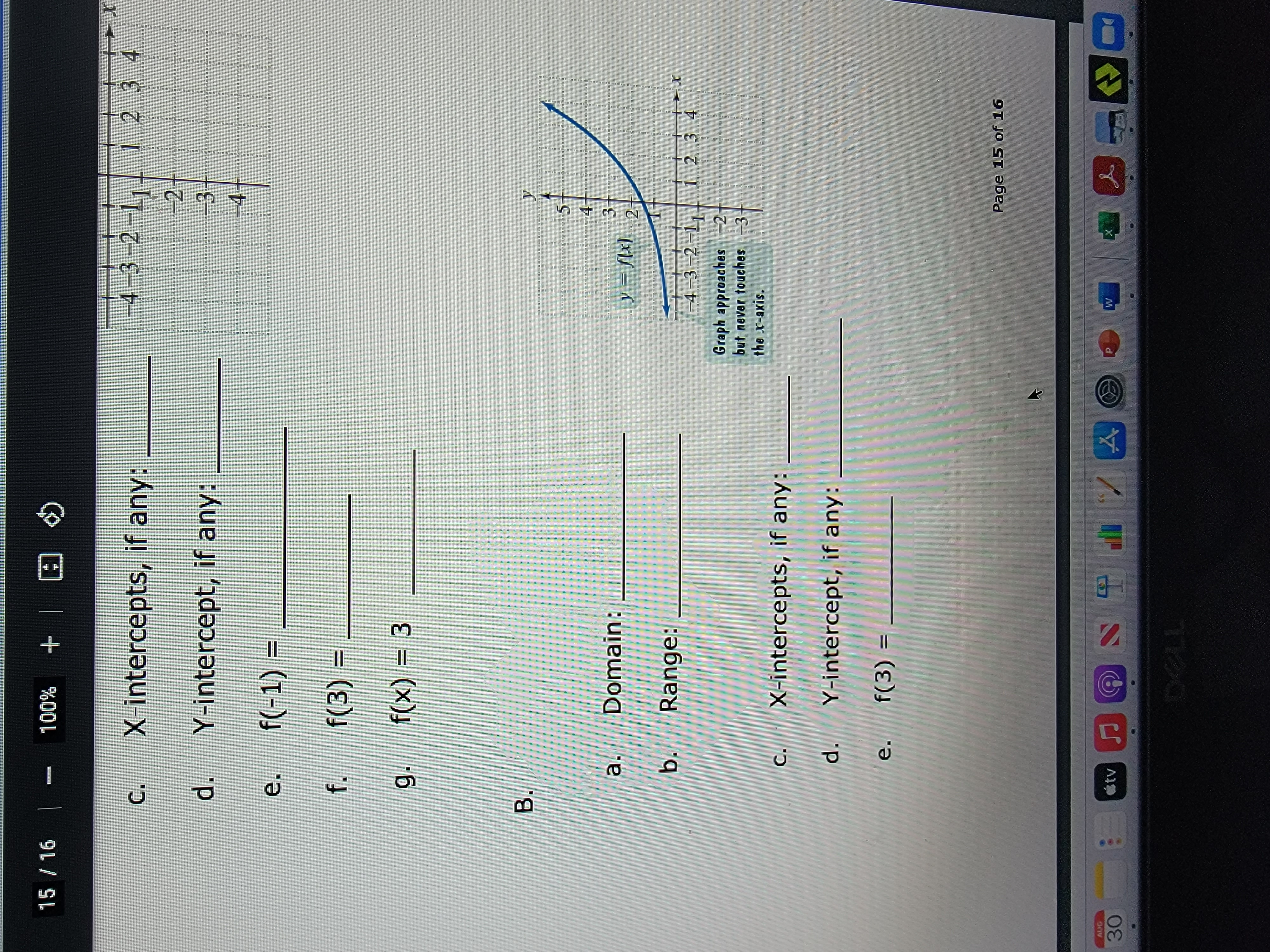
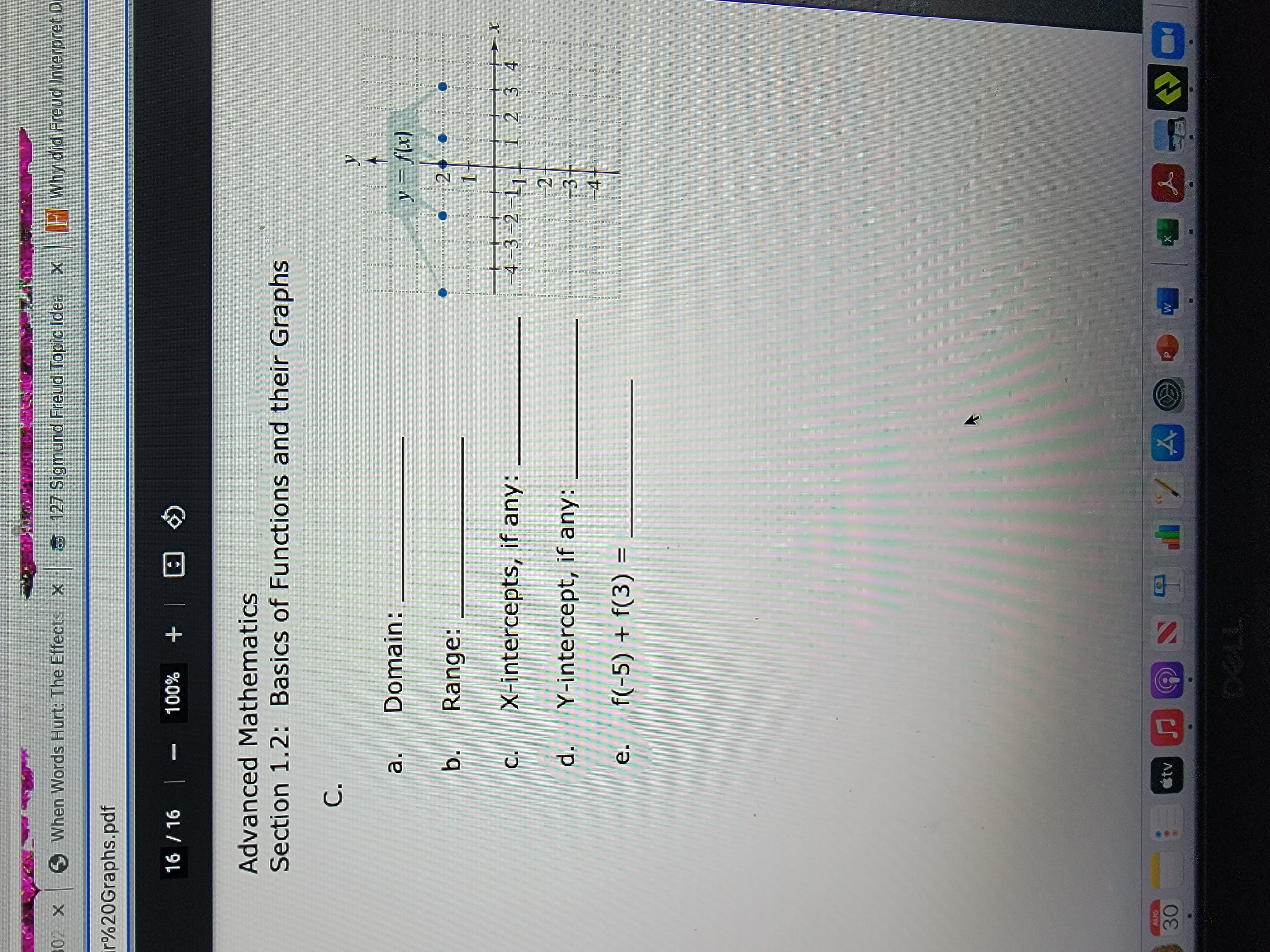
11 / 16 100% + 1. Determine whether each relation is a function. Give the domain and range of each relation. a. { (-3, -3), (-2, -2), (-1, -1) } Function? Domain: Range: b. { (1, 4), (1, 5), (1, 6)} Function? Domain: Range: 2. Determine whether each equation defines y as a function of X. a. y = x2 - 9 b. 4x = yz C. X + y3 = 8 3. If f(r) = V25 - r - 6, evaluate each of the following. a. f(16) b. f(-24) c. f(25 - 2x) AUG 30 istv P W DELLAdvanced Mathematics Section 1.2: Basics of Functions and their Graphs 4. Use the vertical line test to identify graphs in which y is a function of x. b. C. y a. A a. b. C. 5. Use the same graph to answer the following. a. Find f(5). T Cell Count and HIV Infection 1200 1000 Asymptomatic Stage Fow or no symptoms present. b. For what value of x 800 Symptomatic Stage is f(x) = 100? Symptoms begin or Average T Cell Count (per milliliter of blood) 500 got worse. 400 AIDS Clinical Diagnosis y = (x) C. Estimate the minimum average T 2 6 9 10 11 Time after Infection (years) cell count during the asymptomatic stage. AUG 30 stv P W X DELL13 / 16 100% + 6. Use the graph of g to solve the following: = g(x) a. Find g(-4) = b. Find g(2) = c. Find g(-10) = d. Find g(10) = e. For what value of x is g(x) = 1? f. For what value of x is g(x) = -1? 7. Let f and g be defined by the following table: a. Find f(-2) + 9(1) f(x) 6 0 b. Find [g(-1) ]2 : f(1) - 6 c. Find If(1) - f(0)1 - [9(1)12 + 9(1) - f(-1)-9(2) 30 . .. DELLe graph of each function to identify its domain and its b. 1 = AN 125 45 -3-4-3-2-11-12345 AN main: b. Domain: c. Domain: ange: Range: Range: C- -3 -4 -3-2 -11 1 2 3 4 - 24 - 3+ - 4 4 d. Domain: e. Domain: Range: Range : W15 / 16 100% 9. Use the graph to determine the following. A. a. Domain: 147 . y = f(x) b. Range: c. X-intercepts, if any: -4 -32-1 1234 d. Y-intercept, if any: e. f(-1) = f. f(3 ) = g. f(x) = 3 B. a. Domain: y = flx) b . Range: -321 1234 Graph approaches -2- but never touches - 3+ the x-axis. C. X-intercepts, if any: d. Y-intercept, if any: AUG stv P 30 4 W X DELL15 / 16 100% + c. X-intercepts, if any: 4-3-2-1 d. Y-intercept, if any : e. f(-1) = f. f(3) = g. f(x) = 3 B a. Domain: y = f(x) 2- b. Range: -3-2 -11 12 3 4 Graph approaches 2 but never touches -3- the x-axis. c. X-intercepts, if any: d. Y-intercept, if any: e. f (3) = Page 15 of 16 AUG 30 tv02 X 5 When Words Hurt: The Effects x # 127 Sigmund Freud Topic Idea F Why did Freud Interpret D r%20Graphs.pdf 16 / 16 1 - 100% Advanced Mathematics Section 1.2: Basics of Functions and their Graphs C. a. Domain: y =J(X b. Range: 2 c. X-intercepts, if any: 2. d. Y-intercept, if any: e. f(-5) + f(3) = 30 itv P W
Step by Step Solution
There are 3 Steps involved in it
1 Expert Approved Answer
Step: 1 Unlock
Question Has Been Solved by an Expert!
Get step-by-step solutions from verified subject matter experts
Step: 2 Unlock
Step: 3 Unlock
Students Have Also Explored These Related Mathematics Questions!









 Study Help