







Question: 11. (a) [4 marks] Show that sin(x) 1 + cos2 (x) dx = -. Justify your answer fully. (b) [4 marks] Let f(x) be continuous,
![11. (a) [4 marks] Show that sin(x) 1 + cos2 (x)](https://s3.amazonaws.com/si.experts.images/answers/2024/06/66797ccc0be98_83566797ccbe049d.jpg)
![dx = -. Justify your answer fully. (b) [4 marks] Let f(x)](https://s3.amazonaws.com/si.experts.images/answers/2024/06/66797ccc790b5_83666797ccc4fdec.jpg)
![)da = ["'s(a-x) da.(c) [4 marks] Find x sin(x) 1 + cos2](https://s3.amazonaws.com/si.experts.images/answers/2024/06/66797ccd73786_83766797ccd43c02.jpg)
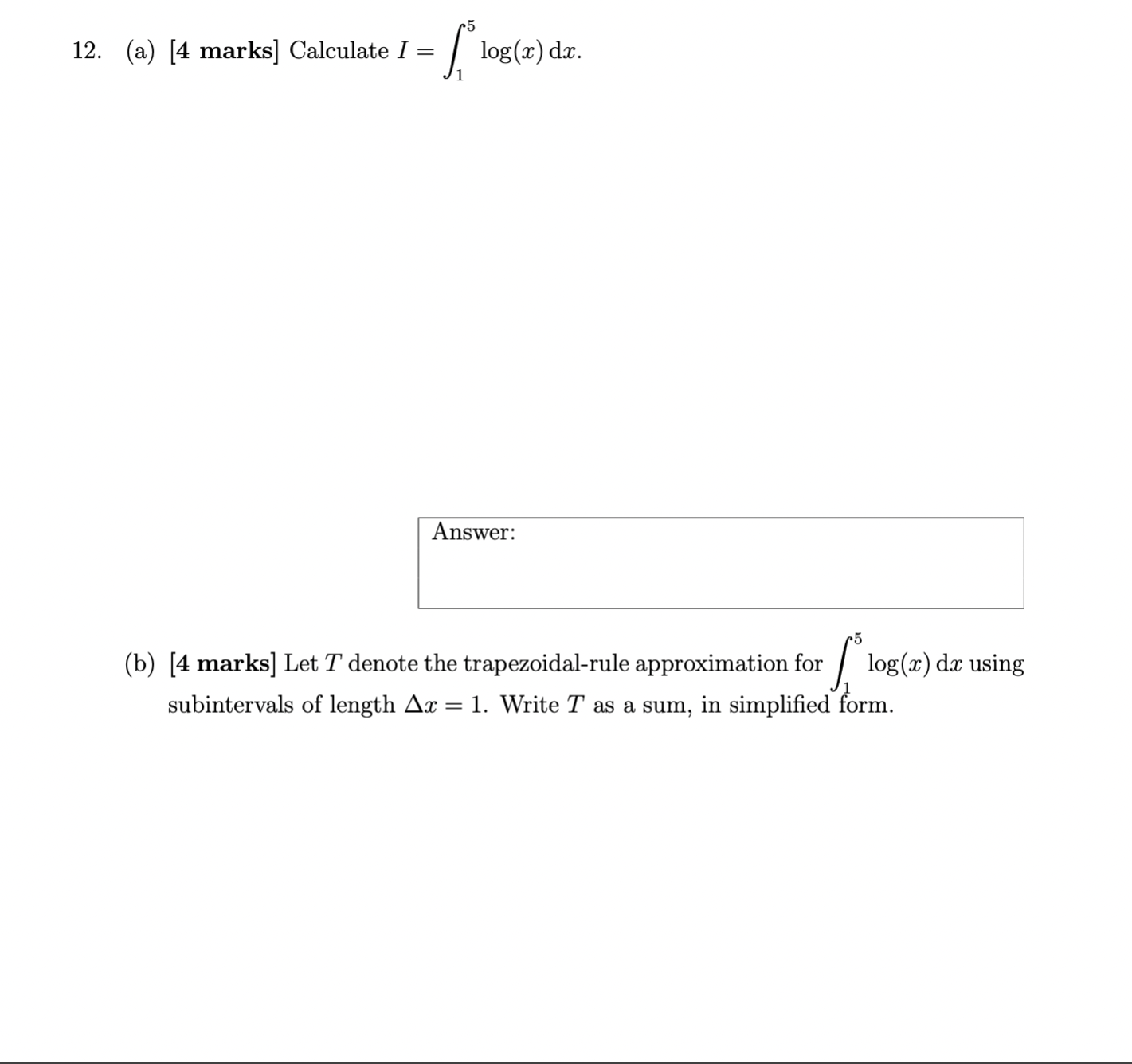
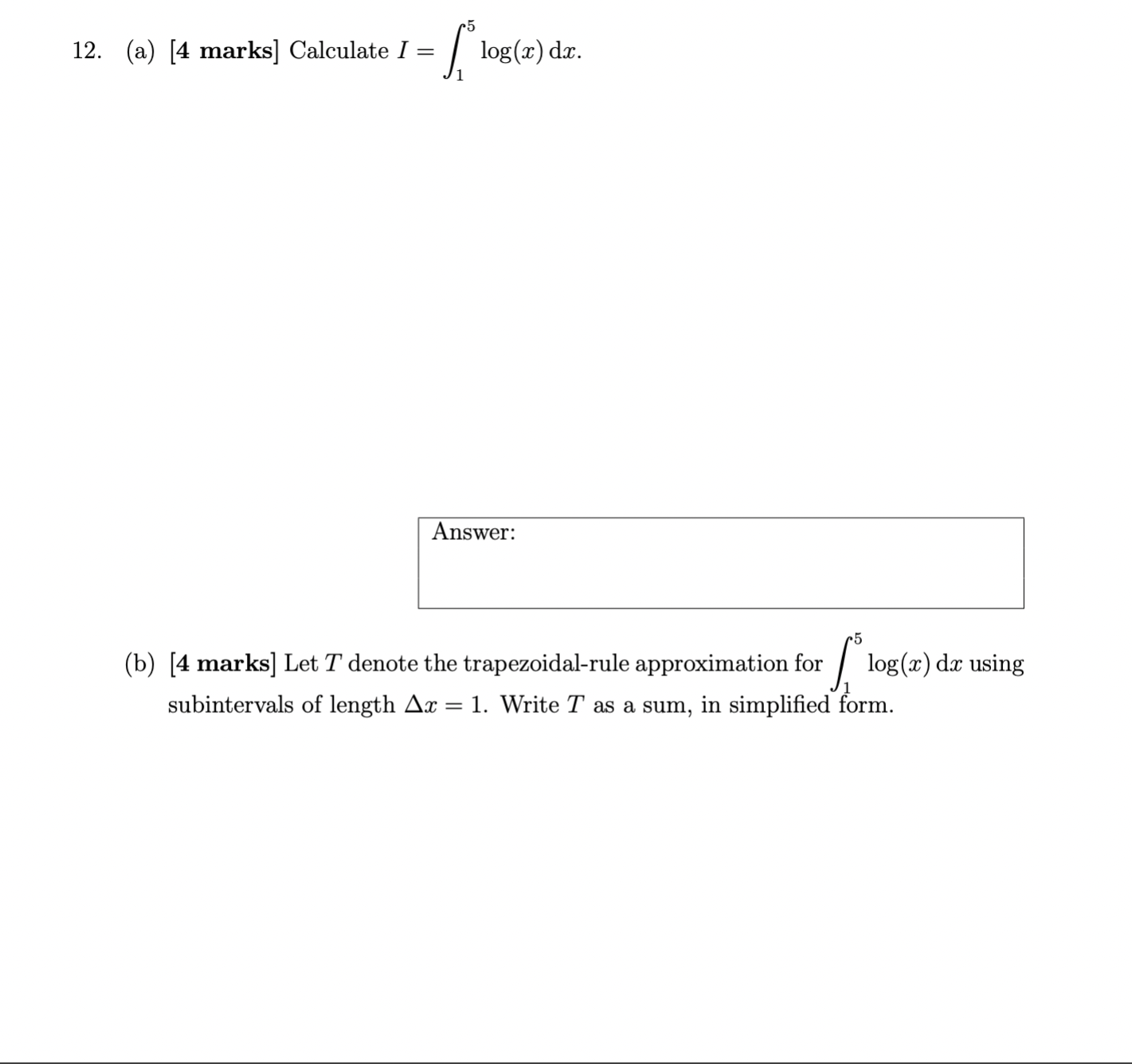
![sin(0) and cos(7 + 0) = - cos(0).12. (a) [4 marks] Calculate](https://s3.amazonaws.com/si.experts.images/answers/2024/06/66797ccf34710_83966797ccf15f70.jpg)
![I = / log(x) dx. Answer: (b) [4 marks] Let T denote](https://s3.amazonaws.com/si.experts.images/answers/2024/06/66797ccfa4e7d_83966797ccf80919.jpg)
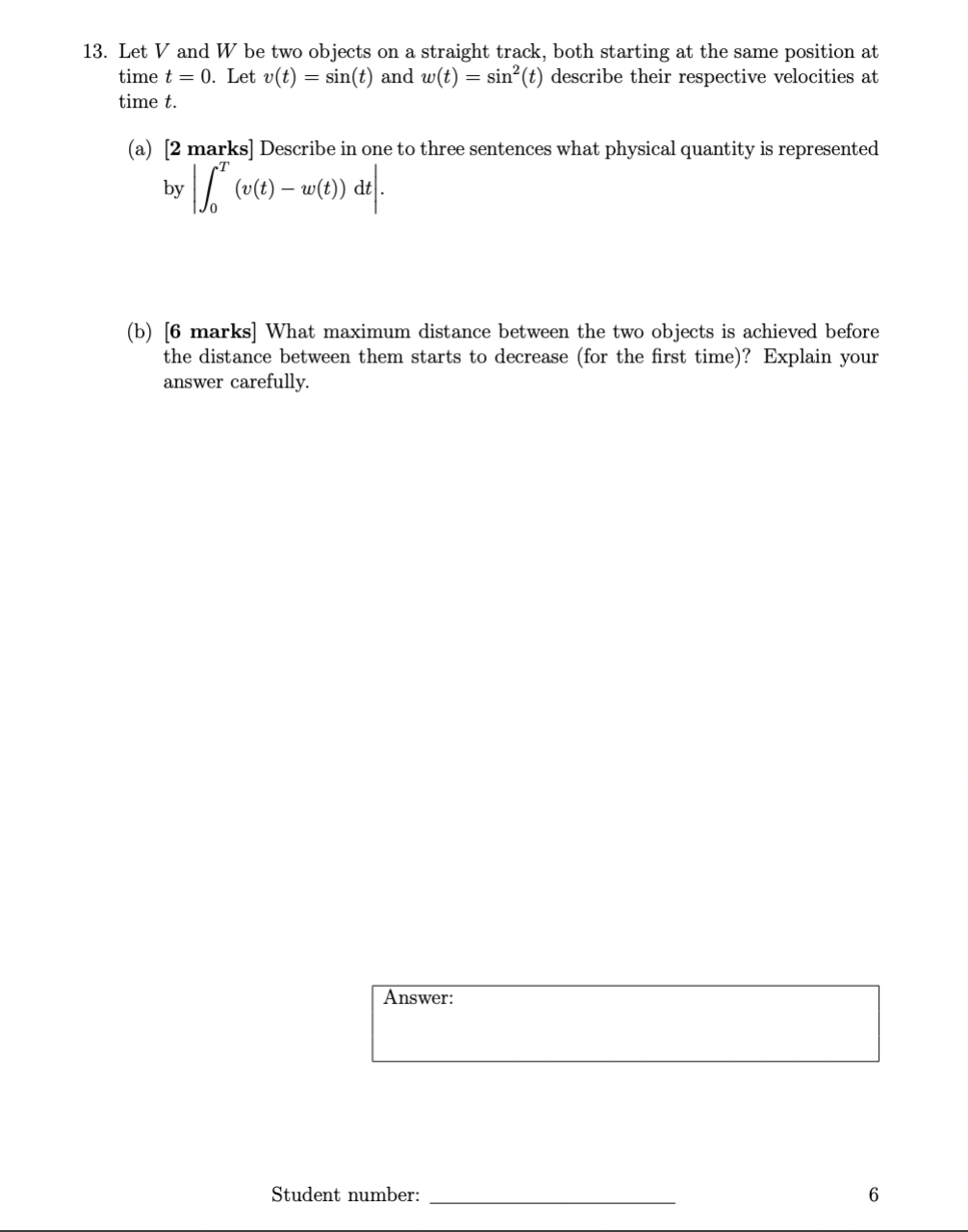
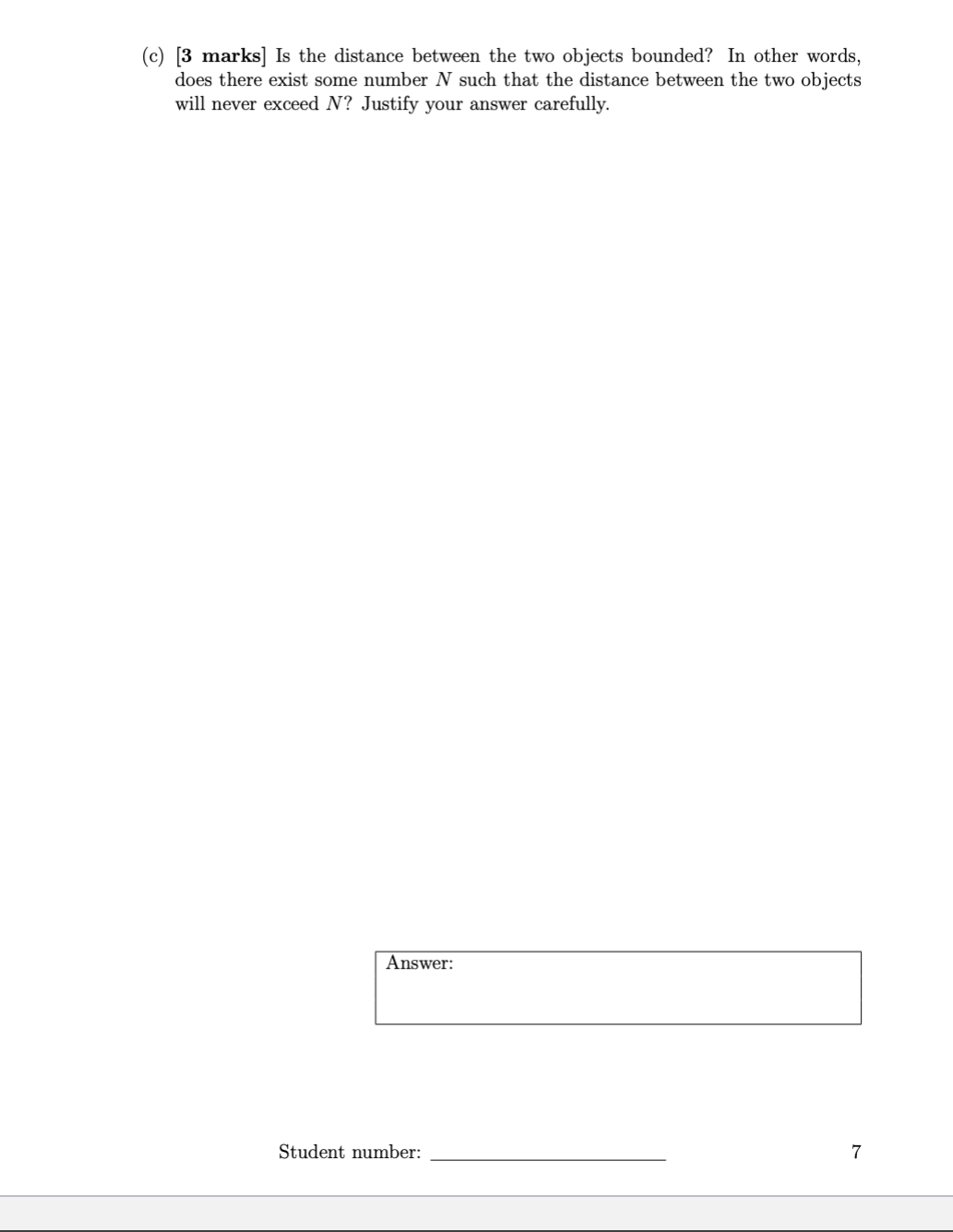
![= 1. Write T as a sum, in simplified form.(c) [3 marks]](https://s3.amazonaws.com/si.experts.images/answers/2024/06/66797cd0b1e5a_84066797cd0835a6.jpg)
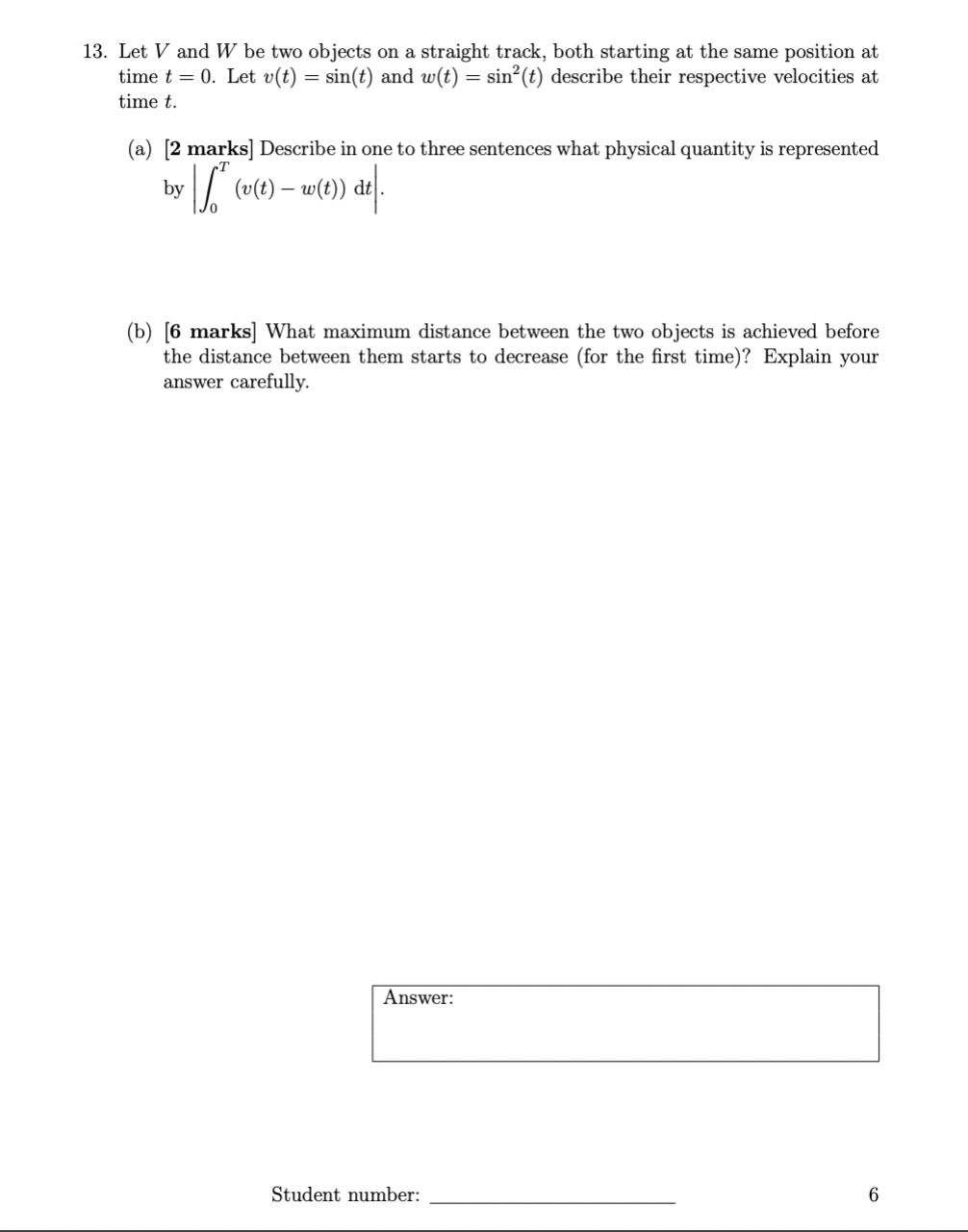
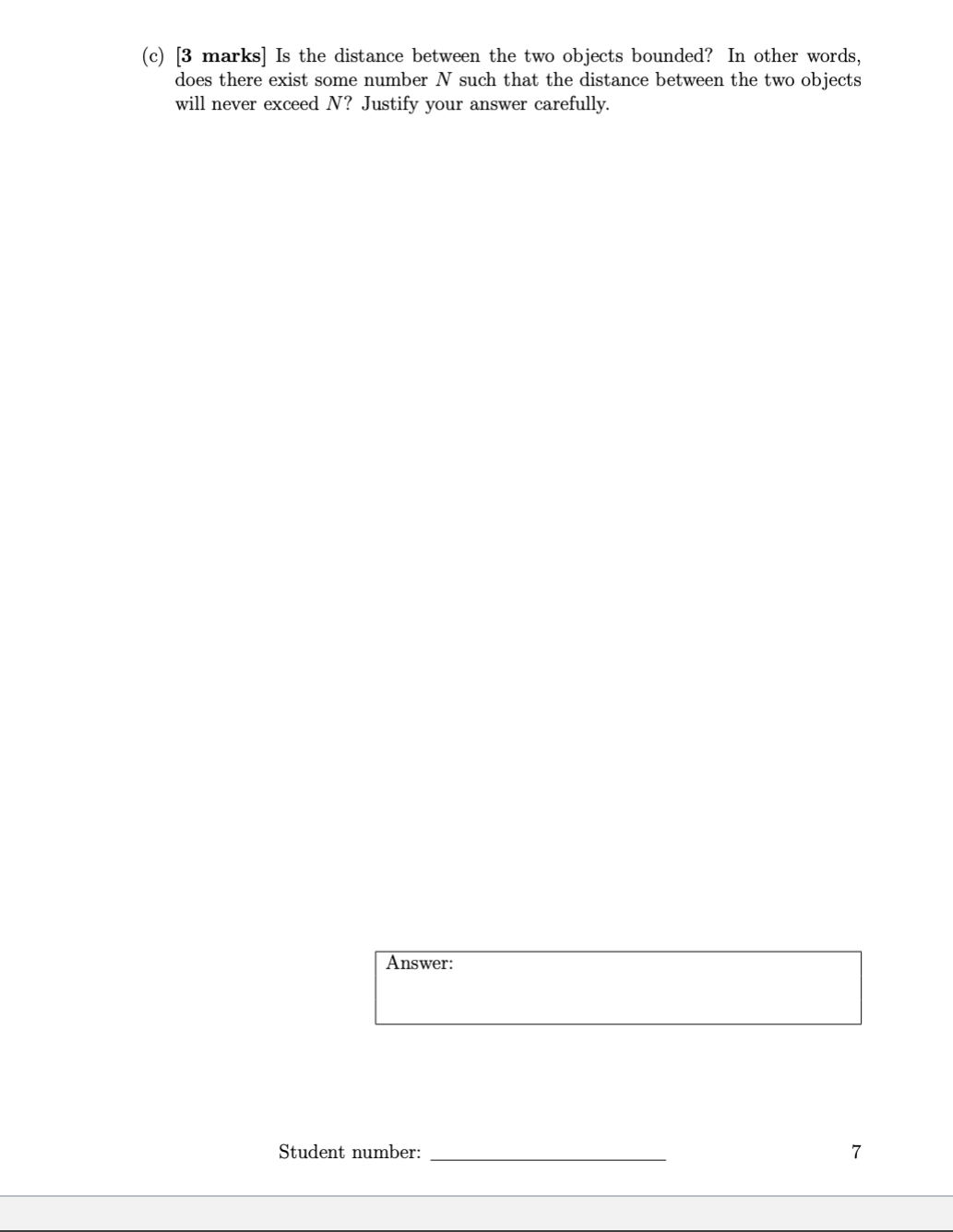
11. (a) [4 marks] Show that sin(x) 1 + cos2 (x) dx = -. Justify your answer fully. (b) [4 marks] Let f(x) be continuous, and a be any constant. Explain carefully why [" f( )da = ["'s(a-x) da.(c) [4 marks] Find x sin(x) 1 + cos2 (a) dx. The results of parts (a) and (b) above can help. You may use without proof the identities sin(7 + 0) = - sin(0) and cos(7 + 0) = - cos(0).12. (a) [4 marks] Calculate I = / log(x) dx. Answer: (b) [4 marks] Let T denote the trapezoidal-rule approximation for / log(x) dx using subintervals of length Ax = 1. Write T as a sum, in simplified form.(c) [3 marks] What is a reasonable upper bound on the absolute error induced by M b 3 the trapezoidal method as used in part (b)? Recall the error bound ( a) 12 n2 where |f\"(x)| g M. Answer: (d) [3 marks] Is the trapezoidal approximation T larger than, smaller than, or equal to the true value 1'? Explain your answer carefully. Answer: 13. Let V and W be two objects on a straight track, both starting at the same position at time t = 0. Let v{t) = sin(t) and tub!) = sin2(t) describe their respective velocities at time t. (a) [2 marks] Describe in one to three sentences what physical quantity is represented by A (nu) w(t)) dt . (b) [6 marks] What maximum distance between the two objects is achieved before the distance between them starts to decrease (for the rst time)? Explain your answer carefully. Answer: Student number: 6 (c) [3 marks] Is the distance between the two objects bounded? In other wordsJ does there exist some number N such that the distance between the two objects will never exceed N ? Justify your answer carefully. Answer: Student number: 7
Step by Step Solution
There are 3 Steps involved in it

Get step-by-step solutions from verified subject matter experts
 Study Help