Question: 11. Name the compound shown using IUPAC nomenclature. 12. Name the compound shown. In blank 1 put the IUPAC name and in blank 2 put

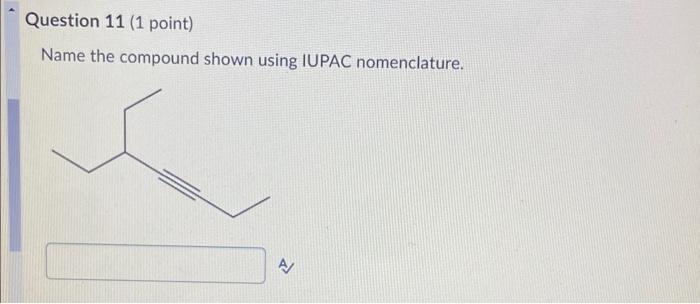
11. Name the compound shown using IUPAC nomenclature.
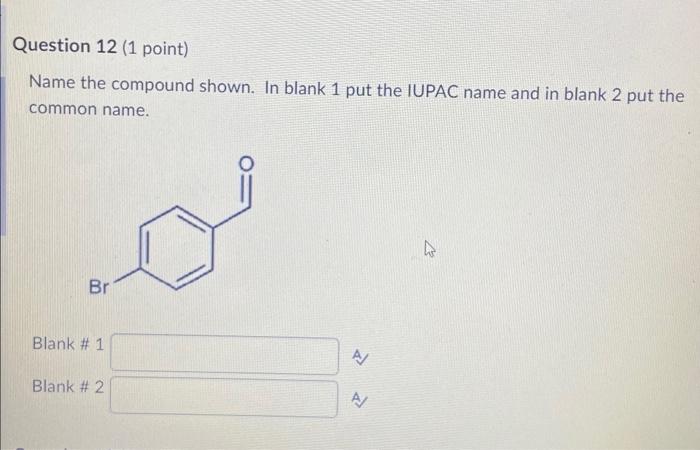
12. Name the compound shown. In blank 1 put the IUPAC name and in blank 2 put the common name.
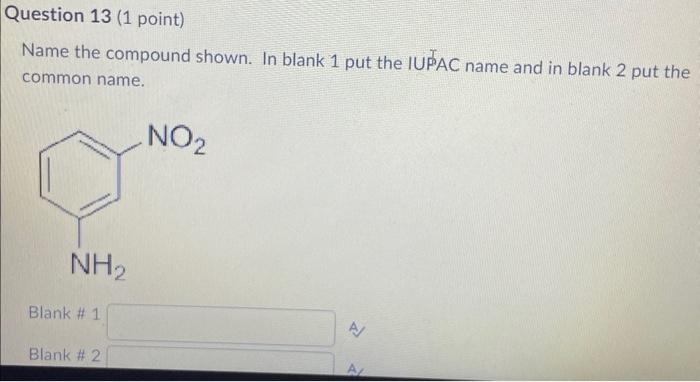
13. Name the compound shown. In blank 1 put the IUPAC name and in blank 2 put the common name.
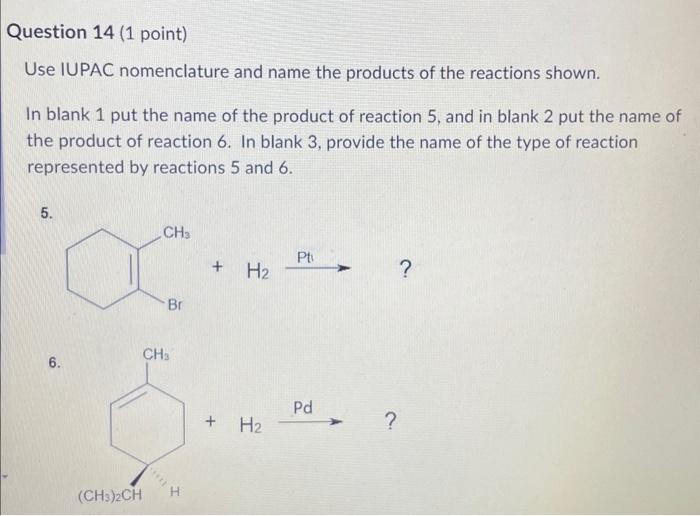
14. Use IUPAC nomenclature and name the products of the reactions shown. In blank 1 put the name of the product of reaction 5, and in blank 2 put the name of the product of reaction 6. In blank 3, provide the name of the type of reaction represented by reactions 5 and 6.
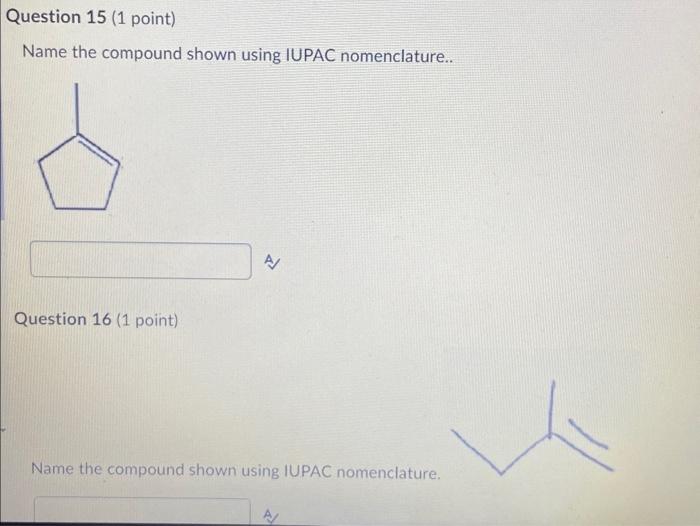
15. Name the compound shown using IUPAC nomenclature.
16. Name the compound shown using IUPAC nomenclature.
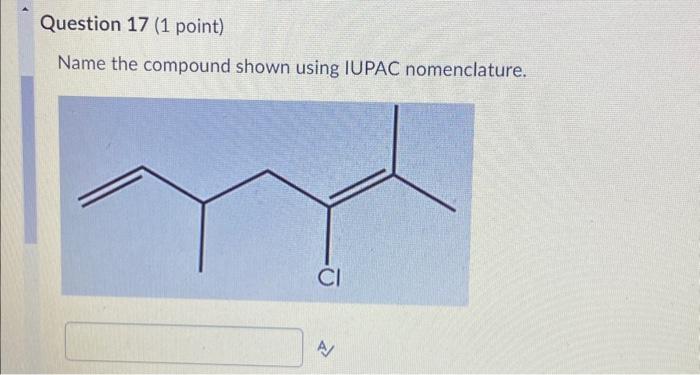
17. Name the compound shown using IUPAC nomenclature.
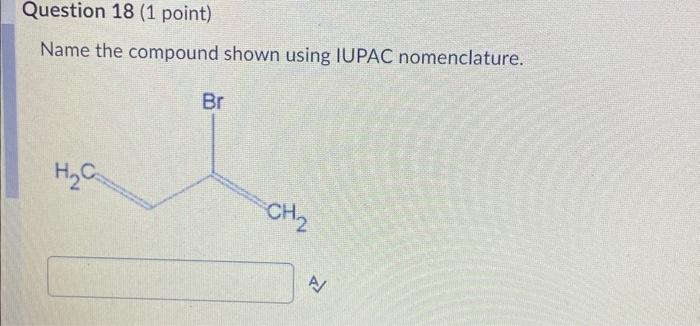
18. Name the compound shown using IUPAC nomenclature.
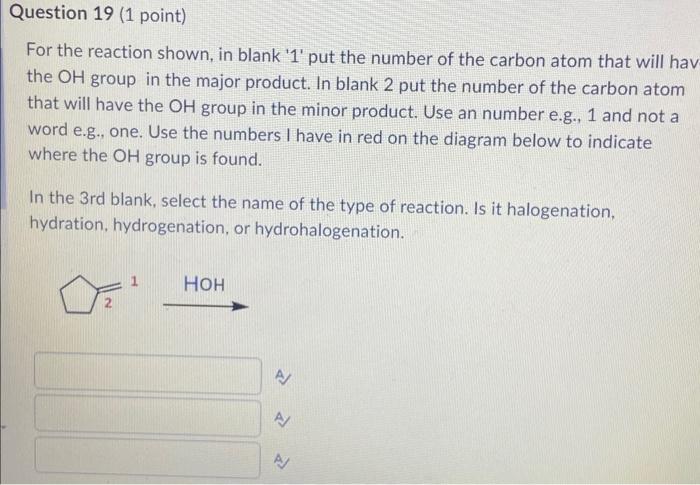
19. For the reaction shown, in blank '1 put the number of the carbon atom that will have the OH group in the major product. In blank 2 put the number of the carbon atom that will have the OH group in the minor product. Use an number e.g., 1 and not a word e.g., one. Use the numbers I have in red on the diagram below to indicate where the OH group is found.
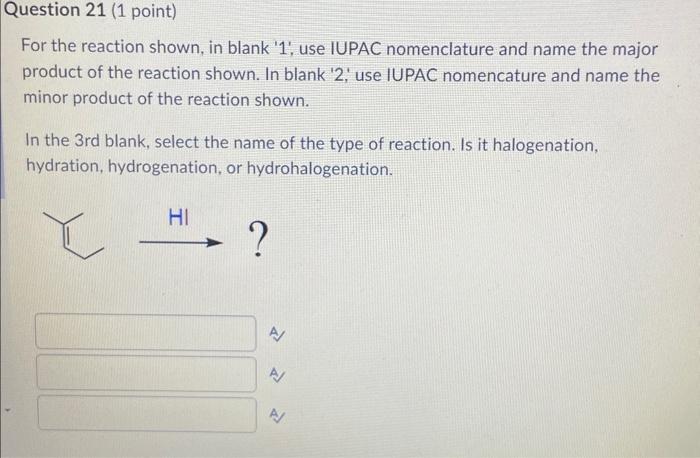
21. For the reaction shown, in blank 1, use IUPAC nomenclature and name the major product of the reaction shown. In blank 2, use IUPAC nomenature and name the minor product of the reaction shown.

In the 3rd blank, select the name of the type of reaction. Is it halogenation, hydration, hydrogenation, or hydrohalogenation.
 11. Name the compound shown using IUPAC nomenclature. 12. Name the
compound shown. In blank 1 put the IUPAC name and in blank
2 put the common name. 13. Name the compound shown. In blank
1 put the IUPAC name and in blank 2 put the common
name. 14. Use IUPAC nomenclature and name the products of the reactions
shown. In blank 1 put the name of the product of reaction
5, and in blank 2 put the name of the product of
reaction 6. In blank 3, provide the name of the type of
reaction represented by reactions 5 and 6. 15. Name the compound shown

Name the compound shown using IUPAC nomenclature. Name the compound shown. In blank 1 put the IUPAC name and in blank 2 put the common name. Blank \# 1 Blank \# 2 Name the compound shown. In blank 1 put the IUPAC name and in blank 2 put the common name. Blank \# 1 Blank \# 2 Use IUPAC nomenclature and name the products of the reactions shown. In blank 1 put the name of the product of reaction 5 , and in blank 2 put the name of the product of reaction 6. In blank 3, provide the name of the type of reaction represented by reactions 5 and 6. 5. +H2Pt? 6 . Name the compound shown using IUPAC nomenclature.. Question 16 (1 point) Name the compound shown using IUPAC nomenclature Name the compound shown using IUPAC nomenclature. Name the compound shown using IUPAC nomenclature. For the reaction shown, in blank ' 1 ' put the number of the carbon atom that will hav the OH group in the major product. In blank 2 put the number of the carbon atom that will have the OH group in the minor product. Use an number e.g., 1 and not a word e.g., one. Use the numbers I have in red on the diagram below to indicate where the OH group is found. In the 3rd blank, select the name of the type of reaction. Is it halogenation, hydration, hydrogenation, or hydrohalogenation. For the reaction shown, in blank ' 1 ', use IUPAC nomenclature and name the major product of the reaction shown. In blank ' 2; ' use IUPAC nomencature and name the minor product of the reaction shown. In the 3rd blank, select the name of the type of reaction. Is it halogenation, hydration, hydrogenation, or hydrohalogenation
Step by Step Solution

There are 3 Steps involved in it

1 Expert Approved Answer
Step: 1 Unlock blur-text-image
Question Has Been Solved by an Expert!

Get step-by-step solutions from verified subject matter experts

Step: 2 Unlock
Step: 3 Unlock

Students Have Also Explored These Related Chemistry Questions!