







Question: 1-101 When measuring small pressure differences with a manometer, often one arm of the manometer is inclined to improve the accuracy of reading. (The pressure
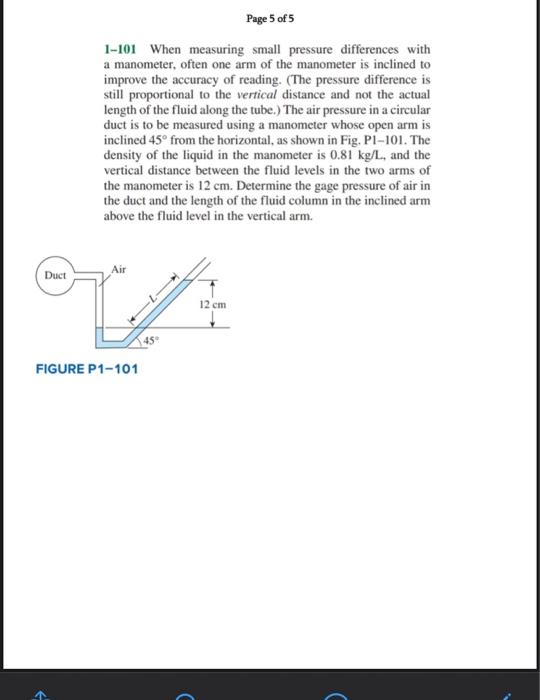
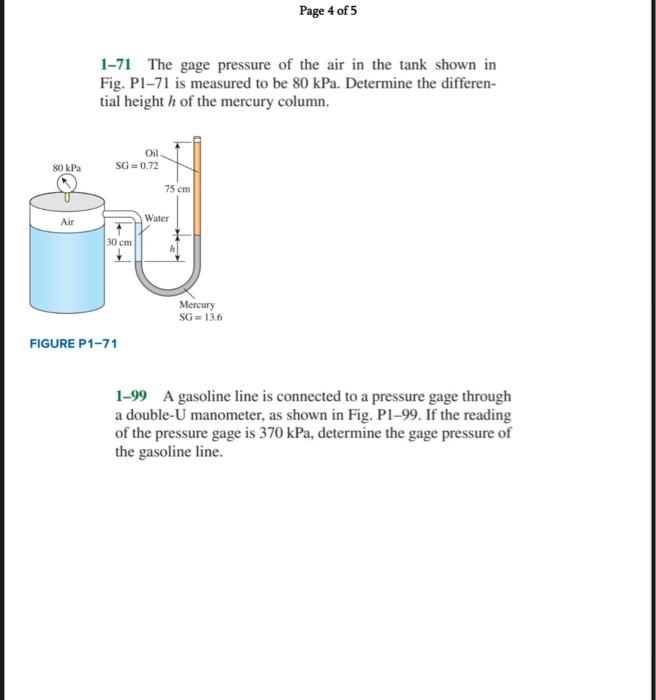
1-101 When measuring small pressure differences with a manometer, often one arm of the manometer is inclined to improve the accuracy of reading. (The pressure difference is still proportional to the vertical distance and not the actual length of the fluid along the tube.) The air pressure in a circular duct is to be measured using a manometer whose open arm is inclined 45 from the horizontal, as shown in Fig. P1-101. The density of the liquid in the manometer is 0.81kg/L, and the vertical distance between the fluid levels in the two arms of the manometer is 12cm. Determine the gage pressure of air in the duct and the length of the fluid column in the inclined arm above the fluid level in the vertical arm. 1-71 The gage pressure of the air in the tank shown in Fig. P1-71 is measured to be 80kPa. Determine the differential height h of the mercury column. 171 1-99 A gasoline line is connected to a pressure gage through a double-U manometer, as shown in Fig. P1-99. If the reading of the pressure gage is 370kPa, determine the gage pressure of the gasoline line
Step by Step Solution
There are 3 Steps involved in it

Get step-by-step solutions from verified subject matter experts
 Study Help