







Question: 111 Jx F B D E A 1 Cost Setups Quality Control |Maintenance . Transportation/ Receiving |Total 2 Indirect salaries 30% 50% 15% 5% 100%
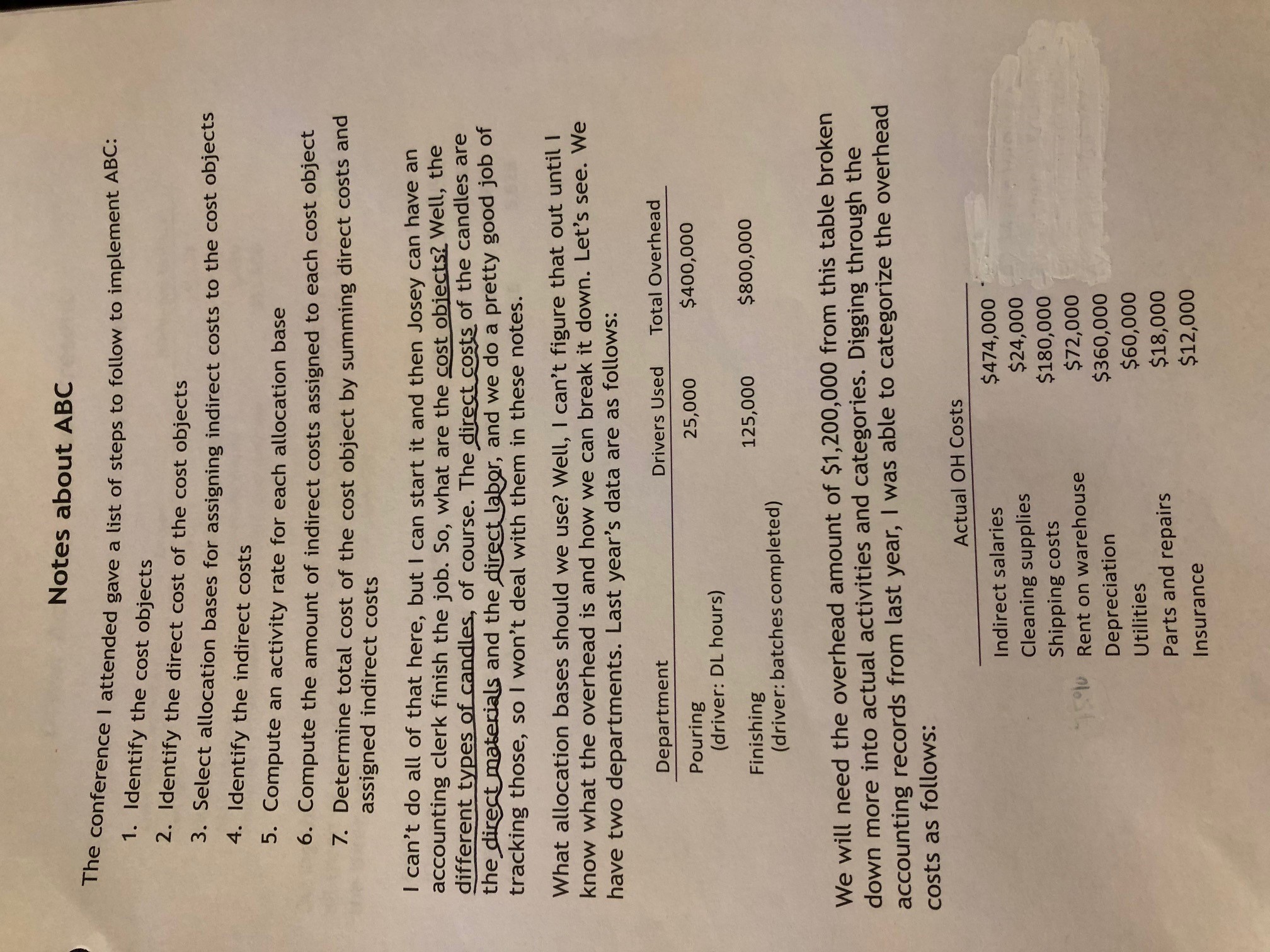
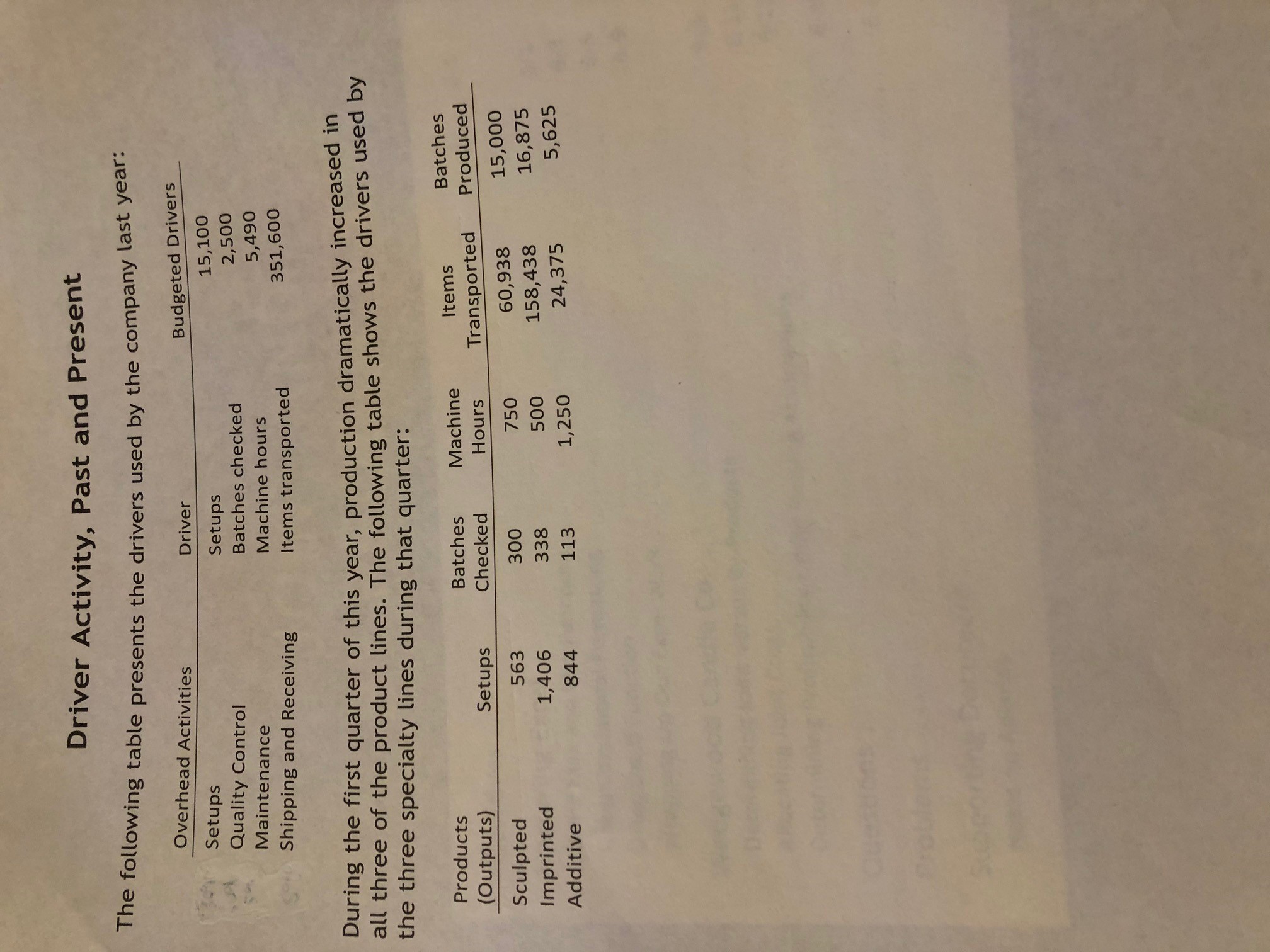
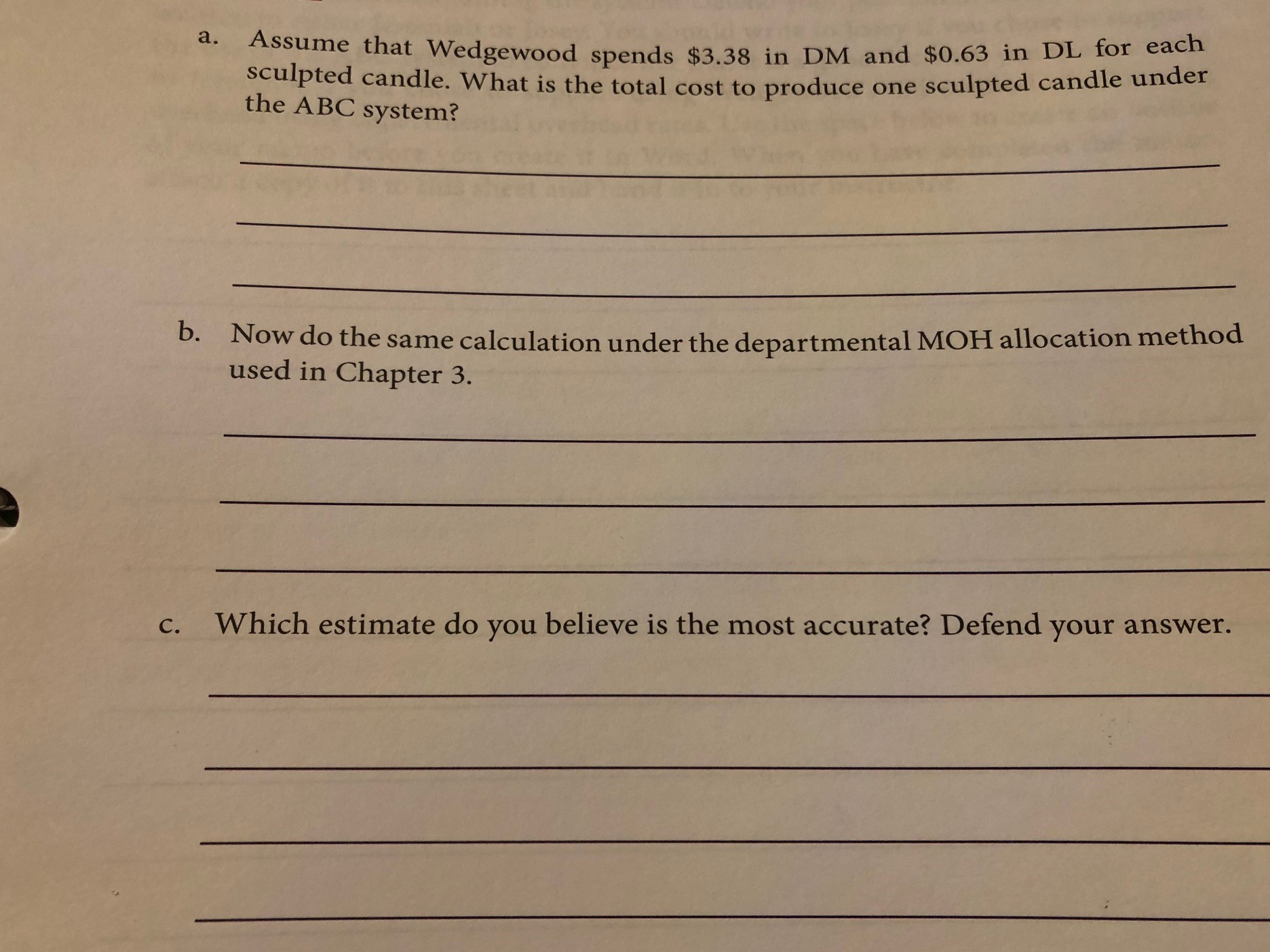
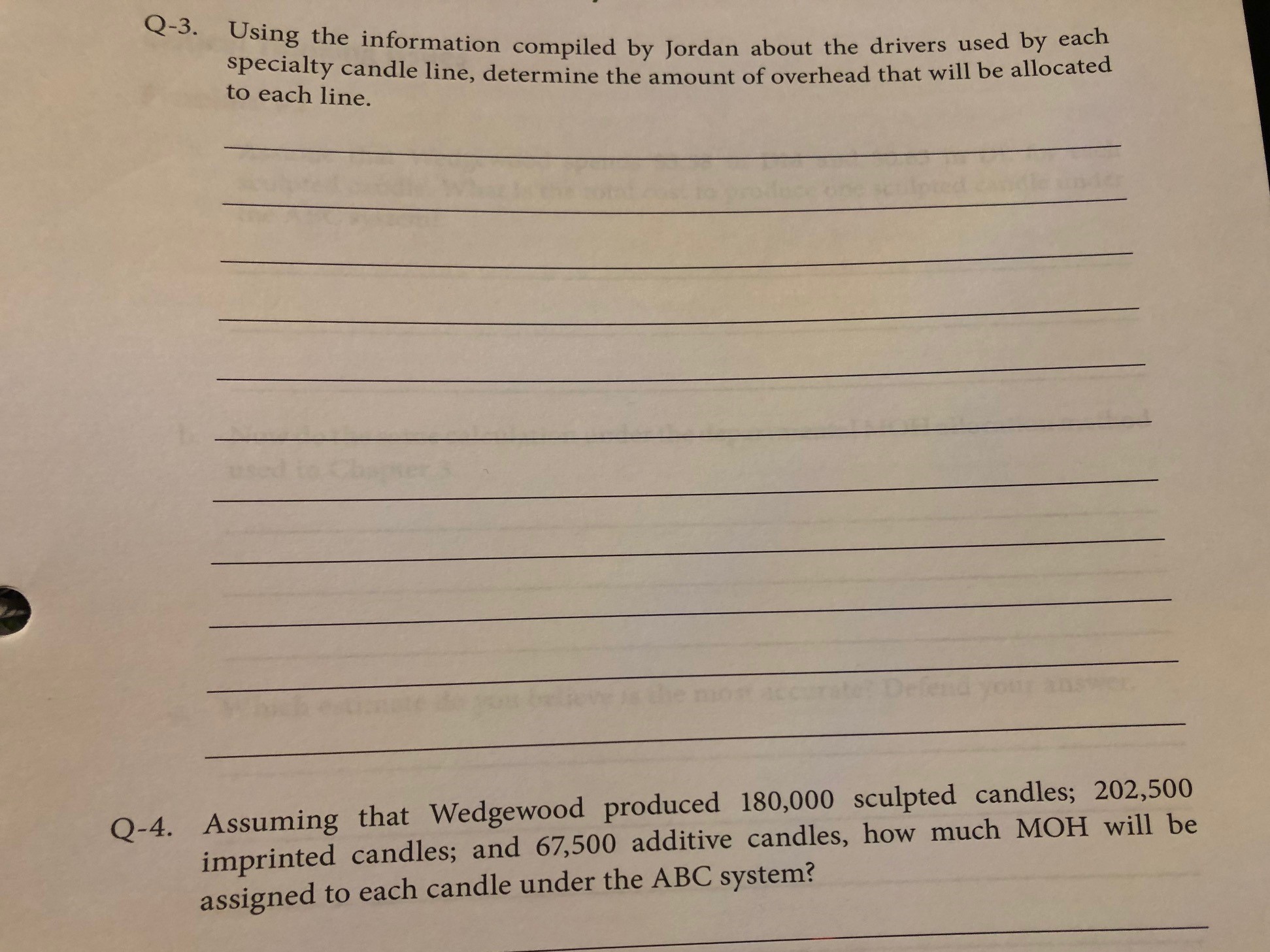
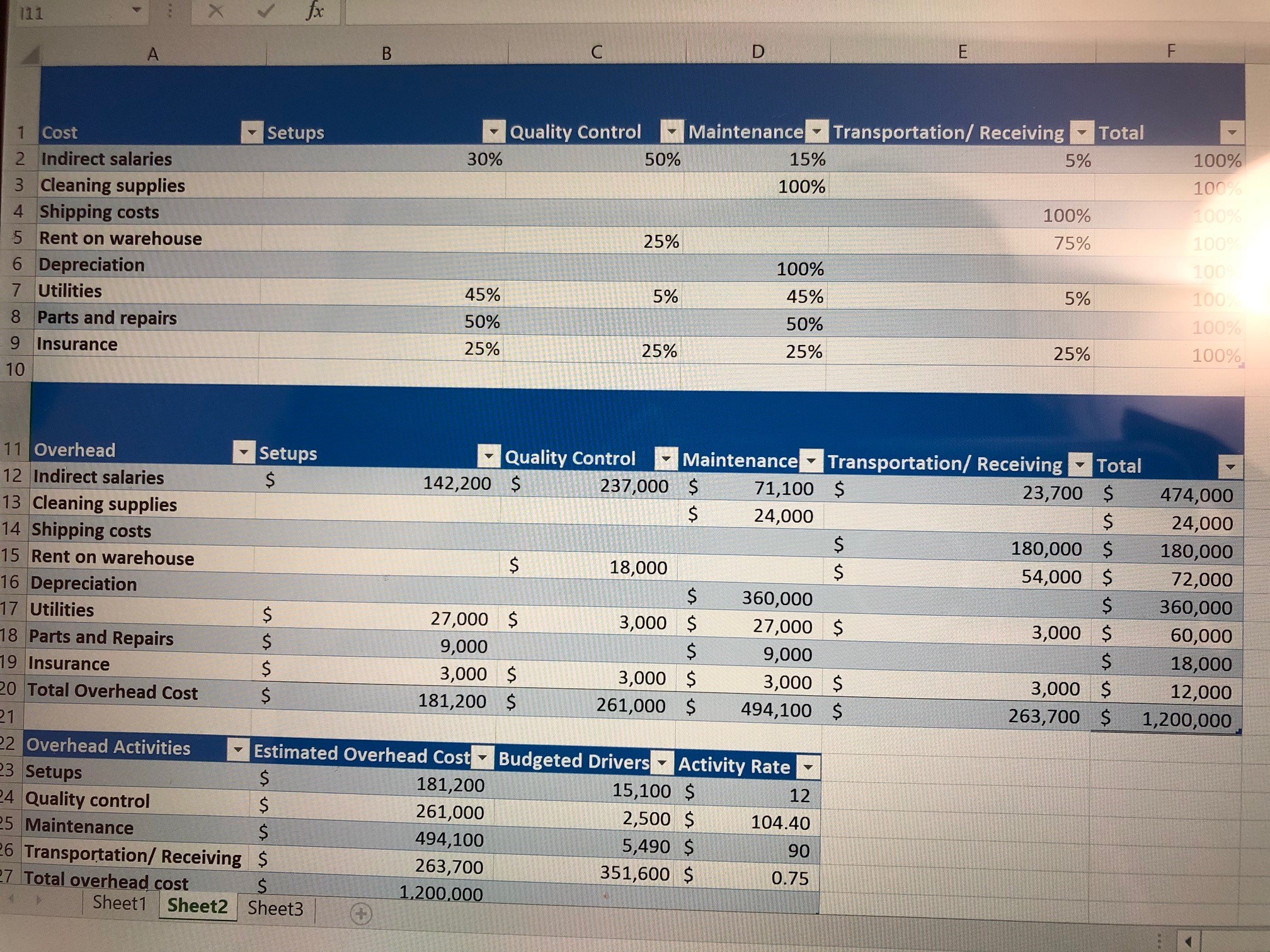
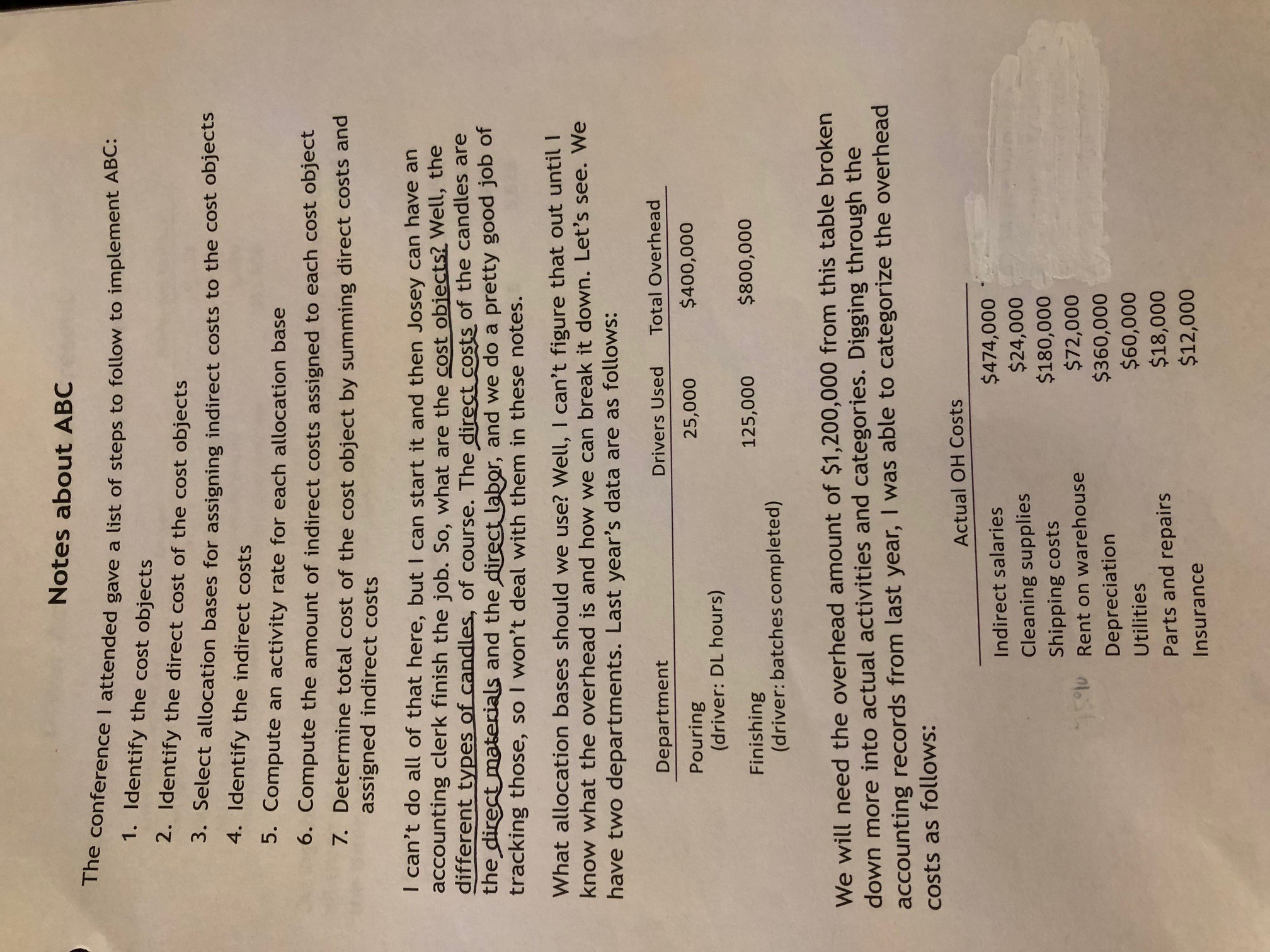
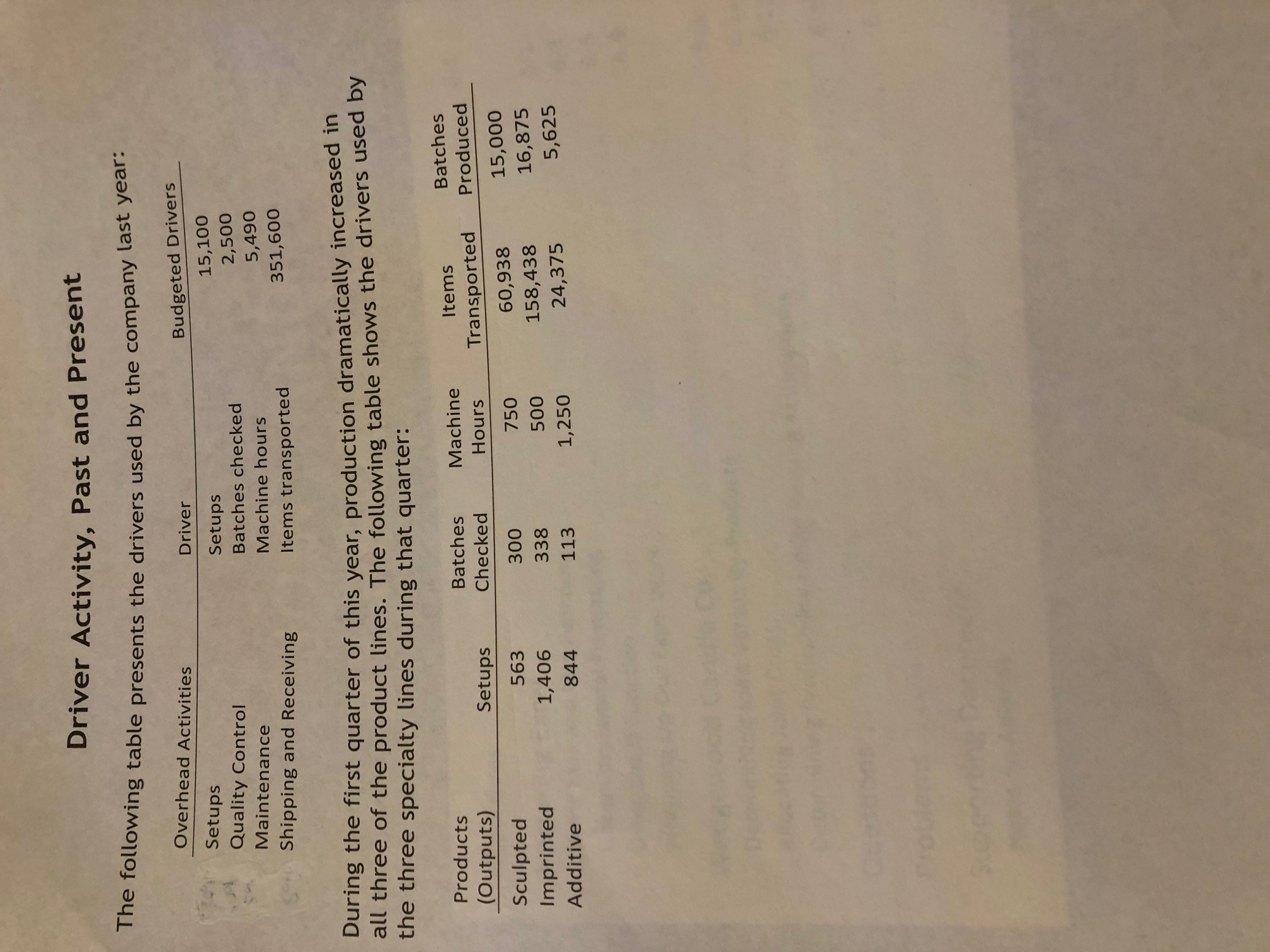
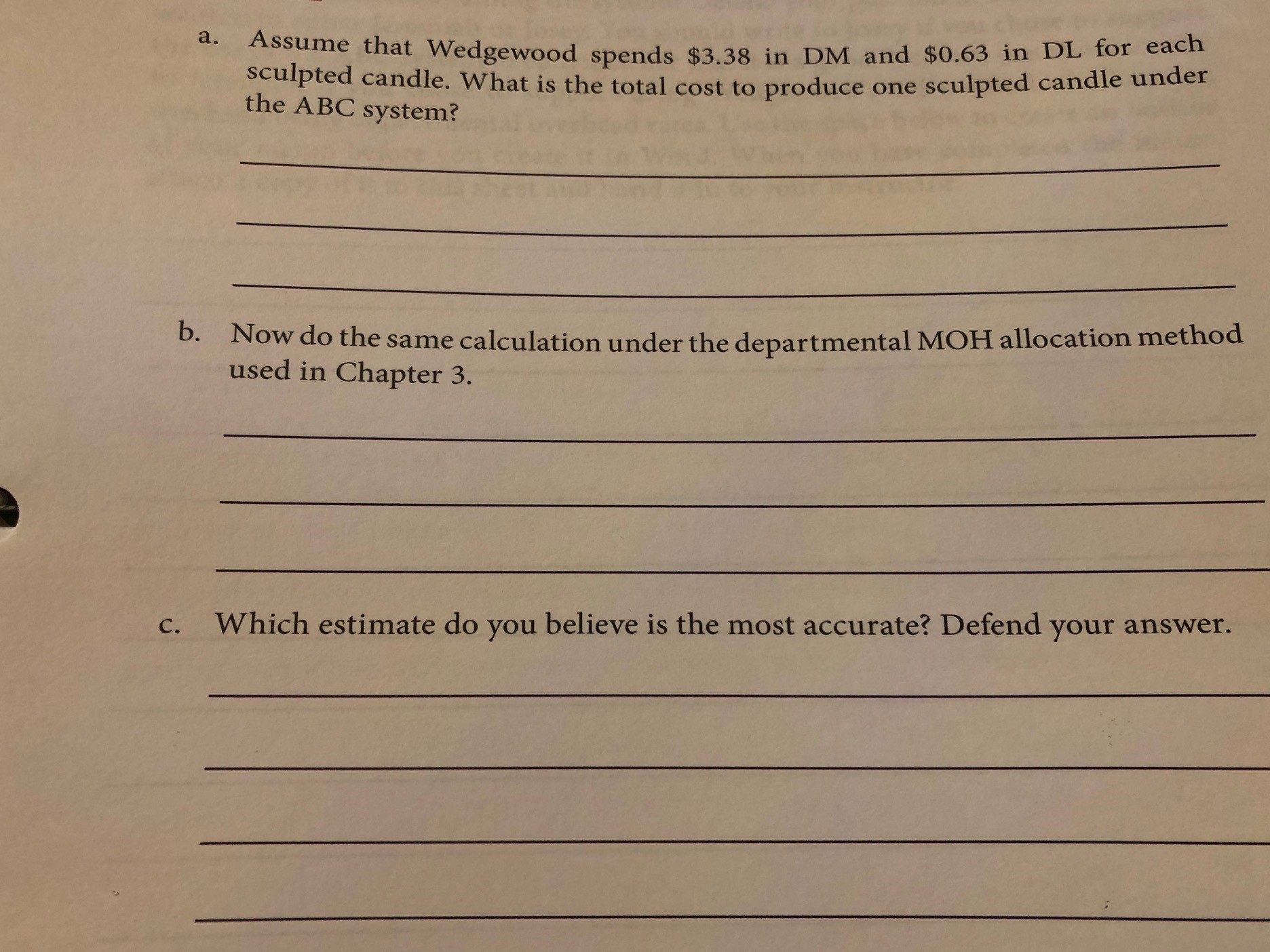
111 Jx F B D E A 1 Cost Setups Quality Control |Maintenance . Transportation/ Receiving |Total 2 Indirect salaries 30% 50% 15% 5% 100% Cleaning supplies 100% 100% Shipping costs 100% 100% 5 Rent on warehouse 25% 75% 1009 6 Depreciation 100% 100 7 Utilities 45% 5% 45% 5% 100 Parts and repairs 50% 50% 100% 9 Insurance 25% 25% 25% 25% 100% 10 11 Overhead Setups Quality Control Maintenance . Transportation/ Receiving . Total 12 Indirect salaries 142,200 $ 237,000 $ 71,100 $ 23,700 $ 474,000 13 Cleaning supplies 24,000 $ 24,000 14 Shipping costs 180,000 180,000 15 Rent on warehouse $ 18,000 54,000 72,000 16 Depreciation 360,000 17 Utilities 360,000 27,000 $ 3,000 27,000 $ 3,000 $ 8 Parts and Repairs 60,000 9,000 9,000 19 Insurance 18,000 3,000 $ 3,000 $ 3,000 $ 0 Total Overhead Cost 3,000 181,200 $ 12,000 261,000 494,100 $ 21 263,700 $ 1,200,000 2 Overhead Activities 3 Setups Estimated Overhead Cost . Budgeted Drivers . Activity Rate 181,200 4 Quality control 15,100 $ 12 261,000 Maintenance 2,500 $ 104.40 494,100 6 Transportation/ Receiving 5,490 $ 90 263,700 7 Total overhead cost 351,600 $ S 0.75 Sheet1 Sheet2 Sheet3 1,200,000 +Notes about ABC The conference I attended gave a list of steps to follow to implement ABC: 1. Identify the cost objects 2. Identify the direct cost of the cost objects 3. Select allocation bases for assigning indirect costs to the cost objects 4. Identify the indirect costs 5. Compute an activity rate for each allocation base 6. Compute the amount of indirect costs assigned to each cost object 7. Determine total cost of the cost object by summing direct costs and assigned indirect costs I can't do all of that here, but I can start it and then Josey can have an accounting clerk finish the job. So, what are the cost objects? Well, the different types of candles, of course. The direct costs of the candles are the direct materials and the direct labor, and we do a pretty good job of tracking those, so I won't deal with them in these notes. What allocation bases should we use? Well, I can't figure that out until I know what the overhead is and how we can break it down. Let's see. We have two departments. Last year's data are as follows: Department Drivers Used Total Overhead Pouring 25,000 $400,000 (driver: DL hours) Finishing 125,000 $800,000 (driver: batches completed) We will need the overhead amount of $1,200,000 from this table broken down more into actual activities and categories. Digging through the accounting records from last year, I was able to categorize the overhead costs as follows: Actual OH Costs Indirect salaries $474,000 Cleaning supplies $24,000 Shipping costs $180,000 150 Rent on warehouse $72,000 Depreciation $360,000 Utilities $60,000 Parts and repairs $18,000 Insurance $12,000Driver Activity, Past and Present The following table presents the drivers used by the company last year: Overhead Activities Driver Budgeted Drivers Setups Setups 15,100 Quality Control Batches checked 2,500 Maintenance Machine hours 5,490 Shipping and Receiving Items transported 351,600 During the first quarter of this year, production dramatically increased in all three of the product lines. The following table shows the drivers used by the three specialty lines during that quarter: Products Batches Machine Items Batches (Outputs) Setups Checked Hours Transported Produced Sculpted 563 300 750 60,938 15,000 Imprinted 1,406 338 500 158,438 16,875 Additive 844 113 1,250 24,375 5 , 625a. Assume that Wedgewood spends $3.38 in DM and $0.63 in DL for each sculpted candle. What is the total cost to produce one sculpted candle under the ABC system? b. Now do the same calculation under the departmental MOH allocation method used in Chapter 3. c. Which estimate do you believe is the most accurate? Defend your answer.Q-3. Using the information compiled by Jordan about the drivers used by each to each line. specialty candle line, determine the amount of overhead that will be allocated Q-4. Assuming that Wedgewood produced 180,000 sculpted candles; 202,500 imprinted candles; and 67,500 additive candles, how much MOH will be assigned to each candle under the ABC system
Step by Step Solution
There are 3 Steps involved in it

Get step-by-step solutions from verified subject matter experts
 Study Help