



Question: 11.14 Using CAPM. A stock has an expected return of 13.4 percent, its beta is 1.60 , and the risk-free rate is 5.5 percent. What
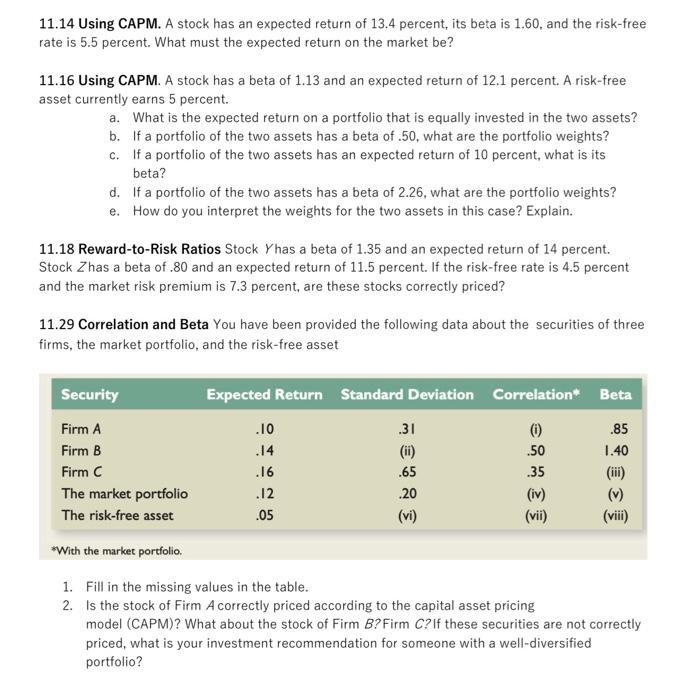
11.14 Using CAPM. A stock has an expected return of 13.4 percent, its beta is 1.60 , and the risk-free rate is 5.5 percent. What must the expected return on the market be? 11.16 Using CAPM. A stock has a beta of 1.13 and an expected return of 12.1 percent. A risk-free asset currently earns 5 percent. a. What is the expected return on a portfolio that is equally invested in the two assets? b. If a portfolio of the two assets has a beta of .50 , what are the portfolio weights? c. If a portfolio of the two assets has an expected return of 10 percent, what is its beta? d. If a portfolio of the two assets has a beta of 2.26 , what are the portfolio weights? e. How do you interpret the weights for the two assets in this case? Explain. 11.18 Reward-to-Risk Ratios Stock Y has a beta of 1.35 and an expected return of 14 percent. Stock Z has a beta of .80 and an expected return of 11.5 percent. If the risk-free rate is 4.5 percent and the market risk premium is 7.3 percent, are these stocks correctly priced? 11.29 Correlation and Beta You have been provided the following data about the securities of three firms, the market portfolio, and the risk-free asset *With the market portfolio. 1. Fill in the missing values in the table. 2. Is the stock of Firm A correctly priced according to the capital asset pricing model (CAPM)? What about the stock of Firm B?Firm C? ? these securities are not correctly priced, what is your investment recommendation for someone with a well-diversified portfolio
Step by Step Solution
There are 3 Steps involved in it

Get step-by-step solutions from verified subject matter experts