



Question: 12. Statement evaluation. Indicate whether each of the following statements is (i) always true, (ii) sometimes true, or (iii) never true. For those that are
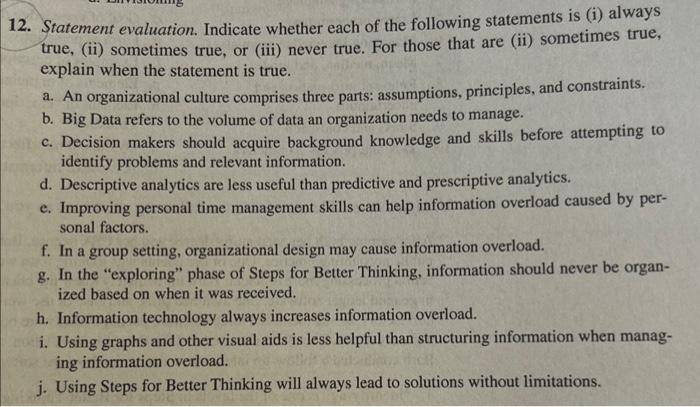
12. Statement evaluation. Indicate whether each of the following statements is (i) always true, (ii) sometimes true, or (iii) never true. For those that are (ii) sometimes true, explain when the statement is true. a. An organizational culture comprises three parts: assumptions, principles, and constraints. b. Big Data refers to the volume of data an organization needs to manage. c. Decision makers should acquire background knowledge and skills before attempting to identify problems and relevant information. d. Descriptive analytics are less useful than predictive and prescriptive analytics. e. Improving personal time management skills can help information overload caused by personal factors. f. In a group setting, organizational design may cause information overload. g. In the "exploring" phase of Steps for Better Thinking, information should never be organized based on when it was received. h. Information technology always increases information overload. i. Using graphs and other visual aids is less helpful than structuring information when managing information overload. j. Using Steps for Better Thinking will always lead to solutions without limitations
Step by Step Solution
There are 3 Steps involved in it

Get step-by-step solutions from verified subject matter experts