







Question: 12:36 all 5GY E Q AA R . . . honors SELF-ASSESSMENT 11.1: Conflict Resolution Styles This self-assessment exercise identifies your conflict resolution style. There
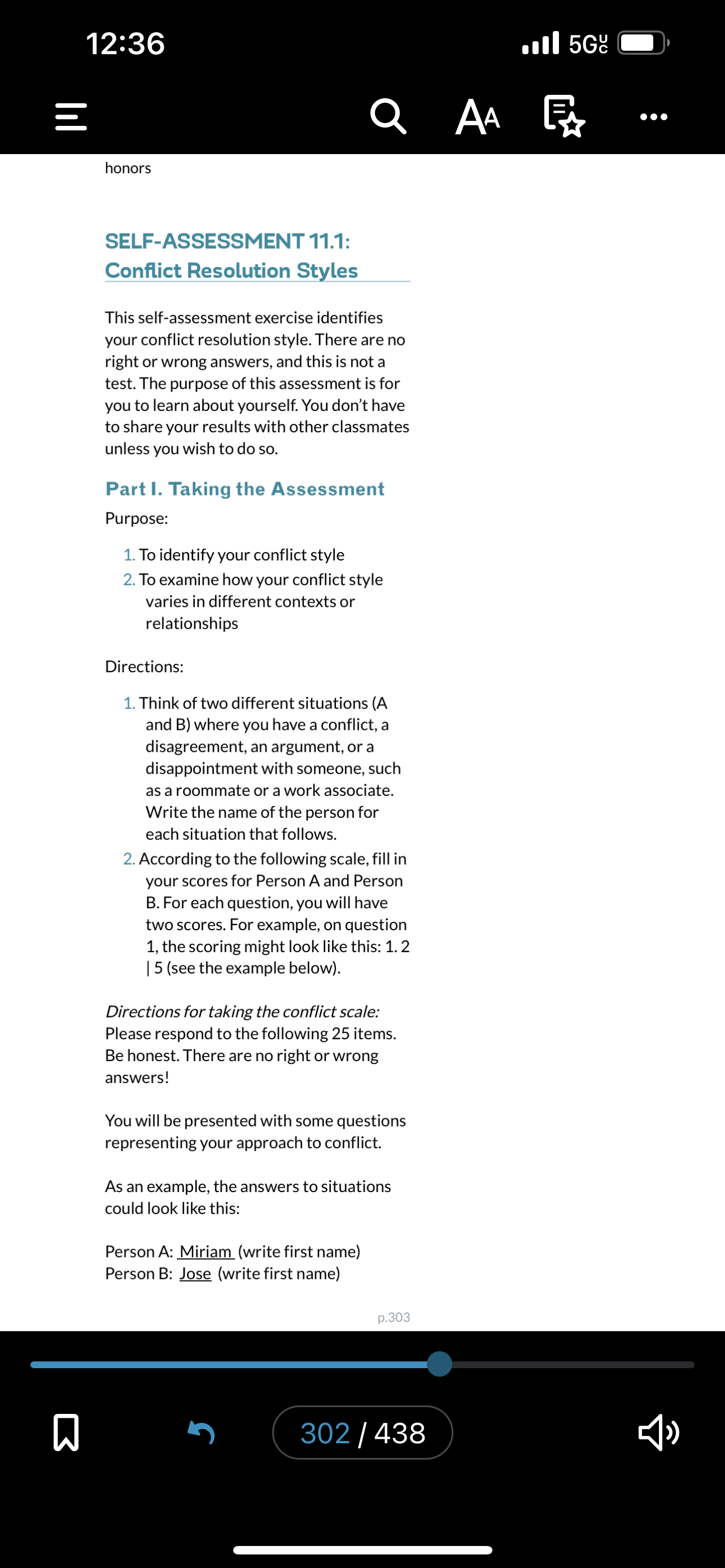
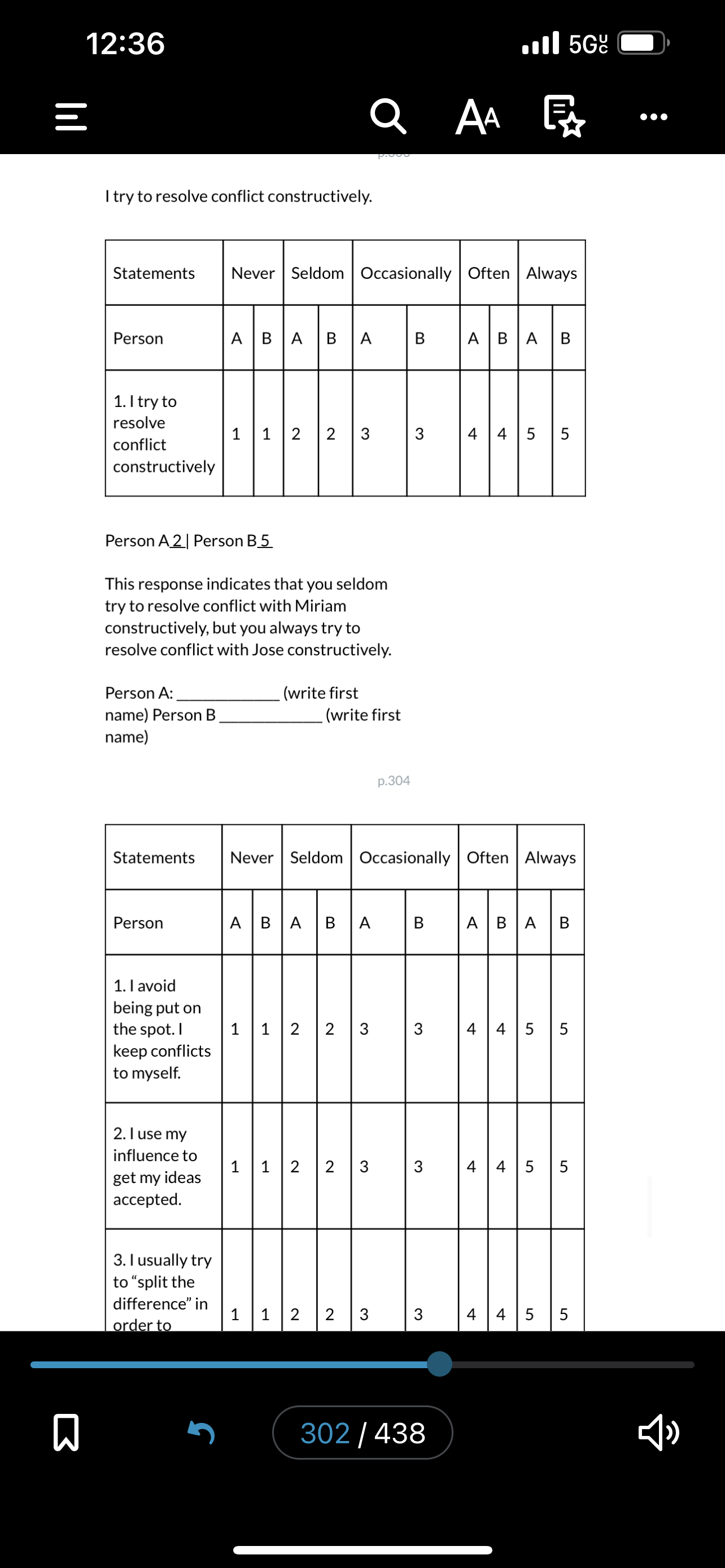
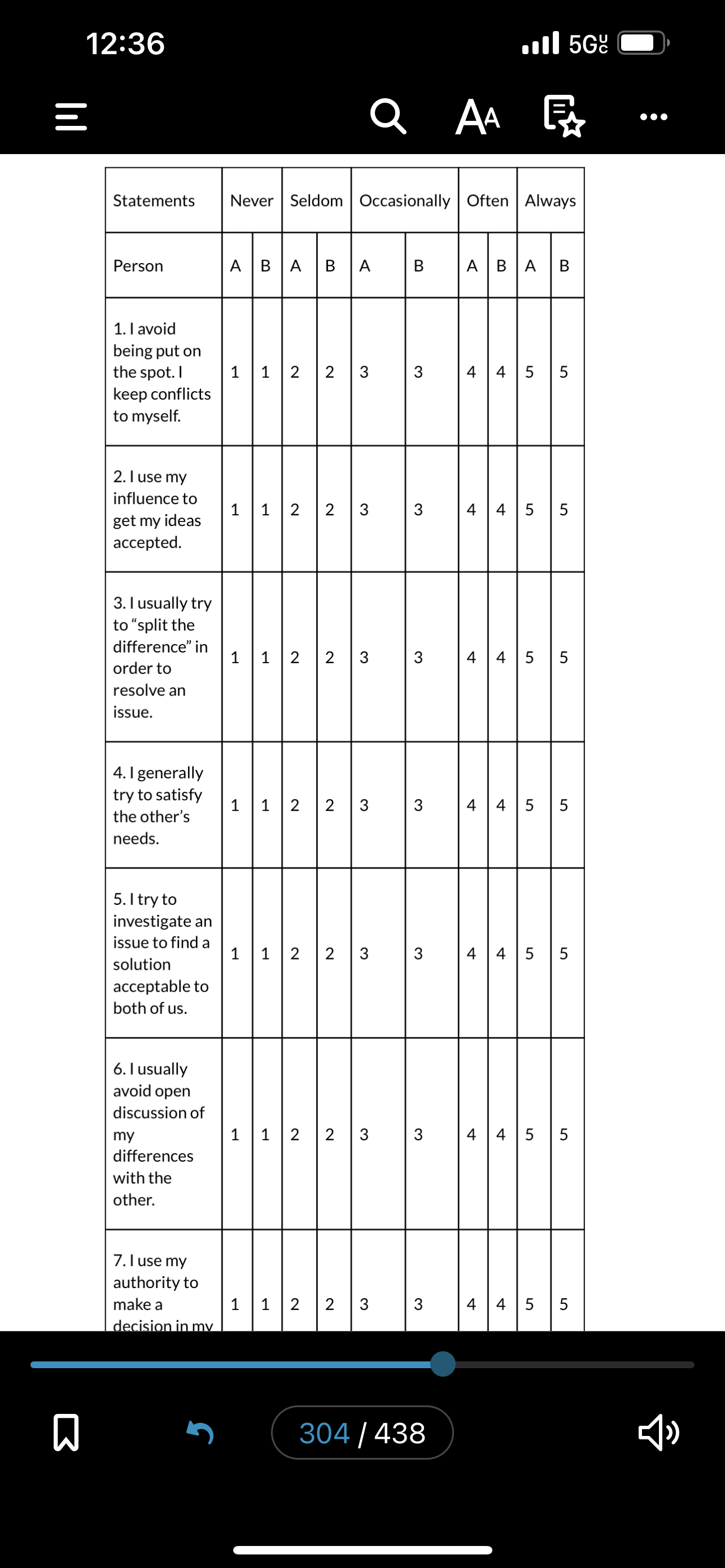
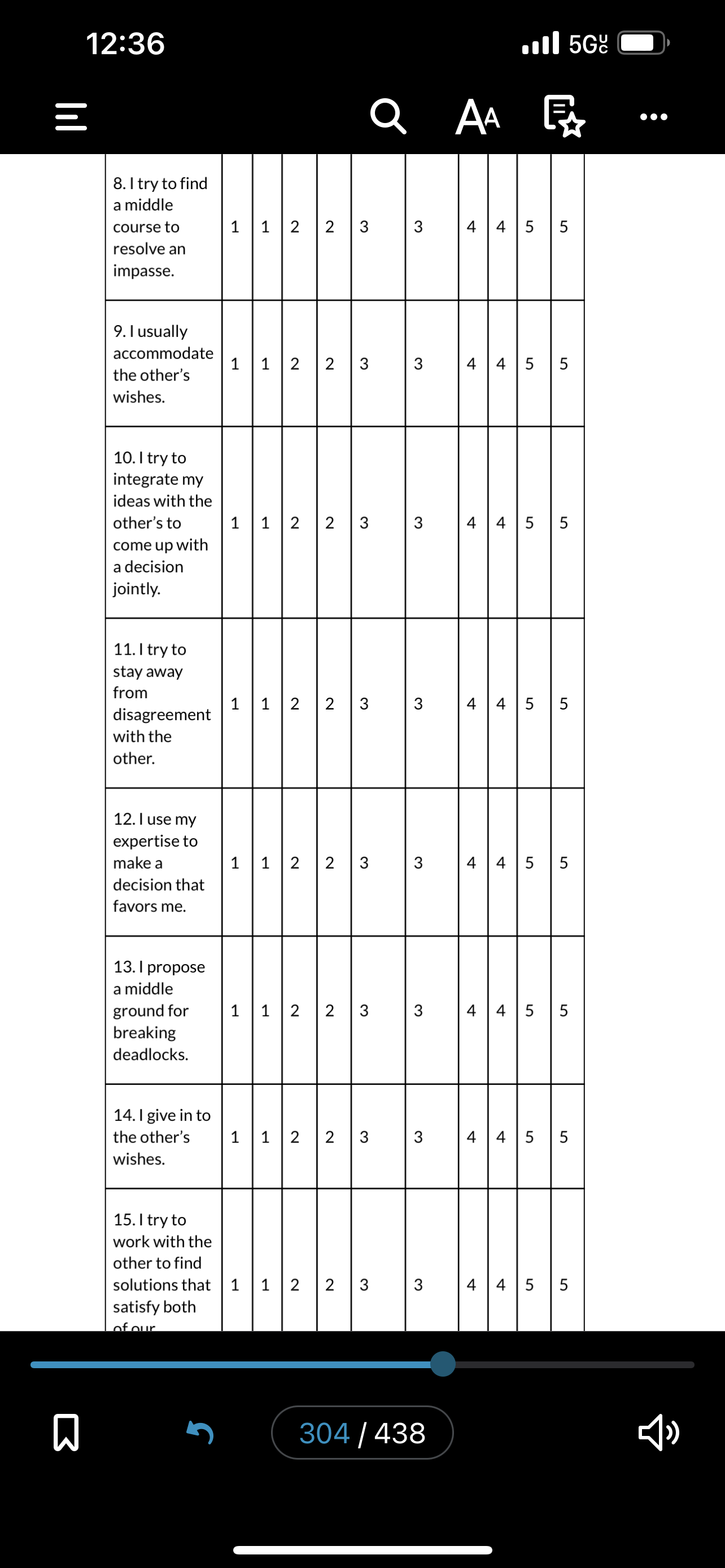
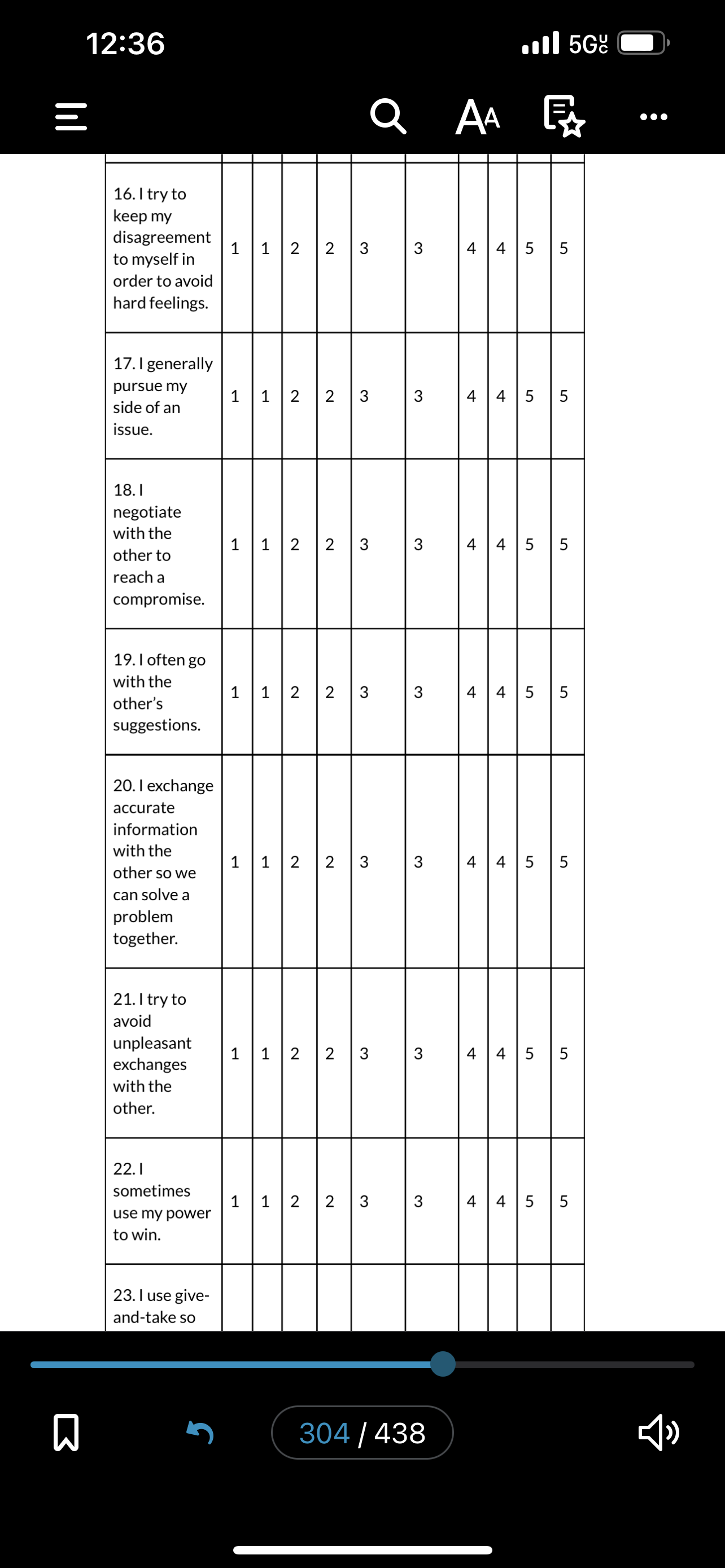
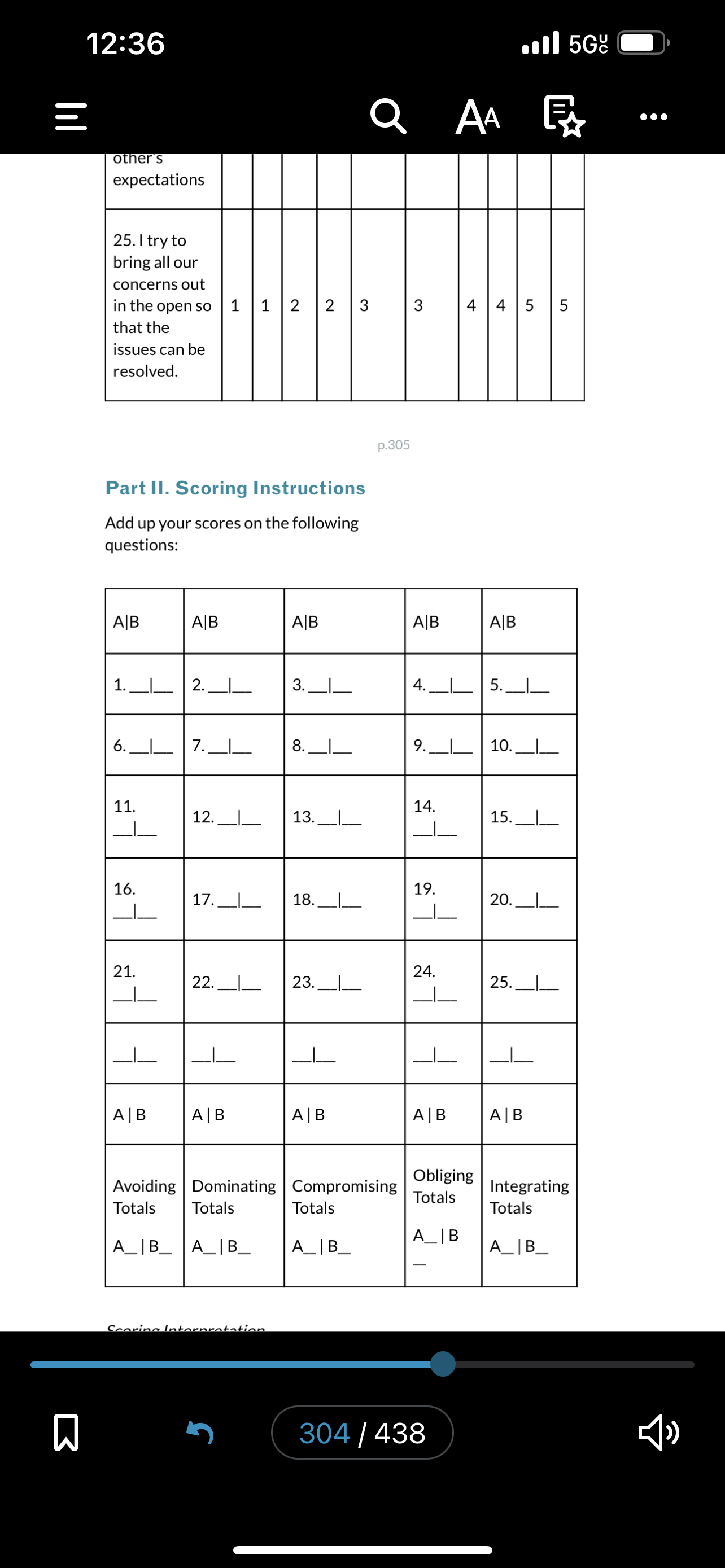
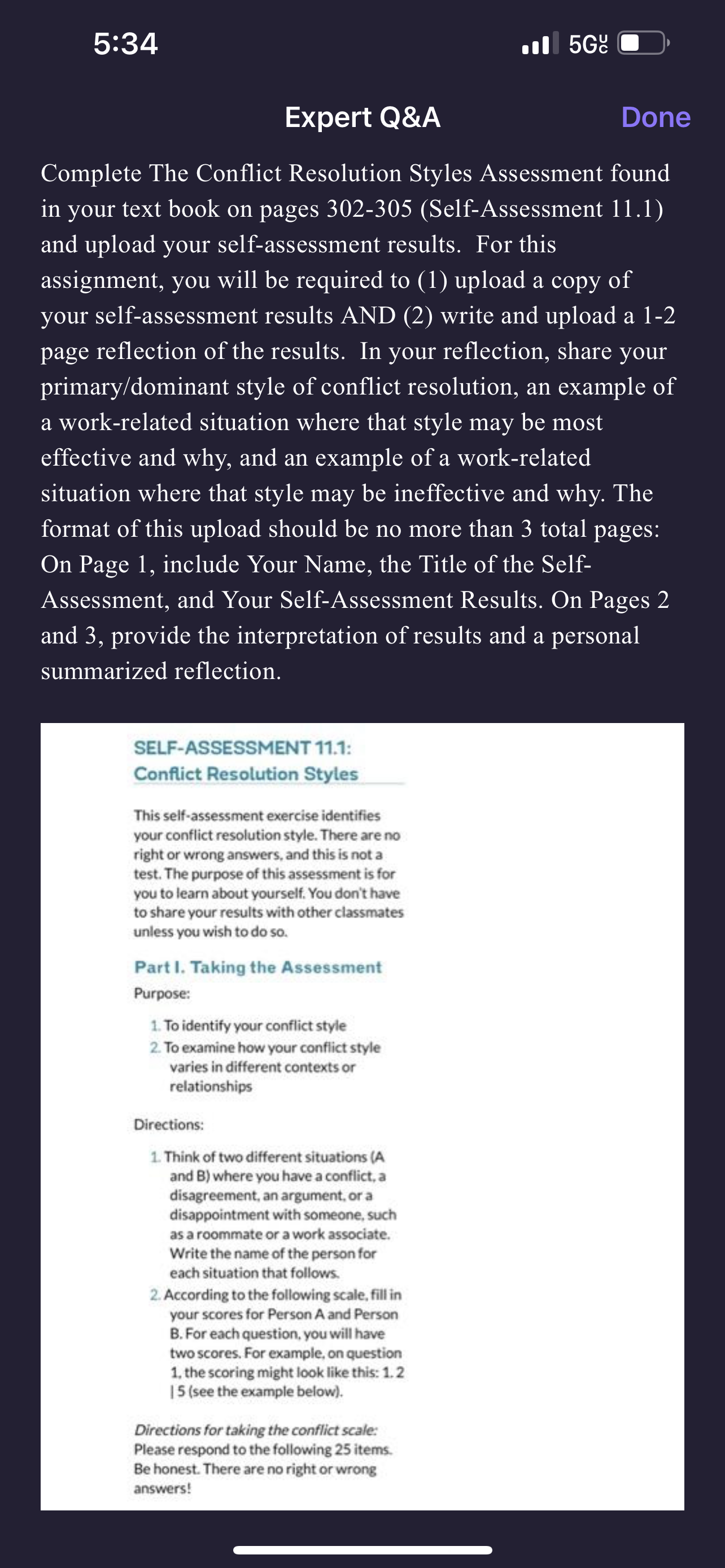
12:36 all 5GY E Q AA R . . . honors SELF-ASSESSMENT 11.1: Conflict Resolution Styles This self-assessment exercise identifies your conflict resolution style. There are no right or wrong answers, and this is not a test. The purpose of this assessment is for you to learn about yourself. You don't have to share your results with other classmates unless you wish to do so. Part I. Taking the Assessment Purpose: 1. To identify your conflict style 2. To examine how your conflict style varies in different contexts or relationships Directions: 1. Think of two different situations (A and B) where you have a conflict, a disagreement, an argument, or a disappointment with someone, such as a roommate or a work associate. Write the name of the person for each situation that follows. 2. According to the following scale, fill in your scores for Person A and Person B. For each question, you will have two scores. For example, on question 1, the scoring might look like this: 1. 2 1 5 (see the example below). Directions for taking the conflict scale: Please respond to the following 25 items. Be honest. There are no right or wrong answers! You will be presented with some questions representing your approach to conflict. As an example, the answers to situations could look like this: Person A: Miriam (write first name) Person B: Jose (write first name) p.303 302 / 43812:36 all 5GY E Q AA R . . . I try to resolve conflict constructively. Statements Never Seldom Occasionally |Often |Always Person A B A B A B A B A B 1. I try to resolve 1 1 2 2 3 3 4 4 5 5 conflict constructively Person A2 | Person B.5 This response indicates that you seldom try to resolve conflict with Miriam constructively, but you always try to resolve conflict with Jose constructively. Person A: (write first name) Person B (write first name) p.304 Statements Never Seldom | Occasionally Often Always Person A B A B A B A B A B 1. I avoid being put on the spot. I 1 1 2 2 3 3 4 4 5 5 keep conflicts to myself. 2. I use my influence to 1 1 2 2 3 3 4 4 5 5 get my ideas accepted. 3. I usually try to "split the difference" in 1 1 2 2 3 3 4 4 5 5 order to W 302 / 43812:36 all 5GY Q AA R . . . Statements Never Seldom Occasionally | Often Always Person A B A B A B A B A B 1. I avoid being put on the spot. I 1 1 2 2 3 3 4 4 5 5 keep conflicts to myself. 2. I use my influence to 1 1 2 2 3 3 4 4 5 5 get my ideas accepted. 3. I usually try to "split the difference" in 1 1 2 2 3 3 4 4 5 5 order to resolve an issue . 4. I generally try to satisfy 1 1 2 2 3 3 4 4 5 5 the other's needs. 5. I try to investigate an issue to find a 1 1 2 2 3 3 4 4 5 5 solution acceptable to both of us. 6. I usually avoid open discussion of my 1 1 2 2 3 3 4 4 5 5 differences with the other. 7. I use my authority to make a 1 1 2 2 3 3 4 4 5 5 decision in my W 304 / 43812:36 all 5GY E Q AA R . . . 8. I try to find a middle course to 1 1 2 2 3 3 4 4 5 5 resolve an impasse. 9. I usually accommodate 1 1 2 2 3 3 4 4 5 5 the other's wishes. 10. I try to integrate my ideas with the other's to 1 1 2 2 3 3 4 4 5 5 come up with a decision jointly. 11. I try to stay away from 1 1 2 2 3 3 4 4 5 5 disagreement with the other. 12. I use my expertise to make a 1 1 2 2 3 3 4 4 5 5 decision that favors me. 13. I propose a middle ground for 1 1 2 12 3 3 4 4 5 5 breaking deadlocks. 14. I give in to the other's 1 1 2 2 3 3 4 4 5 5 wishes. 15. I try to work with the other to find solutions that 1 1 2 2 3 3 4 4 5 5 satisfy both of our W 304 / 43812:36 all 5GY Q AA R . . . 16. I try to keep my disagreement 1 1 2 2 3 3 4 4 5 5 to myself in order to avoid hard feelings. 17. I generally pursue my 1 1 2 2 3 3 4 4 5 5 side of an issue. 18. 1 negotiate with the 1 1 2 12 3 3 4 4 5 5 other to reach a compromise. 19. I often go with the 1 1 2 3 3 4 4 5 5 other's suggestions. 20. I exchange accurate information with the 1 1 2 2 3 3 4 4 5 5 other so we can solve a problem together. 21. I try to avoid unpleasant 1 1 2 2 3 3 4 4 5 5 exchanges with the other. 22. 1 sometimes 1 1 2 2 3 3 4 4 5 5 use my power to win. 23. I use give- and-take so W 304 / 43812:36 all 5GY E Q AA R . . . other's expectations 25. I try to bring all our concerns out in the open so 1 1 2 2 3 3 4 4 5 5 that the issues can be resolved. p.305 Part II. Scoring Instructions Add up your scores on the following questions: A|B A|B A|B A|B A B 1. 2. __ 3. __ 4. _ 5. __ 6. _ _ 7. __ 8. __ 9._ _ 10. __ 11 14. 12._ 13._ 15. __ 16. 19. 17. __ 18. 20. 21. 24. 22. _ 23. 25. A| B A| B A| B A| B A B Avoiding Dominating Obliging Compromising Integrating Totals Totals Totals Totals Totals A_IB_ A_| B_ A_IB_ A_IB A_IB_ 304 / 4385:34 Expert Q&A Done Complete The Conflict Resolution Styles Assessment found in your text book on pages 302-305 (Self-Assessment 11.1) and upload your self-assessment results. For this assignment, you will be required to (1) upload a copy of your self-assessment results AND (2) write and upload a 1-2 page reflection of the results. In your reflection, share your primary/dominant style of conflict resolution, an example of a work-related situation where that style may be most effective and why, and an example of a work-related situation where that style may be ineffective and why. The format of this upload should be no more than 3 total pages: On Page 1, include Your Name, the Title of the Self- Assessment, and Your Self-Assessment Results. On Pages 2 and 3, provide the interpretation of results and a personal summarized reflection. SELF-ASSESSMENT 11.1: Conflict Resolution Styles This self-assessment exercise identifies your conflict resolution style. There are no right or wrong answers, and this is not a test. The purpose of this assessment is for you to learn about yourself. You don't have to share your results with other classmates unless you wish to do so. Part I. Taking the Assessment Purpose: 1. To identify your conflict style 2. To examine how your conflict style varies in different contexts or relationships Directions: 1. Think of two different situations (A and B) where you have a conflict, a disagreement, an argument, or a disappointment with someone, such as a roommate or a work associate. Write the name of the person for each situation that follows. 2. According to the following scale, fill in your scores for Person A and Person B. For each question, you will have two scores. For example, on question 1, the scoring might look like this: 1. 2 15 (see the example below). Directions for taking the conflict scale: Please respond to the following 25 items. Be honest. There are no right or wrong answers
Step by Step Solution
There are 3 Steps involved in it

Get step-by-step solutions from verified subject matter experts
 Study Help